
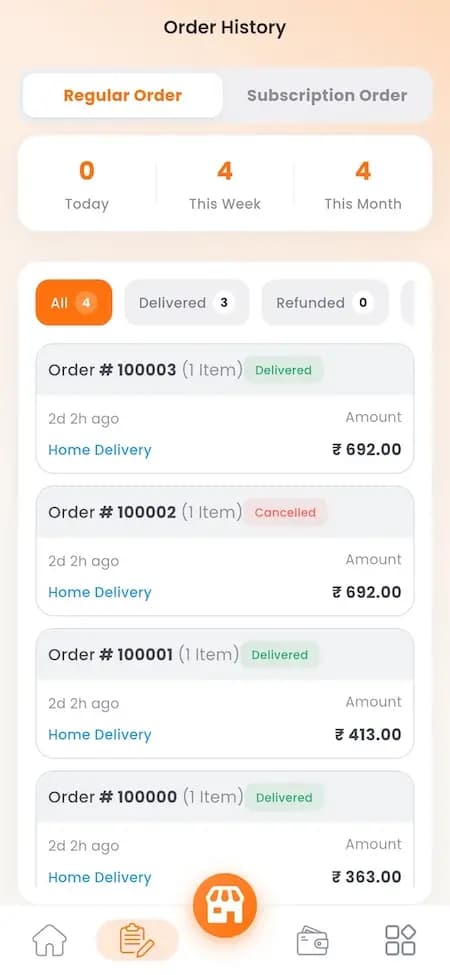
Scope the order that goes wrong
A restaurant accepts an order, discovers that one item is unavailable, and calls the customer while a courier is already travelling to pickup. The customer agrees to a cheaper replacement. Who changes the order, who approves the new amount, and what does the courier see? A multi-restaurant food delivery MVP that cannot answer those questions has not scoped its basic transaction, even if its menu browser looks complete.
The economical first release supports a complete business loop for a deliberately narrow market. It should help customers place valid orders, restaurants make credible commitments, couriers receive clear assignments, and operators resolve exceptions. That does not require every feature associated with a national delivery platform. It requires enough connected behaviour that ordinary problems do not force staff to improvise payment and order rules outside the system.
This guide shows restaurant groups and marketplace founders how to produce that scope before requesting development estimates. Numerical examples are fictional planning exercises, not supplier quotes, performance results or forecasts. A final budget needs agreed requirements, integration details and current commercial terms. Food-service rules, payment arrangements, tax obligations and employment questions depend on the market and require appropriate specialist review.
Choose between a restaurant group and an open marketplace
A restaurant group controlling its own brands and locations has different requirements from a marketplace onboarding independent merchants. The group may share menu governance, customer accounts, promotions and finance processes. Independent restaurants may need separate contracts, approval workflows, catalogue ownership, commission statements and payout schedules. Calling both products multi-restaurant does not make their operations or development estimates interchangeable.
Write the commercial relationship first. Identify who sells the food, who collects payment, who arranges delivery and who handles customer complaints. Specify whether locations have individual legal or payment identities. Decide whether a customer can buy from more than one restaurant in a single checkout. A multi-merchant basket creates separate acceptance, preparation, delivery, cancellation and reconciliation obligations. It is a major scope decision, not simply another cart component.
For an economical pilot, consider one launch area, one currency, one restaurant per order and a small approved merchant group. This is a planning option rather than a universal prescription. It reduces coordination requirements while preserving the core transaction. If your business depends on a different model, make that dependency explicit and budget for it instead of removing the capability that gives the product commercial meaning.
Draw the order lifecycle before naming screens
Start with states such as basket, submitted, awaiting restaurant acceptance, accepted, preparing, ready, assigned, collected, delivered and closed. Money has a related but separate lifecycle: authorization, capture, refund, dispute and settlement. Do not combine everything into one status field. A delivered order can still have an unresolved refund, and an authorized payment does not prove the restaurant has agreed to prepare the meal.
For every transition, name the actor, permission, prerequisite, timeout and recovery path. A restaurant may accept only before a deadline. A courier may mark collection only after a valid handoff. A support agent may authorize a partial refund within a limit. The customer should receive an explanation when the original promise changes. Record the rule in ordinary language that restaurant managers and developers can both evaluate.
Turn the lifecycle into acceptance scenarios. Test simultaneous cancellation and acceptance, restaurant rejection after authorization, missing courier availability, a duplicate payment event and a failed delivery confirmation. State the expected order, money and notification outcomes. These scenarios are stronger procurement inputs than a list of app screens because they expose whether the proposal includes the actual business responsibilities.
Separate menu governance from visual catalogue browsing
Restaurant menus contain rules. Item availability can vary by location, service window and sales channel. Options may be required, mutually exclusive or priced differently. A preparation instruction differs from an allergen declaration. A menu photograph should not conceal an unavailable combination or make a customer believe that a price applies to every branch. Define those rules before discussing catalogue layout.
Specify the smallest editing workflow that restaurants can operate safely. Decide who creates dishes, approves changes, controls prices, pauses items and schedules opening hours. If a central team owns the catalogue, individual locations might only change availability. If merchants own their menus, platform operators may need review and moderation. Avoid building both governance models unless the pilot genuinely needs them.
Preserve an order-time snapshot of names, selected options, prices, fees and relevant terms. Editing tomorrow's menu should not rewrite yesterday's receipt. Ask how the system handles an item becoming unavailable during checkout and whether the restaurant sees the precise configuration the customer bought. A stable order snapshot supports kitchen preparation, customer support, refunds and financial reconciliation without relying on a mutable catalogue record.
Define the customer promise at checkout
Before submitting, the customer should understand the selected restaurant, delivery address, availability, order total and current service expectation. Break down items, taxes where relevant, delivery fees and other charges without inventing hidden commitments. Address validation should establish whether the restaurant and delivery operation serve the location. A valid map coordinate is not enough to prove that a building entrance is reachable or a service zone covers it.
Decide whether payment is authorized before restaurant acceptance, captured immediately or handled through another supported arrangement. Explain what the customer sees while the restaurant is deciding and what happens if it rejects the request. Coordinate the user interface with the provider's actual capabilities and the business's contractual obligations. Do not promise immediate refund availability when settlement networks may take longer.
For the MVP, one payment flow implemented properly is often more valuable than many incomplete methods. Add cash, wallet balances, business invoicing or multiple currencies only when the launch model requires them and their operational consequences are scoped. Each method changes failure handling, support, reconciliation and fraud exposure. Removing optional payment methods reduces work only if it does not exclude the customers the pilot is meant to serve.
Give restaurants an acceptance and preparation workspace
The restaurant needs a reliable incoming-order queue with a clear distinction between unacknowledged and accepted work. Define acceptance deadlines, audible or visual alerts, staffing responsibilities and the action taken if a device is offline. Notification delivery is not the same as acceptance. The server should preserve the authoritative order state, and reconnecting devices should fetch that state before allowing another action.
Scope preparation estimates carefully. A single default preparation time might suffice for a limited pilot, but operators need a way to pause orders or indicate delays. Do not add algorithmic kitchen prediction merely because a larger competitor has it. First establish who can change the estimate, whether the change affects the customer promise, and how courier dispatch responds to the revised readiness expectation.
Include rejection and substitution rules. If the restaurant cannot fulfil an item, determine whether the entire order is rejected, a customer-approved replacement is permitted, or support must intervene. Price changes need explicit handling. Avoid silent substitutions, especially where dietary restrictions or allergies may be involved. The software should support the agreed communication and record, not claim that an interface can replace a restaurant's food-safety responsibilities.
Select one delivery arrangement and describe its exceptions
Delivery can be restaurant-managed, platform-managed or provided through an external courier integration. A hybrid model is possible but introduces additional assignment and responsibility rules. For a pilot, identify which arrangement applies to each location and how dispatch staff recognize it. A customer should not receive conflicting instructions because the product cannot distinguish the restaurant's driver from a platform courier.
A platform courier needs an eligible assignment, pickup details, relevant customer delivery instructions and a way to report problems. Decide what confirms collection and completion. Specify how failed pickup, wrong bags, inaccessible buildings, absent customers and damaged items are escalated. Record evidence appropriate to the service and privacy requirements. More surveillance is not automatically better assurance, and collecting unnecessary personal information creates its own obligations.
Defer route optimization, batching and dynamic courier incentives unless they are essential to the pilot. Manual assignment with good visibility may establish the initial operating model more clearly. However, manual dispatch still requires permissions, assignment history and protection against conflicting actions. The goal is fewer algorithms and cleaner accountability, not a hidden spreadsheet that becomes the real source of order truth.
Scope the operator queues that protect the launch
An operator dashboard should organize decisions, not merely show totals. Start with queues for unaccepted orders, delayed preparation, unassigned deliveries, failed payments, refund requests and unresolved complaints. Each queue needs a reason the record appears, a responsible role and a permitted action. Without those definitions, the dashboard becomes a second inbox that staff must interpret manually under pressure.
Use separate roles for merchant operations, delivery coordination, customer support and finance where the team needs those boundaries. A dispatcher should not automatically change payout accounts, and a restaurant employee should not browse another merchant's customer orders. Test unauthorized actions through APIs as well as hidden buttons. Role boundaries have engineering and testing costs, so include them in the estimate rather than classifying security as a later enhancement.
Require an audit trail for material interventions. A refund, cancellation, reassignment or price adjustment should identify who acted and why. Preserve the original order and payment evidence. Define which records can be exported and how sensitive data is limited. A narrow, well-controlled back office can be more useful than a broad analytics suite that cannot explain how a single customer lost an item and received a different charge.
Model commissions, refunds and settlements independently
Write a sample restaurant statement before commissioning the payment integration. It should explain gross order value, relevant taxes, platform commission, delivery allocation, refunds, adjustments and net amount owed under the agreement. Clarify which party bears each fee and dispute. A percentage commission field is not a settlement system, especially when orders change after acceptance or money is returned later.
Stripe's Connect documentation illustrates different approaches to charging and transferring funds. Destination charges and separate charges with transfers have different technical and liability implications. Availability and suitability depend on the parties, locations and business model. A transfer mechanism should not be described as regulated escrow without an appropriate legal and provider basis. Confirm the arrangement before deciding that milestone-based withholding belongs in the MVP.
Test duplicate events and delayed outcomes. A webhook retry must not create a second order or refund. A failed merchant payout should remain visible as an outstanding obligation rather than vanish from a total. Reconcile application records with provider reports using stable identifiers. Include an operator procedure for mismatches. Financial correctness is part of the first viable release even when advanced merchant reporting is deferred.
Estimate work by complete slices rather than feature count
Ask suppliers to estimate connected slices: merchant setup, menu publication, valid checkout, restaurant acceptance, dispatch, delivery completion, refund and settlement reconciliation. Each slice includes interfaces, backend rules, permissions, tests and operational behaviour. A list containing fifty feature names is not necessarily larger than a list containing ten; the difference is how much behaviour each name conceals.
As a fictional budgeting exercise, assume 60 hours for discovery, 100 for catalogue and merchant workflows, 140 for checkout and acceptance, 100 for dispatch and delivery, 100 for payments and reconciliation, and 140 for testing, release and handover. The total is 640 hours. At an assumed USD 50 blended hourly rate, that is USD 32,000 before licences, infrastructure, tax and contingency. It is not a market estimate or a quote.
Challenge the example with your actual complexity. An existing foundation might reduce some slices, while a difficult POS integration or unusual settlement agreement could increase others. Apply an adverse scenario to the unresolved items. Ask what the rate includes and who provides product decisions, design, test devices and content. A useful budget explains ownership and evidence rather than claiming that every food delivery app costs the same amount.
Calculate recurring costs from a workload model
Separate fixed hosting and operating support from usage-based maps, messages, payment processing, storage and observability. Use a fictional month with 5,000 orders to make the calculation concrete. If each order creates two operational text messages, that is 10,000 messages before retries or verification. If each booking makes three billable route requests, that is 15,000 requests before driver navigation and development traffic. These are assumptions to validate, not measured requirements.
Attach the applicable provider rate and currency to each line. Current Google Maps pricing distinguishes products and billable events, so registered users alone are not an adequate estimate. Messaging costs vary with destinations and message types. Payment processing, connected-account and payout charges need their own treatment. Keep rates dated and linked to current commercial terms, especially when comparing a fixed hosting proposal with pay-as-you-go services.
Plan budget controls alongside estimates. Restrict API keys, separate test credentials, set relevant quotas, monitor retry behaviour and review unexpected usage. Define retention for images, logs and delivery evidence. Infrastructure budgets should include backups and recovery work rather than only the smallest web server. A low monthly figure is misleading if it excludes the resources required to restore service after a failure.
Put attractive but optional features into a later release
Loyalty wallets, subscriptions, complex coupons, multi-restaurant baskets, AI recommendations and automatic batching can be useful. They can also introduce expensive state and money rules before the core order lifecycle works. Classify each requested feature against a specific launch decision: required to complete an order, required to operate safely, required to test the business hypothesis, or optional after evidence from the pilot.
Use simple alternatives where they preserve the hypothesis. A limited set of centrally managed offers may replace a generalized promotion engine. A restaurant pause control may solve the immediate problem more reliably than predictive order throttling. A documented support adjustment may cover a rare exception without building a flexible rules builder. Make the ceiling explicit so a temporary simplification does not become an undocumented permanent dependency.
Do not use MVP as a reason to omit authorization, payment correctness, accessible interactions, consent or failure recovery. Those concerns affect whether the chosen first transaction can be trusted. The sensible reduction is fewer operating models, integrations and markets. It is not a weaker version of the same system with no way to explain an order, recover data or restrict a privileged action.
Make integration readiness part of the critical path
POS and kitchen integrations need a named product, supported version, sandbox, API permissions, commercial terms and ownership of support. Ask which system owns menus, availability, taxes and accepted orders. Decide what happens when the connector is unavailable and whether orders can be reconciled after recovery. Do not budget an integration from a vendor logo or an unverified statement that an API exists.
For the pilot, compare integration with a deliberate manual workflow. A merchant tablet might be adequate for a small group if staff responsibilities and reconciliation are clear. Manual duplication becomes unacceptable when it produces conflicting prices, missed orders or untraceable state changes. The choice should be made from expected operating work and error consequences, not from a blanket rule that every restaurant must integrate immediately.
Keep payment onboarding, messaging accounts, map keys, store accounts and content delivery on the dependency register. State who supplies credentials and who approves configuration. Use appropriate secret handling rather than sending production keys through issue descriptions. Suppliers should identify the dates when missing dependencies block testing or submission. This is how a development timeline becomes a usable launch plan.
Test a pilot with known failure conditions
Prepare a shared acceptance pack using fictional customer and merchant data. Include happy-path ordering, restaurant rejection, late acceptance, unavailable items, failed assignment, duplicate payment notifications, partial refunds and reconnects. Test the supported mobile devices, keyboard navigation where relevant, readable error states and denied permissions. Each result should identify the build and environment so the team can reproduce what was reviewed.
Run a supervised restaurant rehearsal before a public pilot. Staff should accept, prepare, hand over and reconcile test orders while dispatch and support handle interruptions. Simulate a restaurant going offline and a courier becoming unavailable. Time the human actions as observations from that rehearsal, not universal performance claims. Use the findings to change instructions, scope or staffing before customers depend on the service.
Define expansion gates from the service promise: unresolved order exceptions, reconciliation mismatches, merchant response problems and support capacity. Set thresholds with the operating team rather than copying a competitor. The first release succeeds when it teaches you how the business works while keeping commitments explainable. A larger feature list is not evidence that the product is ready for more locations or higher order volumes.
Request a proposal that a buyer can actually compare
Keep one owner for the scope register. Restaurant teams, dispatchers, finance and marketing may each request reasonable additions, but someone must resolve conflicting priorities before engineering begins. Record the reason a feature belongs in the first release and the acceptance scenario it supports. When a new request arrives, compare it with that boundary rather than adding it silently. This simple discipline keeps a smaller budget connected to a real operating plan and makes later investment decisions easier to explain.
Send vendors the market boundary, commercial model, actor list, order lifecycle, acceptance pack, integration inventory and first-year workload assumptions. Ask for a response that labels existing foundation capabilities, configuration, new engineering, third-party dependencies and exclusions. Request milestones with reviewable outputs and a clear treatment of changes. This lets you compare responsibilities instead of comparing screenshots and headline prices.
Specify the handover package and rights. Identify source repositories, deployment access, account ownership, design assets, database documentation, operating instructions and support terms. Distinguish client-specific work from reusable and third-party components. Require a clean-build and recovery demonstration appropriate to the engagement. Source access without the accounts or instructions needed to operate the product leaves a costly gap at the end of delivery.
App Clone Labs can use this packet to assess a suitable foundation or a custom implementation against the same launch boundary. Start with the food delivery solution and the MVP development guide, then bring the actual restaurant, payment and dispatch constraints to discovery. The useful outcome is a smaller, coherent first release with priced assumptions and acceptance evidence, not a promise that a minimal app will automatically produce a successful delivery business.
Stripe Connect destination charges
Stripe separate charges and transfers
Google Routes API usage and billing
Firebase Cloud Messaging overview
Comparison register
Illustrative MVP budgeting worksheet
Fictional planning inputs, not a market estimate or quotation. Assumed rate USD 50/hour. Excludes licences, infrastructure, tax and contingency.
| Connected delivery slice | Assumed hours | Illustrative labour cost |
|---|---|---|
| Discovery | 60 | USD 3,000 |
| Catalogue and merchant workflows | 100 | USD 5,000 |
| Checkout and acceptance | 140 | USD 7,000 |
| Dispatch and delivery | 100 | USD 5,000 |
| Payments and reconciliation | 100 | USD 5,000 |
| Testing, release and handover | 140 | USD 7,000 |
| Total | 640 | USD 32,000 |
- 01
- 02
- 03
- 04
- 05
Reviewed by the App Clone Labs product strategy team
This guide is written for founders and operators planning clone-inspired platforms, SaaS products, marketplaces, and mobile apps. It is reviewed against App Clone Labs delivery patterns, product scoping standards, and current implementation realities before being published.
Review the editorial team structureRelated product paths
Continue with the services, solutions, guides, and articles that connect this topic to a real software build.