Blog

Blog

Read App Clone Labs articles on app clone strategy, MVP scoping, SaaS architecture, marketplace builds, AI automation, product costs, and launch operations.

Editorial stack

110 founder-focused articles across 26 buying journeys.

Clone strategy

MVP scoping

AI workflows

Admin systems

Article library

Browse founder guides in a masonry archive built for scanning.

Talk to App Clone Labs

Showing 1-15 of 110 articles

15 articles per page

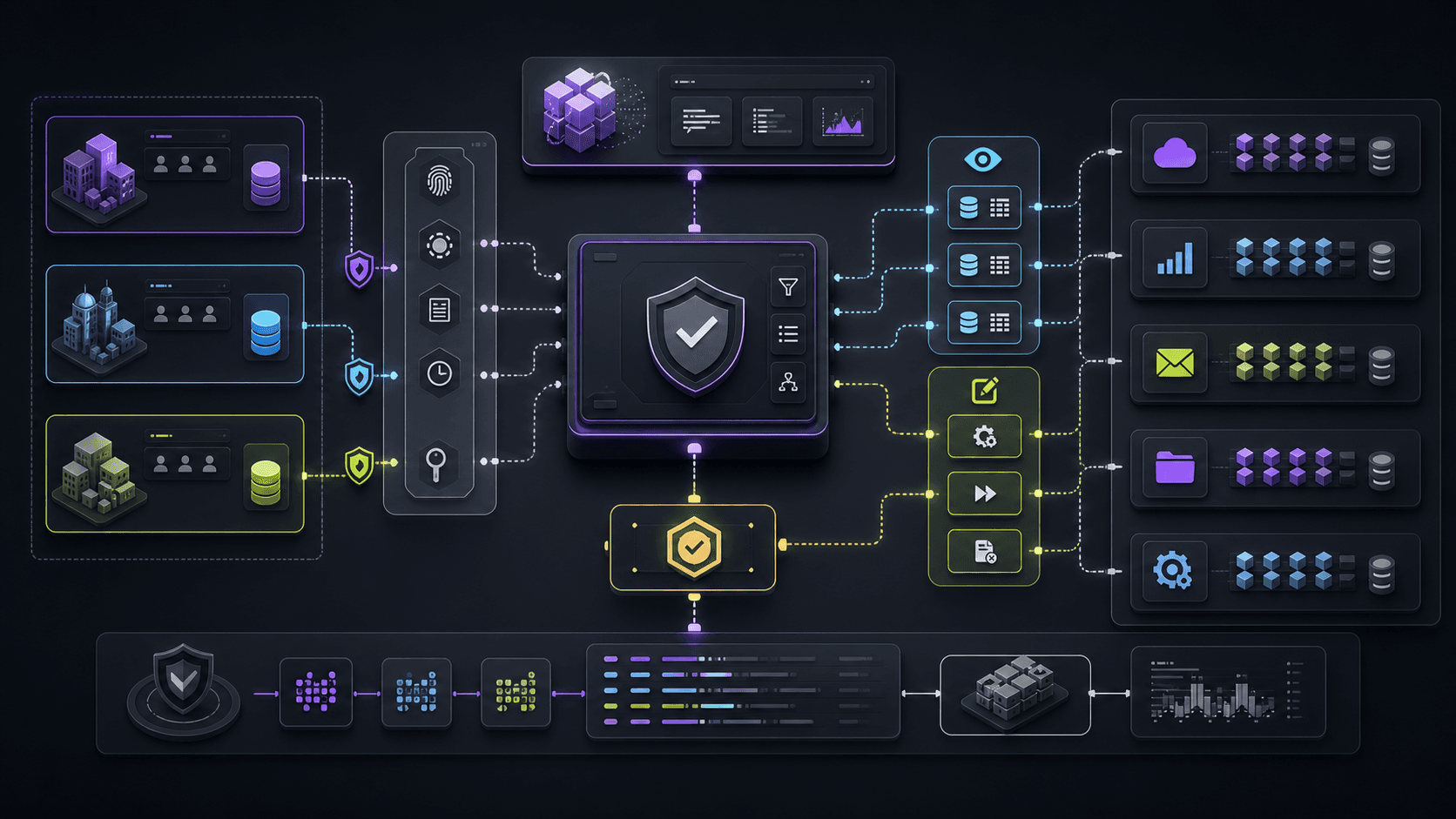
Secure MCP architecture separating tenants, read tools, approval-gated actions and audit logs
SaaS Development13 min read

MCP for SaaS Products: Do Not Give an AI Agent Your Admin Panel

By Aditya Bhimrajka

A secure architecture for exposing SaaS data and actions through MCP with tenant isolation, scoped tools, approval gates, token boundaries and auditable execution.

Read post
White-label Android app portfolio moving through identity, package and signing-key verification
Quality and Launch11 min read

Android Developer Verification 2026: The White-Label App Deadline Founders Cannot Ignore

By Aditya Bhimrajka

A deadline-ready plan for identity, package ownership, signing keys and client handover across white-label Android app portfolios before regional enforcement begins.

Read post
Agentic commerce architecture connecting discovery, consent, payment, merchants, fulfilment and returns
AI Engineering12 min read

Agentic Commerce Is Rewriting Marketplace Checkout: What Founders Need to Build Now

By Aditya Bhimrajka

A practical architecture for making marketplace catalogs, carts, payments, fulfilment and returns usable by AI shopping agents without surrendering merchant control.

Read post

Operations

The Admin Panel Scope Behind a Production-Ready Marketplace MVP

Area 01

The admin panel is the first operating product, not a reporting screen added after launch.

Area 02

Every automated workflow needs an exception queue and an authorised recovery action.

Area 03

Support needs timelines and reason codes, while finance needs immutable money history.

Area 04

MVP admin scope should prioritise control and explainability over dashboard decoration.

Operations11 min read

The Admin Panel Scope Behind a Production-Ready Marketplace MVP

By Aditya Bhimrajka

Scope the operator tools a marketplace needs for onboarding, listings, orders, money, support, moderation, permissions and auditability.

Read post

Quality and Launch

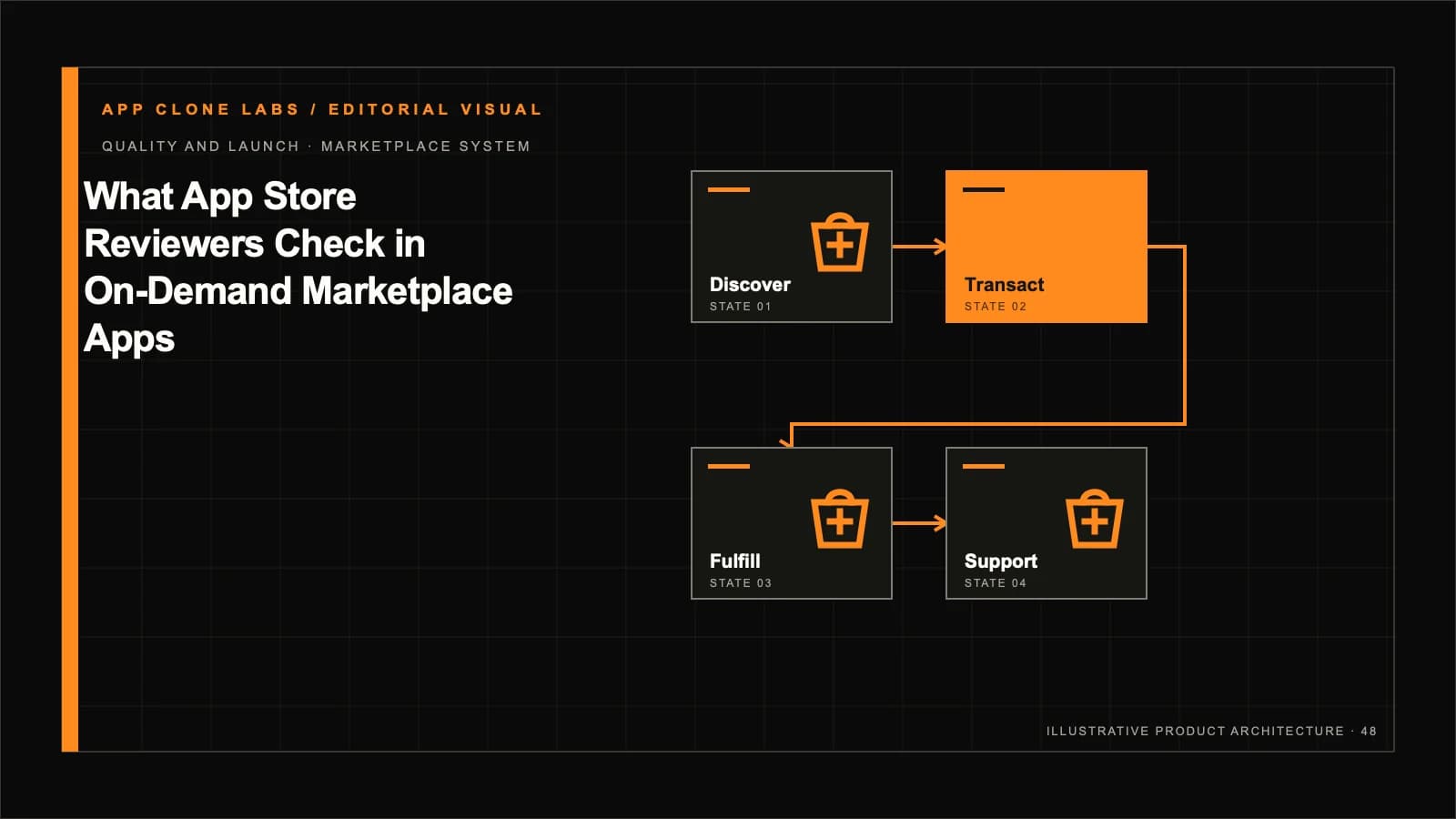
What App Store Reviewers Check in On-Demand Marketplace Apps

01

Review begins with a complete, working build and usable reviewer access—not a feature list.

02

Physical goods and services follow different payment rules from digital goods and subscriptions.

03

Location and other sensitive permissions need accurate purpose, minimal scope and functioning fallback states.

04

User-generated content needs reporting, blocking, moderation and reachable support.

Quality and Launch12 min read

What App Store Reviewers Check in On-Demand Marketplace Apps

By Aditya Bhimrajka

Prepare on-demand apps for Apple and Google review with complete accounts, privacy disclosures, payments, permissions, moderation and test evidence.

Read post

Product Engineering

React Native vs Flutter for Driver Apps on Budget Android Devices

Area 01

Framework choice should follow a representative driver workload on the lowest supported device.

Area 02

Maps, markers, background location and rapid state changes usually matter more than synthetic widget demos.

Area 03

Flutter and React Native can both work; plugin maturity, native debugging and team skill often decide delivery risk.

Area 04

Define frame, memory, battery and recovery tests before choosing a framework.

Product Engineering12 min read

React Native vs Flutter for Driver Apps on Budget Android Devices

By Aditya Bhimrajka

Compare React Native and Flutter for map-heavy driver apps using workload tests, device constraints, lifecycle behaviour and team capability.

Read post

SaaS Development

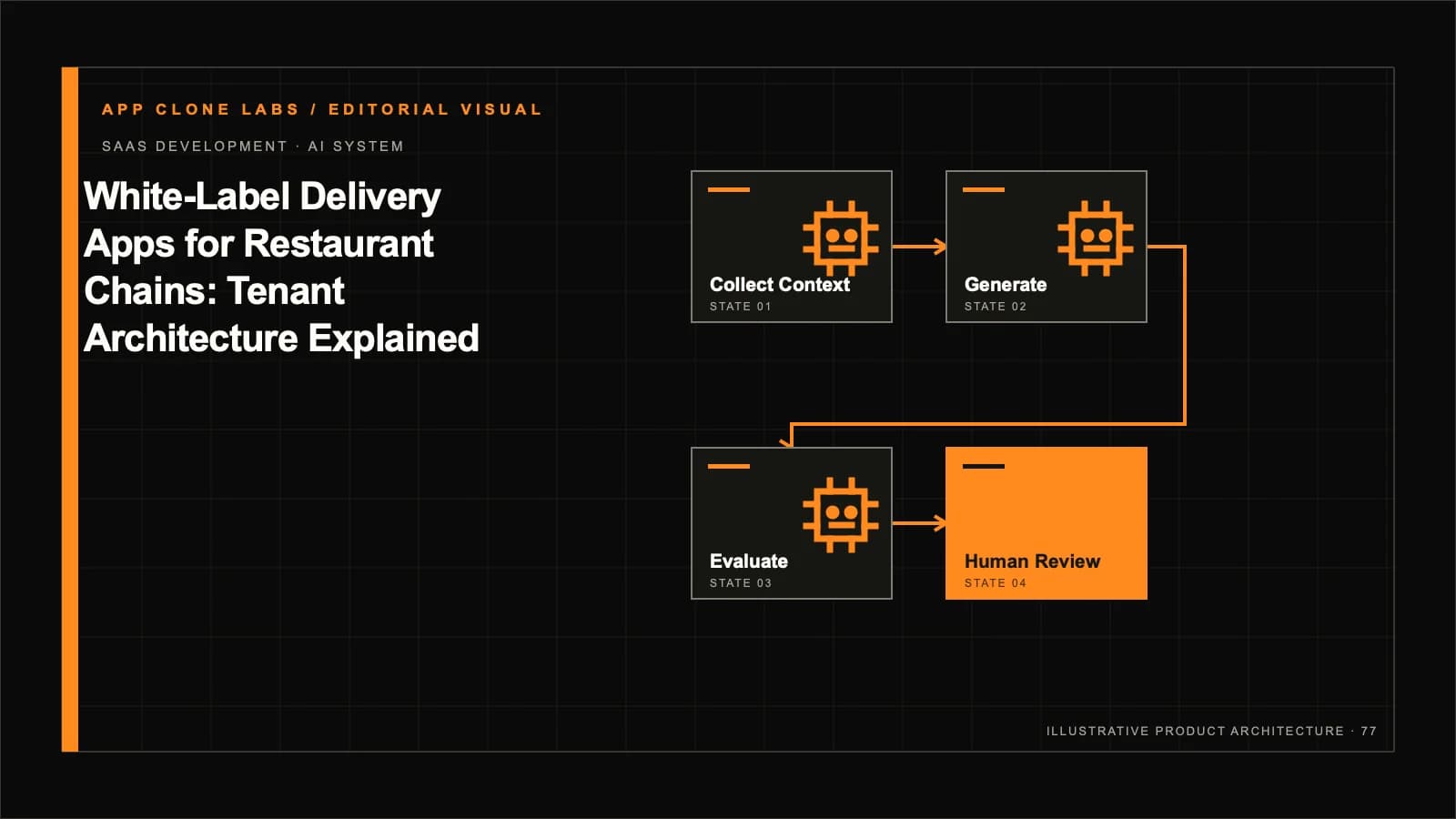
White-Label Delivery Apps for Restaurant Chains: Tenant Architecture Explained

01

A restaurant brand, operating company and physical location are different entities and should not share one tenant ID blindly.

02

Tenant context must be enforced in data access, jobs, caches, files, search and analytics—not only in the UI.

03

Use configuration for branding and capabilities; avoid maintaining a separate code fork for each client.

04

Decide early whether each brand needs its own store listing or can operate inside one multi-brand application.

SaaS Development11 min read

White-Label Delivery Apps for Restaurant Chains: Tenant Architecture Explained

By Aditya Bhimrajka

A practical tenant model for restaurant brands, locations, menus, pricing, orders, permissions, domains, mobile releases and operational isolation.

Read post

Marketplace Apps

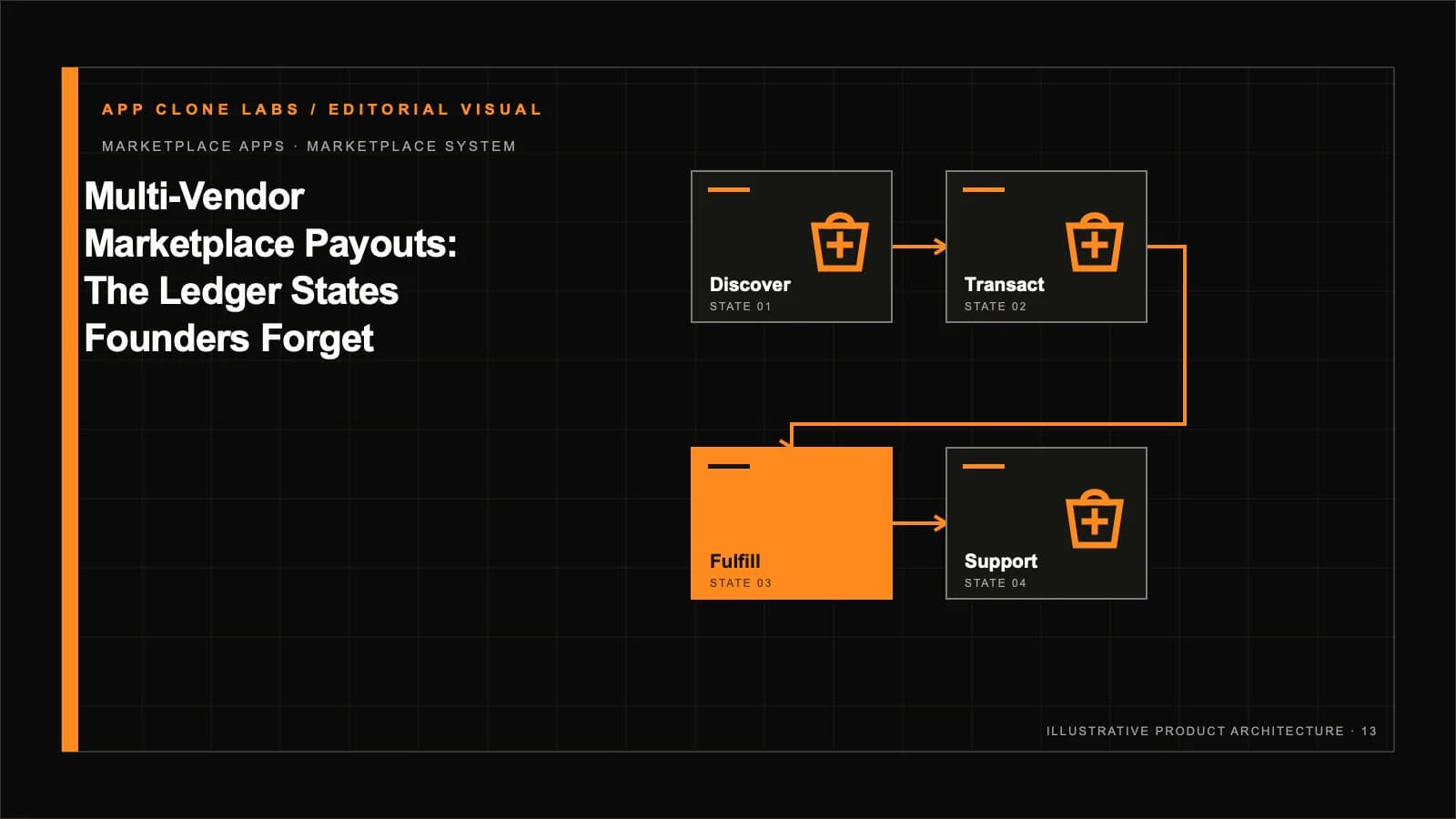
Multi-Vendor Marketplace Payouts: The Ledger States Founders Forget

01

An order status is not a financial ledger and a payout status is not a balance.

02

Record immutable money events, then derive balances and operator views from them.

03

Charges, transfers and payouts are different objects with different failure and reversal paths.

04

Webhooks must be idempotent because providers can deliver events more than once or out of order.

Marketplace Apps12 min read

Multi-Vendor Marketplace Payouts: The Ledger States Founders Forget

By Aditya Bhimrajka

Design marketplace money movement around charges, transfers, refunds, disputes, reserves, adjustments and reconciliation—not one payout flag.

Read post

On-Demand Apps

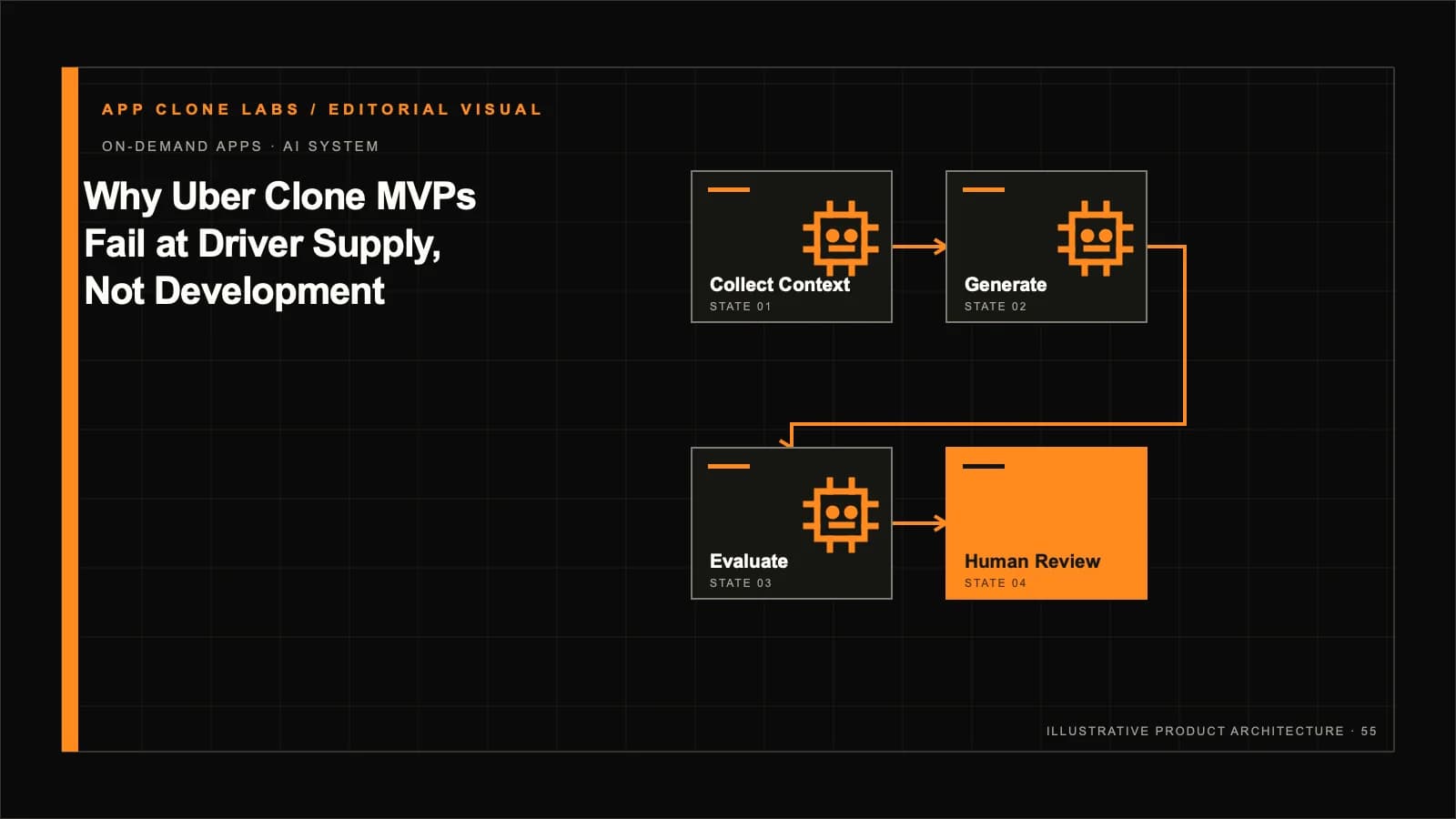
Why Uber Clone MVPs Fail at Driver Supply, Not Development

01

A working booking flow cannot compensate for too few available drivers in the launch zone.

02

Measure request coverage, acceptance, cancellation, pickup delay and driver idle time by zone and hour.

03

Start with constrained geography and operating hours before expanding supply across an entire city.

04

Incentives need eligibility, budget caps, fraud controls and a clear exit condition.

On-Demand Apps11 min read

Why Uber Clone MVPs Fail at Driver Supply, Not Development

By Aditya Bhimrajka

A practical operating model for driver supply, marketplace liquidity, launch zones, dispatch quality, incentives, and service reliability.

Read post
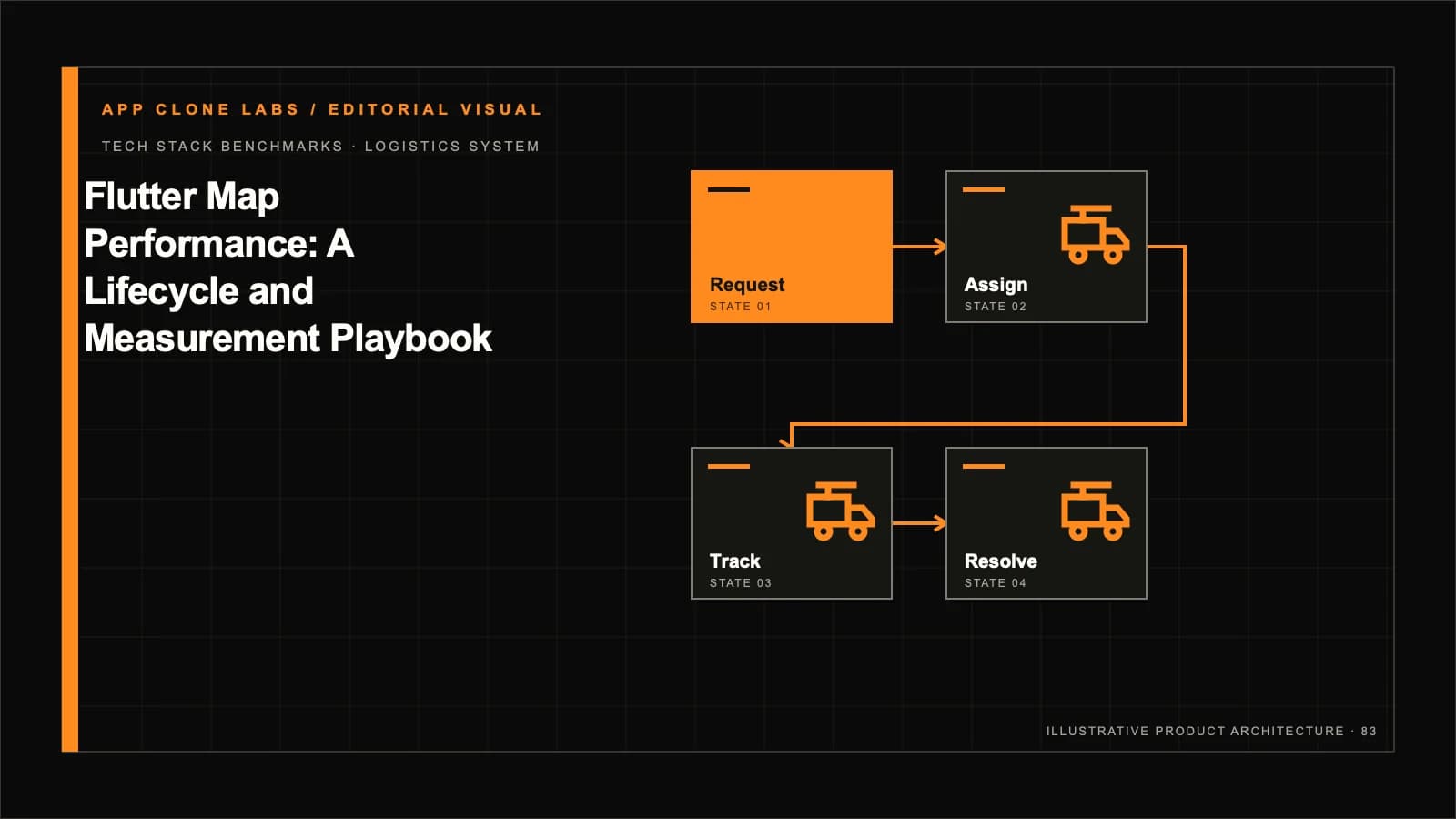
Dense city roads representing real-time Flutter map rendering on driver devices
Tech Stack Benchmarks7 min read

Flutter Map Performance: A Lifecycle and Measurement Playbook

By Aditya Bhimrajka

A practical method for isolating map rebuilds, lifecycle work, and frame timing before making performance claims about Flutter rendering.

Read post

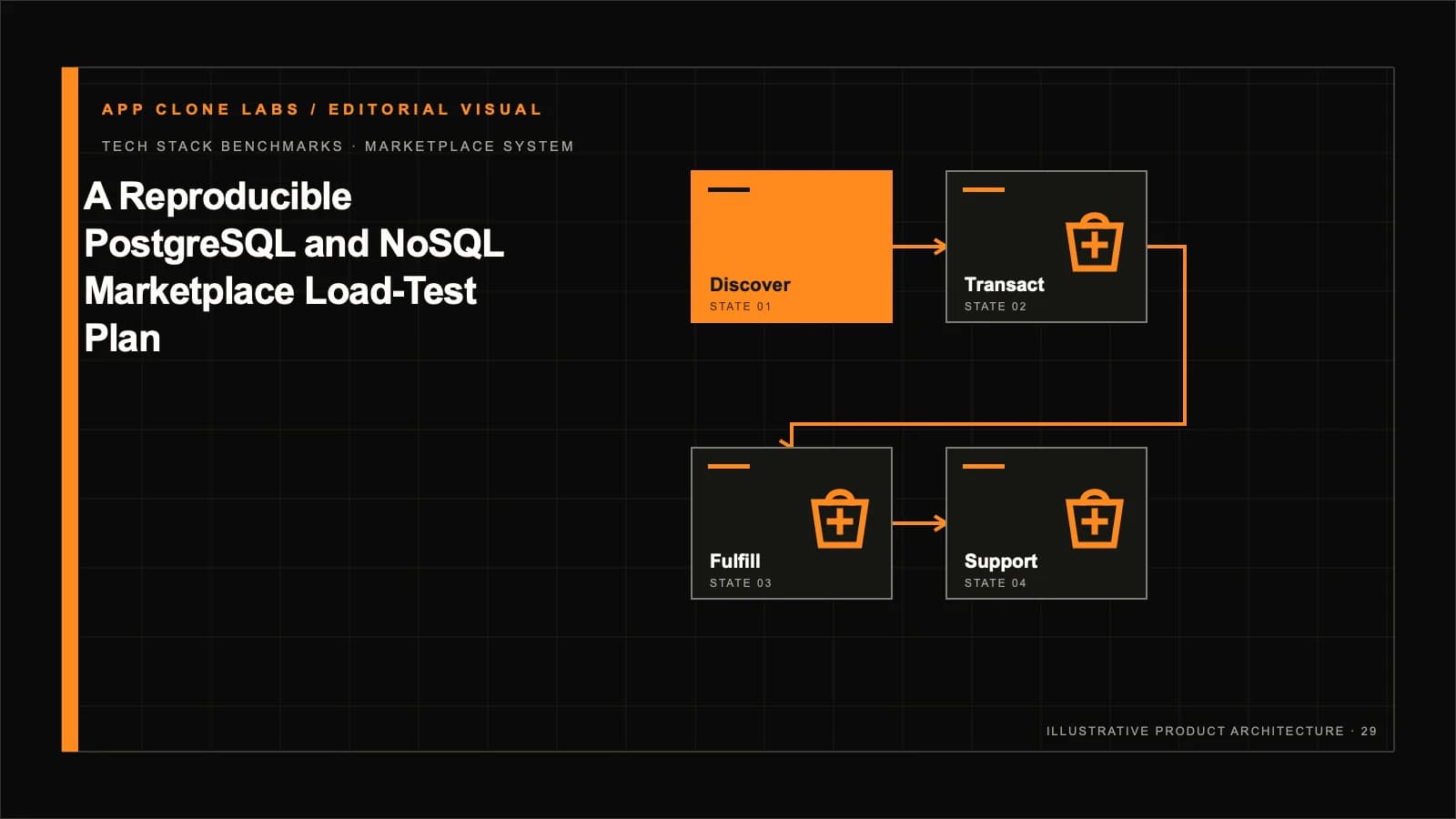
Tech Stack Benchmarks

A Reproducible PostgreSQL and NoSQL Marketplace Load-Test Plan

01

Define financial and inventory invariants before measuring throughput.

02

Test duplicates, lock conflicts, worker failure, refunds, and reconciliation.

03

Name the NoSQL engine and disclose consistency settings.

04

Use the best data store for each workload rather than forcing one database everywhere.

Tech Stack Benchmarks6 min read

A Reproducible PostgreSQL and NoSQL Marketplace Load-Test Plan

By Aditya Bhimrajka

A method for comparing named database versions and consistency settings using disclosed order workloads, schemas, conflicts, latency, and failures.

Read post

Quality and Launch

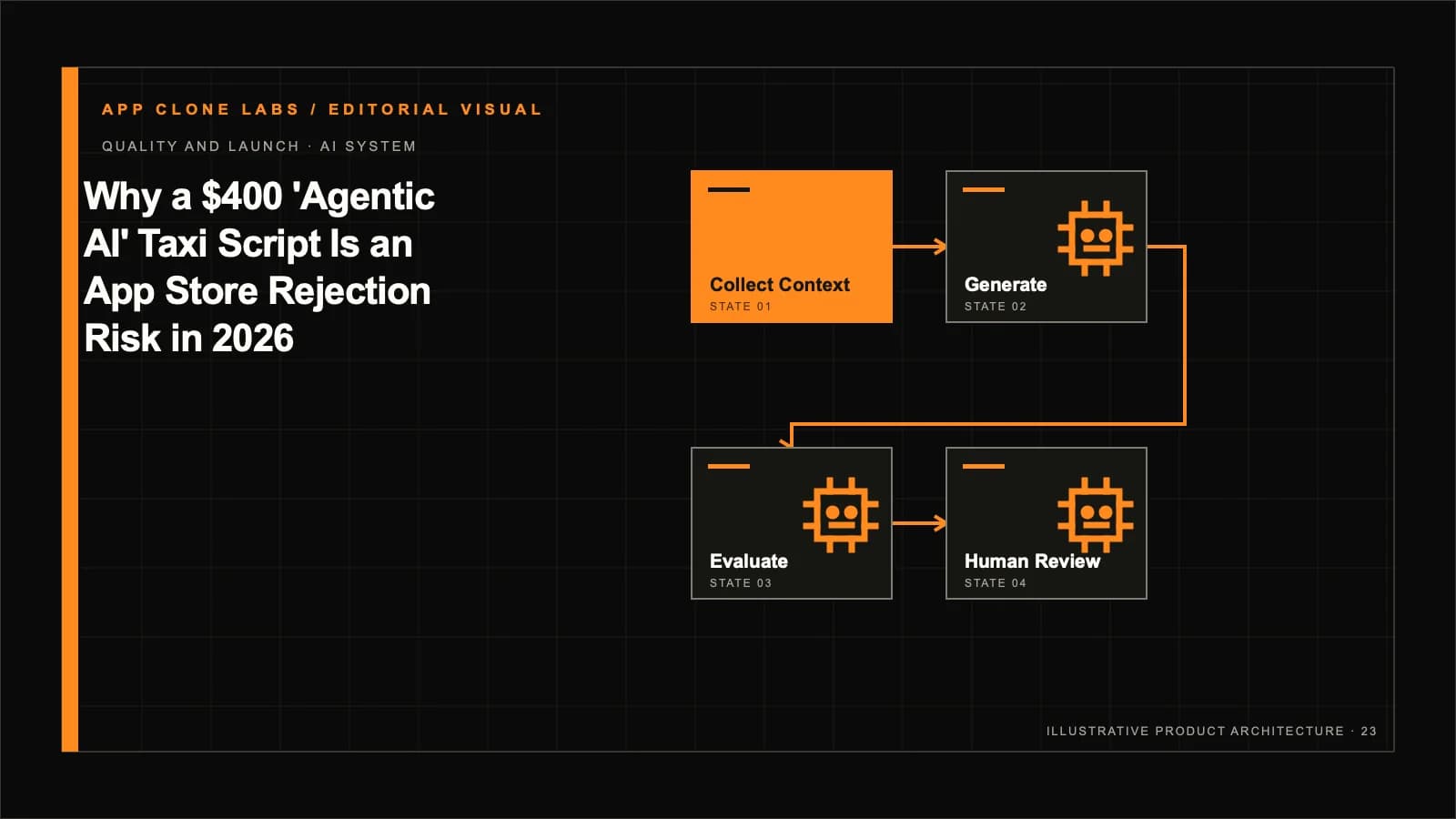
Why a $400 'Agentic AI' Taxi Script Is an App Store Rejection Risk in 2026

01

Price and AI usage do not themselves determine App Store approval.

02

Privacy, lifecycle behavior, ownership, and functionality require evidence.

03

Native Flutter compilation does not replace platform-specific QA.

04

Treat cheap scripts as prototypes until provenance and release readiness are proven.

Quality and Launch7 min read

Why a $400 'Agentic AI' Taxi Script Is an App Store Rejection Risk in 2026

By Aditya Bhimrajka

A technical review of the privacy, IP, lifecycle, minimum-functionality, and release risks hidden inside cheap AI-generated taxi application scripts.

Read post

B2B Go-to-Market

9 Years in SaaS Sales: The Email Playbook for Turning Restaurant Chains into White-Label App Partners

01

Lead with an operating hypothesis rather than an application pitch.

02

Use channel economics, repeat demand, and support load to qualify fit.

03

Propose a bounded pilot with explicit success and stop conditions.

04

Respect existing marketplace channels instead of promising instant replacement.

B2B Go-to-Market7 min read

9 Years in SaaS Sales: The Email Playbook for Turning Restaurant Chains into White-Label App Partners

By Aditya Bhimrajka

A practical B2B email sequence for selling first-party ordering software to multi-location restaurant operators without relying on generic app pitches.

Read post

Logistics

How to Scope a Logistics MVP Without an In-App Wallet

Area 01

A wallet is a ledger and operational system, not one screen.

Area 02

Protect one complete paid-delivery loop in the first release.

Area 03

Use verified, idempotent provider events for payment state.

Area 04

Defer loyalty, balances, transfers, and complex payouts until validated.

Logistics6 min read

How to Scope a Logistics MVP Without an In-App Wallet

By Aditya Bhimrajka

A bounded scope model for deferring wallet complexity while preserving payment confirmation, reconciliation, support, and a credible launch path.

Read post

Tech Stack Benchmarks

A Reproducible Load-Test Plan for Laravel Reverb Driver Tracking

01

Benchmark active connections, update cadence, and fan-out together.

02

Report p50, p95, p99, errors, disconnects, memory, and CPU.

03

Use identical hardware, Redis placement, TLS, payloads, and warm-up.

04

Treat authorization and reconnect recovery as benchmark dimensions.

Tech Stack Benchmarks6 min read

A Reproducible Load-Test Plan for Laravel Reverb Driver Tracking

By Aditya Bhimrajka

A test plan for measuring driver-location fan-out with disclosed workload, environment, latency percentiles, resource use, and failure rates.

Read post