CustomerDiscover, configure, pay, track, resolve
- Location + search
- Basket + checkout
- Status + support
Validation dossier · FD-MKT-01 · revision B
A complete planning packet for an original multi-restaurant delivery product—connecting customer demand, restaurant capacity, courier movement and dispatcher control before a build path is chosen.
Review the customer storefront, restaurant order records and marketplace catalogue together. Use these references to decide how ordering, courier handoffs and support decisions should work in your restaurant marketplace, then ask to follow an order through checkout, dispatch and a refund in a guided demo.
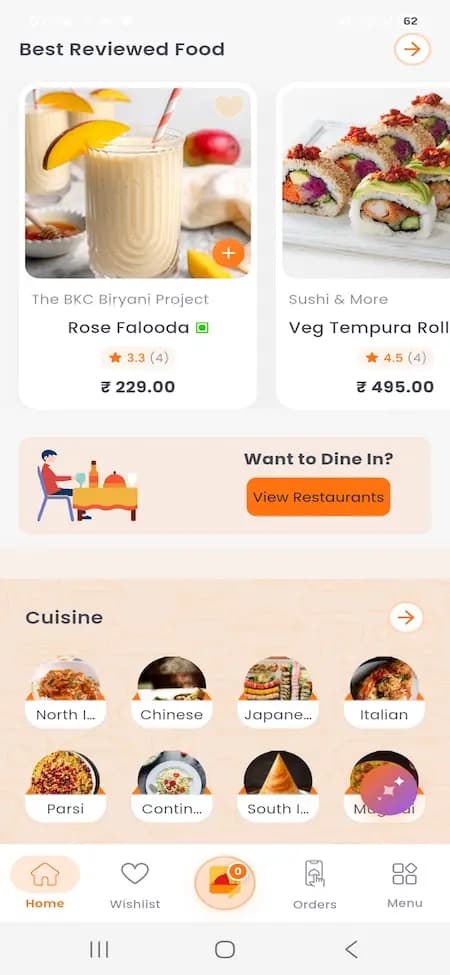
Customer discovery reference with sample dishes, restaurant names, ratings and prices. It illustrates browsing, not current offers, a deployed client product or a completed checkout.
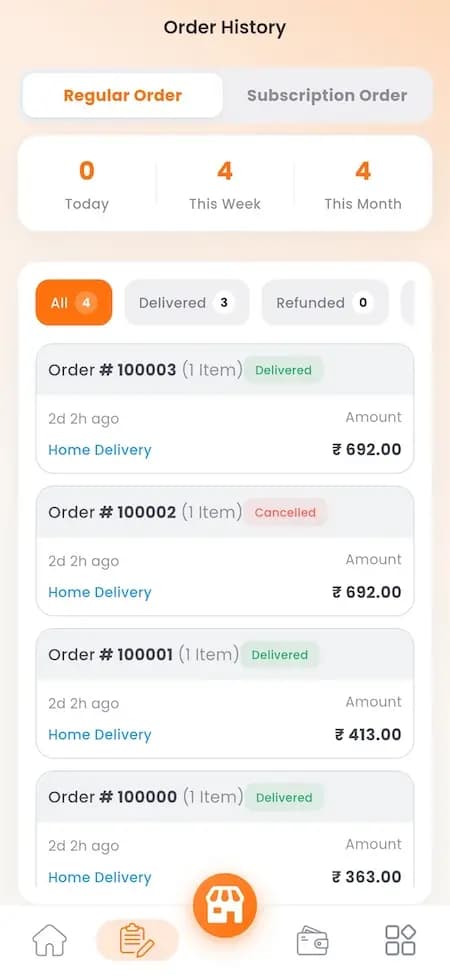
Restaurant order-history reference with demonstration records and status filters. Acceptance, preparation, courier assignment and refund execution need a separate walkthrough.
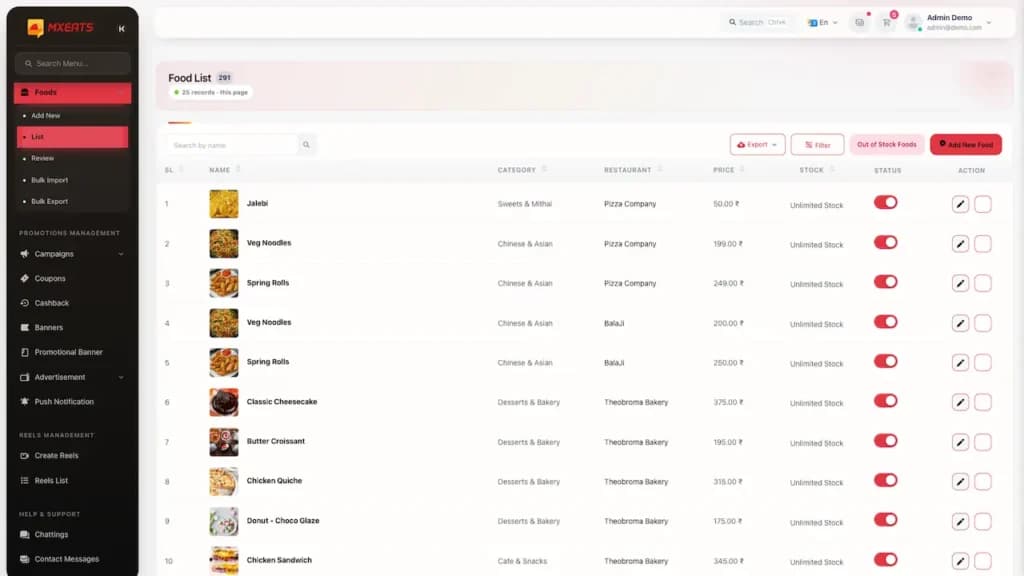
Marketplace catalogue reference with demo branding and sample food records. Visible stock and editing controls do not establish permission enforcement, live dispatch or payment reconciliation.
Validation premise
A credible marketplace does more than list menus. It resolves who can sell, what can be ordered, whether a restaurant can prepare it, which courier may carry it, what the customer sees when reality changes, and how every financial and support action can be explained later.
This dossier makes those dependencies reviewable without pretending that one template, provider or policy fits every operator.
Operator decisions
Each row is a decision axis, not a promised inclusion. Combinations alter permissions, contracts, checkout, dispatch, settlement, support and jurisdictional review.
Connected workflows
Every participant receives only the actions, information and escalation paths appropriate to their role.
Order-state control
The order service governs allowed transitions. Participant views are projections of the same versioned history, not separate informal statuses.
| Lane | Intent | Authorise | Confirm | Prepare | Collect | Deliver | Resolve |
|---|---|---|---|---|---|---|---|
| Customer | Submit order | Authorised | Confirmed | Track prep | Track courier | Receive | Closed |
| Platform | Validate basket | Create order | Notify parties | Match courier | Track events | Capture / settle | Archive |
| Restaurant | Receive request | Accept / reject | Prepare | Mark ready | Verify pickup | Complete | Settlement view |
| Courier | — | Offer queued | Accept task | Travel to pickup | Collect | Deliver + proof | Earnings view |
Release or reverse authorisation as provider rules allow; notify customer; optionally offer a replacement path.
Restaurant requests an approved substitution or removal; recalculate totals and obtain customer consent where required.
Expand or change matching rules, surface revised expectation, enable manual dispatch, cancellation or alternate fulfilment.
Escalate to operator; protect customer and food-safety decisions; record custody and re-delivery outcome.
Apply contact attempts, wait policy and evidence rules; operator decides return, disposal, redelivery or refund path.
Use idempotency and order version checks; preserve event history and suppress invalid state regression.
Application suite
Surfaces may be web, mobile, tablet or service-only according to users, environment, budget and release strategy.
Responsive web or native/cross-platform mobile experiences for discovery, ordering, tracking, account, consent and support.
Tablet-friendly order queue plus web operations for menus, hours, capacity, staff access, promotions and settlement views.
Onboarding status, availability, offers, navigation context, pickup and delivery evidence, incidents and earnings records.
Live order map, supply and queue health, assignment controls, communications, exception cases and action history.
Configuration, access control, restaurant lifecycle, territories, commercial rules, trust, content, finance operations and reporting.
Identity, catalogue, search, basket, order, dispatch, payment orchestration, notifications, support, audit and analytics contracts.
Detailed modules
Control plane
Administrative power is permissioned, auditable and separated from routine dispatcher work where the risk requires it.
Restaurants, branches, service zones, opening rules, delivery modes and capacity controls
Commission configuration, fee eligibility, promotion funding, tax inputs and settlement policy references
Order search, live queue, dispatch overrides, cancellation and refund permissions, support cases and reason codes
Role-based permissions, approval steps, verification status, abuse signals, blocks, audit events and retention controls
Cuisine taxonomy, menu moderation, merchandising, ratings review, policy content and accessibility checks
Demand, acceptance, preparation, assignment, fulfilment, cancellation and reconciliation exports
Order economics
Rates, minimums, taxes, fee labels, promotions, tips, commissions and payout logic are configuration and policy decisions—not generic claims on this page.
| Ledger view | Potential components | Validation rule |
|---|---|---|
| Customer charge | Item subtotal, taxes, delivery/service/small-order fees, discount and tip where supported | Calculated from configured rules and disclosed before confirmation |
| Restaurant side | Gross food sales, restaurant-funded promotion, commission or subscription, adjustments | Contract and territory dependent |
| Courier side | Base logic, distance/time inputs, incentives, tip allocation, adjustments | Requires local worker-model and payout review |
| Platform side | Recognised fees or commission less funded promotions, provider fees, support adjustments and taxes | Accounting treatment must be confirmed by advisers |
| Reconciliation | Order ledger, payment-provider events, refunds, disputes, restaurant settlement and courier payout records | Differences enter a review queue; no silent balancing |
Release boundary
One launch territory; core customer ordering; restaurant queue and menu controls; courier offer-to-proof flow; dispatcher console; payments, maps and notifications; admin permissions; support/refund reasons; essential analytics; release and handover pack.
Operating choices agreed; happy path and priority exceptions proven; provider accounts ready; security and privacy review completed; accessibility acceptance criteria tested; reconciliation and support drills passed.
Scheduled/group orders, loyalty, subscriptions, advanced promotion funding, multi-tenant controls, sophisticated batching, POS depth, restaurant self-serve growth tools, richer experimentation and warehouse analytics.
Guaranteed delivery times, regulated alcohol/pharmacy flows, autonomous dispatch optimisation, proprietary navigation, call-centre staffing, courier hardware, tax/legal advice, provider fees, menu content production and ongoing marketplace operations.
Architecture & boundaries
A modular monolith or selected services can both be valid. The choice follows scale, team, failure isolation and change patterns—not diagram fashion.
Order and ledger records remain authoritative in transactional stores; search, maps, analytics and notifications receive only the projections needed for their purpose.
External clients are untrusted; privileged operations require server-side authorisation, scoped roles, auditable reasons and protection against replay or duplicate actions.
Provider adapters translate contracts, verify callbacks, apply idempotency and isolate retries so an outage does not silently corrupt order state.
Integration register
| Boundary | Expected capability | Responsibility note |
|---|---|---|
| Payments | Tokenised checkout, authorisation/capture, refunds, disputes, marketplace settlement or payouts where the selected provider and operating model support them. | Provider is system of record for processor events; platform retains mapped order/ledger references. |
| Maps & location | Address search, geocoding, routes, ETA inputs, distance matrices and optional geofence signals. | Provider terms, accuracy and cost controls apply; operator owns service-zone rules. |
| Notifications | Transactional email, SMS and push with templates, preference checks, retries and delivery receipts where available. | Providers deliver messages; platform owns notification intent and audit status. |
| POS / restaurant systems | Menu import, availability and order injection/acknowledgement using vendor APIs or middleware. | Capabilities vary by vendor and market; manual fallback remains a scoped decision. |
| Analytics | Consented product events, operational events, aggregated reporting and governed exports. | Operational database is not a free-form analytics interface; minimise personal data. |
Trust & market readiness
These are planning considerations, not legal conclusions or certifications. Applicability and evidence must be assessed for the selected market and model.
Apply data minimisation, purpose and retention decisions, encryption, secrets management, least privilege, auditability, incident procedures and vendor review. Exact obligations depend on launch jurisdictions and roles such as controller/processor.
Define restaurant and courier verification, rating/report handling, prohibited use, account action, fraud review and appeals. Identity or background checks require lawful providers, notices and local review.
Target agreed WCAG criteria across web and operational surfaces; test keyboard, focus, labels, contrast, zoom, errors and assistive technology. Mobile platform accessibility and ongoing content quality also need acceptance checks.
Prepare privacy disclosures, account deletion paths, permission explanations, content moderation/support details and payment-model review. Apple and Google policies change and approval cannot be guaranteed.
Food safety, allergen information, tax, invoicing, tipping, pricing disclosure, consumer cancellation/refund rights, worker classification, age-restricted items and accessibility duties vary. Qualified local advisers must confirm the applicable model.
Failure, refund & support
| Scenario | Customer/support response | Financial control | Evidence retained |
|---|---|---|---|
| Payment authorised, restaurant rejects | Customer sees cancellation and reason-safe status | Void/reversal or refund path per provider state | Order, payment and restaurant event log |
| Restaurant delay exceeds policy | Updated status and support entry point | Operator applies configured remedy; not automatic unless approved | Prep timestamps, notices, case decision |
| Courier unavailable / reassigns | Revised fulfilment state and contact path | No financial action unless policy threshold or cancellation is reached | Offer history, reassignment reason, ETA changes |
| Missing or incorrect item | Issue form with item selection and evidence rules | Partial/full adjustment subject to policy and permissions | Items, evidence reference, actor, reason and payment event |
| Marked delivered, customer disputes | Case acknowledgment; avoid exposing private courier data | Hold for review, refund or deny according to evidence and policy | Proof, location/time signals, contacts, decision |
| Provider outage / unknown result | Pending message; prevent duplicate action | Reconcile before retrying irreversible operations | Request keys, webhooks, retries, operator resolution |
Quality system
Contract and state-machine tests; role/permission tests; basket and fee permutations; payment sandbox cases; location edge cases; accessibility checks; device/browser coverage; load and recovery exercises.
Structured logs with redaction, correlation IDs, order-state metrics, queue lag, provider latency/errors, notification outcomes, dispatch health, dashboards and actionable alerts.
Environment separation, protected secrets, migration rehearsal, feature flags, staged rollout, store release checklist, rollback/run-forward plan, incident ownership and post-release verification.
Restaurant, courier and dispatcher simulations; refund and reconciliation drill; support macros and escalation; data export/deletion drill; provider failover or degraded-mode walkthrough.
Handover & rights
The signed agreement, licences and provider terms control. This matrix avoids implying that every component can be transferred or owned outright.
| Register item | Examples | Rights / custody position |
|---|---|---|
| Product outputs | Validated scope, original experience specification, workflow/state definitions, backlog and acceptance criteria | Customer, subject to the signed engagement and third-party restrictions |
| Custom implementation | Project-specific source code, configuration and test assets identified in the agreement | Rights/license are defined by contract after applicable obligations are met; not stated unconditionally |
| Pre-existing materials | Reusable libraries, methods, templates, know-how or separately licensed foundation | Original owner; customer receives only the agreed licence or access |
| Third-party services | Cloud, maps, payment, messaging, analytics, POS SDKs and open-source packages | Respective providers/licensors under their terms; accounts and billing assigned as agreed |
| Brand and content | Customer-selected original name, marks, menus, policies and media | Customer supplies or commissions lawful materials and clearances |
| Access and operations | Repositories, environments, domains, store records, credentials, runbooks and support boundary | Named custodian and transfer method recorded in the handover register |
08 · Delivery stages
Sequence and commercial terms are set in a project proposal. No generic duration is implied.
Operating model, users, territory, reference analysis, state map, risks, exclusions and success measures.
Original UX direction, application map, service contracts, data boundaries, integration plan, backlog and acceptance criteria.
Working surfaces and services, automated checks, environment configuration, demos and decision log.
End-to-end and exception tests, security/privacy/accessibility findings, performance evidence and operational drills.
Release records, runbooks, architecture and API notes, inventory, credentials register, training and support boundary.
Build-path comparison
| Path | Best when | Advantage | Watch-outs | Decision test |
|---|---|---|---|---|
| Configured foundation | Existing lawful codebase fits core roles and states | Faster validation of standard loops; known modules | Inherited constraints, upgrade path, licence and deep customisation limits | Use only after technical and rights diligence |
| Composable build | Managed providers can own commodity capabilities | Focused custom product layer; replaceable integrations | Vendor coordination, event consistency and cumulative usage costs | Good when boundaries and fallbacks are explicit |
| Custom platform | Operating model or differentiation requires original domain logic | Maximum control over workflows and evolution | More design, engineering, QA and operational responsibility | Use where control justifies lifecycle cost |
Continue the review
Use these existing routes to deepen product, delivery and technical decisions.
Detailed FAQ
Neither. It is a validation dossier showing the questions, systems and evidence a food-delivery marketplace scope should resolve. A proposal follows discovery of the actual territory, business model, foundation and integrations.
Yes, as a conversation aid for workflows and expectations. The resulting name, brand, copy, assets and interface should be original, and any code, data or content used must have appropriate rights.
No. The page maps the complete operating domain. V1 is the smallest coherent slice selected in the signed scope; V2 candidates and exclusions remain outside until expressly added.
Through configurable commercial rules approved for the operating territory. This dossier deliberately does not invent rates or amounts; tax, consumer and worker-model implications require qualified review.
Potentially. Feasibility depends on each POS vendor, API access, market, menu model and acknowledgement capabilities. The design should include monitoring and a manual or degraded-mode decision.
It can be architected for zones, currencies, languages, brands or tenants, but multi-country launch materially changes legal, tax, payment, privacy, support and configuration requirements.
The product can provide policy-based workflows, permissions, evidence and audit history. The operator remains responsible for approved policies, trained decision-makers and compliance with payment-provider and local consumer rules.
No. The build can prepare evidence and implement agreed controls, but platforms and regulators make their own determinations and rules change. Independent legal, tax, privacy, employment and accessibility advice may be needed.
Named decision-makers, target markets, commercial and fulfilment model, policy owners, provider preferences, brand direction, representative menus, operations participants and timely access to required accounts.
The contract should enumerate repositories, custom outputs, licences, third-party accounts, credentials, documentation, training, support and acceptance. Rights are allocated by that agreement rather than assumed from a generic page.
“Clone” describes using a familiar product category or named service as an initial functional reference. It does not authorise copying. A project should use an original name, identity, interface expression, copy and assets. No affiliation, endorsement or compatibility with any referenced company is implied. The operator must have rights to all supplied code, data, menus, media, marks and other materials; third-party names remain the property of their respective owners.
This page is an illustrative validation artifact, not a live product, client case study, binding scope, quote, delivery schedule, warranty, legal opinion, compliance certification or promise of app-store approval, provider availability, market performance or operational outcome. Features, architecture, deliverables, rights, support, security controls and acceptance criteria are confirmed only through discovery and a signed agreement. Payment, map, messaging, cloud, POS, analytics and identity services are subject to provider capabilities, terms, fees and regional availability. Privacy, consumer, tax, food, accessibility, employment, courier, insurance, invoicing and age-restricted-item obligations vary by jurisdiction and operating model; obtain qualified local advice. Any refund, cancellation, dispatch, verification or retention rule shown here is a design prompt to be replaced by an approved policy.
Validation starts with decisions
Bring the market, model and must-have loop. Leave with clearer boundaries, risks and a build-path decision.
Request a validation conversation