Editorial dossier / Operations
Marketplace Operations Dashboards: Queues, Exceptions and Recovery
Design marketplace operations dashboards around owned exception queues, service levels, financial reconciliation, trust cases, data freshness and auditable recovery actions.
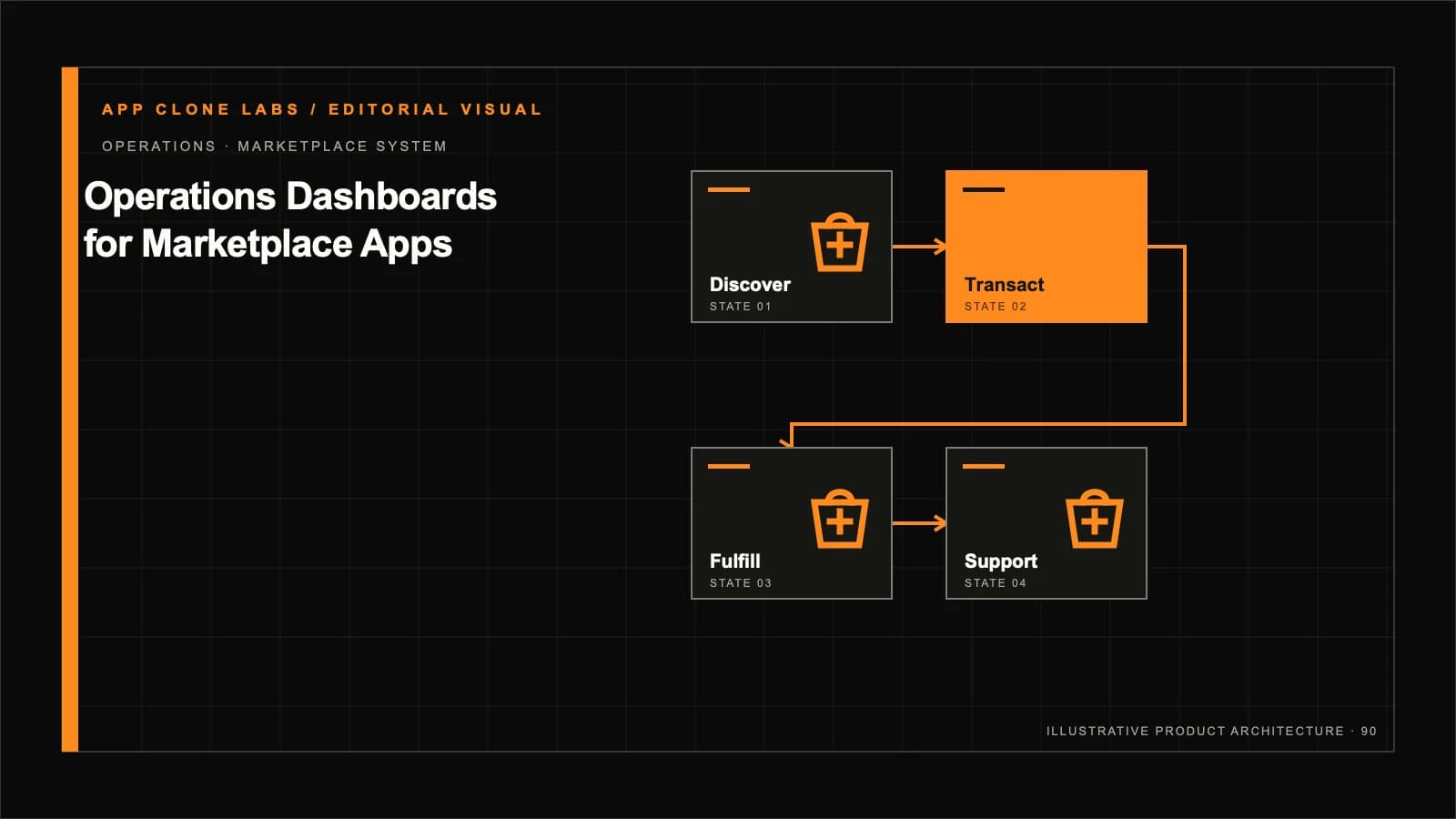
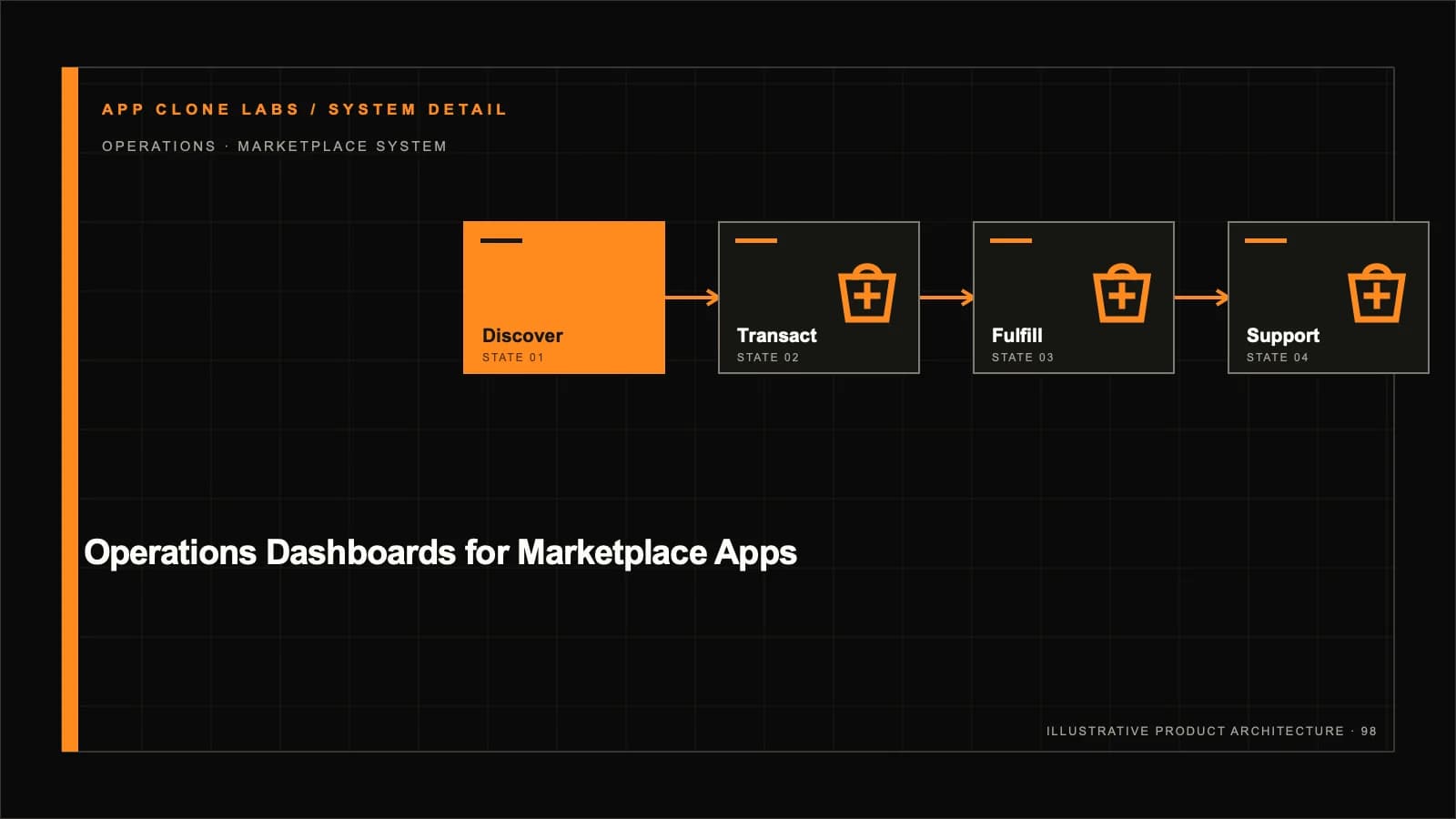
A map with moving dots can look impressive while every important order is failing off-screen. The actual operating questions are narrower: which obligation is at risk, who owns the next action, what evidence supports it, and can the action be reversed if the operator is wrong?
Marketplace dashboards should compress operational uncertainty into accountable queues. Buyers, sellers, providers, couriers, payments and support all produce exceptions, but a wall of metrics does not resolve any of them.
This guide replaces decorative monitoring with decision-ready views, bounded actions and measurable recovery.
Start from operating decisions
Every dashboard element should support a named decision.
The failure mode is concrete: teams begin with available charts and invent meaning later. This is not solved by adding another screen or background job. The product has to define ownership, permitted transitions, and the evidence retained when the transition occurs.
For the first release, map decisions, owners, cadence and allowed actions. Write that decision as an enforceable server-side rule, not guidance that depends on a client, operator, or AI model remembering the intended boundary.
Implementation should include question, role, trigger, evidence, decision, action, SLA and escalation. Keep the public response smaller than the internal record: users need a clear outcome and recovery path, while authorized operators need correlation IDs, policy versions, timestamps, and the before-and-after state.
Validate it with one normal shift and one incident shift. Test the ordinary path, then repeat under timeout, duplicate delivery, stale state, partial failure, revoked authority, and concurrent requests. A feature is not ready when only the demonstration succeeds.
- Owner: operations lead
- Release evidence: Start from operating decisions acceptance record
- Stop condition: start from operating decisions cannot be explained or recovered
Define obligations and service clocks
Orders and bookings contain promises with start, pause and breach rules.
The failure mode is concrete: SLA timers are calculated differently across screens. This is not solved by adding another screen or background job. The product has to define ownership, permitted transitions, and the evidence retained when the transition occurs.
For the first release, centralize versioned service-clock definitions. Write that decision as an enforceable server-side rule, not guidance that depends on a client, operator, or AI model remembering the intended boundary.
Implementation should include obligation, subject, start, pause conditions, deadline, breach, timezone and policy. Keep the public response smaller than the internal record: users need a clear outcome and recovery path, while authorized operators need correlation IDs, policy versions, timestamps, and the before-and-after state.
Validate it with reschedule, refund hold and provider delay. Test the ordinary path, then repeat under timeout, duplicate delivery, stale state, partial failure, revoked authority, and concurrent requests. A feature is not ready when only the demonstration succeeds.
- Owner: service owner
- Release evidence: Define obligations and service clocks acceptance record
- Stop condition: define obligations and service clocks cannot be explained or recovered
Build queues rather than broad lists
Operators need prioritized work, not every record.
The failure mode is concrete: urgent exceptions disappear in sortable tables. This is not solved by adding another screen or background job. The product has to define ownership, permitted transitions, and the evidence retained when the transition occurs.
For the first release, create typed queues with explainable priority. Write that decision as an enforceable server-side rule, not guidance that depends on a client, operator, or AI model remembering the intended boundary.
Implementation should include case type, severity, customer impact, ageing, financial exposure, owner and next action. Keep the public response smaller than the internal record: users need a clear outcome and recovery path, while authorized operators need correlation IDs, policy versions, timestamps, and the before-and-after state.
Validate it with surge, reassignment and duplicate case. Test the ordinary path, then repeat under timeout, duplicate delivery, stale state, partial failure, revoked authority, and concurrent requests. A feature is not ready when only the demonstration succeeds.
- Owner: queue owner
- Release evidence: Build queues rather than broad lists acceptance record
- Stop condition: build queues rather than broad lists cannot be explained or recovered
Show state lineage
Current status without transition history conceals why work is blocked.
The failure mode is concrete: operators repeatedly retry unsafe actions. This is not solved by adding another screen or background job. The product has to define ownership, permitted transitions, and the evidence retained when the transition occurs.
For the first release, show relevant events, versions and failed attempts. Write that decision as an enforceable server-side rule, not guidance that depends on a client, operator, or AI model remembering the intended boundary.
Implementation should include state, prior state, actor, source, timestamp, reason, correlation and evidence. Keep the public response smaller than the internal record: users need a clear outcome and recovery path, while authorized operators need correlation IDs, policy versions, timestamps, and the before-and-after state.
Validate it with reordered webhook and stale client. Test the ordinary path, then repeat under timeout, duplicate delivery, stale state, partial failure, revoked authority, and concurrent requests. A feature is not ready when only the demonstration succeeds.
- Owner: platform owner
- Release evidence: Show state lineage acceptance record
- Stop condition: show state lineage cannot be explained or recovered
Checkpoint 4: reconcile the product promise with the recorded state. Support, finance, security, and delivery teams should be able to reach the same conclusion from the same identifiers without reconstructing events from chat messages or screenshots.
Expose data freshness
Operational sources update asynchronously.
The failure mode is concrete: old location or payment data appears current. This is not solved by adding another screen or background job. The product has to define ownership, permitted transitions, and the evidence retained when the transition occurs.
For the first release, display last verified time and degraded status near the decision. Write that decision as an enforceable server-side rule, not guidance that depends on a client, operator, or AI model remembering the intended boundary.
Implementation should include source, observed time, received time, processed time, lag, health and fallback. Keep the public response smaller than the internal record: users need a clear outcome and recovery path, while authorized operators need correlation IDs, policy versions, timestamps, and the before-and-after state.
Validate it with connector outage and delayed batch. Test the ordinary path, then repeat under timeout, duplicate delivery, stale state, partial failure, revoked authority, and concurrent requests. A feature is not ready when only the demonstration succeeds.
- Owner: reliability owner
- Release evidence: Expose data freshness acceptance record
- Stop condition: expose data freshness cannot be explained or recovered
Separate customer and provider perspectives
The same marketplace event creates different obligations for each party.
The failure mode is concrete: one timeline mixes messages and financial states. This is not solved by adding another screen or background job. The product has to define ownership, permitted transitions, and the evidence retained when the transition occurs.
For the first release, provide joined context with role-specific detail. Write that decision as an enforceable server-side rule, not guidance that depends on a client, operator, or AI model remembering the intended boundary.
Implementation should include order, participants, promises, communications, evidence, payments, payouts and disputes. Keep the public response smaller than the internal record: users need a clear outcome and recovery path, while authorized operators need correlation IDs, policy versions, timestamps, and the before-and-after state.
Validate it with provider cancellation and buyer refund. Test the ordinary path, then repeat under timeout, duplicate delivery, stale state, partial failure, revoked authority, and concurrent requests. A feature is not ready when only the demonstration succeeds.
- Owner: support lead
- Release evidence: Separate customer and provider perspectives acceptance record
- Stop condition: separate customer and provider perspectives cannot be explained or recovered
Design financial exception queues
Payment, refund and payout states can disagree.
The failure mode is concrete: finance issues are discovered during monthly close. This is not solved by adding another screen or background job. The product has to define ownership, permitted transitions, and the evidence retained when the transition occurs.
For the first release, surface unmatched and aged financial obligations daily. Write that decision as an enforceable server-side rule, not guidance that depends on a client, operator, or AI model remembering the intended boundary.
Implementation should include charge, refund, fee, payout, external reference, variance, ageing and owner. Keep the public response smaller than the internal record: users need a clear outcome and recovery path, while authorized operators need correlation IDs, policy versions, timestamps, and the before-and-after state.
Validate it with missing event and negative balance. Test the ordinary path, then repeat under timeout, duplicate delivery, stale state, partial failure, revoked authority, and concurrent requests. A feature is not ready when only the demonstration succeeds.
- Owner: finance operations
- Release evidence: Design financial exception queues acceptance record
- Stop condition: design financial exception queues cannot be explained or recovered
Integrate trust and safety cases
Reports and restrictions affect fulfilment and access.
The failure mode is concrete: safety work happens in a disconnected tool. This is not solved by adding another screen or background job. The product has to define ownership, permitted transitions, and the evidence retained when the transition occurs.
For the first release, link cases while minimizing sensitive evidence exposure. Write that decision as an enforceable server-side rule, not guidance that depends on a client, operator, or AI model remembering the intended boundary.
Implementation should include case ID, severity, affected order, restriction, authorized summary, owner and outcome. Keep the public response smaller than the internal record: users need a clear outcome and recovery path, while authorized operators need correlation IDs, policy versions, timestamps, and the before-and-after state.
Validate it with urgent threat and false report. Test the ordinary path, then repeat under timeout, duplicate delivery, stale state, partial failure, revoked authority, and concurrent requests. A feature is not ready when only the demonstration succeeds.
- Owner: trust operations
- Release evidence: Integrate trust and safety cases acceptance record
- Stop condition: integrate trust and safety cases cannot be explained or recovered
Checkpoint 8: reconcile the product promise with the recorded state. Support, finance, security, and delivery teams should be able to reach the same conclusion from the same identifiers without reconstructing events from chat messages or screenshots.
Constrain operator actions
Recovery tools can refund money, change access or move work.
The failure mode is concrete: every operator gets a universal fix button. This is not solved by adding another screen or background job. The product has to define ownership, permitted transitions, and the evidence retained when the transition occurs.
For the first release, grant narrow capabilities with reason and confirmation. Write that decision as an enforceable server-side rule, not guidance that depends on a client, operator, or AI model remembering the intended boundary.
Implementation should include capability, scope, target, before-and-after preview, reason, approval and audit. Keep the public response smaller than the internal record: users need a clear outcome and recovery path, while authorized operators need correlation IDs, policy versions, timestamps, and the before-and-after state.
Validate it with direct API call and bulk selection. Test the ordinary path, then repeat under timeout, duplicate delivery, stale state, partial failure, revoked authority, and concurrent requests. A feature is not ready when only the demonstration succeeds.
- Owner: security owner
- Release evidence: Constrain operator actions acceptance record
- Stop condition: constrain operator actions cannot be explained or recovered
Make bulk actions safe
Large incidents require scale but amplify mistakes.
The failure mode is concrete: bulk updates execute from a changing filter. This is not solved by adding another screen or background job. The product has to define ownership, permitted transitions, and the evidence retained when the transition occurs.
For the first release, snapshot selection, preview impact and support partial rollback. Write that decision as an enforceable server-side rule, not guidance that depends on a client, operator, or AI model remembering the intended boundary.
Implementation should include query, selected IDs, count, exclusions, approver, job state, failures and compensation. Keep the public response smaller than the internal record: users need a clear outcome and recovery path, while authorized operators need correlation IDs, policy versions, timestamps, and the before-and-after state.
Validate it with browser retry and partial execution. Test the ordinary path, then repeat under timeout, duplicate delivery, stale state, partial failure, revoked authority, and concurrent requests. A feature is not ready when only the demonstration succeeds.
- Owner: incident commander
- Release evidence: Make bulk actions safe acceptance record
- Stop condition: make bulk actions safe cannot be explained or recovered
Use metrics with denominators
Rates need populations and observation windows.
The failure mode is concrete: headline percentages change when filters change invisibly. This is not solved by adding another screen or background job. The product has to define ownership, permitted transitions, and the evidence retained when the transition occurs.
For the first release, publish metric definitions and drill-down lineage. Write that decision as an enforceable server-side rule, not guidance that depends on a client, operator, or AI model remembering the intended boundary.
Implementation should include numerator, denominator, exclusions, window, timezone, source, version and owner. Keep the public response smaller than the internal record: users need a clear outcome and recovery path, while authorized operators need correlation IDs, policy versions, timestamps, and the before-and-after state.
Validate it with zero denominator and late event. Test the ordinary path, then repeat under timeout, duplicate delivery, stale state, partial failure, revoked authority, and concurrent requests. A feature is not ready when only the demonstration succeeds.
- Owner: analytics owner
- Release evidence: Use metrics with denominators acceptance record
- Stop condition: use metrics with denominators cannot be explained or recovered
Design accessible dense views
Tables and alerts must work without color or pointer precision.
The failure mode is concrete: severity is shown only through colored dots. This is not solved by adding another screen or background job. The product has to define ownership, permitted transitions, and the evidence retained when the transition occurs.
For the first release, provide semantic tables, text status and keyboard workflows. Write that decision as an enforceable server-side rule, not guidance that depends on a client, operator, or AI model remembering the intended boundary.
Implementation should include headers, labels, focus, sort state, error summary, contrast, zoom and export. Keep the public response smaller than the internal record: users need a clear outcome and recovery path, while authorized operators need correlation IDs, policy versions, timestamps, and the before-and-after state.
Validate it with screen reader and keyboard-only shift. Test the ordinary path, then repeat under timeout, duplicate delivery, stale state, partial failure, revoked authority, and concurrent requests. A feature is not ready when only the demonstration succeeds.
- Owner: accessibility owner
- Release evidence: Design accessible dense views acceptance record
- Stop condition: design accessible dense views cannot be explained or recovered
Checkpoint 12: reconcile the product promise with the recorded state. Support, finance, security, and delivery teams should be able to reach the same conclusion from the same identifiers without reconstructing events from chat messages or screenshots.
Measure resolution quality
Closing a case quickly is not enough if it reopens or harms users.
The failure mode is concrete: teams optimize average handling time alone. This is not solved by adding another screen or background job. The product has to define ownership, permitted transitions, and the evidence retained when the transition occurs.
For the first release, track correctness, recurrence and downstream outcome. Write that decision as an enforceable server-side rule, not guidance that depends on a client, operator, or AI model remembering the intended boundary.
Implementation should include resolution type, time, reopen rate, compensation, customer outcome, reviewer and sampling. Keep the public response smaller than the internal record: users need a clear outcome and recovery path, while authorized operators need correlation IDs, policy versions, timestamps, and the before-and-after state.
Validate it with fast wrong refund and repeat provider failure. Test the ordinary path, then repeat under timeout, duplicate delivery, stale state, partial failure, revoked authority, and concurrent requests. A feature is not ready when only the demonstration succeeds.
- Owner: quality lead
- Release evidence: Measure resolution quality acceptance record
- Stop condition: measure resolution quality cannot be explained or recovered
Create incident mode
Normal queues do not suit platform-wide disruption.
The failure mode is concrete: operators fight one case at a time during an outage. This is not solved by adding another screen or background job. The product has to define ownership, permitted transitions, and the evidence retained when the transition occurs.
For the first release, group affected obligations and coordinate a shared response. Write that decision as an enforceable server-side rule, not guidance that depends on a client, operator, or AI model remembering the intended boundary.
Implementation should include incident, affected cohort, communication, action freeze, bulk remedy, owner and recovery criteria. Keep the public response smaller than the internal record: users need a clear outcome and recovery path, while authorized operators need correlation IDs, policy versions, timestamps, and the before-and-after state.
Validate it with payment outage and regional failure. Test the ordinary path, then repeat under timeout, duplicate delivery, stale state, partial failure, revoked authority, and concurrent requests. A feature is not ready when only the demonstration succeeds.
- Owner: incident lead
- Release evidence: Create incident mode acceptance record
- Stop condition: create incident mode cannot be explained or recovered
Rehearse a complete shift
Dashboards are only proven through realistic use.
The failure mode is concrete: acceptance ends when charts render. This is not solved by adding another screen or background job. The product has to define ownership, permitted transitions, and the evidence retained when the transition occurs.
For the first release, run seeded queues through triage, action, escalation and handoff. Write that decision as an enforceable server-side rule, not guidance that depends on a client, operator, or AI model remembering the intended boundary.
Implementation should include shift roles, scenarios, expected evidence, actions, audit, unresolved work and retrospective. Keep the public response smaller than the internal record: users need a clear outcome and recovery path, while authorized operators need correlation IDs, policy versions, timestamps, and the before-and-after state.
Validate it with staff handover and overlapping incidents. Test the ordinary path, then repeat under timeout, duplicate delivery, stale state, partial failure, revoked authority, and concurrent requests. A feature is not ready when only the demonstration succeeds.
- Owner: delivery lead
- Release evidence: Rehearse a complete shift acceptance record
- Stop condition: rehearse a complete shift cannot be explained or recovered
Implementation references
Use W3C Web Content Accessibility Guidelines 2.2 and record the version applied to this release.
Validate implementation against OWASP Authorization Cheat Sheet and record the version applied to this release.
Review Google SRE Workbook and record the version applied to this release.
Compare with NIST Privacy Framework and record the version applied to this release.
Continue with Marketplace Development when translating this guide into delivery scope.
Frequently asked questions
What should a marketplace dashboard show first?
Owned exceptions that threaten customer, provider, financial or safety obligations.
How is a queue different from a list?
A queue has eligibility, priority, ownership, service targets and permitted resolution actions.
Should dashboards update in real time?
Only where the decision requires it; every view should disclose freshness and degraded state.
What makes an operator action safe?
Scoped authority, a before-and-after preview, reason, confirmation, audit and a recovery path.
How should marketplace metrics be defined?
With numerator, denominator, exclusions, observation window, source, owner and version.
What should happen during a broad outage?
Switch to incident mode, group affected obligations, coordinate communications and use reviewed bulk recovery.
How should financial issues appear?
As reconciled exception queues for unmatched charges, refunds, fees and payouts.
How do you test an operations dashboard?
Run realistic shifts with seeded exceptions, permission boundaries, handoffs, partial failures and incidents.
Turn the plan into release evidence
A credible release connects the public promise to durable state, scoped authority and recoverable operations. Ordinary journeys and important exceptions should be explainable from the same evidence.
Keep the initial scope narrow enough to rehearse end to end. Expand only after permissions, financial consequences, data integrity and support outcomes remain consistent under retries, failures and human mistakes.
- 01
- 02
- 03
- 04
- 05
- 06
Reviewed by the App Clone Labs product strategy team
This guide is written for founders and operators planning clone-inspired platforms, SaaS products, marketplaces, and mobile apps. It is reviewed against App Clone Labs delivery patterns, product scoping standards, and current implementation realities before being published.
Review the editorial team structureRelated product paths
Continue with the services, solutions, guides, and articles that connect this topic to a real software build.