One account must not turn a cancelled meal into a cancelled ride
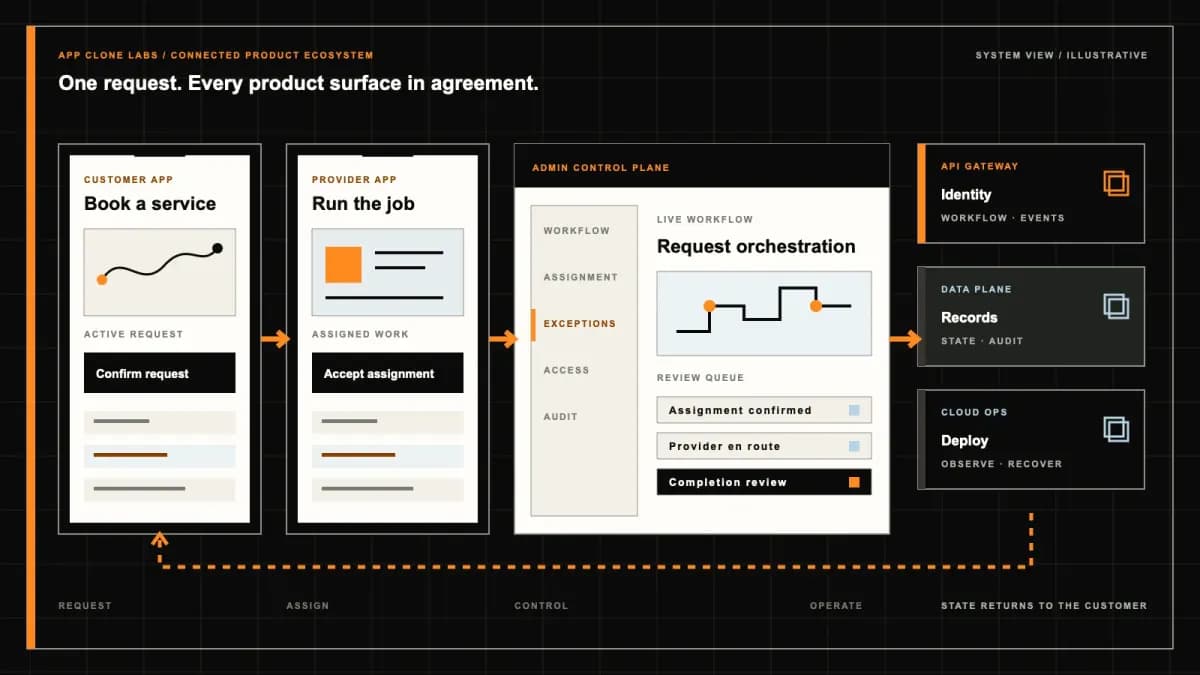
A customer orders dinner while a ride is already on its way. The kitchen declines, but the ride remains valid and the customer still needs to travel. A Careem-style regional super app needs to represent both requests independently inside a shared account. One transaction cannot overwrite the other’s address, payment selection, notification or support owner. The buyer should see a coherent account experience without asking every operational team to follow the same contract.
Start the buying decision with a city-service matrix: which operator serves which zone, which partners can accept work, and who resolves each failure. Shared sign-in, saved preferences and activity history can reduce repetition. They do not create a driver fleet, restaurant network or authority to offer financial services. This page describes an independently branded implementation scope, not Careem affiliation, access to its proprietary platform or a promise of its coverage and commercial terms.
A traveler opens the app after landing in a different city. A restaurant saved at home is irrelevant, and yesterday’s ride category may not be available. Resolve the selected market and service area before presenting an actionable offer. Distinguish device location, user-selected browsing location, pickup coordinates and delivery address. Ask for confirmation where these conflict rather than silently moving the destination. Language selection must not change the transaction’s currency or contracting entity.
Maintain a reviewed availability record for each service, including operating hours, partner eligibility and temporary suspension. An existing account should still be usable when a module is unavailable, with a clear explanation and access to historical requests. Test a city switch while a ride is active and a food basket is unconfirmed. The ride retains its accepted context; the basket must be rechecked against the new destination instead of carrying an invalid price into checkout.
Share account recovery without sharing every service permission
An account holder who resets a phone number still needs access to legitimate transaction history, but a support agent handling that recovery does not need every passenger route or household instruction. Define account ownership, verification steps and recovery evidence separately from transaction authorization. Mask sensitive data in general support views and notification previews. A merchant should see the delivery information needed for its order, not the customer’s ride activity or payment-provider review status.
Document permissions for customers, drivers, couriers, merchant staff and city operators before interface design. Scope access by service and operational responsibility, with recorded reasons for escalated access. Marketing consent is not permission to reuse precise journey data across modules. Test a recovered account, a reassigned staff member and an expired partner session. Historical ownership and audit records should remain intact even when present-day access changes, and restricted records must not leak through exports or search.
Keep ride quotes and passenger dispatch in their own workflow
A ride quote describes passenger transport, not delivery fulfillment. Agree supported vehicle categories, pickup rules, destination changes, waiting, cancellation and fare adjustments for the reviewed market. Retain the quote version and customer acceptance. Dispatch only to a driver eligible for that transport category and operating area; courier eligibility alone is insufficient. Recheck assignment when availability expires or a driver declines, and make the customer’s options visible instead of leaving an endlessly spinning map.
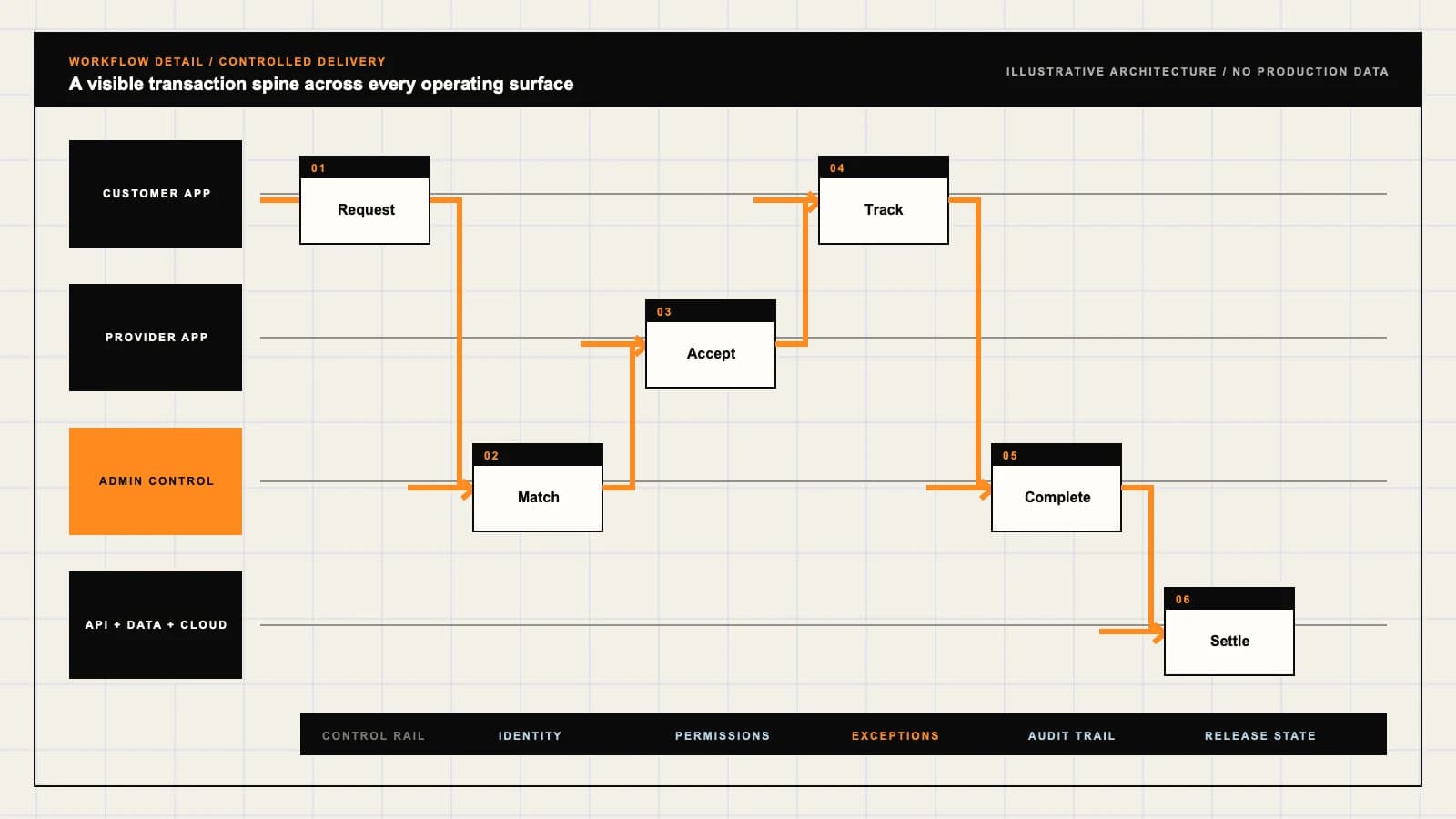
Track accepted assignment, arrival, passenger pickup and trip completion as distinct events. A delayed callback should not let two drivers claim the same passenger, while lost connectivity should preserve event time and uncertainty. Establish operator-approved safety contacts and escalation responsibilities; the software does not itself provide emergency services or insurance. Ask the demonstration to recover a rejected assignment and a disputed destination change, including the resulting fare and support record, rather than merely animating a moving vehicle.
Food amendments need merchant agreement and delivery responsibility
A meal request can fail after the customer has committed to a price but before preparation is accepted. Define menu availability, modifiers, allergens, merchant acknowledgement and preparation capacity. A driver’s proximity cannot make an unavailable dish orderable. Separate platform-arranged delivery from merchant-arranged delivery, since the operator’s control over assignment and handoff differs. Customer instructions need a clear acceptance boundary rather than a chat message that appears to amend an already accepted contract.
Careem’s food order amendment guidance describes restrictions on changing restaurant location, promotions and order details after placement, with delivery-model distinctions. It is a reference for identifying decisions, not a policy to copy into an independent product. Establish your own reviewed change rules and retain the accepted order, requested change, merchant response and any revised charge.
Record amendments as decisions rather than replacing historical facts
An accepted request is evidence of what the customer and provider agreed to. A later change should preserve the original terms, proposed revision, required approvals and outcome. Rides may need a destination revision; food may need merchant agreement; a parcel may need recipient confirmation. Those are different authorities. A shared activity screen can display them consistently, but each service must control which changes are permitted at its current execution stage.
Give support an explicit route when an amendment cannot be accepted. Show whether the original request remains active, whether cancellation is possible and which charge may apply. Prevent an old notification or repeated API request from applying the revision twice. Rehearse an amendment after preparation starts and another after passenger pickup. The buyer should be able to explain both outcomes from preserved records without asking an engineer to reconstruct a mutable database row.
Payment choice is a capability decision for each service and market
A payment tile can appear available while the underlying provider cannot process the selected service or local currency. Decide the supported methods with the operator and approved providers before advertising them. Keep saved tokens distinct from permission to charge a new request. Agree authorization, capture and cancellation behavior, cash collection responsibility and partner settlement. Do not describe a database balance as a licensed wallet or imply that a checkout integration enables remittance.
The official Careem food payment methods reference illustrates multiple ways to pay within its own service. Its general payment and amendment articles also contain differing descriptions of post-order changes, so an implementation should confirm its current rules rather than treating broad help copy as an executable specification. The independent product needs verified provider behavior, clearly disclosed eligibility and transaction-specific reconciliation.