The chilled tote is missing when the fresh-food route is ready
A customer has ordered fish, vegetables and frozen goods for an evening delivery. The warehouse has completed each zone’s picking work, but the chilled tote does not appear at vehicle loading. Dispatching the remaining containers may create a partial meal, an unexplained invoice and a second trip that cannot safely reuse the original goods. This loading exception exposes what the product must connect: receiving, lot release, order allocation, temperature-zone work, route custody and customer resolution.
A FreshDirect-style product is an independently branded fresh-food retail operation built around centralized fulfillment and scheduled delivery. The reference does not include FreshDirect affiliation, supplier relationships, proprietary systems or food-safety certification. Start with one warehouse and one route model whose complete order can be traced. The agreement must identify software deliverables separately from the buyer’s equipment, trained teams, physical handling procedures and responsibility for launch-market review.
Choose warehouse-led retail rather than borrowing a store-picking flow
A central warehouse receives and releases inventory before customers can buy it. That differs from sending a shopper to a retail shelf whose stock is only approximately known. Define who owns goods, which warehouse can fulfill an address and whether an order must remain within one facility. A decision to split fulfillment affects route fees, delivery windows, invoices and quality investigations; it is not merely an extra location field in an admin screen.
Compare the Amazon Fresh-style inventory and slot brief when evaluating a broader grocery channel. For this warehouse-led scope, the buyer should bring receiving, lot-release and vehicle-loading records, not only customer shopping screens. Select the first operating boundary based on existing systems and real fulfillment responsibilities rather than the number of categories a catalog can display.
Receiving must preserve supplier lots and the release decision
A delivery from a supplier creates a receipt, not automatically sellable inventory. Capture the supplier reference, product identifier, lot or batch where applicable, received quantity and the evidence required by the operator’s receiving procedure. Separate accepted, held and rejected goods. A missing inspection or disputed quantity needs an accountable queue so a catalog synchronization cannot publish stock that the warehouse has not approved.
Keep product provenance attached when cartons are broken into picking units or transferred between locations. Record who released a hold and why, and restrict those permissions to approved roles. Supplier data may be incomplete, duplicated or arrive after the truck; agree how exceptions are resolved without inventing missing origin information. Demonstrate a rejected receipt and verify that its goods never reach checkout, allocation or a replacement proposal. Software records the process; it does not perform the physical inspection.
Freshness rules must govern allocation rather than decorate product cards
A customer-facing freshness badge is weak evidence if allocation can still choose an unsuitable lot. Define sellable eligibility using the reviewed category rules, receipt state, storage location and remaining suitability for the planned delivery. Agree how the warehouse selects lots, how prepared portions receive their own identifiers and what happens when reserved goods later fail a quality check. Do not silently remove the original allocation history when another lot is substituted.
Quality teams need to hold affected stock while operations sees which orders require intervention. The customer should receive a clear shortage or replacement decision under disclosed terms, not a confusing cancellation message after dispatch. Keep the product fact, lot fact and handling observation separate: a supplier description is not a measurement from your warehouse. Any remaining-life claim needs a defined evidence basis and responsible reviewer before it appears publicly.
Reserve route capacity and enforce the order cutoff
A scheduled window consumes picking time, consolidation space, vehicle compartment capacity and a feasible delivery stop. Define reservation expiry and the checks required when an address or basket changes. Large quantities, heavy goods and building access can alter serviceability even when a postcode is covered. Avoid leaving dispatch to discover an impossible stop after the order has already been packed.
FreshDirect’s delivery-time availability guidance explains that support sees the same slot availability as customers and that unused reservations are released before order cutoffs. This is an example of a capacity policy, not a schedule to copy. Specify your own hold duration, release rules and permissioned changes, with a visible customer explanation when the selected route is no longer available.
Temperature-zone waves must meet at a complete-order loading gate
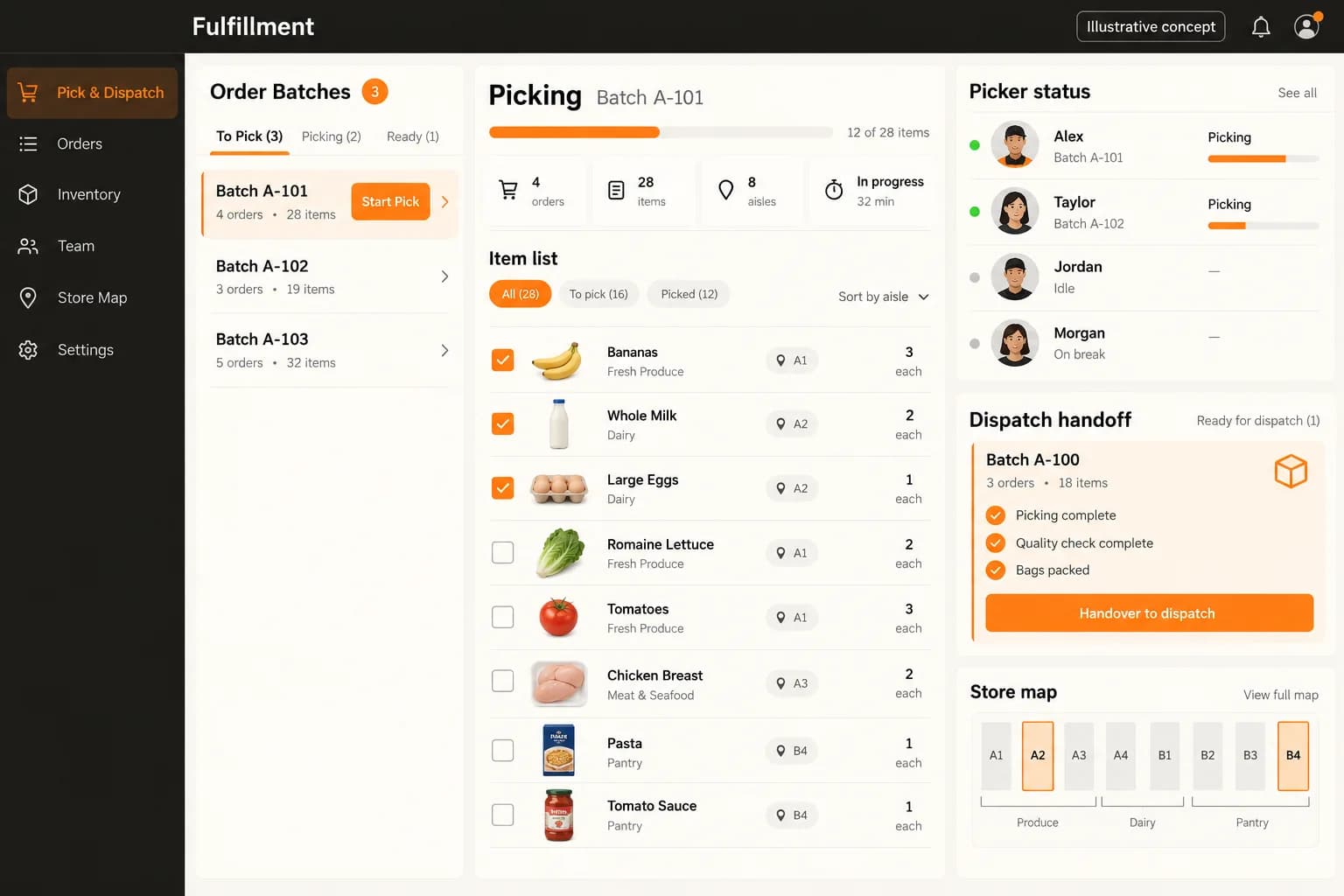
Ambient, chilled and frozen picking can finish at different times. Give every zone container an order identity and reconcile the expected containers at consolidation. A picked status alone does not prove a tote reached staging or the vehicle. The loading gate should show the manifest, outstanding containers and required checks before a dispatcher can release the route. Include an explicit policy for permitted partial deliveries rather than letting an accidental missing tote become one.
An interrupted handheld update must not create a second tote or erase a confirmed handoff. Retain event identities and reconcile uncertain scans after reconnecting. A supervisor can investigate wrong-container, wrong-route and missing-tote exceptions with the order and zone records together. Decide which deviations require a hold and which can be approved, retaining the responsible person and reason. Physical compartment loading and handling still depend on the operator’s reviewed procedures and equipment.
Final weight and replacement consent affect the payment contract
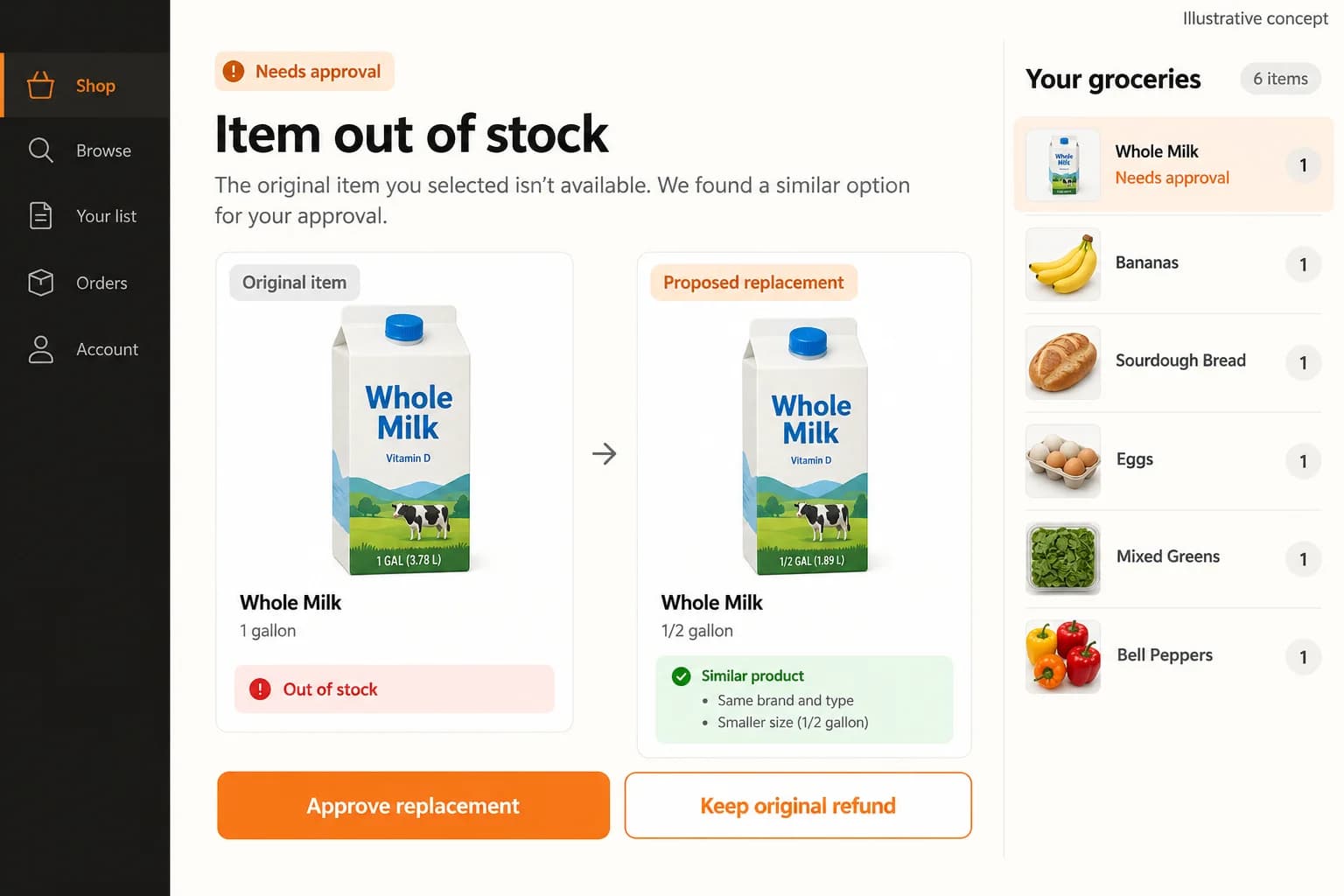
A portion of fish may be sold by actual weight rather than the estimate shown in the basket. Preserve the agreed unit price, prepared weight, tolerance and final amount, and explain how payment authorization supports that change. A different product or portion size also needs the stated replacement policy. Payment-provider support and customer consent must be established before promising automatic increases or unattended substitutions.
The FreshDirect customer agreement describes order cutoffs, variable-weight estimates and final invoices, as well as delivery and quality-resolution terms. Those published policies illustrate decisions a buyer must make; they do not become your product’s terms or establish access to FreshDirect’s systems. Write and review your own policies, then prove the warehouse record, invoice and provider amount remain consistent when prepared quantities change.