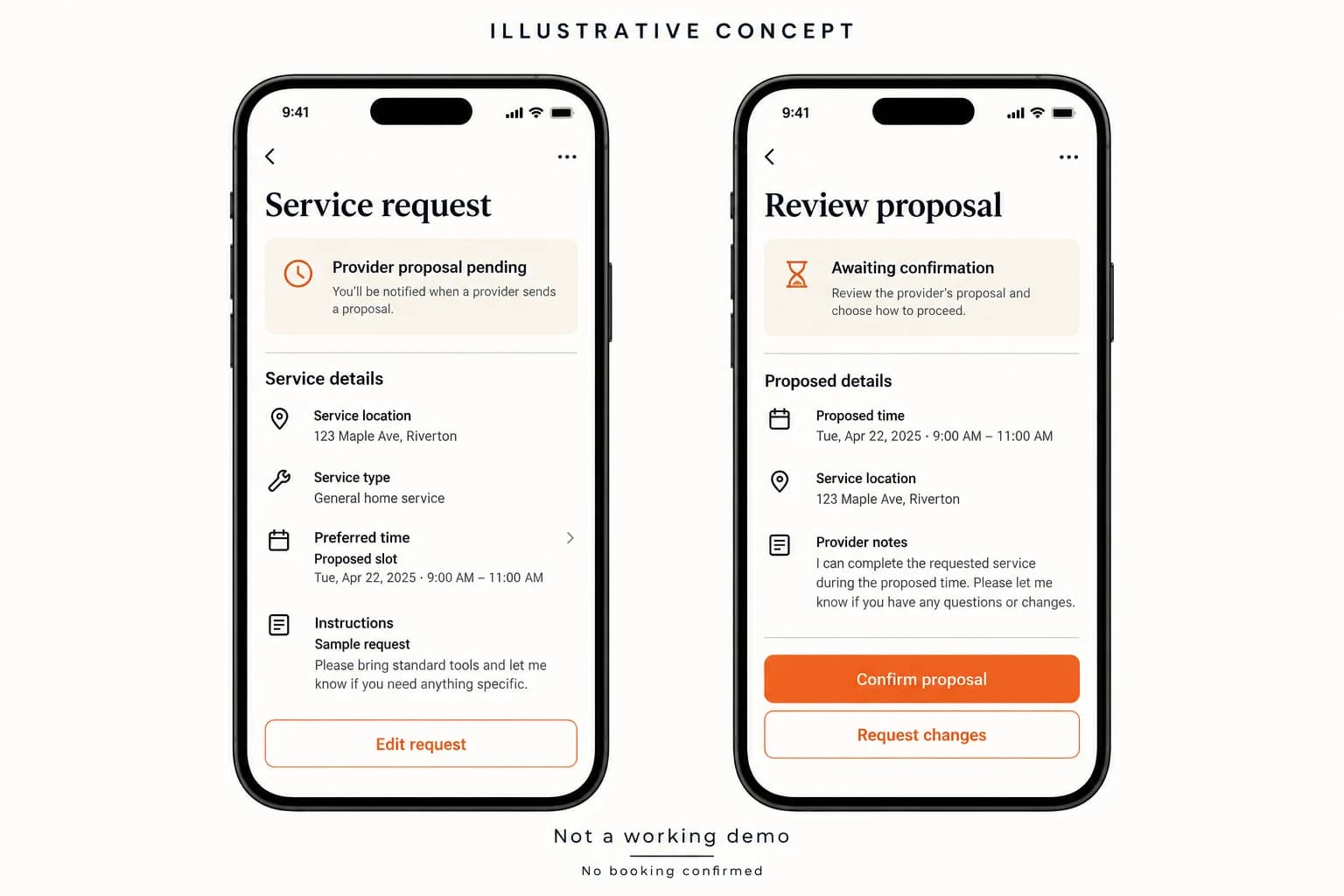
A change order needs approval before additional work becomes chargeable
A professional discovers an unexpected condition after work begins. The app needs a change proposal explaining the additional work, price and schedule effect, not an editable final invoice that erases the original agreement. Record who requested the change, what evidence is relevant and whether the customer approved it. A conversation can support understanding, but a vague acknowledgement should not automatically authorize a higher charge.
Define what happens while approval is pending and when the customer declines. Keep safe-work and urgent property concerns under an appropriately reviewed operating policy; the software must not invent technical trade instructions. Preserve the original scope and every accepted amendment. Rehearse partial approval, a disconnected phone and a worker trying to close the job before the change is resolved. Operations should be able to explain exactly which version governed the disputed work.
Milestones describe agreed progress, not automatic proof of quality
A project may have preparation, installation and final inspection stages, but a completion photo alone cannot prove that the work meets every requirement. Define the evidence and acceptance arrangement for each milestone with the parties. Keep claimed completion, customer acknowledgement and disputed progress distinct. A buyer should understand whether the platform merely records these events or undertakes a separately established inspection responsibility.
Payment timing must follow the agreed commercial model and permitted provider arrangement. Do not call held funds escrow without appropriate legal and payment infrastructure. Record deposits, invoices, adjustments and uncertain provider outcomes separately from work status. Test a rejected milestone and a duplicated payment callback. A financial reversal does not delete the history of work performed, and a successful payment does not settle a quality complaint automatically.
Resolve a workmanship complaint without losing the incident record
A missed visit, work outside the accepted scope, property damage and alleged unsafe conduct are different complaints. Give each an accountable review path, appropriate evidence access and a clear statement of the operator’s authority. Keep receipts, photos and messages associated with the relevant project version. Avoid publishing private home images or sensitive reports merely because a review asks for proof of the problem.
Define the conditions for financial adjustments, provider response and escalation without copying a reference platform’s guarantee or coverage figures. If the operator offers a protection program, its eligibility, funding and terms need separate establishment. A refunded charge must not close a safety report silently. The software can preserve facts and route a review; it cannot guarantee workmanship, replace emergency services or determine every legal responsibility from a rating or uploaded photograph.
A professional team may change the assigned worker while the project remains booked. Make the identity change visible under the reviewed policy and recheck any relevant permissions. Restrict entry codes, exact addresses and occupancy notes to legitimate participants for the required period. A former worker should not retain access because they appeared in an earlier chat. Keep operational notifications useful without placing sensitive access instructions in lock-screen previews.
Customers also need authority boundaries when someone books for a landlord, household or business. Identify who can accept a quote, approve a change or view financial records. Paying a deposit does not necessarily authorize every property decision. Rehearse removal of an assistant and reassignment of a worker during an active project. Preserve appropriate evidence and contract history without leaving unnecessary live access open after the person’s role ends.
Keep specialist booking models separate from broad project leads
Compare the Rover-style pet-care booking model when the service revolves around an identified pet, care dates and provider suitability for a defined stay or visit. A general project marketplace instead needs category briefs, estimation and scope negotiation. Shared scheduling infrastructure does not make those buying journeys interchangeable.
Start with categories the operator can support and review. New trades may change permits, credential requirements, consumer terms and dispute evidence; event and wellness services have their own constraints. Broader coverage needs more than new icons and provider filters. Measure relevant inquiries and explained exceptions before expanding, without promising revenue or lead conversion. A smaller supervised launch gives the buyer a clearer operating commitment than an unrestricted directory with unclear booking responsibility.
Validate a disputed quote before accepting the marketplace
Illustrative screens explain the intended interface, not a screened provider network, functioning registry connection or established guarantee. Request a sandbox walkthrough with fictional property details. Edit the brief after a response, expire a credential, miss a site visit and reject a change order. Buyer acceptance should include readable mobile proposals, keyboard access and permissions across customer, professional and operations views.
Inspect a partial project and an unresolved payment, not only a successful booking. Confirm that the accepted scope, assigned worker and evidence remain recoverable when participants reconnect. Agree licensed components, source ownership, integration rights, deployment access and support duties in the contract. Require documented boundaries for lead reviews, project complaints and incident handling so the operator can explain the service it actually controls.
Bring one service category and a sample project brief to a local-professional marketplace scope discussion to map qualification, quote acceptance and change approval before implementation.
Use the delivery process to establish credential review, proposal rehearsal and operator acceptance checkpoints before public launch.