One basket can contain several different retail commitments
A customer orders groceries for store pickup, a retailer-owned appliance for shipping and a marketplace seller’s accessory. The groceries are ready, the appliance is delayed and the accessory has its own return arrangement. Showing “order complete” after the pickup tells the customer almost nothing useful. A Walmart-style platform needs one understandable purchase experience without flattening the separate promises attached to each line, seller and fulfillment group.
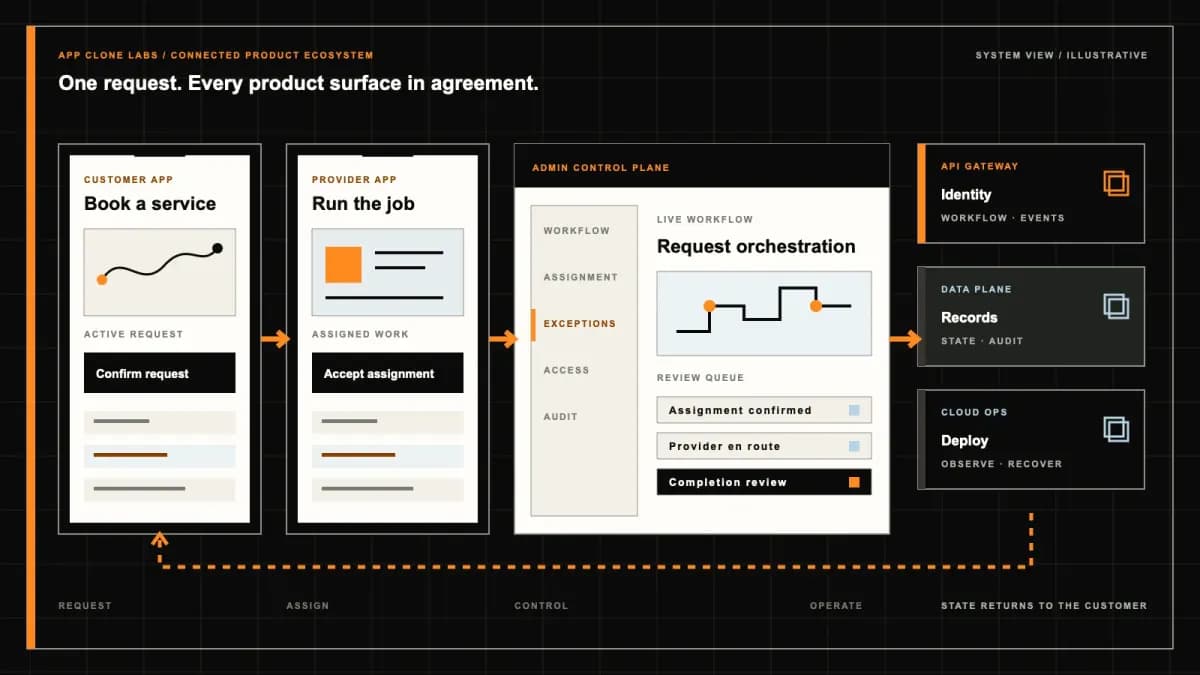
The proposed product combines owned retail, third-party offers and location-aware fulfillment under an independent brand. It does not include Walmart inventory, suppliers, fulfillment facilities, customers or privileged system access. The buying question is whether the software can represent your actual retail operation accurately. Catalog breadth should follow a defensible allocation and resolution model, rather than creating a large storefront whose stock, handover and refund responsibilities remain uncertain.
Identify the seller and fulfillment party before comparing offers
The official Walmart marketplace seller guidance distinguishes the seller of an item from how it is fulfilled. That distinction is a useful reference for offer presentation, not access to Walmart’s seller programs or a return policy that automatically applies to your business.
Store seller identity, offer conditions and fulfillment source as separate facts. A retailer can sell its own stock while an independent merchant supplies another offer for the same product. Customer-facing labels should explain that difference without requiring support to decode it later. Define which party maintains product claims, responds to an order issue and funds an adjustment. Review category eligibility and seller terms before publication, especially where product safety or restricted goods create obligations beyond ordinary catalog management.
Choose an inventory authority for every sellable location
A store shelf, warehouse balance and seller feed can all report stock, but they do not necessarily update together. Establish which system governs availability for each offer and how online reservations interact with in-store sales. Distinguish physical units, reserved units and stock that is not eligible for the selected channel. A positive total across the business does not prove the chosen store can fulfill this customer’s basket.
Reserve against the appropriate source when the order reaches the agreed commitment point, with expiry and recovery rules. Reconcile a stock discrepancy instead of silently borrowing another seller’s offer or promising an unreviewed substitution. Test the last unit being purchased simultaneously at a register and online. Operations should see the affected line, current source and authorized resolution choices. The customer should receive a clear change or failure outcome rather than an unexplained disappearing item.
Pickup, local delivery and shipping need separate promises
A delivery method changes the required stock, packing and handover arrangements. Local groceries may depend on store picking capacity; an appliance shipment may require another warehouse and carrier. Show eligible methods at offer level and re-evaluate the basket when the customer changes location or method. A postcode inside the service area does not establish capacity for every product or time window. Keep the intended fulfillment source visible to the operator.
Capacity reservations should be connected to the relevant group, not merely a generic checkout session. Explain whether a chosen window is provisional or confirmed and how it changes after edits. Test a customer switching from pickup to shipping with goods unsuitable for that route. Do not accept the payment first and reveal the incompatibility only in the store console. A bounded launch can support fewer methods well while leaving unsupported combinations unavailable and clearly explained.
Split orders require line-level status and customer communication
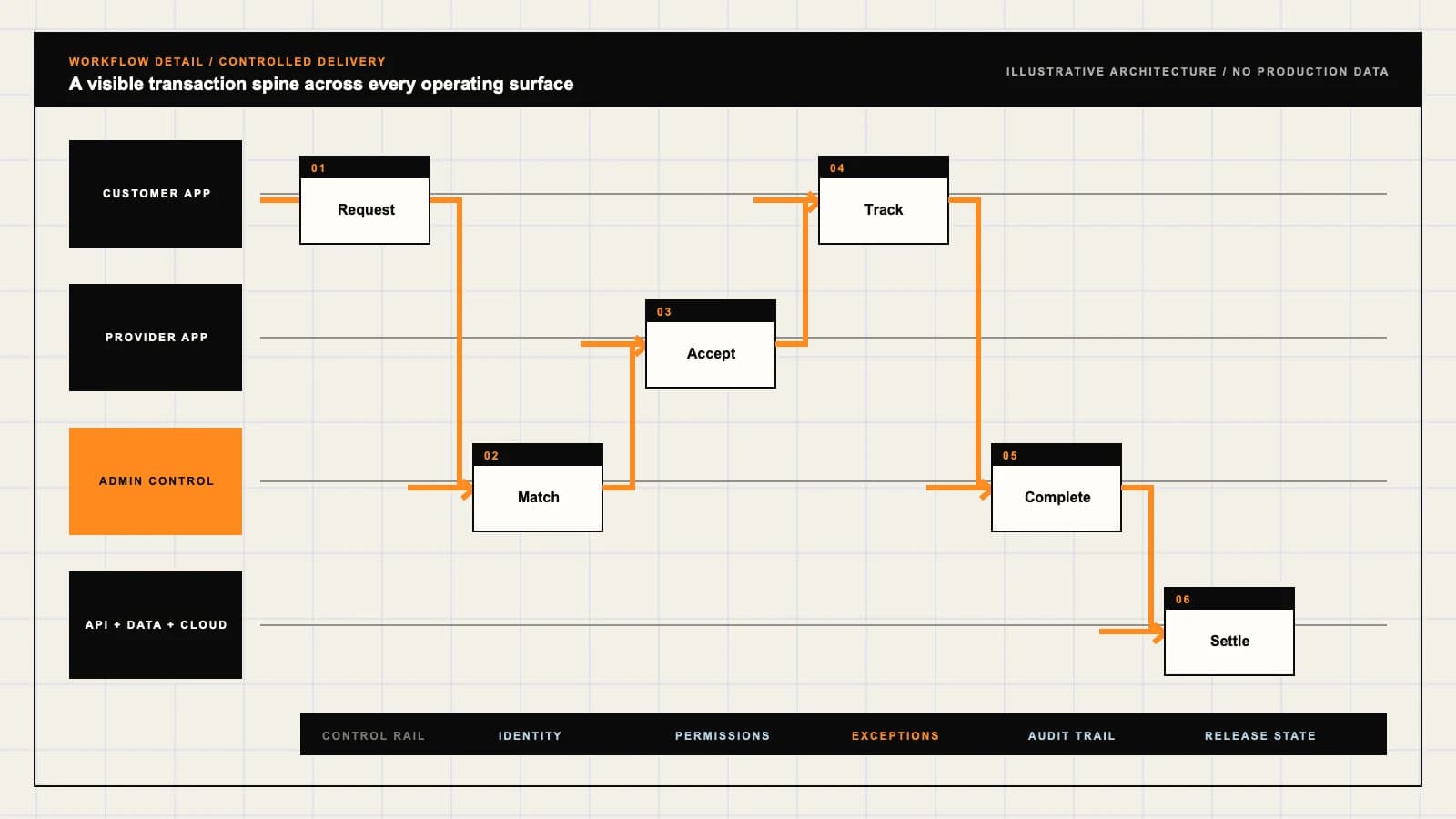
Create child fulfillment groups under the customer’s order while preserving purchased quantities and amounts. Each group needs its own preparation, dispatch, handover and exception history. Customer notifications should name the affected items rather than repeatedly announcing that “your order” has shipped. An item removed during picking must not invalidate the tracking information for another seller’s parcel. Keep the original basket available for understanding what changed.
Payment capture and cancellation need an agreed relationship with these groups. A cancelled pickup should not cancel an already shipped accessory simply because both share one order number. Handle partial quantities and duplicate carrier events without manufacturing additional deliveries. Rehearse one group completing while another loses stock and a third receives a delayed tracking event. The customer account should explain what remains outstanding, what was charged and which team can resolve the exception.
Substitutions and weighted goods change the accepted amount
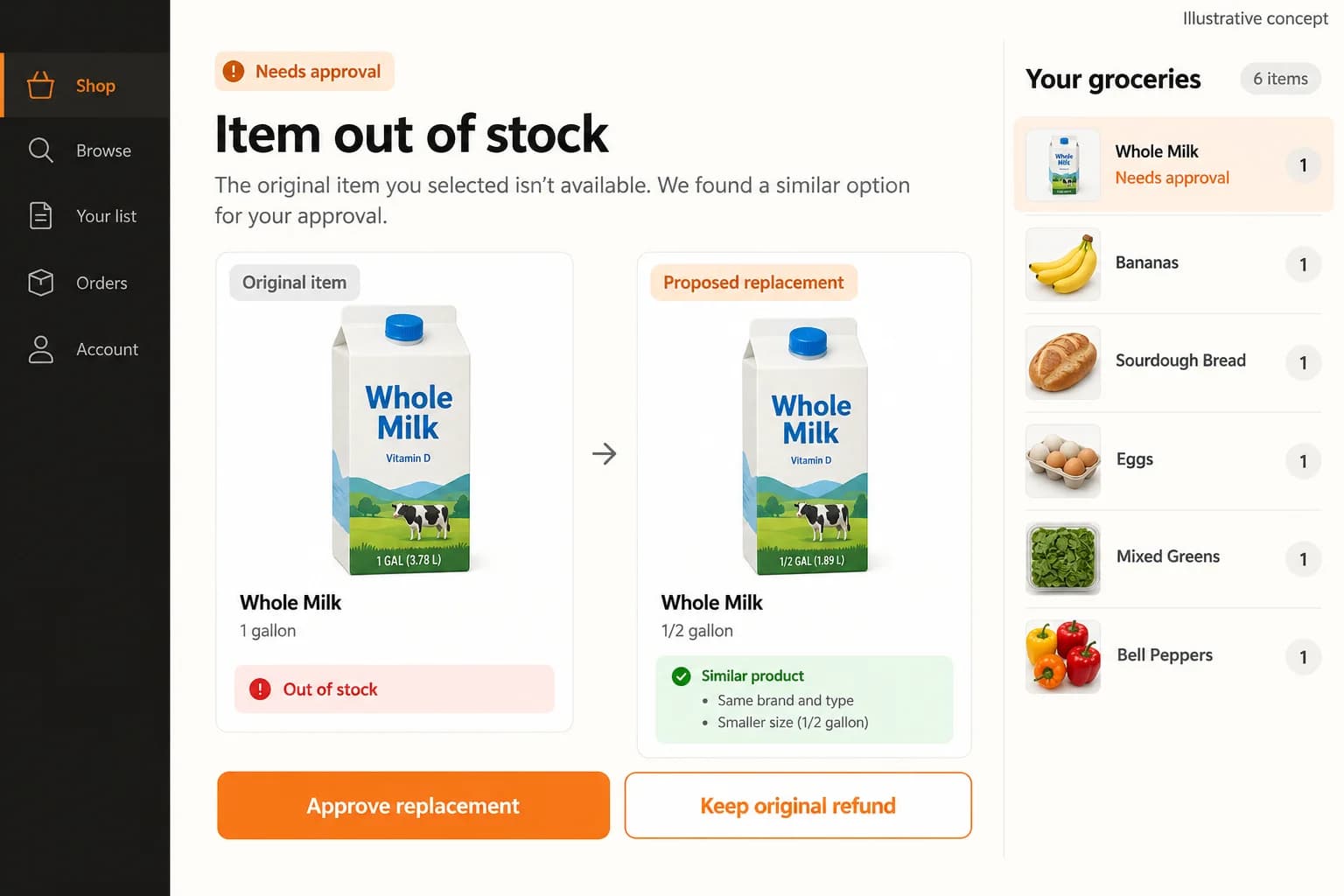
The official Walmart substitution guidance describes replacement controls and payment authorization considerations for store orders. It illustrates why selected items and final picked amounts need explicit handling; your own consent, pricing and payment arrangements require separate definition.
Capture substitution preferences at the appropriate line and order level. A similar-looking product can differ in ingredients, pack size or suitability, so do not substitute solely because a ranking model considers it close. Explain the effect of a replacement on price and allow the supported response under a reviewed policy. For weighted goods, retain the estimated quantity, actual measured quantity and unit-price basis. Staff corrections need a reason and permission; the final receipt should make the arithmetic inspectable without exposing unrelated operational information.
Store associates need task permissions rather than universal admin access
A picker needs the relevant items and fulfillment instructions, not every customer purchase or marketplace payout. Separate picking, replacement handling, handover confirmation and refund authority. Restrict associates to assigned stores or supervised tasks, with reviewed access for covering another location. If a supervisor approves an exception, preserve who requested and approved it rather than recording the picker as the sole decision-maker.
A pickup handover can involve an approved alternate collector, but account access and collection authority are different permissions. Define the evidence appropriate to the service and avoid storing unnecessary identity documents. Rehearse a collector change after preparation, an associate leaving a shift and a store transfer during an unresolved order. Access should follow the current task without erasing accountability for earlier actions or leaving sensitive pickup details available indefinitely.