Editorial dossier / Creator Platforms
Creator Platform Monetization Models: Subscriptions, Tips, Ads and Payouts
A complete creator-platform monetization guide covering subscriptions, memberships, tips, paid content, advertising, app-store rules, entitlements, earnings and payouts.
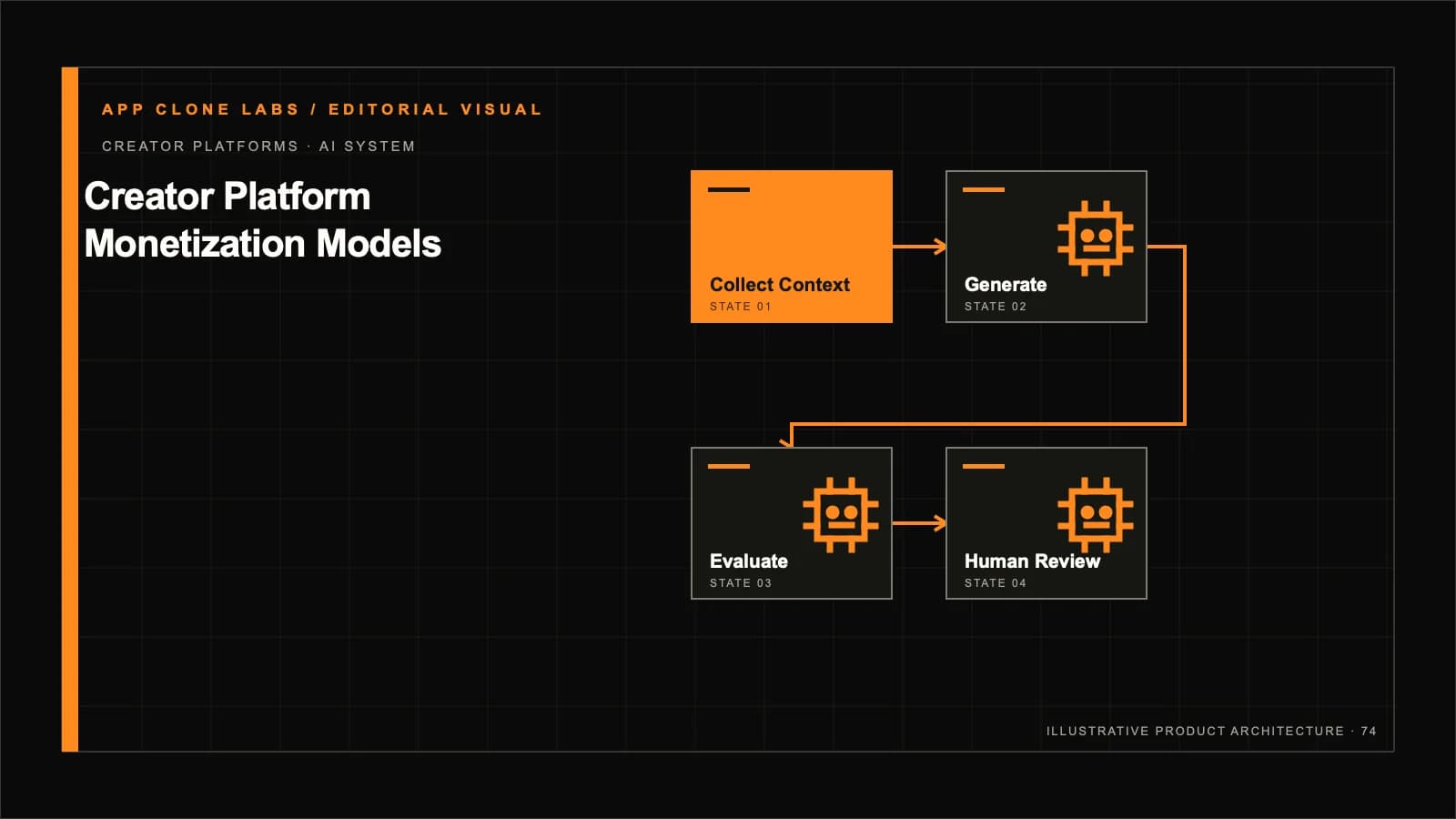
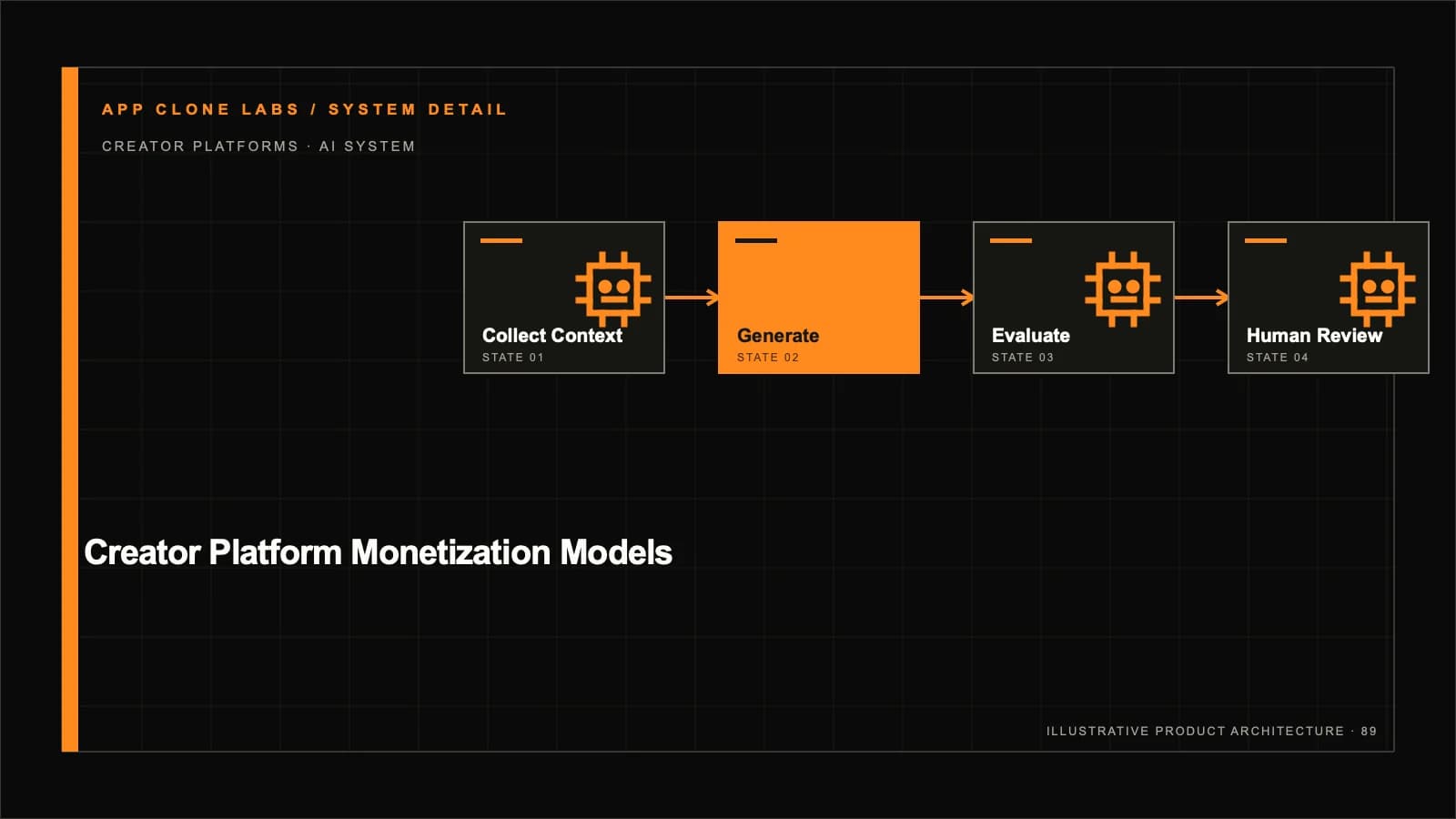
Creator monetization is not a switch labelled “subscriptions.” It is a system of promises among viewers, creators, the platform, payment providers, app stores, advertisers and tax or regulatory authorities. Every promise changes product behavior: who is charged, what unlocks, when earnings become available, who funds a refund, which content is eligible, and what evidence support can inspect.
A weak plan begins with a menu of tips, ads, memberships, paid messages, storefronts and virtual currency. A stronger plan chooses one economic loop, defines the value exchanged, calculates unit economics after fees and loss, and builds an auditable lifecycle from purchase through entitlement and creator settlement. That narrow foundation is easier to explain to users and safer to operate.
This guide compares practical models and then shows how to implement them without confusing gross sales with creator earnings or a payment confirmation with money that is ready to withdraw. Store policies and provider capabilities change by market, so the referenced documentation must be rechecked for the exact app, region and release date.
Choose the economic relationship first
The platform may sell its own subscription, facilitate purchases from creators, sell advertising, or combine models. Those structures affect merchant responsibility, fees, disputes and reporting.
The failure mode is concrete: the product copies a competitor button while finance and support assume different parties own the transaction. This is not solved by adding another screen or background job. The product has to define ownership, permitted transitions, and the evidence retained when the transition occurs.
For the first release, draw the flow of value and money for viewer, creator, platform and provider before selecting an interface or API. Write that decision as an enforceable server-side rule, not guidance that depends on a client, operator, or AI model remembering the intended boundary.
Implementation should include buyer, seller, merchant presentation, platform fee, provider fee, refund owner, dispute exposure, payout destination and tax-information responsibility. Keep the public response smaller than the internal record: users need a clear outcome and recovery path, while authorized operators need correlation IDs, policy versions, timestamps, and the before-and-after state.
Validate it with one successful purchase plus refund, dispute, creator suspension and negative balance. Test the ordinary path, then repeat under timeout, duplicate delivery, stale state, partial failure, revoked authority, and concurrent requests. A feature is not ready when only the demonstration succeeds.
- Owner: business model owner
- Release evidence: approved funds-flow diagram
- Stop condition: the team cannot name who owes the buyer the purchased value
Start with one monetization loop
Subscriptions, tips, ads and commerce each introduce different state and operational demands.
The failure mode is concrete: five incomplete models launch together and none has accurate entitlement, reconciliation or support. This is not solved by adding another screen or background job. The product has to define ownership, permitted transitions, and the evidence retained when the transition occurs.
For the first release, select the model that best matches repeat value and creator supply, then complete its purchase-to-settlement lifecycle. Write that decision as an enforceable server-side rule, not guidance that depends on a client, operator, or AI model remembering the intended boundary.
Implementation should include eligibility, pricing, checkout, receipt, entitlement, earnings, refund, reporting, support and reconciliation. Keep the public response smaller than the internal record: users need a clear outcome and recovery path, while authorized operators need correlation IDs, policy versions, timestamps, and the before-and-after state.
Validate it with ordinary transaction, abandonment, duplicate event, cancellation, refund and payout hold. Test the ordinary path, then repeat under timeout, duplicate delivery, stale state, partial failure, revoked authority, and concurrent requests. A feature is not ready when only the demonstration succeeds.
- Owner: product lead
- Release evidence: end-to-end commercial acceptance test
- Stop condition: a second model delays controls for the first
Use audience subscriptions for recurring platform value
A platform subscription works when viewers receive an ongoing catalogue, experience or service rather than a single creator purchase.
The failure mode is concrete: recurring billing is added to a product with no continuing value or clear cancellation path. This is not solved by adding another screen or background job. The product has to define ownership, permitted transitions, and the evidence retained when the transition occurs.
For the first release, define the recurring promise, content access, device behavior, trial, renewal, grace and cancellation before building paywalls. Write that decision as an enforceable server-side rule, not guidance that depends on a client, operator, or AI model remembering the intended boundary.
Implementation should include plan catalog, price localization, entitlement key, family or account rules, renewal notices, restore purchases and subscriber support. Keep the public response smaller than the internal record: users need a clear outcome and recovery path, while authorized operators need correlation IDs, policy versions, timestamps, and the before-and-after state.
Validate it with new purchase, renewal, billing failure, upgrade, downgrade, cancellation and reinstall. Test the ordinary path, then repeat under timeout, duplicate delivery, stale state, partial failure, revoked authority, and concurrent requests. A feature is not ready when only the demonstration succeeds.
- Owner: subscription owner
- Release evidence: subscription lifecycle matrix
- Stop condition: the team cannot demonstrate value delivered after the first billing period
Use creator memberships for a clear ongoing benefit
A membership can connect one supporter to one creator through exclusive content, community access or recurring recognition.
The failure mode is concrete: membership becomes a vague donation while users expect guaranteed content and creators expect irreversible earnings. This is not solved by adding another screen or background job. The product has to define ownership, permitted transitions, and the evidence retained when the transition occurs.
For the first release, state what membership unlocks, when access begins and ends, and how creator eligibility is maintained. Write that decision as an enforceable server-side rule, not guidance that depends on a client, operator, or AI model remembering the intended boundary.
Implementation should include tier version, creator status, benefit list, entitlement period, cancellation, content removal and subscriber communication. Keep the public response smaller than the internal record: users need a clear outcome and recovery path, while authorized operators need correlation IDs, policy versions, timestamps, and the before-and-after state.
Validate it with creator pauses, changes tier, is suspended, deletes content or misses a promised cadence. Test the ordinary path, then repeat under timeout, duplicate delivery, stale state, partial failure, revoked authority, and concurrent requests. A feature is not ready when only the demonstration succeeds.
- Owner: creator operations lead
- Release evidence: membership promise and exception playbook
- Stop condition: support cannot explain what the subscriber purchased
Checkpoint 4: reconcile the product promise with the recorded state. Support, finance, security, and delivery teams should be able to reach the same conclusion from the same identifiers without reconstructing events from chat messages or screenshots.
Treat tips as transactions, not messages
A tip appears simple but still needs authorization, receipt, fraud monitoring, refund policy and creator-earnings treatment.
The failure mode is concrete: the UI shows money as available before the transaction is settled or lets a message bypass moderation because it was paid. This is not solved by adding another screen or background job. The product has to define ownership, permitted transitions, and the evidence retained when the transition occurs.
For the first release, model payment and accompanying message separately; apply content rules regardless of payment and release earnings under a defined policy. Write that decision as an enforceable server-side rule, not guidance that depends on a client, operator, or AI model remembering the intended boundary.
Implementation should include amount limits, currency, confirmation, message moderation, fee disclosure, refund handling, risk hold and immutable references. Keep the public response smaller than the internal record: users need a clear outcome and recovery path, while authorized operators need correlation IDs, policy versions, timestamps, and the before-and-after state.
Validate it with duplicate tap, declined payment, abusive message, chargeback and tipped creator suspension. Test the ordinary path, then repeat under timeout, duplicate delivery, stale state, partial failure, revoked authority, and concurrent requests. A feature is not ready when only the demonstration succeeds.
- Owner: trust and payments owner
- Release evidence: tip-to-earnings trace
- Stop condition: a paid message receives weaker safety enforcement
Design paid content around entitlement state
One-time video, course, download or event access needs a durable answer to who purchased which product version.
The failure mode is concrete: access depends on a transient checkout redirect or content URL secrecy. This is not solved by adding another screen or background job. The product has to define ownership, permitted transitions, and the evidence retained when the transition occurs.
For the first release, create an entitlement from verified payment state and enforce it at every content-delivery boundary. Write that decision as an enforceable server-side rule, not guidance that depends on a client, operator, or AI model remembering the intended boundary.
Implementation should include product ID, content version, buyer, territory, purchase channel, start and end, refund revocation and device access. Keep the public response smaller than the internal record: users need a clear outcome and recovery path, while authorized operators need correlation IDs, policy versions, timestamps, and the before-and-after state.
Validate it with reinstall, second device, refund, deleted content, region change and shared link. Test the ordinary path, then repeat under timeout, duplicate delivery, stale state, partial failure, revoked authority, and concurrent requests. A feature is not ready when only the demonstration succeeds.
- Owner: commerce engineer
- Release evidence: entitlement allow-and-deny suite
- Stop condition: a direct asset URL bypasses purchase access
Evaluate advertising only with enough supply and measurement
Advertising can preserve free access, but meaningful revenue requires eligible inventory, brand safety, measurement and sales or network operations.
The failure mode is concrete: a small platform forecasts revenue from raw views without fill rate, geography, format or invalid-traffic assumptions. This is not solved by adding another screen or background job. The product has to define ownership, permitted transitions, and the evidence retained when the transition occurs.
For the first release, model impressions, eligible inventory, fill, effective revenue, platform share, creator share and safety exclusions using conservative scenarios. Write that decision as an enforceable server-side rule, not guidance that depends on a client, operator, or AI model remembering the intended boundary.
Implementation should include viewability definition, duplicate filtering, invalid traffic, campaign pacing, frequency cap, suitability controls and reporting corrections. Keep the public response smaller than the internal record: users need a clear outcome and recovery path, while authorized operators need correlation IDs, policy versions, timestamps, and the before-and-after state.
Validate it with blocked category, removed content, bot surge, underdelivery and advertiser credit. Test the ordinary path, then repeat under timeout, duplicate delivery, stale state, partial failure, revoked authority, and concurrent requests. A feature is not ready when only the demonstration succeeds.
- Owner: ads operations owner
- Release evidence: documented revenue model and reconciliation sample
- Stop condition: the forecast depends on every view being paid
Add storefront commerce only when fulfilment is owned
Digital downloads, physical merchandise, services and affiliate offers have different payment, delivery and refund requirements.
The failure mode is concrete: one generic shop promises the platform will resolve fulfilment it cannot observe. This is not solved by adding another screen or background job. The product has to define ownership, permitted transitions, and the evidence retained when the transition occurs.
For the first release, choose one product type and define seller verification, inventory or delivery evidence, fees, returns and dispute responsibility. Write that decision as an enforceable server-side rule, not guidance that depends on a client, operator, or AI model remembering the intended boundary.
Implementation should include listing policy, product state, order timeline, fulfilment event, customer support, commission and settlement reserve. Keep the public response smaller than the internal record: users need a clear outcome and recovery path, while authorized operators need correlation IDs, policy versions, timestamps, and the before-and-after state.
Validate it with out of stock, failed download, late shipment, return, counterfeit report and seller suspension. Test the ordinary path, then repeat under timeout, duplicate delivery, stale state, partial failure, revoked authority, and concurrent requests. A feature is not ready when only the demonstration succeeds.
- Owner: marketplace operations
- Release evidence: order-to-settlement runbook
- Stop condition: the platform cannot prove whether value was delivered
Checkpoint 8: reconcile the product promise with the recorded state. Support, finance, security, and delivery teams should be able to reach the same conclusion from the same identifiers without reconstructing events from chat messages or screenshots.
Check mobile store rules per product and region
Payments for digital content or in-app functionality are governed by current Apple and Google rules, with programs and regional variations that evolve.
The failure mode is concrete: the web and mobile teams implement one universal checkout assumption and discover a review problem at submission. This is not solved by adding another screen or background job. The product has to define ownership, permitted transitions, and the evidence retained when the transition occurs.
For the first release, classify every paid item, map its purchase surface and verify current store requirements for each target storefront and territory. Write that decision as an enforceable server-side rule, not guidance that depends on a client, operator, or AI model remembering the intended boundary.
Implementation should include product classification, app version, country list, allowed purchase path, disclosure, restore behavior and policy review date. Keep the public response smaller than the internal record: users need a clear outcome and recovery path, while authorized operators need correlation IDs, policy versions, timestamps, and the before-and-after state.
Validate it with review build, deep link, account sign-in, restored purchase and region-specific configuration. Test the ordinary path, then repeat under timeout, duplicate delivery, stale state, partial failure, revoked authority, and concurrent requests. A feature is not ready when only the demonstration succeeds.
- Owner: release compliance owner
- Release evidence: dated store-policy matrix
- Stop condition: a monetization CTA has no reviewed store-policy basis
Keep purchases, entitlements and earnings separate
A viewer purchase, access right and creator financial claim change at different times.
The failure mode is concrete: one paid boolean unlocks content and immediately increases a withdrawable balance. This is not solved by adding another screen or background job. The product has to define ownership, permitted transitions, and the evidence retained when the transition occurs.
For the first release, maintain linked but independent state machines for payment attempts, entitlements, creator earnings, adjustments and payouts. Write that decision as an enforceable server-side rule, not guidance that depends on a client, operator, or AI model remembering the intended boundary.
Implementation should include immutable provider references, amount in minor units, currency, fee components, availability date, reason codes and reversals. Keep the public response smaller than the internal record: users need a clear outcome and recovery path, while authorized operators need correlation IDs, policy versions, timestamps, and the before-and-after state.
Validate it with delayed event, partial refund, dispute, creator share change and payout already initiated. Test the ordinary path, then repeat under timeout, duplicate delivery, stale state, partial failure, revoked authority, and concurrent requests. A feature is not ready when only the demonstration succeeds.
- Owner: financial systems lead
- Release evidence: state-transition and reconciliation matrix
- Stop condition: one field claims both access and settled earnings
Calculate creator earnings transparently
Creators need an explainable bridge from gross transaction to net earning. Store, provider, tax, currency and platform deductions may vary.
The failure mode is concrete: a dashboard displays gross sales as earnings or silently changes historical calculations after a fee update. This is not solved by adding another screen or background job. The product has to define ownership, permitted transitions, and the evidence retained when the transition occurs.
For the first release, version the revenue-share rule and create line items for each deduction or adjustment. Write that decision as an enforceable server-side rule, not guidance that depends on a client, operator, or AI model remembering the intended boundary.
Implementation should include gross amount, channel fee, tax treatment, provider fee where applicable, platform share, creator share, reserve, refund and rule version. Keep the public response smaller than the internal record: users need a clear outcome and recovery path, while authorized operators need correlation IDs, policy versions, timestamps, and the before-and-after state.
Validate it with multiple currencies, discounted purchase, fee change, partial refund and rounding boundary. Test the ordinary path, then repeat under timeout, duplicate delivery, stale state, partial failure, revoked authority, and concurrent requests. A feature is not ready when only the demonstration succeeds.
- Owner: finance product owner
- Release evidence: recomputable earnings statement
- Stop condition: a creator total cannot be derived from transaction lines
Onboard payout recipients safely
Paying creators can require identity, business and bank information plus provider capability status. The exact obligations depend on countries and model.
The failure mode is concrete: the platform stores unnecessary sensitive payout data or promises withdrawals before onboarding is complete. This is not solved by adding another screen or background job. The product has to define ownership, permitted transitions, and the evidence retained when the transition occurs.
For the first release, use qualified provider-hosted or embedded onboarding where suitable and store references and capability state rather than raw financial credentials. Write that decision as an enforceable server-side rule, not guidance that depends on a client, operator, or AI model remembering the intended boundary.
Implementation should include terms acceptance, country, required-information status, payout capability, remediation link, restricted access and retention. Keep the public response smaller than the internal record: users need a clear outcome and recovery path, while authorized operators need correlation IDs, policy versions, timestamps, and the before-and-after state.
Validate it with incomplete onboarding, expired link, changed bank, disabled capability and creator country change. Test the ordinary path, then repeat under timeout, duplicate delivery, stale state, partial failure, revoked authority, and concurrent requests. A feature is not ready when only the demonstration succeeds.
- Owner: payments operations
- Release evidence: onboarding and remediation test
- Stop condition: the application logs or directly stores bank credentials without necessity
Checkpoint 12: reconcile the product promise with the recorded state. Support, finance, security, and delivery teams should be able to reach the same conclusion from the same identifiers without reconstructing events from chat messages or screenshots.
Control payout availability and negative balances
Money received is not always safe to pay immediately. Refunds, disputes, fraud review and provider settlement create timing and loss exposure.
The failure mode is concrete: instant withdrawal empties the balance before a later reversal. This is not solved by adding another screen or background job. The product has to define ownership, permitted transitions, and the evidence retained when the transition occurs.
For the first release, define pending, available, reserved, paid and reversed amounts and choose a risk-based release schedule. Write that decision as an enforceable server-side rule, not guidance that depends on a client, operator, or AI model remembering the intended boundary.
Implementation should include availability calculation, minimum payout, reserve, currency, schedule, failed payout, negative balance and manual hold authority. Keep the public response smaller than the internal record: users need a clear outcome and recovery path, while authorized operators need correlation IDs, policy versions, timestamps, and the before-and-after state.
Validate it with refund before release, dispute after payout, failed bank transfer, reserve release and account suspension. Test the ordinary path, then repeat under timeout, duplicate delivery, stale state, partial failure, revoked authority, and concurrent requests. A feature is not ready when only the demonstration succeeds.
- Owner: risk owner
- Release evidence: balance invariant and negative-balance playbook
- Stop condition: available earnings can exceed settled funds minus obligations
Make reconciliation a daily product function
Dashboards drift when purchases, refunds, store proceeds, provider balances, creator earnings and payouts are not matched.
The failure mode is concrete: finance uses a spreadsheet that cannot trace an unexplained difference to a purchase or adjustment. This is not solved by adding another screen or background job. The product has to define ownership, permitted transitions, and the evidence retained when the transition occurs.
For the first release, reconcile each channel to internal transactions and settlement records with stable references and an owned exception queue. Write that decision as an enforceable server-side rule, not guidance that depends on a client, operator, or AI model remembering the intended boundary.
Implementation should include source import, gross-to-net mapping, currency, timing differences, unmatched category, ageing, notes and resolution. Keep the public response smaller than the internal record: users need a clear outcome and recovery path, while authorized operators need correlation IDs, policy versions, timestamps, and the before-and-after state.
Validate it with missing webhook, duplicate settlement row, fee correction, exchange difference and partial refund. Test the ordinary path, then repeat under timeout, duplicate delivery, stale state, partial failure, revoked authority, and concurrent requests. A feature is not ready when only the demonstration succeeds.
- Owner: finance operations
- Release evidence: daily reconciliation report with zero unexplained aged items
- Stop condition: an imbalance has no identifier, owner or resolution state
Tie monetization eligibility to trust and safety
Revenue changes incentives. Spam, impersonation, stolen content, harmful material and engagement manipulation can become financially rewarding.
The failure mode is concrete: growth goals override enforcement or a suspended creator keeps selling through old links. This is not solved by adding another screen or background job. The product has to define ownership, permitted transitions, and the evidence retained when the transition occurs.
For the first release, define eligibility, review, strikes, suspension, appeal, fund holds and content enforcement as part of monetization—not a later moderation feature. Write that decision as an enforceable server-side rule, not guidance that depends on a client, operator, or AI model remembering the intended boundary.
Implementation should include identity signals, content rights attestations, policy version, human escalation, action audit, appeal window and payout hold. Keep the public response smaller than the internal record: users need a clear outcome and recovery path, while authorized operators need correlation IDs, policy versions, timestamps, and the before-and-after state.
Validate it with copyright report, coordinated abuse, account takeover, false positive and repeat offender. Test the ordinary path, then repeat under timeout, duplicate delivery, stale state, partial failure, revoked authority, and concurrent requests. A feature is not ready when only the demonstration succeeds.
- Owner: trust and safety lead
- Release evidence: monetization enforcement simulation
- Stop condition: commercial pressure can bypass a documented safety action
Measure model health beyond gross revenue
Revenue without retention, creator distribution, refund cost and support burden can hide an unhealthy model.
The failure mode is concrete: the team optimizes purchase conversion while subscribers churn and a few accounts capture all earnings. This is not solved by adding another screen or background job. The product has to define ownership, permitted transitions, and the evidence retained when the transition occurs.
For the first release, define a balanced scorecard for viewer value, creator outcomes, platform margin, safety and operational cost. Write that decision as an enforceable server-side rule, not guidance that depends on a client, operator, or AI model remembering the intended boundary.
Implementation should include renewal and churn, paying conversion, net revenue, creator earnings distribution, refund and dispute rate, payout failure, moderation rate and support contacts. Keep the public response smaller than the internal record: users need a clear outcome and recovery path, while authorized operators need correlation IDs, policy versions, timestamps, and the before-and-after state.
Validate it with weekly cohort review, pricing experiment guardrail and data-quality check. Test the ordinary path, then repeat under timeout, duplicate delivery, stale state, partial failure, revoked authority, and concurrent requests. A feature is not ready when only the demonstration succeeds.
- Owner: growth analyst
- Release evidence: metric definitions with source-of-truth queries
- Stop condition: a growth experiment can ship without harm and margin guardrails
Checkpoint 16: reconcile the product promise with the recorded state. Support, finance, security, and delivery teams should be able to reach the same conclusion from the same identifiers without reconstructing events from chat messages or screenshots.
Sequence expansion through evidence
Once one loop works, additional models can share identity, entitlements, ledger events and trust controls without sharing ambiguous states.
The failure mode is concrete: the roadmap adds virtual currency because it makes several unfinished flows appear simpler. This is not solved by adding another screen or background job. The product has to define ownership, permitted transitions, and the evidence retained when the transition occurs.
For the first release, require a validated user need, positive unit economics, policy review and operational readiness before adding each model. Write that decision as an enforceable server-side rule, not guidance that depends on a client, operator, or AI model remembering the intended boundary.
Implementation should include decision memo, target cohort, forecast, state changes, support volume, risk review, migration and rollback. Keep the public response smaller than the internal record: users need a clear outcome and recovery path, while authorized operators need correlation IDs, policy versions, timestamps, and the before-and-after state.
Validate it with shadow calculation, limited cohort, reconciliation, policy review and creator communication. Test the ordinary path, then repeat under timeout, duplicate delivery, stale state, partial failure, revoked authority, and concurrent requests. A feature is not ready when only the demonstration succeeds.
- Owner: portfolio owner
- Release evidence: model launch gate
- Stop condition: a new model depends on hiding fees or financial state from users
Implementation references
Review every mobile purchase flow against the current Apple App Review Guidelines for the exact product and storefront.
Verify Android purchase paths using the current Google Play payments policy and applicable regional programs.
For marketplace-style creator payouts, use the Stripe Connect marketplace guide as provider-specific guidance rather than a substitute for business and legal analysis.
Protect high-risk financial actions using OWASP transaction authorization guidance and product-specific threat modelling.
Connect monetization to the broader creator platform feature plan so discovery, moderation and analytics support the economic model.
Frequently asked questions
Which creator monetization model should launch first?
Choose the model that best matches the repeated user value and creator supply you can verify. Complete its payment, entitlement, earnings, refund, settlement and support lifecycle before adding another.
Are creator tips simpler than subscriptions?
They avoid renewal state but still require payment authorization, receipts, moderation, fraud controls, refunds, earnings calculation and payout handling. They are not merely a message with an amount.
Can creators receive money immediately?
Only if the funds, provider capabilities and risk policy support it. Many platforms need pending and available states, reserves or holds for refunds, disputes and fraud review.
Do mobile creator apps have to use in-app purchase?
Digital content and in-app functionality can fall under current Apple or Google billing requirements, with territory-specific programs and exceptions. Classify each product and verify current policy for every storefront and release.
What is the difference between entitlement and earnings?
An entitlement is the buyer’s access right. Earnings are the creator’s financial claim after applicable fees, adjustments, holds and reversals. They should be linked but never represented by one status.
How should the platform calculate revenue share?
Use versioned rules and explicit transaction lines for gross amount, taxes or channel deductions as applicable, platform share, creator share, reserves, refunds and adjustments.
When does advertising make sense?
When the platform has sufficient eligible inventory, audience quality, brand-safety controls, measurement and operational capability. Raw view counts alone do not establish viable ad revenue.
What must be tested before monetization launches?
Test purchase, verified events, access restoration, refund and revocation, earnings math, creator onboarding, payout failure, negative balances, reconciliation, moderation action and support recovery.
Build a monetization system users can understand
A durable creator economy does not hide complexity behind a balance number. It gives viewers an accurate purchase promise, creators an explainable earnings statement, operators a recoverable transaction timeline, and finance a path from every settlement back to its source.
Start with one narrow economic loop and make it trustworthy. Once purchases, entitlements, earnings, reversals, safety actions and payouts agree, the platform can add another model without sacrificing clarity or turning financial exceptions into permanent manual work.
- 01
- 02
- 03
- 04
- 05
- 06
Reviewed by the App Clone Labs product strategy team
This guide is written for founders and operators planning clone-inspired platforms, SaaS products, marketplaces, and mobile apps. It is reviewed against App Clone Labs delivery patterns, product scoping standards, and current implementation realities before being published.
Review the editorial team structureRelated product paths
Continue with the services, solutions, guides, and articles that connect this topic to a real software build.