Travel

Airbnb Clone App Development — Custom-Built for Your Market

Property listings, host onboarding, calendars, bookings, reviews, and secure payouts. Built as a custom transactional marketplace platform for buyers, sellers, hosts, vendors, marketplace operators, finance teams, and support teams, with original UX, admin controls, integrations, QA, and launch support.

Custom workflowsBrand-safe product strategyAdmin and operations tooling

90+

clone-inspired product modules

Reusable thinking, custom implementation.

6-9 days

typical MVP launch path

For focused first-market versions.

100%

client-owned IP

Code, credentials, docs, and cloud access.

Marketplace shopping bags for commerce platform content
Commerce marketplace operations
Laundry service station for pickup delivery app planning
Laundry service workflow
UX wireframe workspace for product design articles
UX and interface planning
Fitness training session for vertical app strategy
Fitness app product planning

Feature breakdown

Airbnb Clone features we plan before build.

Each feature is mapped to a role, workflow, admin control, and measurable launch outcome.

Marketplace shopping bags for commerce platform content
Commerce marketplace operations

Listings

Property listing system

Media gallery, amenities, rules, room types, capacity, location privacy, accessibility, pricing, and publish workflow.

Search

Discovery and map filters

Destination, dates, guests, price, amenities, property type, instant book, map clusters, and ranking logic.

Booking

Calendar and reservation flow

Availability calendar, checkout, fees, taxes, cancellation policy, deposits, and booking states.

Messaging

Guest-host communication

Pre-booking questions, post-booking chat, templates, attachments, notifications, and safety controls.

Trust

Reviews and verification

Guest/host reviews, ID checks, listing moderation, damage reports, disputes, and policy workflows.

Finance

Payout and commission engine

Host payouts, platform fees, refunds, coupons, taxes, deposits, and settlement exports.

Architecture

Architecture and tech stack diagram.

The stack is selected around speed, ownership, scale, admin needs, integrations, and maintainability.

Product team collaborating around app interface designs
Interface systems for web and mobile products
Layer 101

Next.js marketplace frontend

The web layer gives guest users a focused interface for search and book stays. In Airbnb Clone, it carries the highest-density screens: search, dashboards, configuration, reporting, and review workflows that need fast navigation and clear permission boundaries.

Founder and engineering lead discussing a software launch plan
Founder-friendly product delivery
Layer 202

React Native optional guest app

React Native optional guest app is planned as a distinct layer in Airbnb Clone, with ownership over listing creation, search, filters, checkout or booking, payments, commissions, disputes, reviews, availability, and seller reporting. It connects to host needs, discovery and map filters, admin visibility, QA scenarios, and the first launch scope instead of sitting as a generic technology choice.

Modern technology workspace with product engineering activity
Production engineering and cloud support
Layer 303

Node.js booking APIs

The API layer encodes the product rules behind calendar and reservation flow: Availability calendar, checkout, fees, taxes, cancellation policy, deposits, and booking states. For Airbnb Clone, these services coordinate authentication, permissions, workflow state, third-party integrations, notifications, and admin actions.

Premium studio workspace for product design and software development
Dedicated product squad environment
Layer 404

PostgreSQL availability model

The data model stores the records that make Airbnb Clone operable: users, roles, states, transactions, content, support events, audit trails, and reports. It is designed around limit complex travel rules first, with enough structure for the full-build roadmap.

Senior software team reviewing a product roadmap in a strategy room
Product strategy and launch planning
Layer 505

Search indexing

Search is tuned around discovery behavior: query intent, filters, ranking, location or category context, availability, trust signals, and analytics. In Airbnb Clone, search quality directly shapes conversion and supply utilization.

Analytics dashboard displayed on engineering monitors
Operational dashboards and admin systems
Layer 606

Stripe Connect payouts

The payments layer handles checkout, authorization, refunds, payouts, tips, commissions, invoices, failed-payment states, and finance exports. In Airbnb Clone, it is planned with admin reconciliation and support visibility from the start.

Admin panel

Admin panel capabilities.

The control center is scoped as a first-class product surface, not an afterthought.

Marketplace shopping bags for commerce platform content
Commerce marketplace operations

Listings

Listing review and quality control

Approve, reject, edit, feature, pause, or flag listings with image, rule, and location checks.

Bookings

Reservation and dispute management

Monitor booking states, cancellations, refunds, host no-shows, guest complaints, and evidence.

Finance

Payout and tax reporting

Commission rules, payout cycles, tax fields, coupons, deposits, and exportable finance reports.

Trust

Verification and moderation

User identity, host documents, reviews, message reports, blocked users, and policy actions.

Monetization

Monetization models.

We model monetization early so payments, admin controls, and reporting support the business.

Guest and host service fees

Charge host commission, guest booking fee, or both depending on marketplace strategy.

Host plans

Premium host dashboards, higher listing limits, analytics, or property-manager accounts.

Featured stays

Sell boosted listings, destination promotions, seasonal campaigns, and partner placements.

Add-on marketplace

Offer cleaning, photography, insurance, concierge, or local experiences as revenue extensions.

MVP vs full build

MVP scope vs full build comparison.

Launch the smallest complete operating loop first, then scale the product with confidence.

Marketplace shopping bags for commerce platform content
Commerce marketplace operations

Must ship

Search, listing, booking, and payout loop

Launch one property type, one geography, host portal, guest checkout, admin review, and support workflows.

Keep lean

Limit complex travel rules

Avoid multi-currency, experiences, long-term stays, smart pricing, and deep property-manager features in V1.

Scale layer

Multi-property and multi-market operations

Add host teams, channel integrations, smart pricing, tax rules, localized payments, and advanced search ranking.

Trust layer

Insurance and advanced dispute workflows

Add deposits, claims, identity checks, moderation queues, and automated risk scoring.

Related articles

Deeper planning guides for this build.

These supporting articles help founders understand scope, operations, QA, monetization, and launch risk before starting.

Hire specialists

Dedicated experts for the build path.

If you need embedded specialists or an extended team, these hiring paths map to the skills usually required for this solution.

Selected proof

Case-study style outcomes, not empty claims.

View all case studies
Airbnb Clone Property listing system Pilot case study visual for Airbnb Clone App Development — Custom-Built for Your Market
transactional marketplace platform

Search, listing, booking, and payout loop

Airbnb Clone Property listing system Pilot

A airbnb clone pilot centered on property listing system. The scope translated guest behavior into media gallery, amenities, rules, room types, capacity, location privacy, accessibility, pricing, and publish workflow. The workflow covered host creates a listing, admin or automated checks approve it, guest searches with dates and filters, booking is confirmed or requested, payment is authorized, guest and host communicate, stay is completed, payouts are released, and reviews close the loop.

Next.js marketplace frontendReact Native optional guest appNode.js booking APIsPostgreSQL availability model
Airbnb Clone Listing review and quality control Console case study visual for Airbnb Clone App Development — Custom-Built for Your Market
transactional marketplace platform

Multi-property and multi-market operations

Airbnb Clone Listing review and quality control Console

The operations layer for airbnb clone focused on listing review and quality control. Operators needed approve, reject, edit, feature, pause, or flag listings with image, rule, and location checks. We connected those controls to support visibility, audit trails, exception handling, and launch reporting.

Next.js marketplace frontendReact Native optional guest appNode.js booking APIsPostgreSQL availability model
Airbnb Clone Guest and host service fees Revenue Track case study visual for Airbnb Clone App Development — Custom-Built for Your Market
transactional marketplace platform

Guest and host service fees

Airbnb Clone Guest and host service fees Revenue Track

The commercial proof path for airbnb clone modeled guest and host service fees. The plan covered charge host commission, guest booking fee, or both depending on marketplace strategy. Analytics, settlement states, growth experiments, and post-launch backlog items were defined around the actual revenue motion.

Next.js marketplace frontendReact Native optional guest appNode.js booking APIsPostgreSQL availability model

Process

A launch rhythm built for serious decisions.

Founder and engineering lead discussing a software launch plan
Founder-friendly product delivery
01

Model teardown

We map the reference business model, user roles, monetization path, regulatory needs, and launch constraints.

Product teardown, risk map, role matrix

02

Market-fit blueprint

We reshape the model around your market, operations, pricing, workflows, and first release priorities.

Feature scope, flows, technical plan

03

Design and build

Product, design, engineering, QA, and cloud delivery move in weekly demo cycles with visible progress.

Working releases, QA notes, sprint demos

04

Launch and operate

We support production release, monitoring, handoff, roadmap decisions, and post-launch improvement.

Launch checklist, docs, growth backlog

Client voice

Built for buyers who need trust before speed.

App Clone Labs helped us convert a familiar marketplace idea into a product our operations team could actually run, not just a nice set of screens.

Marketplace founder, India

Founder, Short-stay marketplace

Booking marketplace MVP

The team challenged weak assumptions early, then mapped the rider, driver, dispatcher, and admin flows before we spent money on development.

Mobility operator, GCC

Innovation Lead, Regional transport startup

Ride-hailing launch plan

We came for speed, but the real value was clarity: scope, tradeoffs, cloud handoff, and post-launch ownership were handled properly.

Media product COO

COO, OTT subscription platform

OTT platform build

FAQ

The questions founders ask before they build.

What is Airbnb Clone app development?

Airbnb Clone app development means building a custom transactional marketplace platform inspired by proven product mechanics, with original branding, workflows, code, admin tools, integrations, and launch support for your market.

Who is Airbnb Clone best suited for?

Airbnb Clone is best suited for travel marketplace founders, property managers, niche rental communities, serviced apartment operators, and destination-specific booking startups. It works well when you want a proven product category but need original execution, local market fit, and operational ownership.

Is a Airbnb Clone legal to build?

A clone-inspired product is acceptable when it uses the business model as inspiration but does not copy protected branding, proprietary UI, private data, content, trademarks, or unique assets. App Clone Labs builds original products around familiar mechanics.

How fast can we launch a Airbnb Clone MVP?

A focused MVP can often follow a 6-9 days path when scope is narrow, decisions are fast, content is ready, and integrations are clear. Larger multi-role or enterprise builds need a broader timeline.

What should be included in Airbnb Clone V1?

V1 should include the smallest complete operating loop for buyers, sellers, hosts, vendors, marketplace operators, finance teams, and support teams: onboarding, core workflow, transaction or request state, notifications, admin visibility, support, and analytics.

What should wait until V2?

Advanced personalization, complex loyalty, deep automation, multi-region rules, uncommon integrations, and enterprise analytics should usually wait until real usage proves the core loop.

Do you provide source-code ownership for Airbnb Clone?

Yes. App Clone Labs hands over source code, repository access, deployment context, documentation, and the operating knowledge needed for future development.

Can you customize Airbnb Clone for my country or niche?

Yes. We adapt language, currency, payment methods, compliance needs, business rules, roles, workflows, content, and growth mechanics for your specific market.

Does Airbnb Clone include an admin panel?

Yes. Serious clone-inspired platforms need admin controls for users, transactions, payments, reports, support, moderation, content, settings, and operational exceptions.

Which tech stack do you use for Airbnb Clone?

The stack depends on scope, but common choices include Next.js marketplace frontend, React Native optional apps, Node.js or Python APIs, PostgreSQL, Search indexing, cloud hosting, analytics, payment gateways, and role-based admin tooling.

How much does Airbnb Clone cost?

Cost depends on apps required, number of roles, workflow depth, integrations, admin complexity, QA, cloud setup, and launch support. We estimate after mapping the MVP scope and full-build roadmap.

Can you add AI features to Airbnb Clone?

Yes. AI can support search, recommendations, moderation, support copilots, fraud review, document intake, analytics, and workflow automation where it creates real operational value.

Details

Airbnb Clone App Development — Custom-Built for Your Market

Executive summary

Airbnb Clone is for travel marketplace founders, property managers, niche rental communities, serviced apartment operators, and destination-specific booking startups. Teams choose this route because guests understand search, filters, availability, reviews, and secure booking, while hosts need control over listings, calendars, pricing, payouts, rules, and guest communication. The point is not to copy a famous product. The point is to use a familiar market pattern as research, then build a product that is legally original, commercially sharp, and operationally useful for your own customers.

For App Clone Labs, a serious airbnb clone starts with the operating model. We define who uses it, what each role can do, what data moves between screens, where money is captured or paid out, what support needs to see, which events should be measured, and which admin controls will keep the business manageable after launch.

This page gives you the planning depth we use before a build: the executive case, feature breakdown, screen and mockup direction, architecture, role workflows, admin panel, monetization, cost drivers, MVP scope, full build roadmap, FAQs, and related solution paths.

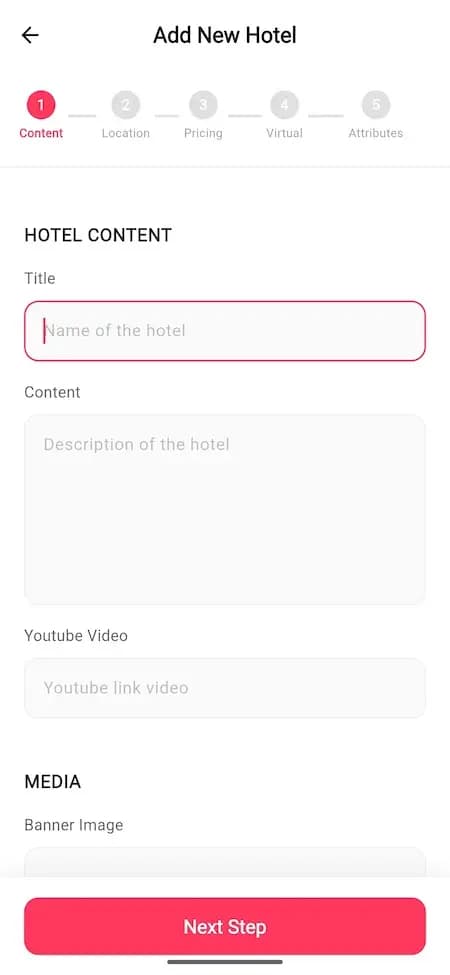
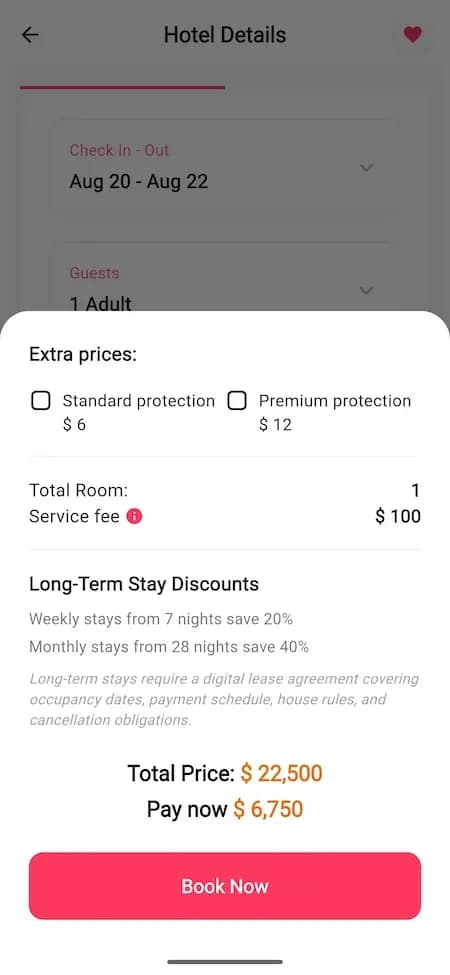
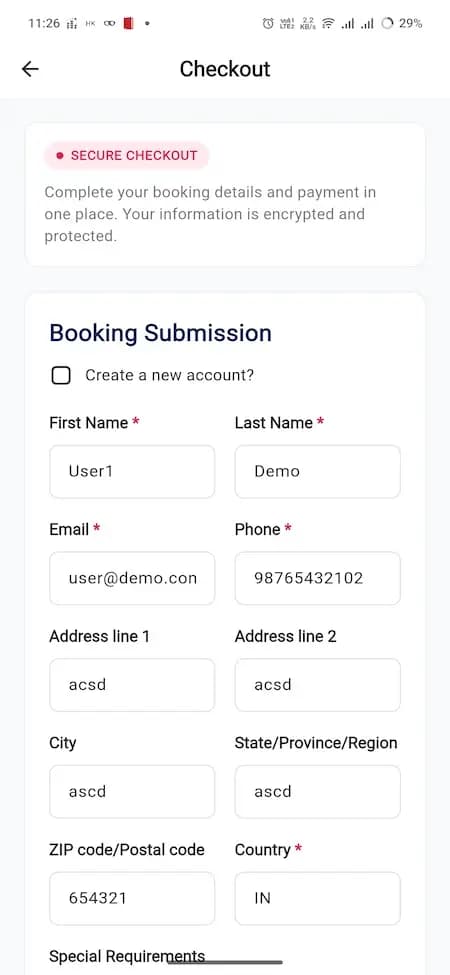
Feature breakdown with screenshots and mockups

Use listing-card mockups, booking calendar screens, host dashboard screenshots, and an admin view for reservations, disputes, and payout health.

The feature breakdown for airbnb clone is organized around the core workflow: host creates a listing, admin or automated checks approve it, guest searches with dates and filters, booking is confirmed or requested, payment is authorized, guest and host communicate, stay is completed, payouts are released, and reviews close the loop. During discovery, these features become annotated wireframes, clickable mockups, acceptance criteria, empty states, error states, permission rules, event tracking, and QA cases.

Core features include Property listing system, Discovery and map filters, Calendar and reservation flow, Guest-host communication, Reviews and verification, Payout and commission engine. These are not decorative cards. Each feature affects the database, APIs, roles, notifications, admin views, support policies, analytics, and future roadmap. That is why we scope feature behavior before writing production code.

Architecture and tech stack diagram

The architecture diagram for airbnb clone should show six layers: experience layer, API layer, workflow layer, data layer, integration layer, and operations layer. The experience layer includes role-specific apps and portals. The API layer controls authentication, permissions, business rules, and third-party communication. The workflow layer handles listing creation, search, filters, checkout or booking, payments, commissions, disputes, reviews, availability, and seller reporting. The data layer stores users, records, transactions, states, events, and audit history.

A practical stack for this solution can include Next.js marketplace frontend, React Native optional guest app, Node.js booking APIs, PostgreSQL availability model, Search indexing, Stripe Connect payouts, Cloudinary/S3 media storage, Maps integration, Transactional messaging. We usually recommend a modular backend for MVPs instead of premature microservices. The system should still isolate identity, permissions, transactions, notifications, admin actions, media, analytics, and payments so scale work does not require a rewrite.

User roles and workflows

The important roles for this solution are Guest: Search and book stays; Host: Publish and manage properties; Property manager: Operate many listings; Admin: Run marketplace trust and revenue. Each role needs its own permissions, navigation, state visibility, notification rules, and support context. A buyer, rider, seller, host, courier, creator, provider, or admin should never see the same product from a generic template lens.

The workflow we plan first is host creates a listing, admin or automated checks approve it, guest searches with dates and filters, booking is confirmed or requested, payment is authorized, guest and host communicate, stay is completed, payouts are released, and reviews close the loop. That workflow becomes the backbone for screens, APIs, permissions, notifications, admin actions, QA cases, and analytics. If the workflow is unclear, the interface can look polished while failing under real usage.
Admin panel capabilities

The admin panel is where airbnb clone becomes operable. For this product, admin capability should cover Listing review and quality control, Reservation and dispute management, Payout and tax reporting, Verification and moderation. A weak admin panel creates manual work, slow support, low trust, and poor visibility after launch.

We scope admin screens as first-class product surfaces: dashboard metrics, filters, detail views, approval queues, bulk actions, audit trails, exports, configuration controls, and role-based access. The admin panel should answer what happened, why it happened, who is responsible, and what action the business can take next.

Monetization models

The strongest monetization paths for airbnb clone include Guest and host service fees, Host plans, Featured stays, Add-on marketplace. Monetization should be designed before development because it affects database structure, checkout, payout flows, invoices, refunds, plan limits, analytics, and admin reporting.

For many clone-inspired platforms, the first version should support one primary revenue stream and one optional growth lever. Adding every possible revenue model in V1 slows launch and makes finance QA harder. The full build can expand into subscriptions, featured placement, enterprise plans, advertising, or partner revenue once real usage validates demand.

Cost estimation framework

The cost of airbnb clone depends on Search and calendar logic are core, Host self-service increases scope, Dispute and verification workflows matter, Payments, maps, and messaging add effort. The biggest mistake is estimating from a feature checklist without mapping roles, states, admin controls, integrations, and support scenarios.

For App Clone Labs, the first conversation usually maps product model, market, roles, integration needs, risk areas, and a first sprint plan. That creates a grounded estimate rather than a generic package price. Focused clone-inspired MVPs can often follow a 6-9 days path, while full commercial builds require a broader plan.

MVP scope vs full build comparison

For airbnb clone, the MVP should focus on Search, listing, booking, and payout loop and Limit complex travel rules. The MVP is not a weak product; it is the smallest complete operating loop with enough admin visibility, support readiness, and analytics to learn from real users.

The full build expands into Multi-property and multi-market operations and Insurance and advanced dispute workflows. This staged approach protects speed and quality at the same time. It gives founders something real to launch, measure, and sell without locking the product into a shallow template that cannot support the next version.

Build with clarity

Turn a proven product idea into an owned software platform.

Share the model you want to build, your market, timeline, and budget range. We will map the fastest credible launch path.

Build Airbnb Clone
Marketplace shopping bags for commerce platform content
Commerce marketplace operations
NDA-ready
Transparent pricing path
IP ownership