Age-restricted creator subscriptions

Fansly-style Age-restricted Creator Memberships — Custom-Built for Your Market

Tiered adult creator subscriptions with locked posts and direct fan access. Planned for compliant operators serving verified adult creators and subscribers with role-specific workflows, operator controls, integrations, and a handover boundary defined for the selected market.

See product screens and demo access

Custom workflows

Brand-safe product strategy

Admin and operations tooling

Reference walkthrough by arrangement

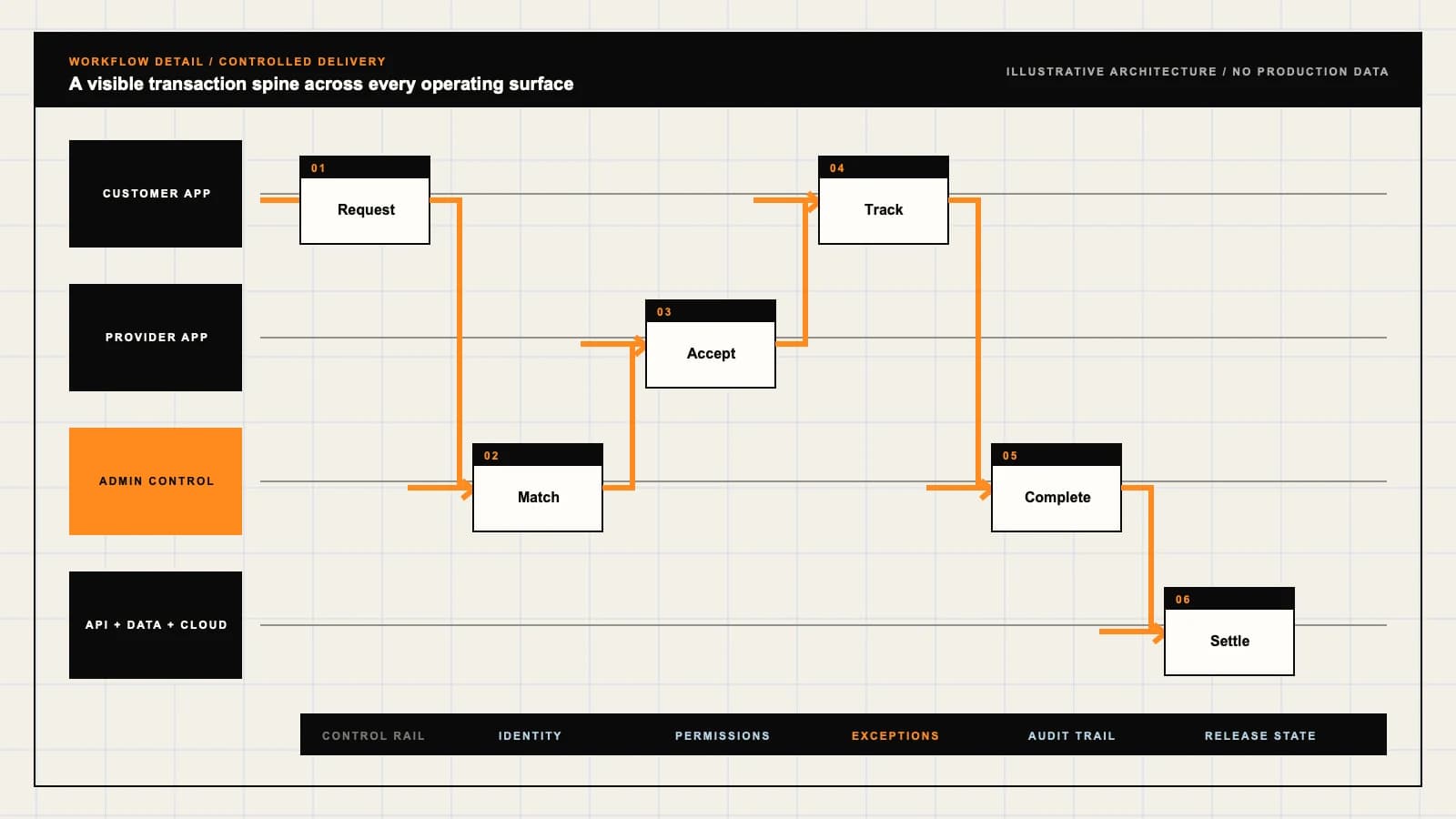
Workflow

Fansly-style Age-restricted Creator Memberships workflow stages.

Each workflow stage is mapped to a role, screen, API, notification, admin control, and measurable launch outcome.

01Qualify participation

Review adulthood, identity and permitted market access

Apply market-specific eligibility procedures before granting protected access or creator publishing. A simple checkbox must not be presented as completed specialist verification.

02Publish and grant access

Check asset permission independently of subscription status

Associate performer consent and rights evidence with the relevant media version. Grant the current tier entitlement through permissioned delivery rather than publicly reusable links.

03Review and reconcile

Separate safety decisions from payment outcomes

Track reports, access withdrawal, removals and appeals. Reconcile subscription charges and creator withdrawals without erasing the evidence behind a disputed decision.

Deployable Product Architecture

Workflow / system register

Revision DPlanning surface

Content platform

Fansly-style Age-restricted Creator Memberships workflow stages.

Publishing is only the start of the system

Content platform: Fansly-style Age-restricted Creator Memberships workflow stages.Publishing is only the start of the system. Entitlements, discovery, delivery quality, and governance work together.
01

Review adulthood, identity and permitted market access

02

Check asset permission independently of subscription status

03

Separate safety decisions from payment outcomes

Control note

Entitlements, discovery, delivery quality, and governance work together.

Illustrative architecture register; validate against the accepted scope.

Operator controls

Fansly-style Age-restricted Creator Memberships admin and operator controls.

The control center is scoped as a first-class product surface, not an afterthought.

01Consent provenance

Identify the person, permission and asset involved

Distinguish account-holder verification from each participant’s consent and publication rights. Preserve versioned records with restricted review and an established change or withdrawal process.

02Protected access

Enforce tiers without bypassing safety holds

Recheck media eligibility and subscriber entitlement at delivery. A paid unlock must not restore a removed asset or make an expired membership valid.

03Sensitive investigations

Limit evidence access to trained reviewers

Use reason-specific queues, audited permissions and bounded retention. Avoid sharing complainant details with a creator merely because the creator requests an explanation.

Integrations

Fansly-style Age-restricted Creator Memberships integration surface.

External systems that determine launch readiness, data flow, and operational continuity.

01Integration

Specialist age and identity services

Specialist age and identity services with approved market coverage, subject matching, minimized evidence retention and a review route for uncertain results

02Integration

Payment and payout systems

Eligible payment and payout systems with explicit business-model approval, reserve handling, unique financial references and withdrawal reconciliation

03Integration

Protected media and case tools

Protected media, fingerprinting and case-management tools with asset provenance, consent links, restricted evidence access and accountable removal propagation

Scope drivers

Fansly-style Age-restricted Creator Memberships scope drivers.

The variables that most influence build effort, cost, and launch readiness.

01Market and policy boundary

Establish where and what the operator may serve

Review content restrictions, age assurance, recordkeeping and notice duties by market. A software deployment does not establish the legal authority to operate everywhere.

02Rights and tier model

Define how publishing permission and paid access interact

Choose asset review, collaborator records, tier changes and purchase terms. Model permission withdrawal independently of membership billing.

03Staffed response

Budget for investigations as part of the product

Name trained review owners, escalation coverage and access controls. Automated flags can support triage but cannot be the only accountable removal or payout decision-maker.

Deployable Product Architecture

Scope drivers / system register

Revision CPlanning surface

Content platform

Fansly-style Age-restricted Creator Memberships scope drivers.

Publishing is only the start of the system

Content platform: Fansly-style Age-restricted Creator Memberships scope drivers.Publishing is only the start of the system. Entitlements, discovery, delivery quality, and governance work together.
01

Establish where and what the operator may serve

02

Define how publishing permission and paid access interact

03

Budget for investigations as part of the product

Control note

Entitlements, discovery, delivery quality, and governance work together.

Illustrative architecture register; validate against the accepted scope.

V1 scope

Fansly-style Age-restricted Creator Memberships V1 foundation.

Launch the smallest complete operating loop first, then scale the product with confidence.

01Bounded adult participation

Demonstrate eligibility without using real sensitive records

Use fictional identities to rehearse verification, publishing permissions and access restrictions. Define uncertain-result handling before inviting public participants.

02Versioned membership access

Connect tiers to permitted media deliberately

Support protected posts, current entitlements and clear renewal management. Keep public previews and notifications within the approved content and privacy policy.

03Report-to-resolution loop

Make removal and payment exceptions inspectable

Provide restricted reports, safety holds, consent review and reconciled withdrawals. Validate unresolved cases instead of displaying every action as immediately complete.

Later phases

Fansly-style Age-restricted Creator Memberships post-launch expansion.

Capabilities that should usually wait until real usage proves the core loop.

01Creator collaboration

Add publication authority before adding shared publishing

Map all participants, permission scope and versioned agreements. Shared account access must not let one collaborator approve consent for another.

02Additional market coverage

Requalify legal and provider arrangements first

Review local duties, age assurance and payment eligibility separately. Earlier approval in one territory is not a universal operating permission.

03Rights-monitoring assistance

Improve detection without claiming perfect protection

Evaluate fingerprinting and review suggestions against documented limitations. Keep restricted human escalation and do not promise that media can never be copied.

Deployable Product Architecture

Later phases / system register

Revision BPlanning surface

Content platform

Fansly-style Age-restricted Creator Memberships post-launch expansion.

Publishing is only the start of the system

Content platform: Fansly-style Age-restricted Creator Memberships post-launch expansion.Publishing is only the start of the system. Entitlements, discovery, delivery quality, and governance work together.
01

Add publication authority before adding shared publishing

02

Requalify legal and provider arrangements first

03

Improve detection without claiming perfect protection

Control note

Entitlements, discovery, delivery quality, and governance work together.

Illustrative architecture register; validate against the accepted scope.

Regulatory review

Fansly-style Age-restricted Creator Memberships regulatory and compliance flags.

Each flag must be reviewed by qualified counsel for your target market before build or launch.

Require age and identity verification for creators and age assurance for viewers

Capture performer consent, identity, and participation records

Operate proactive and reactive moderation with rapid escalation

Confirm payment-processor eligibility and restricted-content rules

Track creator ownership, licenses, and redistribution rights

Provide notice, appeal, copyright, privacy, and non-consensual-content takedowns

Review market-specific sexually explicit content and recordkeeping duties

Reference walkthrough

Request a Fansly-style Age-restricted Creator Memberships reference walkthrough.

Ask us to confirm which reference surfaces are currently available for this product model. Rather than publishing shared demo credentials, we schedule a private guided walkthrough for qualified buyers.

01Reference surface

Eligible subscriber: Understand the tier and its access boundaries

Request a role-specific demonstration and confirm which capabilities are currently available. Review the proposed responsibility: Review recurring terms and the content scope before subscribing. Manage account security, renewal and reports without gaining access to creator identity documents or investigation evidence.

02Reference surface

Verified creator and collaborators: Publish only material with established permission

Request a role-specific demonstration and confirm which capabilities are currently available. Review the proposed responsibility: Complete appropriate participation review, identify authorized collaborators and supply rights and consent provenance. Keep tier assignment separate from permission to publish a particular asset.

03Reference surface

Safety and payout operator: Investigate access, rights and financial exceptions

Request a role-specific demonstration and confirm which capabilities are currently available. Review the proposed responsibility: Handle restricted reports, removal actions and withdrawal records with scoped authority. Payment approval cannot override prohibited content or missing performer consent.

04Next step

Book a walkthrough

Request a live, private walkthrough of the reference implementation. We will confirm scope and discuss configured deployment versus custom build for your market.

Open register

Deployable Product Architecture

Reference walkthrough / system register

Revision EPlanning surface

Content platform

Request a Fansly-style Age-restricted Creator Memberships reference walkthrough.

Publishing is only the start of the system

Content platform: Request a Fansly-style Age-restricted Creator Memberships reference walkthrough.Publishing is only the start of the system. Entitlements, discovery, delivery quality, and governance work together.
01

Eligible subscriber: Understand the tier and its access boundaries

02

Verified creator and collaborators: Publish only material with established permission

03

Safety and payout operator: Investigate access, rights and financial exceptions

04

Book a walkthrough

Control note

Entitlements, discovery, delivery quality, and governance work together.

Illustrative architecture register; validate against the accepted scope.

User roles

Fansly-style Age-restricted Creator Memberships roles and workflows.

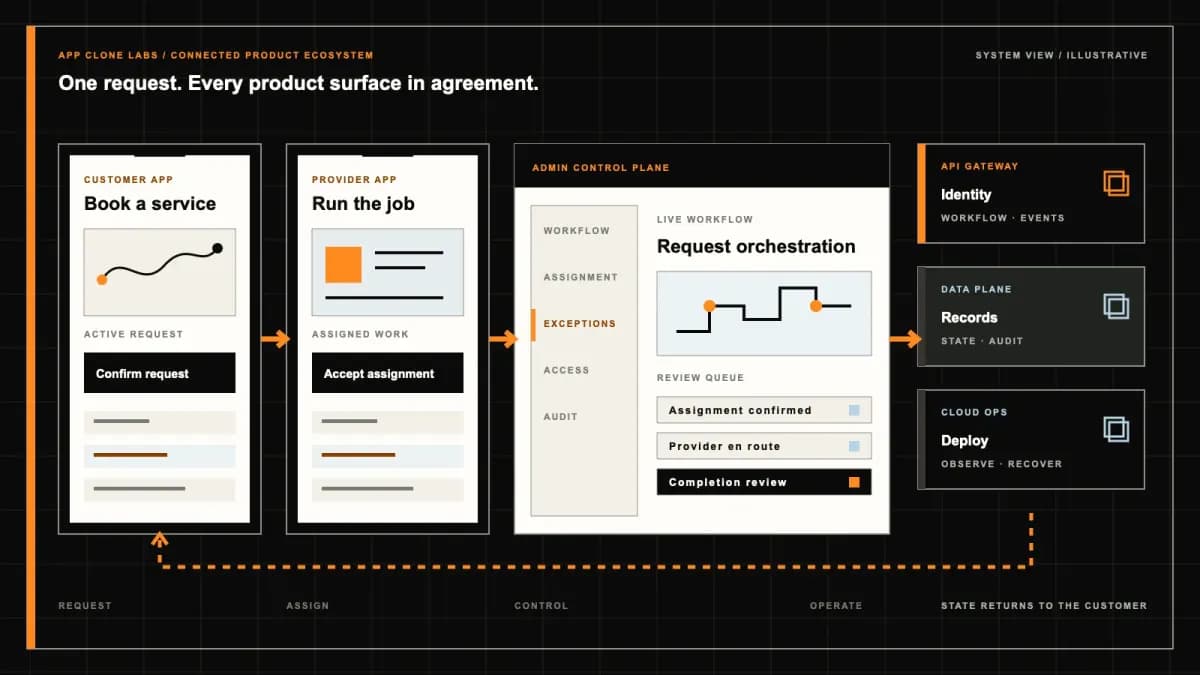
Clone-inspired platforms usually need several coordinated interfaces, not just a customer app.

01Eligible subscriber

Understand the tier and its access boundaries

Review recurring terms and the content scope before subscribing. Manage account security, renewal and reports without gaining access to creator identity documents or investigation evidence.

02Verified creator and collaborators

Publish only material with established permission

Complete appropriate participation review, identify authorized collaborators and supply rights and consent provenance. Keep tier assignment separate from permission to publish a particular asset.

03Safety and payout operator

Investigate access, rights and financial exceptions

Handle restricted reports, removal actions and withdrawal records with scoped authority. Payment approval cannot override prohibited content or missing performer consent.

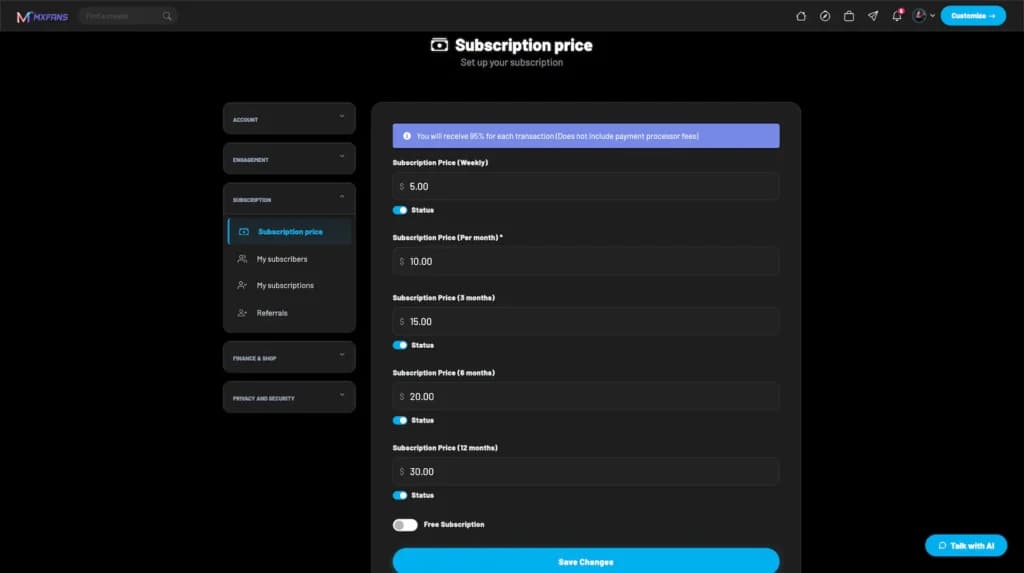
Trace creator tiers from verified eligibility to protected access.

Use this sample membership-pricing screen to frame a Fansly-style platform review. Ask to demonstrate tier entitlements, locked-media purchases and consent-linked publishing separately from pricing. Establish the verification services, eligible payment provider and investigation responsibilities for your launch markets before agreeing scope.

Sample creator membership settings with billing-period price fields, status switches and a free-subscription option

Sample creator membership settings with billing-period price fields, status switches and a free-subscription option

Illustrative membership-pricing screen carrying MXFans demo branding, not official Fansly UI or an affiliation claim. Prices, periods and the 95% notice are sample values, not quoted fees or payout terms. This screen does not demonstrate working subscriptions, payouts, age verification, performer consent or moderation.

What to check in the walkthrough

  • How does each tier control access after adult eligibility is checked? Ask to trace a subscription from the verification result to a protected post, then test an expired verification, tier downgrade and failed renewal against the entitlement record.
  • Can a locked-media purchase be reconciled independently of the membership? Ask to follow a receipt through access and refunds, then test duplicate payment events and a disputed charge; confirm processor eligibility, reserves and payout-hold handling rather than adopting the sample revenue share.
  • What happens when a collaborator withdraws consent or a protected post is reported? Ask to inspect performer-linked consent records, publishing restrictions, investigation access and takedown steps, including already purchased media and an appeal; pricing settings establish none of these controls.
Open full-size reference

Product flow

Role-workflow flow diagram.

A visual map of how each role interacts with each workflow stage, with operator controls and integration boundaries.

Deployable Product Architecture

Fansly-style Age-restricted Creator Memberships

REVIEW ADULTHOOD,…CHECK ASSET PERMI…SEPARATE SAFETY D…Understand the ti…Publish only mate…Investigate acces…INTEGRATIONS: Specialist age and identity services with approved market coverage, subject…OPERATOR CONTROLS: Identify the person, permission and asset involved · Enforce tiers without …
Illustrative validation artifact — role-workflow flow diagram; final surfaces, boundaries, and integration topology are confirmed during discovery.

Monetization

Fansly-style Age-restricted Creator Memberships monetization models.

We model monetization early so payments, admin controls, and reporting support the business.

Explain the recurring commitment and creator amount

Disclose renewal, tier coverage and adjustment terms. Report platform deductions separately from creator balances and do not promise predictable earnings.

Connect one purchase to an eligible asset

Preserve the asset version, agreed access scope and payment outcome. Processor eligibility and publication permission are prerequisites, not consequences of a successful charge.

Define the approved transaction boundary

Review permitted payment types with the selected provider and counsel. Do not introduce unrestricted transfers or reclassify prohibited activity to avoid processor rules.

A paid tier does not establish permission to publish the media

A creator passes an account identity check and assigns a new post to a paid tier. A collaborator later reports that publication was not authorized. The subscriber payment, creator verification and media permission are three different records. If the platform treats the first two as proof of the third, it cannot explain why the post should remain available or what must happen while the report is reviewed.

A Fansly-style membership concept concerns independently branded, age-restricted creator software with tiered access and protected publishing. This non-graphic planning page addresses eligibility, consent, rights, account security and operator responsibilities. It does not supply Fansly affiliation, creators, subscribers, payment approval or proprietary infrastructure. The existing planning and indexing disposition remains unchanged. Legal review, eligible vendors and staffed safety operations are prerequisites to public operation, not implied deliverables of an attractive subscription interface.

An adult account holder can still lack permission to publish a particular asset involving another person. Define the separate decisions for subscriber eligibility, creator identity and each participant’s publication consent. Identify the subject of each check and the evidence supporting it. A generic verified badge should not suggest that every uploaded file and collaborator has passed the same review.

Use specialist review appropriate to the chosen market and minimize retained identity information. Record uncertain or expired results with a restricted recovery route rather than automatically permitting access. Consent evidence needs its own scope and asset relationship, including who provided it and which version it covers. Rehearse a verified creator uploading material with an unreviewed collaborator. Publishing should remain blocked or held under the established policy while membership billing and account security retain their separate states.

Keep rights provenance attached to the published asset version

Upload permission, performer consent and copyright ownership answer different questions. Preserve the relevant provenance for a media version rather than relying on a creator’s general account declaration. A replacement upload or edited compilation may need renewed review. State which rights the operator receives to host, deliver or preview the asset and which uses remain outside the agreement.

Collaborators need their own authority boundaries; one account owner cannot silently attest on behalf of every person involved. Record changes, permission disputes and withdrawal requests through a reviewed process. Do not erase earlier evidence when a creator updates a form. Counsel should establish applicable recordkeeping and retention duties, including treatment of sensitive records after removal. The software can maintain a restricted history, but it cannot establish lawful publication merely from a file timestamp or a completed checkbox.

Tier entitlements need dates, versions and explicit renewal terms

A subscriber joining a tier needs to understand what access begins, when renewal occurs and what changes if the tier is replaced. Distinguish ongoing membership from a separately purchased asset and any time-limited access. Preserve the terms accepted at the transaction rather than applying a newly edited tier description to every historical subscriber automatically.

Upgrade, downgrade, cancellation and failed renewal can alter access on different dates. Define the chosen rules and explain pending payment states. A higher tier must not bypass a content hold, and a prior paid unlock must not restore removed media. Rehearse two devices with different cached membership states after cancellation. The delivery service should check current entitlement and asset eligibility, while customer screens explain why the accessible catalog changed without exposing confidential safety findings.

Creator analytics should describe authorized membership events without becoming another sensitive-data export. Aggregate useful renewal and access information under the approved privacy rules, and restrict identities where they are not needed for the task. A marketing assistant should not infer confidential reports from an unexplained access change or obtain a list of complainants through an engagement dashboard. Review exports and scheduled notifications alongside ordinary account screens.

Processor eligibility is a launch dependency, not a checkout feature

The Stripe prohibited-business policy lists adult content and services among prohibited categories. This is a warning against assuming a familiar processor will support the concept, not a recommendation that Stripe can process it. Choose providers only after explicit review of the actual business model, markets and permitted transaction types.

Obtain the relevant commercial arrangements before presenting working payment acceptance as a deliverable. Model reserves, disputes, failed renewals and withdrawal constraints according to those arrangements. A successful sandbox payment does not establish live underwriting approval. Do not relabel content transactions as unrelated goods or unrestricted donations to evade provider restrictions. If approval changes, the operator needs a controlled suspension and customer communication plan, with unresolved balances still visible for reconciliation rather than simply switching on another connector.

Protected delivery reduces exposure without promising uncopyable media

A subscription paywall is not a permission system if the underlying media URL remains publicly reusable. Establish server-side access decisions, appropriate delivery expiry and separation between public previews and protected assets. Recheck entitlement and safety eligibility when serving the media, including after removal or a disputed account recovery. Protect origin access and avoid revealing sensitive paths in general logs.

No interface can responsibly guarantee that authorized viewers will never capture or redistribute media. Evaluate watermarking or fingerprinting under stated limitations and appropriate rights. A detection suggestion requires a reviewed response, not an automatic accusation. Notifications, analytics and shared previews also need content and privacy boundaries. Rehearse an expired delivery link, a withdrawn asset and a logged-out device so the platform does not confuse a cached page with current authorization.

Provide a restricted report path for nonconsensual material

The FTC TAKE IT DOWN Act explanation describes notice and removal duties for covered United States platforms, including action on valid requests and known identical copies within 48 hours. Qualified counsel must determine applicability and other local duties. This reference does not make a generic moderation dashboard legally sufficient.

Make reporting findable without forcing a complainant to purchase access or expose sensitive details publicly. Assign a case identifier, track receipt and route time-sensitive reports to authorized staff. Distinguish safety reports, rights complaints and ordinary billing disputes. Avoid placing the reported material or complainant identity into broad support notifications. Operators need documented validation, escalation and status communication, with review access limited to the personnel who actually require it.

Removal must propagate beyond the creator’s visible post

Removing a catalog entry may leave a preview, cached rendition or delivery link available. Map the copies and distribution surfaces the operator controls and establish how restriction propagates to them. Track actions and failures without assuming that a successful database update proves removal everywhere. Preserve required restricted evidence under the approved policy rather than leaving it in ordinary media browsing.

Define the review route for mistaken matches or disputed decisions, while respecting applicable safety and removal requirements. A creator appeal must not automatically restore the content or reveal complainant evidence. Rehearse a blocked original with an older preview still available and a newly uploaded matching file. The console should show which surfaces were addressed, which remain unresolved and who owns the follow-up. Detection systems assist that work; they do not replace accountable investigation.

Keep account recovery from becoming a bypass for protected access

An account takeover can expose private messages, payment history and creator publishing permissions. Scope session revocation, authentication recovery and sensitive account changes deliberately. A support worker who resets login access should not automatically approve a new withdrawal destination or remove a publishing hold. Keep meaningful notifications from disclosing private account activity on shared devices.

Review authority for assistants and creator teams separately from the owner account. Content scheduling, billing help and investigation access should not share unrestricted credentials. Record who performed a privileged action and restrict bulk exports of identity or consent evidence. Rehearse a removed assistant with an old session and a creator requesting recovery while a payout change is pending. Reconnection must recover the current restrictions, not restore privileges from stale client-side state.

Separate subscription disputes from creator withdrawal records

A subscriber charge, platform deduction and creator withdrawal are related but not interchangeable. Keep amounts, provider references and adjustment reasons identifiable. State when a creator balance is pending, eligible, held or submitted for payment under the reviewed arrangement. An approval in the operator console is not proof that funds reached the destination.

Duplicate callbacks should reconcile an existing transaction rather than repeat a charge or withdrawal. Unknown provider outcomes need an explicit queue and an accountable reviewer. Fraud investigations, refunds and reserves may change availability but should not rewrite historical earnings or erase the underlying report. Show creators an appropriately bounded explanation without disclosing another participant’s private evidence. Test a partial refund arriving after a withdrawal request so finance can explain the remaining obligation and approved next action.

Choose staffed operating coverage before expanding interactions

Compare the LoyalFans-style community planning model when live experiences and ongoing interaction become central. Tiered publishing is already a substantial consent, rights and response operation; adding more channels changes staffing and evidence requirements rather than merely adding another media tab.

Establish the initial markets, allowed publishing formats and restricted interaction policy. Name trained owners for safety cases, access complaints and financial reconciliation, with coverage appropriate to the duties identified by counsel. Automation can prioritize a queue but must not be advertised as universal compliance. Additional regions, collaboration features or payment types need separate approval. Subscriber counts and tier variety are not evidence that the platform can sustain the required review capacity or safely expand its operating boundaries.

Validate a withheld asset and an unresolved withdrawal before acceptance

Use a non-graphic sandbox with fictional participants, synthetic records and harmless placeholder media. Illustrative screenshots describe the intended interface, not verified creators, processor approval or proven safety effectiveness. Buyer acceptance should test missing collaborator consent, expired eligibility, changed tiers and a reported asset with multiple controlled copies. Inspect subscriber, creator and restricted operator views together.

Then revoke a team member, replay a payment callback and hold a withdrawal while its provider outcome remains uncertain. Confirm role permissions, case history and the ability to explain the unresolved states without exposing private documents. Agree source ownership, third-party licenses, deployment access, staffing and qualified review responsibilities in the contract. A credible decision depends on demonstrated boundaries and recovery, not a promise that a membership script makes the operation compliant automatically.

Bring one tier contract and a non-graphic rights-review scenario to a restricted creator-platform scope discussion to identify the required qualifications before implementation.

Use the delivery process to establish consent, entitlement, removal and withdrawal-reconciliation checkpoints before any public launch decision.

FAQ

Questions to resolve before the build.

01Does this provide Fansly creators, subscribers or proprietary systems?

No. This is independently branded planning for creator membership software. It does not include affiliation, participants, payment-provider approval or the reference company’s infrastructure.

02Is creator identity verification sufficient for every upload?

No. Account identity, adulthood, each participant’s consent and publication rights are separate decisions. Attach appropriate provenance to the relevant media version.

03Can one collaborator approve permission for everyone involved?

Not automatically. Establish each participant’s authority and consent under the reviewed process. A shared account declaration is not universal permission to publish.

04How should tier changes affect existing subscriptions?

Preserve accepted terms, effective dates and the chosen upgrade or downgrade rules. Distinguish membership access from separate purchases and never let a tier bypass a safety hold.

05Can Stripe be assumed to process this business model?

No. Its prohibited-business policy includes adult content and services. An eligible provider and explicit approval of the actual model are separate launch dependencies.

06Does protected delivery prevent all copying?

No. Access controls and reviewed detection can reduce exposure, but they cannot guarantee that authorized viewers never capture or redistribute media.

07Must a person subscribe to submit a safety report?

The report process should not require purchasing access. Establish findable, restricted intake, case tracking and escalation appropriate to the applicable duties.

08Does hiding a post complete a removal action?

Not necessarily. Review controlled previews, renditions, cached surfaces and delivery links, and track unresolved actions with accountable ownership and appropriate evidence handling.

09Can an ordinary support worker inspect consent documents?

Only where the reviewed role genuinely requires it. Restrict sensitive evidence, record privileged access and separate login help from investigation or payout authority.

10Is an approved withdrawal proof of money received?

No. Distinguish eligibility, approval, provider submission and confirmed outcome. Reconcile duplicate events and uncertain responses against identifiable financial records.

11Does the software guarantee regulatory compliance?

No. Market-specific legal review, recordkeeping, age assurance, provider eligibility and staffed response remain operator responsibilities. Configured controls support those arrangements but do not certify them.

12What should a buyer test in the demonstration?

Use fictional, non-graphic material to rehearse missing consent, expired eligibility, changed tiers, restricted reports, removal propagation, revoked sessions and uncertain withdrawals. Inspect permissions and recoverable evidence.

Solution reference register

01 / Reference and IP

This page references third-party product names only to describe familiar product models and planning references. App Clone Labs is not affiliated with or endorsed by those brands. Build decisions require independent legal, regulatory, and operational review for your market.

02 / Regulatory caveat

Require age and identity verification for creators and age assurance for viewers · Capture performer consent, identity, and participation records · Operate proactive and reactive moderation with rapid escalation · Confirm payment-processor eligibility and restricted-content rules · Track creator ownership, licenses, and redistribution rights · Provide notice, appeal, copyright, privacy, and non-consensual-content takedowns · Review market-specific sexually explicit content and recordkeeping duties

Primary sources

References behind this page

Dated official documentation, standards, and research that support the factual claims on this page.

  1. 01
  2. 02

How to read this page

Scope, cost and timeline figures are planning guidance until confirmed in a written proposal. Diagrams and screens are illustrations, not client deliverables, and source-code rights and handover follow the signed agreement. See the delivery process and the full disclaimer.

Next decision

Turn the brief into an accepted product scope.

Define outcomes, constraints, evidence, rights and handover before delivery begins.

Commercial rights, repositories, environments, documentation, acceptance and handover remain contract-defined.

Independent from Fansly

App Clone Labs is not affiliated with, sponsored by, or endorsed by Fansly. The name identifies a familiar product category; every delivered product is independently designed and built, and the mark remains its owner's property. Read the full legal notice.