A club renewal, a tip and a paid message are different promises
A member renews a creator club, sends a tip and purchases a locked message on the same evening. The membership later expires while the message remains in their inbox. Support needs three identifiable agreements to explain what access continues, what payment was voluntary and what delivery was promised. Treating every charge as a single supporter balance makes cancellation, disputes and creator statements difficult to resolve.
LoyalFans-style software planning starts with recurring community access and permitted member interactions. This non-graphic page concerns an independently branded adult creator platform, including identity, consent, media rights and operational controls. It does not provide LoyalFans affiliation, participants, proprietary infrastructure or processor approval. Publish only permitted formats under a documented, market-specific operating policy. A functioning interface cannot establish the authority, qualified review or commercial arrangements required for public operation.
Define the recurring club contract before designing retention
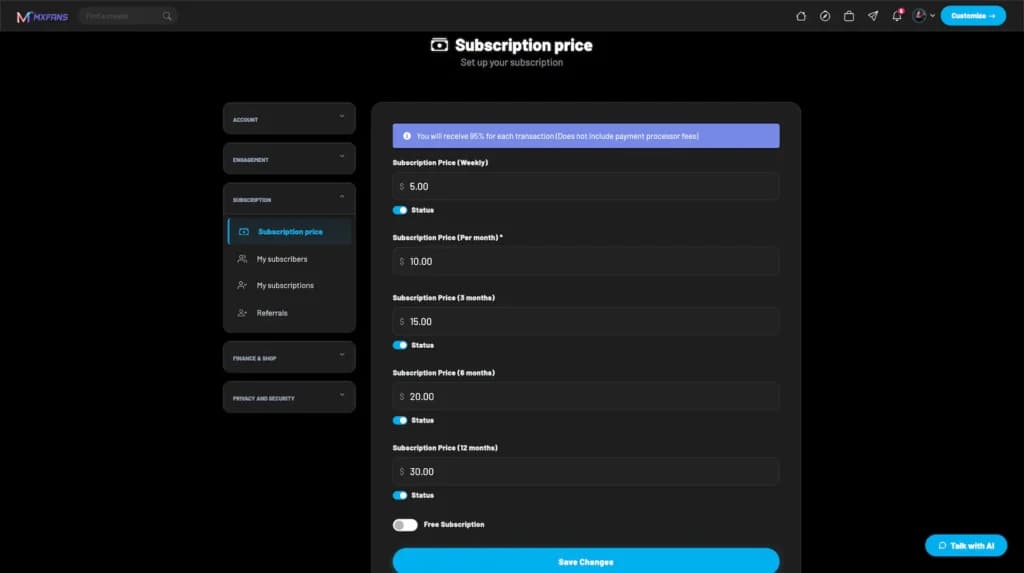
Record what membership includes, its billing frequency and the effective date of cancellation. A club may offer protected posts, while individual messages remain separate purchases under their own terms. Preserve the agreement accepted at checkout rather than silently applying a newly edited description to historical members. Members need a readable account view for upcoming renewal, pending cancellation and failed payment.
A creator pausing publication raises a different question from a subscriber canceling payment. Decide how those situations affect charges and access before building reminders. Test a renewal arriving while cancellation is being confirmed on another device. The system must reconcile the actual outcome and explain the applicable access period. Retention prompts should not conceal cancellation controls or suggest that membership guarantees personal attention, replies or continuing availability of every asset.
Verify identities without substituting account ownership for consent
Identify whose adulthood and identity are being checked: the member, the creator or another participant in uploaded material. These decisions have different subjects and evidence. A verified creator account is not permission to publish every person appearing in a file. Define uncertain, expired and disputed verification outcomes with restricted review instead of displaying the same badge for all cases.
Use specialist procedures appropriate to the chosen market and minimize the identity information retained by the platform. Separate the public creator name from sensitive verification records. Each participant needs independent consent that covers the relevant publication and permitted uses. Rehearse a creator whose identity passes review but whose collaborator has not authorized the asset. Publishing must remain held under the policy even if the club has already collected subscriptions or the uploader owns the account.
A creator may own a recording while lacking permission for a particular participant’s appearance or for an incorporated licensed asset. Keep copyright authority, individual consent and the operator’s hosting license distinguishable. Associate evidence with the media version being delivered. Replacing a file, editing a compilation or changing its distribution scope can require renewed review rather than inheriting a general account declaration.
Define permission changes and disputes through an accountable process. A creator assistant should not authorize another participant’s consent simply because they can schedule posts. Keep earlier records restricted when a new version is submitted, and establish retention duties with qualified counsel. Test a paid message containing an asset that is later withheld. The member’s payment record must remain identifiable while delivery restrictions apply; a completed purchase cannot manufacture missing publication rights or override a safety decision.
Keep tips and paid messages within explicit transaction boundaries
A voluntary tip needs a clear explanation of whether it grants any entitlement. Avoid implying that support purchases unspecified future interactions or guarantees a reply. For a paid message, state what the member receives, the permitted access conditions and the handling of failed delivery. Message price, payment confirmation and media authorization should remain separate facts, each visible to the people who need them.
Define which interactions the operator and provider allow before enabling checkout. Private conversations require blocking, reporting and reviewed attachment rules alongside payment records. Notifications should not reveal message content or spending details on shared devices. Test a duplicate purchase event and a message whose attachment becomes restricted before opening. The platform should resolve the purchase outcome without exposing investigation evidence, charging again or restoring prohibited material merely to make the delivery counter look successful.
Processor eligibility belongs in the operating plan
The Stripe prohibited-business policy includes adult content and services among prohibited categories. A generic creator-platform integration therefore cannot establish that Stripe supports this concept. Obtain explicit eligibility for the actual business model, markets and transaction types from suitable providers before presenting live payment acceptance as a deliverable.
Document the relevant arrangements for subscriptions, paid messages, tips, disputes and creator payouts. Sandbox callbacks demonstrate integration behavior, not underwriting approval. Do not reclassify transactions as unrelated goods or donations to evade restrictions. Review what happens if approval changes: stop affected acceptance, communicate accurately and keep unresolved balances available for reconciliation. Provider switching is another reviewed commercial decision, not an automatic fallback that makes a prohibited transaction eligible. Procurement should identify responsibility for these arrangements separately from software implementation and visual design.
Reconcile disputed payments before promising creator payouts
A creator statement should distinguish gross charges, platform deductions, refunds, reserves and funds eligible for payout. A membership dispute may arise after a payout request, so the ledger must retain its transaction relationship and adjustment reason. Keep provider references and outcomes identifiable. An operator clicking approve means the request passed that internal step; it does not mean money reached the destination.
Duplicate events must update the existing financial record rather than issue another payout. Unknown outcomes require a visible review queue, while failed destination checks need a bounded correction process. A payout destination change should have stronger authority than ordinary login recovery. Rehearse a partial refund after a request enters submission and inspect both creator and finance views. Finance must explain the remaining obligation without rewriting historical earnings or exposing private safety reports in a balance explanation.