A current answer needs a cutoff and sources that support it
A researcher asks whether a product launch has been delayed. A widely shared post says yes, yesterday’s company announcement says no, and the latest official page cannot be reached. A Grok-style current-context assistant should expose that conflict. The useful answer identifies the searched window, available evidence and unresolved claim. A confident sentence labeled current cannot establish what happened while the primary source was unavailable or whether the social post reflects a confirmed development.
The official xAI web-search documentation describes searching and browsing web information. This supports the product-category reference, not a guarantee of complete coverage or correct conclusions. App Clone Labs scopes independently branded software with separately established providers, source permissions and editorial responsibility. The brief does not include xAI affiliation, live feed rights or guaranteed current truth. Select a research question the intended sources and reviewers can meaningfully address.
Define what current means for the selected question
Ask for the subject, relevant geography and time window when they affect the answer. A question about an announcement today differs from a question about the latest confirmed status of an older event. Show the answer’s cutoff with an appropriate time zone and distinguish the event date from publication and retrieval times. Fetching a page this morning does not make its unchanged article a new report.
Decide how the assistant handles missing timestamps, updated pages and material outside the requested window. Explain when it falls back to older context rather than quietly presenting it as fresh evidence. Rehearse a report published after midnight in another zone and a page whose visible update changes only its formatting. The researcher should see why a source was included and what remains outside coverage. Recency is a selection rule, not a substitute for relevance or source quality.
Source coverage needs permissions and an honest boundary
Choose the web domains, social sources and licensed feeds the first release may access. Establish provider accounts and source-specific use, quotation and retention terms before describing a feed as included. A search result can identify material that the product cannot lawfully store or redistribute in full. Make those boundaries visible to editors selecting sources and members exporting research, instead of implying that connectivity supplies unrestricted ownership of the underlying content.
Distinguish an empty result from an access failure, an unsupported language and an excluded source. Keep the selected search configuration with the run so an editor can explain coverage later. Rehearse a licensed feed rejecting an expired entitlement and a member trying to search a source outside their project’s permissions. Preserve the question and explain the unavailable coverage. A fallback must not silently bypass the source restriction or move private query context to a provider with different handling terms.
Social posts are evidence of a claim, not proof of the event
The official xAI X-search documentation describes searching social content and fetching threads. It is a reference for an eligible integration surface, not permission to copy every post or an assurance that retrieved claims are accurate. Establish independent access and reuse arrangements for the selected product.
Attribute a social claim to its source and inspect surrounding context before summarizing it. Reposts, screenshots and multiple accounts repeating the same message may all trace back to one unsupported assertion. Distinguish firsthand reporting from commentary and identify parody, impersonation or missing context when the available evidence supports that qualification. Rehearse a viral screenshot contradicted by its original thread. Do not convert engagement counts, a recognizable profile or repetition into verification. If reliable corroboration is missing, preserve that uncertainty in the answer rather than burying it behind an enthusiastic summary.
Citations should support individual claims and remain inspectable
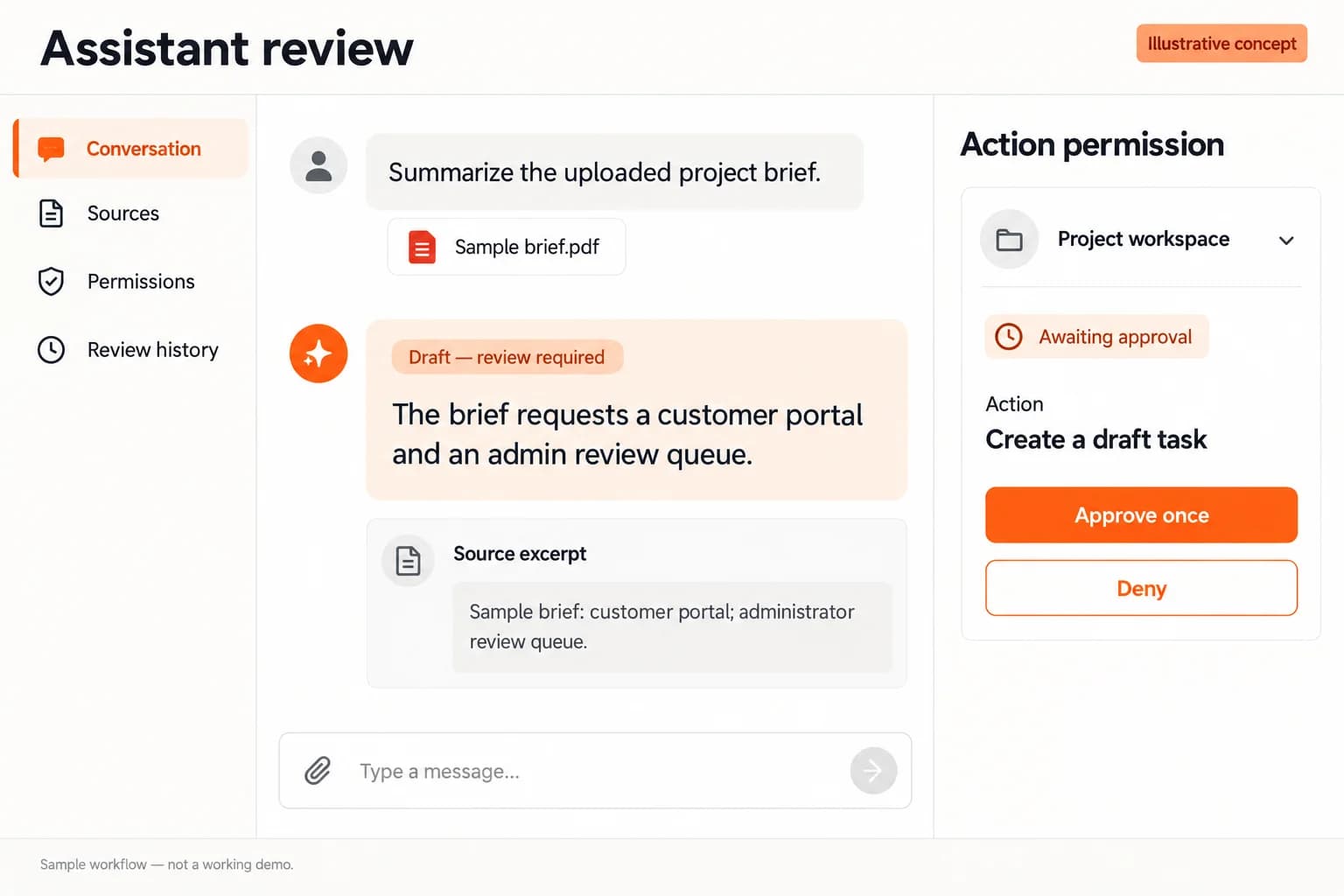
Connect material conclusions to relevant source references, with publication context and a retrieval record appropriate to the selected policy. Let the reviewer open the supporting passage instead of treating a link list as sufficient evidence. A document mentioning a company does not necessarily support the generated statement about its launch. Separate a quoted fact, reported allegation and model inference so readers can see where interpretation begins.
Retain enough permitted evidence to investigate a source that later changes or disappears. Do not claim a stored excerpt preserves complete context when only a limited section was captured. Rehearse a citation to the wrong article, a changed headline and an inaccessible source after an answer is saved. The artifact should describe the limitation without inventing replacement evidence. Quotation limits and content rights still apply to previews, exports and review screens; citation is attribution, not unlimited republication permission.
Contradictory reports need comparison before a conclusion
When sources disagree, identify the contested detail, their dates and whether they describe the same event. One report may concern a regional release while another discusses a global launch. A newer derivative article may repeat an older mistake. Prefer appropriate primary evidence when available, but inspect what it actually establishes rather than treating an official logo as an answer to every surrounding question.
Preserve unresolved disagreement and state what additional evidence would settle it. The assistant should not average incompatible claims into a false compromise or select the most repeated statement automatically. Rehearse a correction issued after several outlets copied the original story and a source that revises its estimate without explaining the change. Give editors a way to annotate the disputed conclusion while keeping source records intact. A qualified answer can be useful even when the current evidence does not support a definitive yes or no.
Stale caches and outages must change the answer’s status
Define the refresh and cache behavior for each source category. Display whether the answer uses a fresh retrieval, a permitted cached result or incomplete coverage. A failed refresh must not leave an old response wearing an unchanged current label. Keep the last successful retrieval separate from the latest attempted search. Explain whether the displayed result remains useful background or requires renewed checking before a reader acts on it.
Rehearse a provider timeout, a source returning an error and a response interrupted before generation completes. Preserve partial results with their limits rather than fabricating a completed search. A successful search against one source does not establish that every configured feed was checked. Decide when the product should stop, ask for a narrower question or provide a qualified historical answer. Operations needs the failed route and recovery owner; the researcher needs an honest account of what evidence is available now.