A scheduled newsletter needs a final eligibility check
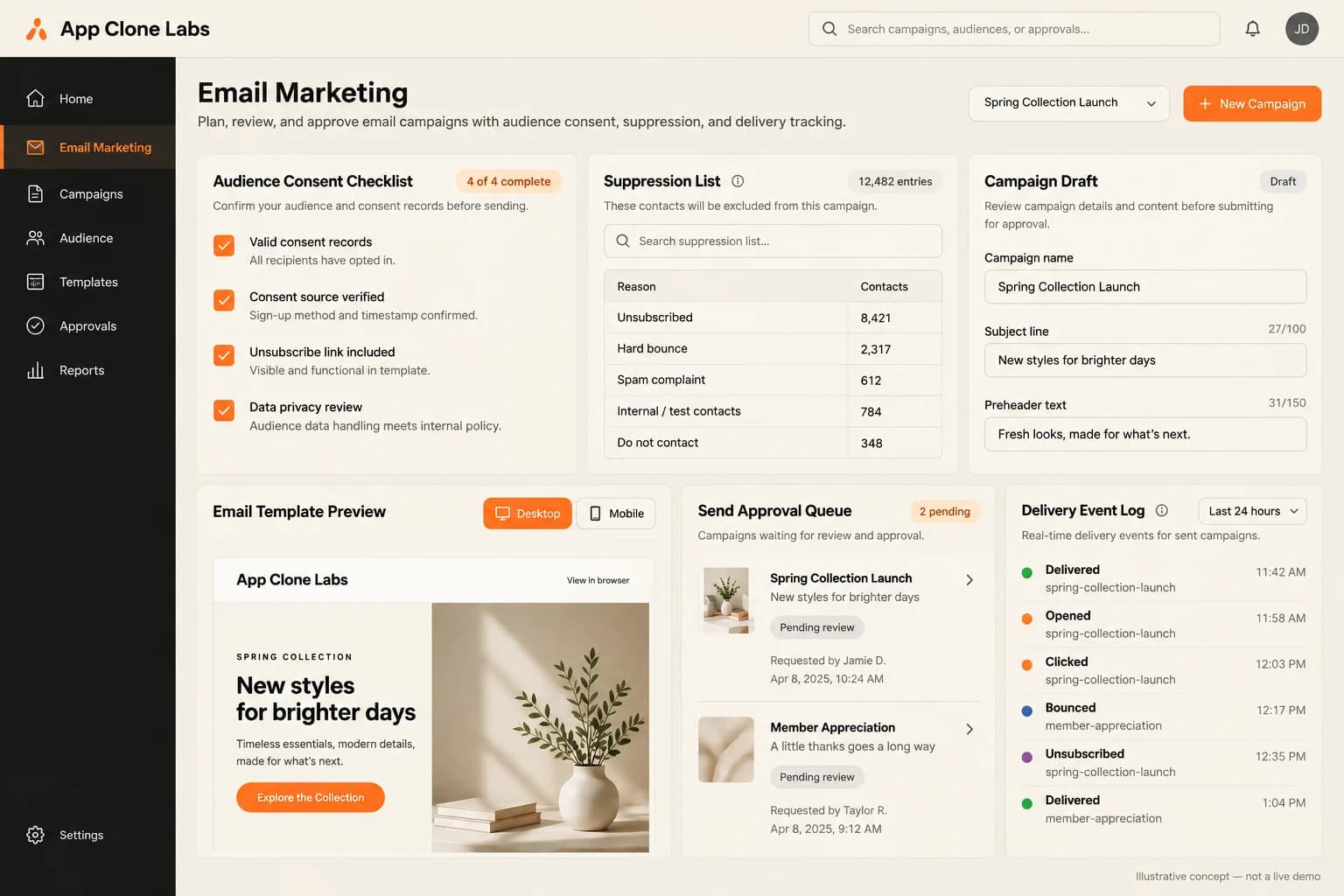
An editor approves Friday’s product newsletter on Thursday afternoon. Overnight, a subscriber withdraws permission and a store import brings the same address back with an old subscribed flag. The newsletter should explain why that person is excluded before the first dispatch attempt. A campaign studio earns its usefulness at this boundary: a polished preview must lead to an accountable decision about who receives the message.
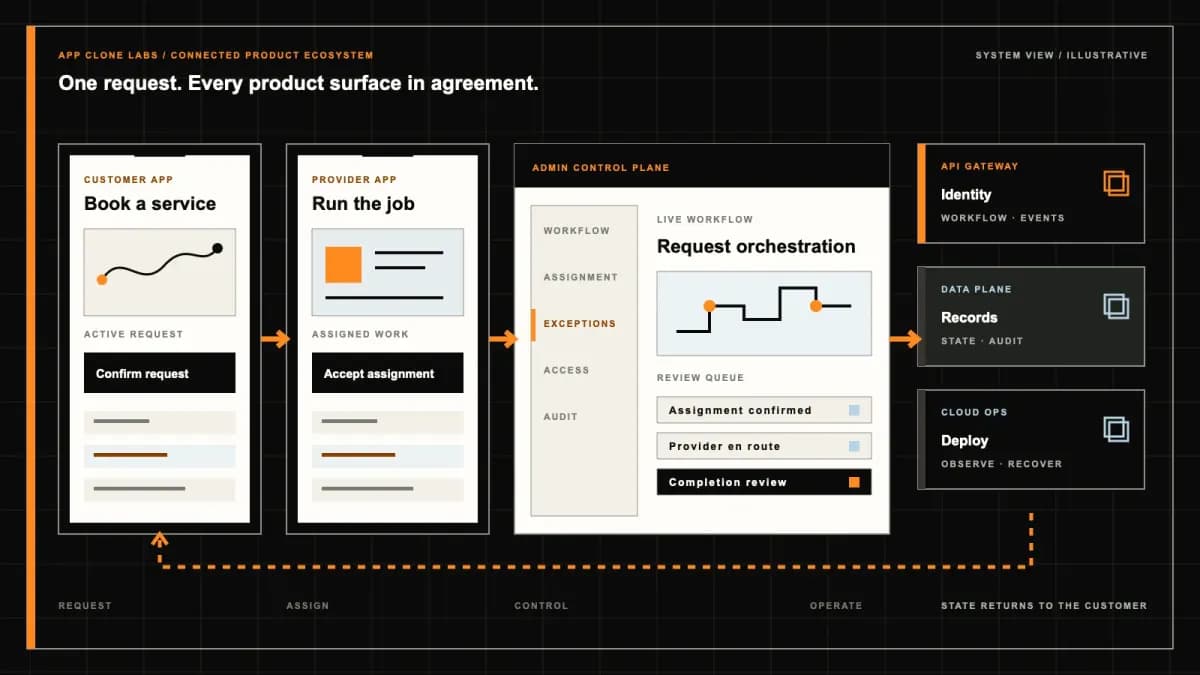
A Mailchimp-style build is an independently branded workspace for permissioned audiences, accessible templates, campaign approval and sending reports. The reference describes a familiar category; it does not include Mailchimp affiliation, proprietary software, contact data or provider arrangements. Start with a newsletter or commerce campaign your team can review from import through outcome. Agree the audience purpose, sending responsibility and evidence needed for release before specifying a larger library of editing controls.
Scope a campaign studio around one publishing decision
Use a concrete brief: a store marketer needs to announce a seasonal collection to customers who requested that type of update. Name the audience owner, content editor, reviewer and person allowed to schedule the send. Decide what each role can inspect or export. A small organization may combine roles, but approval and sending authority still need explicit permissions and a record of the decision.
Compare the ActiveCampaign-style customer automation workspace when the requirement is an event-triggered journey with branches, waits and sales handoffs. This campaign brief centers on preparing and publishing a reviewed message. Commerce sequences can follow after the team defines entry events, exit rules and competing frequency limits. Reusing a template does not supply those journey semantics, and an elaborate automation editor is unnecessary for a first newsletter release.
An import must preserve why an address is eligible
Ask for a redacted source file containing address, source identifier, collection date, channel, permitted purpose and supporting consent evidence. Map those fields before importing. Validate required values, isolate rejected rows and show a reviewable result with duplicates and conflicts. An address being technically deliverable does not establish permission to use it for marketing. Prohibit purchased lists and require an owner to resolve unexplained sources.
A repeat import should update allowed profile attributes without overwriting a later withdrawal. Define who may merge contacts when identifiers disagree or several customers share an address. Keep conflicting permission records visible rather than choosing whichever file arrived last. Agree access, retention and deletion handling for source files and exports; preserve the minimum suppression evidence needed to prevent accidental reintroduction. The import report should identify changes without exposing full contact data to every editor.
Lists and segments need an explicit suppression boundary
Decide whether lists represent separate clients, brands or one organization’s publishing topics. Show the permission scope clearly to operators and subscribers. A segment should have readable rules, evaluation time, eligible count and exclusions. A tag such as summer_sale is useful organization data, but it cannot grant consent or cancel an unsubscribe. Preview representative included and excluded contacts before accepting the recipient estimate.
The Mailchimp unsubscribe guide explains that its audiences are independent and recommends a primary audience for one organization to simplify withdrawal handling. Use that distinction when agreeing your own list boundaries. Define which suppression applies across the organization and which applies to a specific purpose, then make the subscriber-facing choice match that behavior. Otherwise a person can appear excluded in one list while a second list still queues the same marketing message.
An accessible template must survive real email content
Preview a long product name, missing image, large price and empty personalization field in the same template. Define a safe fallback for each merge field and flag unresolved required values before approval. Keep source content separate from the approved campaign revision so a later catalog update does not silently alter an already reviewed offer. Confirm image and font rights, destination links and the accuracy of availability claims.
Use meaningful headings, descriptive links, readable contrast and alternative text that conveys an image’s purpose. Keep essential offer details and unsubscribe access usable when images are blocked. Check reading order and the plain-text alternative. Test the agreed mobile and desktop email clients, recognizing that rendering varies. A designer’s browser preview is useful evidence of layout intent, but buyer acceptance needs delivered test messages and documented limits for unsupported layouts or clients.
Approval must refer to the message that will actually send
Record the subject, sender identity, reply address, content revision, audience rule and planned send time in the approval. Give reviewers a test message clearly marked as a test. Keep test recipients separate from the marketing segment and restrict test sending to approved addresses. A reviewer should see exclusions, missing merge fields and provider readiness before choosing whether to approve publication.
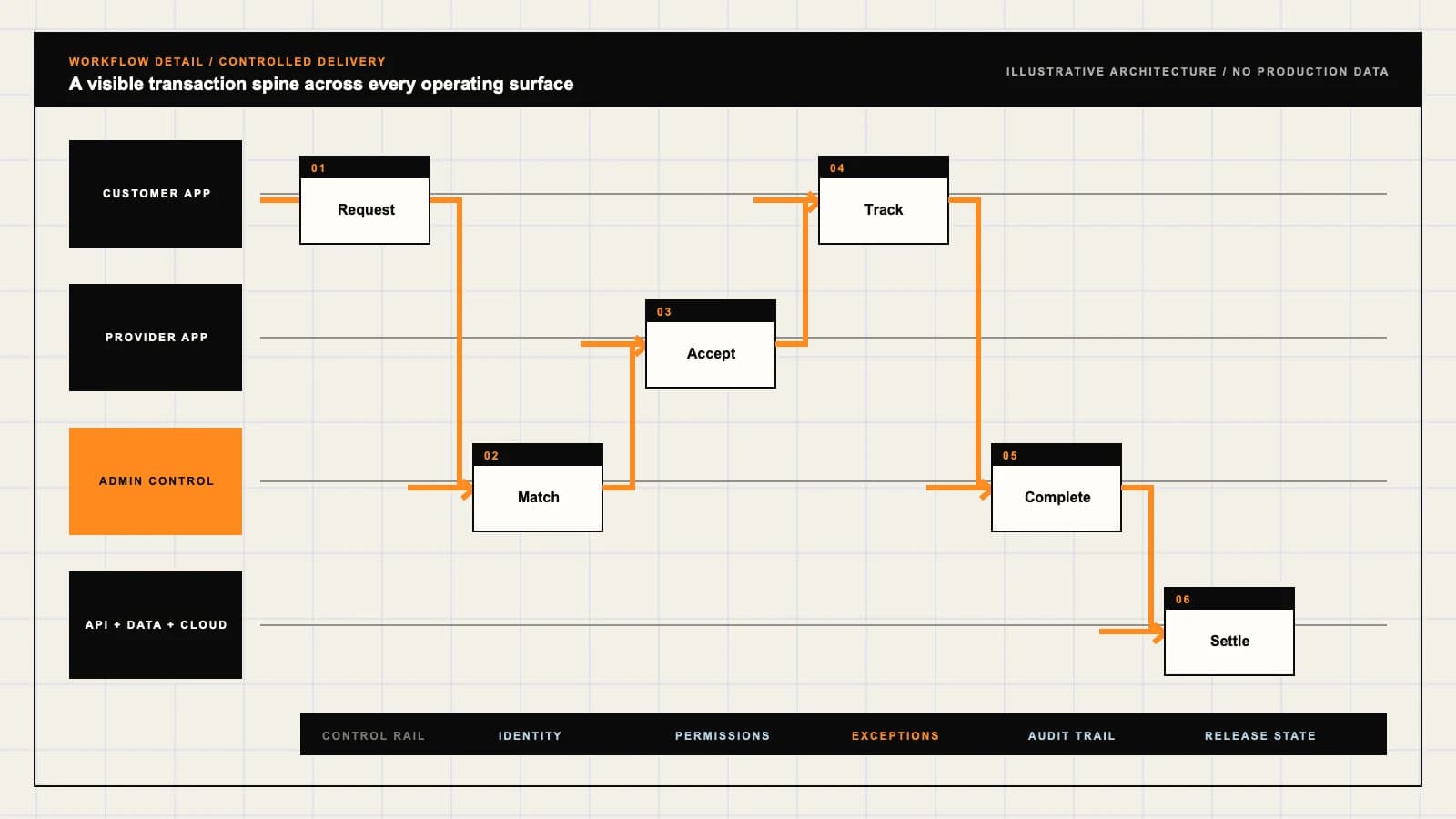
Changes to the offer, recipient rule or sender after approval should return the campaign to review under an agreed policy. Define time zone, daylight-saving handling and what happens when a scheduled time has passed during an outage. Show draft, approved, scheduled, dispatching, completed and cancelled states with their actual meaning. Retain the approving operator and timestamps, so a support investigation can reconstruct the decision without relying on someone’s recollection of a screen.
Verify domain ownership and the selected provider’s setup
Confirm who controls the sender domain and can make authorized DNS changes. Keep provider credentials scoped and inaccessible to campaign editors. Verify the account is approved for the proposed message purpose and volume; an application integration alone does not establish account eligibility. Show pending or failed setup visibly and prevent a campaign from being labelled ready while its required sending configuration remains unresolved.
The Mailchimp domain authentication guide distinguishes domain verification from authentication and documents DKIM and DMARC setup. Check the selected provider’s own requirements, including SPF alignment where relevant, and retain verification evidence. Authentication supports sender identity; it cannot guarantee inbox placement. Assign a domain administrator to investigate configuration changes and failures after handover. Avoid promising that a successful test proves every future message will pass recipient filtering or that provider rules will remain unchanged.