The prescription is approved, but the allocated batch cannot be dispatched
A patient orders two medicines. The pharmacist approves the requested items, but the packer finds that one allocated batch is blocked under the pharmacy’s expiry policy. The approval does not make that stock suitable to ship. A useful pharmacy system preserves the professional decision, releases the unsuitable reservation and asks the responsible team to resolve availability. It does not silently choose another product or mark the entire basket ready because payment has already succeeded.
This page scopes independently branded online pharmacy software for licensed operators. It does not include Netmeds accounts, stock, proprietary technology, protected branding or pharmacy permissions. The focus is a pharmacy-owned order and dispensing record, rather than a broad care-services directory. Buyers should agree who operates the premises, who makes professional decisions and what the proposed catalog may contain before evaluating customer screens or delivery integrations.
Identify the dispensing premises before promising availability
The official Netmeds terms and conditions describe pharmaceutical products sold through licensed premises and orders subject to acceptance and availability. That is a reference for separating storefront activity from dispensing responsibility, not permission to operate your pharmacy. Obtain market-specific advice on premises, professionals, permitted categories, prescriptions and delivery before establishing launch commitments.
Map the selling entity and responsible premises to every order. A centralized catalog may show a product that a particular branch cannot supply. Reserve stock only from an eligible location and explain when review or allocation is still pending. If an order moves to another premises, preserve the reason, affected professional responsibility and stock transition. The customer should not receive two parcels because separate branches both interpreted a routing retry as permission to dispense.
Make medicine identity more precise than a familiar name
A product name alone can conceal different strengths, dosage forms, manufacturers and pack sizes. Define the identifiers needed for catalog search, prescription matching and physical picking. Show units consistently so a pack and an individual unit are not confused in quantity selection or price comparison. Catalog content needs accountable review; a merchandising editor should not publish clinical claims or alter medically relevant fields without the required authorization.
Keep non-prescription and prescription-required purchase paths distinguishable under the reviewed market rules. Search suggestions must not imply diagnosis or recommend treatment from browsing behavior. Missing stock should produce a clear availability outcome, not an automatically promoted alternative medicine. During acceptance, compare two similarly named sample products and ask the pharmacist and packer to identify which record is actually approved. The correct answer must survive the transition from search to label to invoice.
Treat prescription upload as intake rather than permission
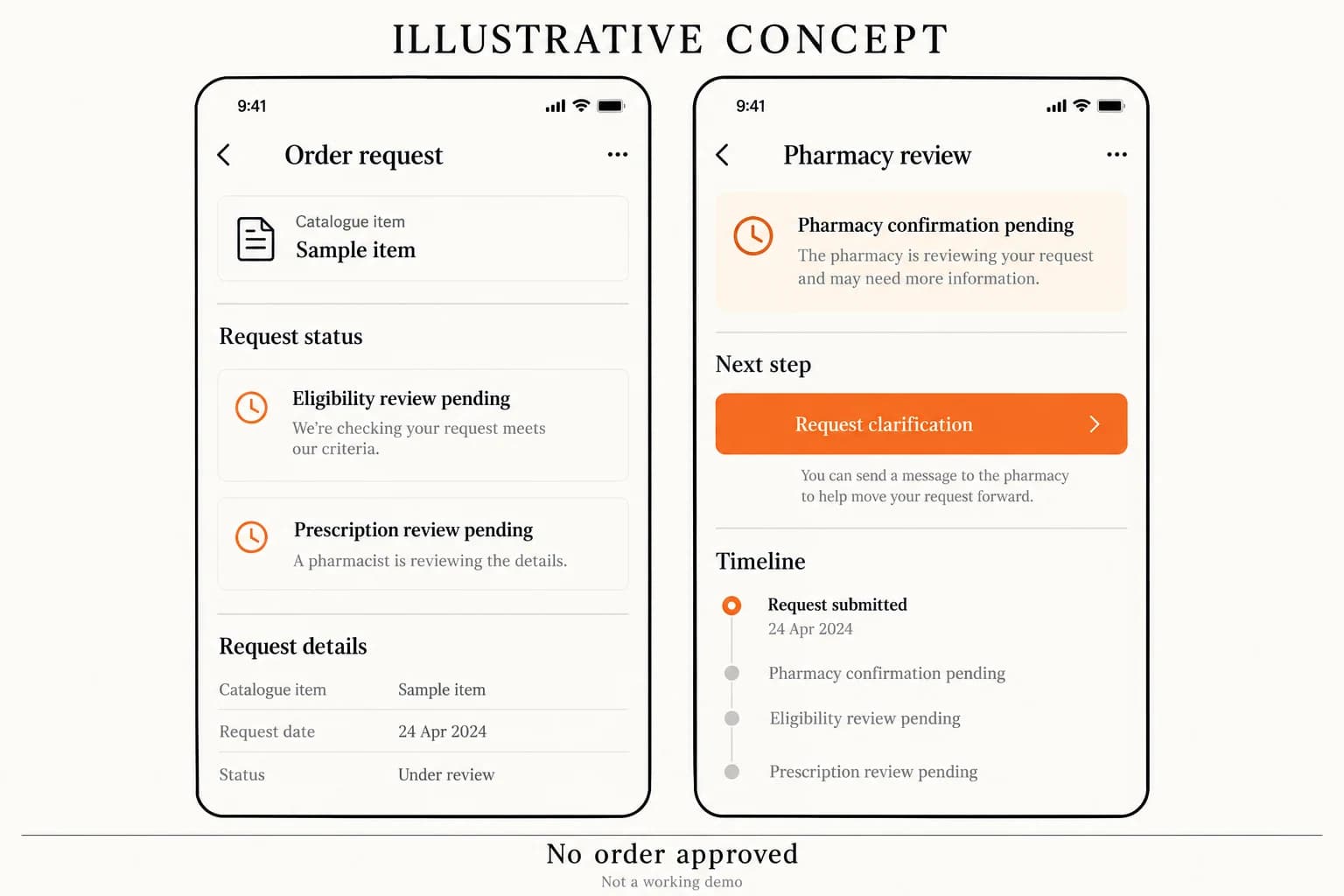
An image can be readable without being sufficient for the intended dispensing decision. Associate the submitted document with the patient, request and version, then route it to the appropriate professional review. Distinguish received, clarification requested, approved, partially approved and declined outcomes. Document extraction may help organize fields, but a machine confidence score must not silently authorize medicine supply or replace professional judgement.
When a replacement image arrives, retain relevant history and make the active version obvious. Staff should not approve an earlier document while the patient assumes a corrected one is under review. Clarification messages must identify what information is needed without exposing sensitive details to an unrelated account user. Test an unreadable upload, an incorrect patient association and a revised prescription. The demonstration should show who can resolve each case and how fulfillment stays blocked until appropriate authorization exists.
Record pharmacist-approved changes without inventing substitution consent
An unavailable item creates a professional and customer decision, not a routine grocery substitution. The operator must define whether a proposed change is permitted and which professional approvals or patient acknowledgements it requires. Preserve the requested product, proposed change, reason and authorized outcome. A checkbox accepting lower prices is not blanket permission to change a medicine’s strength or form. This is an operating-system requirement, not medical advice.
Keep the approved quantity separate from the originally requested quantity. If a customer rejects an eligible proposed change, show the unresolved or cancelled line and its financial consequence. Restrict who can amend approval records and preserve attribution. Demonstrate an unavailable approved item and a declined proposal without relying on a live patient. Buyers should see a controlled exception queue rather than a cheerful substitute selected automatically to keep the basket total high.
Reserve batches with expiry and quarantine visible to the packer
The catalog may report stock while the available physical packs belong to an unsuitable or quarantined batch. Track batch identity, expiry, storage-related restrictions and available quantity separately from overall product totals. Agree the pharmacy’s reviewed allocation policy and how stock becomes blocked. A reservation must be rechecked at picking if status changes after checkout. The system should explain the failed allocation without deleting the original request.
Preserve the batch-to-order connection after dispatch so qualified staff can investigate a stock concern or recall affecting specific supplied packs. Limit who can release quarantine or correct batch records, with a reason and history. Returned goods need their own assessment rather than automatic restocking. Ask the walkthrough to block a reserved sample batch, attempt packing and trace earlier shipments. A warehouse total without these connections is insufficient evidence that dispensing inventory is controlled.
Explain split fulfillment at the medicine-line level
One medicine is ready while another awaits clarification. Decide whether the customer may accept partial supply, wait or cancel eligible lines under the applicable terms. Show which items belong to each shipment, what remains unresolved and whether delivery charges change. A single order status reading dispatched must not imply that every prescribed item is on the way. Avoid estimating availability that the pharmacy cannot substantiate.
Separate order acceptance, professional approval, stock allocation and courier handoff. Record the actual prepared quantity and any discrepancy before releasing the package. Reconcile repeated dispatch events so the same approved line cannot be supplied twice through a retry. Delivery recipients and permitted proof need reviewed rules, especially when a caregiver orders for someone else. A route map helps locate a parcel; it does not establish appropriate storage conditions or successful supply of every medicine.