A courier match is not proof that the right parcel arrived
A merchant requests collection of two sealed parcels. The courier reaches the shop, receives one parcel and starts the trip while the second is still being packed. At the destination, a receptionist signs without checking the intended recipient. A green delivery badge now hides two different problems: missing pickup custody and uncertain handover authority. An on-demand courier app must explain those events, not merely draw a moving vehicle on a map.
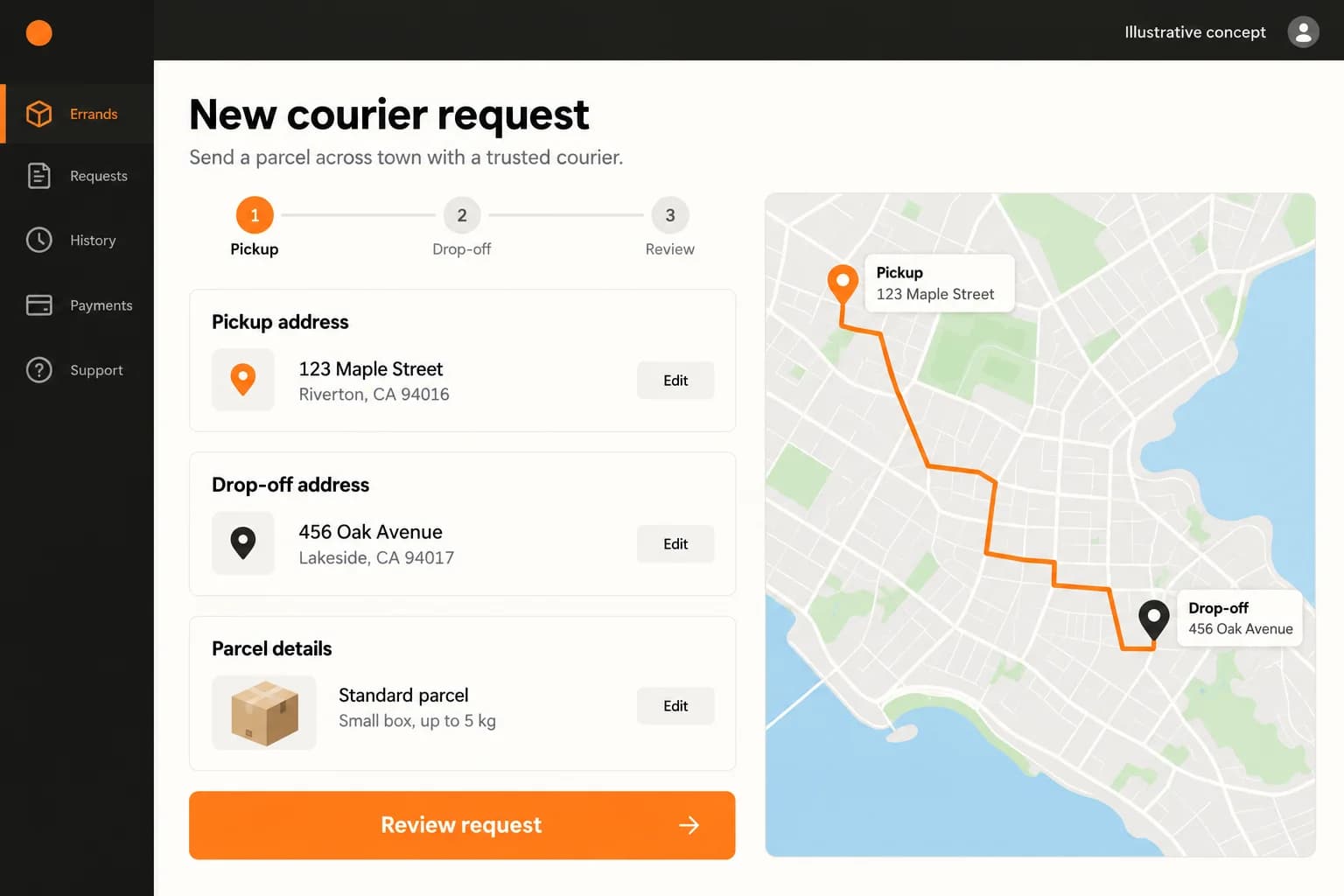
An Uber-style courier delivery platform connects senders, eligible couriers and recipients for local package movement. This is independently branded software, not an Uber service, courier network or granted partner connection. The buyer’s decision is whether the proposed system can preserve the package declaration, custody record and exception responsibility throughout a real shipment. Attractive tracking screens are useful only when their status corresponds to a defensible physical event.
Set a package envelope before accepting the first shipment
The published US Courier terms illustrate that package restrictions and failed-delivery arrangements belong in the operating rules, not only the driver interface. They describe Uber’s US service, not universal limits or legal terms for your independent operation.
Define eligible contents, packaging, dimensions, weight, declared value and appropriate vehicle class with the operator and qualified advisers. Do not inherit reference-platform limits without checking the intended market and service. A small parcel service should not silently accept furniture because the sender selected “other.” Make uncertainty a reviewable condition: unclear contents or an unsuitable vehicle should stop ordinary dispatch until an authorized decision exists. Keep the declaration version attached to the shipment so later changes do not erase what was accepted.
Capture sender authority and a reachable recipient
A pickup address identifies a place, not permission to remove every item found there. Collect the sender’s authority, the expected handover person and a package identifier that the courier can match. Business accounts need named staff permissions for creating shipments and changing instructions. A recipient who receives a tracking link should not automatically gain access to the merchant’s account, other customer orders or the sender’s billing details.
Explain the expected handover arrangement before dispatch. Someone may be sending to a workplace reception, a household member or a named individual who must be present. Establish how a substitute recipient is authorized and who can change that instruction. Avoid exposing access codes in unrestricted notifications. Rehearse an unreachable sender and a mistaken phone number: neither situation should force the courier to invent consent or disclose the parcel to an unrelated person.
Quote the transport obligation rather than a vague delivery fee
Show which addresses, vehicle class, package count and service window the price covers. Waiting, extra stops, cancellation and return journeys need disclosed treatment appropriate to the operator’s reviewed terms. An estimated arrival should not become an unconditional deadline merely because the map has a countdown. Distinguish a quote that is still being evaluated from a confirmed request with payment authorization and an accepted courier assignment.
A sender changing the destination after collection changes more than distance. The new location may fall outside the service zone or require another handling arrangement. Preserve the initial quote, describe the proposed change and request appropriate approval before committing the courier. Test duplicate confirmation taps and a payment provider that returns an uncertain result. The same shipment should recover its existing financial state rather than create another charge and a second dispatch request.
Dispatch against capacity and current courier permission
A nearby courier is not necessarily suitable for the declared parcel. Match current vehicle capacity, reviewed eligibility, operating zone and assignment availability. Keep acceptance distinct from actual collection. If a courier declines, record the reason without automatically treating a refusal as misconduct; an unsuitable or unsafe package needs a different review from an ordinary availability change. The commercial and worker relationship must be established independently of the software.
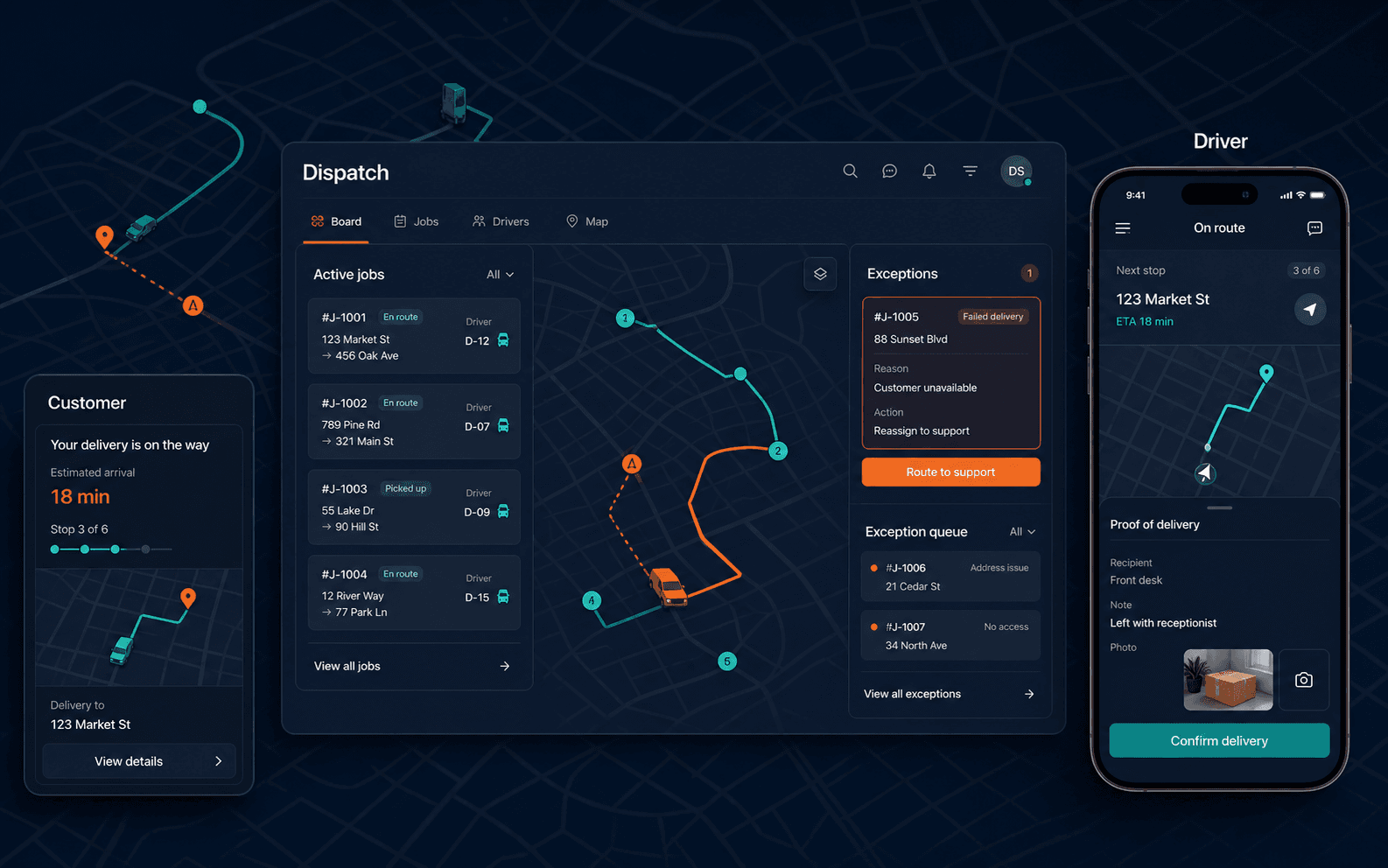
Restrict dispatch staff to the regions and accounts they support. Reassignment after collection requires a custody transfer, not merely replacing a name in the tracking screen. The receiving courier needs the relevant package instructions and a recorded acknowledgement. Test two operators attempting reassignment simultaneously and an eligibility document expiring during an active trip. The system should surface an accountable decision while preserving the courier who last confirmed physical possession.
Pickup proof must describe what entered custody
The official Uber Direct proof-of-delivery guide describes verification methods such as photos, signatures and barcodes at relevant waypoints. It is a reference for evidence design, not evidence that an independent build has approved Direct access or an active integration.
Choose proof appropriate to the parcel and operating policy. Bind it to the shipment, package count, collecting courier and pickup event. A parcel label scan can identify a package but does not establish its contents or condition. A photo should avoid unnecessary personal information and have a defined retention and access policy. When the sender presents fewer packages, damaged packaging or different dimensions, require a recorded discrepancy decision. Do not let a generic “collected” button overwrite the original declaration.
Tracking must admit uncertainty instead of inventing precision
Location data can arrive late, repeat or stop entirely when a phone loses connectivity. Display the last observed update and distinguish estimated movement from verified pickup or handover. A courier entering the destination area is not the same as delivering the parcel. Sender and recipient views should explain the current journey without revealing unrelated stops or retaining unrestricted access to a courier’s location after the assignment ends.
Handle events arriving out of order without moving a completed shipment backwards or creating impossible custody transitions. A delayed pickup update may still be legitimate evidence, but it needs its event time and receipt time preserved. Test a courier going offline after collection, an old location arriving after return and a recipient refreshing a link after closure. Operations should see the uncertainty and relevant contact route instead of a fabricated live position.