A massage booking needs more than a nearby available therapist
A client selects an evening appointment at home. The therapist has an open calendar slot, but the previous visit ends across town and the new request mentions a service outside the therapist’s reviewed scope. A dispatch system that simply chooses the nearest profile can confirm an appointment that should never have been offered. The useful product connects eligibility, consent, location and practical capacity before asking either person to commit.
An on-demand massage marketplace coordinates independently branded mobile wellness bookings. It is not access to Uber’s network, an established therapist roster or a medical service by default. Buyers need to define the sessions, markets and operating responsibilities they will support. The interface should explain what is available, who is assigned, what the visit involves and how either participant can raise a concern. Attractive discovery screens cannot substitute for these decisions.
Keep wellness booking distinct from diagnosis and medical treatment
The NCCIH massage guidance discusses evidence limitations and advises against delaying medical care for a health problem. Use that boundary when reviewing service descriptions; the source does not certify this marketplace or establish individual suitability for a session.
Describe the intended wellness service without promising to cure conditions or presenting a preference questionnaire as clinical clearance. Any contraindication prompts need qualified design and review for the intended market and practitioner scope. The app should not interpret symptoms or tell a client that treatment is safe. Give uncertain requests an appropriate review or decline path, and explain when the service is outside scope. Keep promotional copy, practitioner profiles and customer support scripts consistent with those limits.
Review the practitioner who will actually attend the appointment
A profile badge should identify what was checked, for whom, from which source and when. Identity, training, professional authority and insurance are different records. Requirements vary by location and service, so the operator needs qualified local review before choosing onboarding criteria. A document upload is a submission awaiting review, not instant evidence that a practitioner can perform every listed session. Restrict underlying documents to appropriate reviewers.
Future appointments require a response when a credential expires, is disputed or no longer matches the assigned person. Decide whether affected bookings pause, need another eligible therapist or require customer reconfirmation. Do not hide a substitution behind an unchanged business profile. Rehearse a team owner assigning a different worker after acceptance. Operations should be able to explain the decision from the applicable review record without publishing sensitive verification material or guaranteeing future conduct.
Ask for useful preferences without building an unnecessary health dossier
Duration, visit location, access constraints and practical session preferences can help establish a booking. More sensitive information needs a defined purpose and an appropriate access model. Separate details needed for logistics from information requiring restricted practitioner review. Do not put health concerns, private body-area preferences or incident narratives in a courier-style dispatch feed. A client should understand why a question is asked and which role can read the answer.
Avoid compulsory free-text forms that encourage clients to disclose an entire medical history. Review the intake with qualified stakeholders, including an honest route when the user cannot determine suitability. Define retention and correction procedures before collecting documents or detailed notes. Test notification previews, exported schedules and administrator searches for accidental disclosure. A staff member who can change an appointment time does not automatically need access to every private intake field or a previous confidential report.
Price the session and travel conditions before the client confirms
Show the session duration, included setup assumptions, travel charges, applicable taxes and optional extras before confirmation. Make clear whether a displayed time describes arrival or the start of the session. Apartment access, equipment transport and parking can affect the appointment without becoming surprise fees at the door. Identify who may approve an adjustment and what happens when the therapist cannot perform the selected service under the agreed conditions.
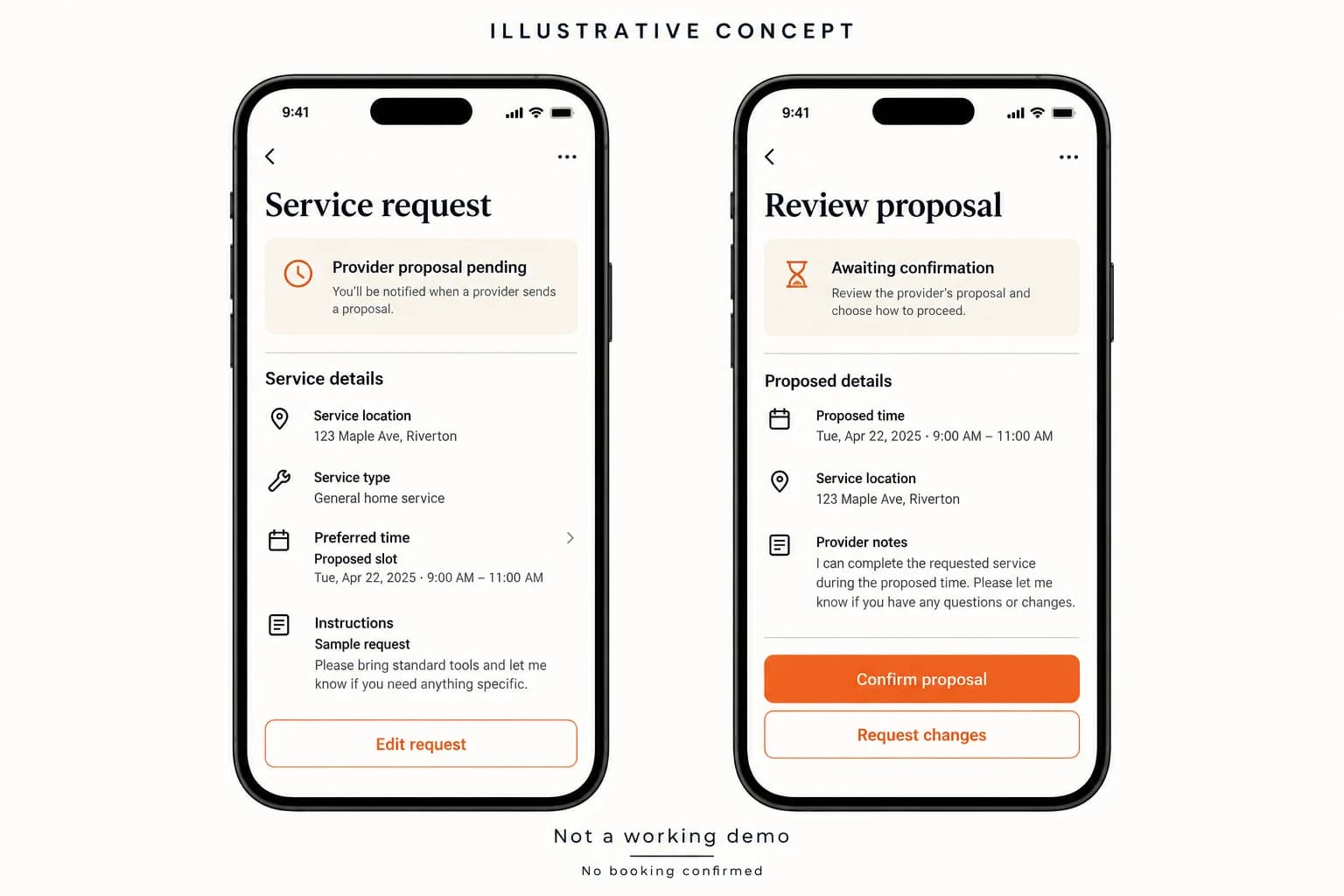
Keep optional tips and additional services separate from the original authorization. A practitioner changing the session length should create a visible request, not silently edit the final charge. Preserve the accepted price version when catalog prices change later. Inspect the receipt for a shortened appointment, an approved extension and a declined extra. The buyer should see which amount was agreed, which was requested and which remains disputed without inferring those states from one mutable total.
Travel buffers belong in availability rather than in apology messages
A mobile therapist’s capacity includes travel, setup, the session, cleanup and a realistic departure window. Define service zones and booking rules that reflect those tasks. A map estimate is an input, not a guarantee of arrival. Calendar imports may omit travel requirements or describe appointments with different durations, so imported availability needs its own validation. Avoid promising immediate dispatch merely because someone appears nearby.
Recheck the assignment when a customer changes the address, session length or start window. Preserve a confirmed booking while operations evaluates alternatives rather than repeatedly notifying both people of contradictory assignments. Test an overrunning earlier visit, a building-access delay and a disconnected practitioner phone. The system needs clear late-arrival and reassignment options, including customer choice where appropriate. Additional demand should not remove travel buffers or pressure therapists to accept schedules that the operator cannot reasonably support.
Consent is ongoing and separate from accepting booking terms
The client may request a different pressure, exclude an area or stop the session. The product must support the agreed consent process without treating a checkout checkbox as permanent permission for every activity. Review what needs recording and what should remain a private professional conversation. Store only the necessary record with appropriate access. A consent change should be understandable even when the appointment was paid for by someone else.
Therapists also need a clear route to decline requests outside their professional boundaries or stop under the operator’s reviewed policy. Completion incentives must not override that route. Define how a stopped session affects booking status, support contact and payment review without deciding conduct allegations from a timer alone. Rehearse a client ending early and a practitioner declining an unagreed extra. Keep the relevant agreement available while protecting private details from ordinary ratings, marketing automation and unrelated staff.