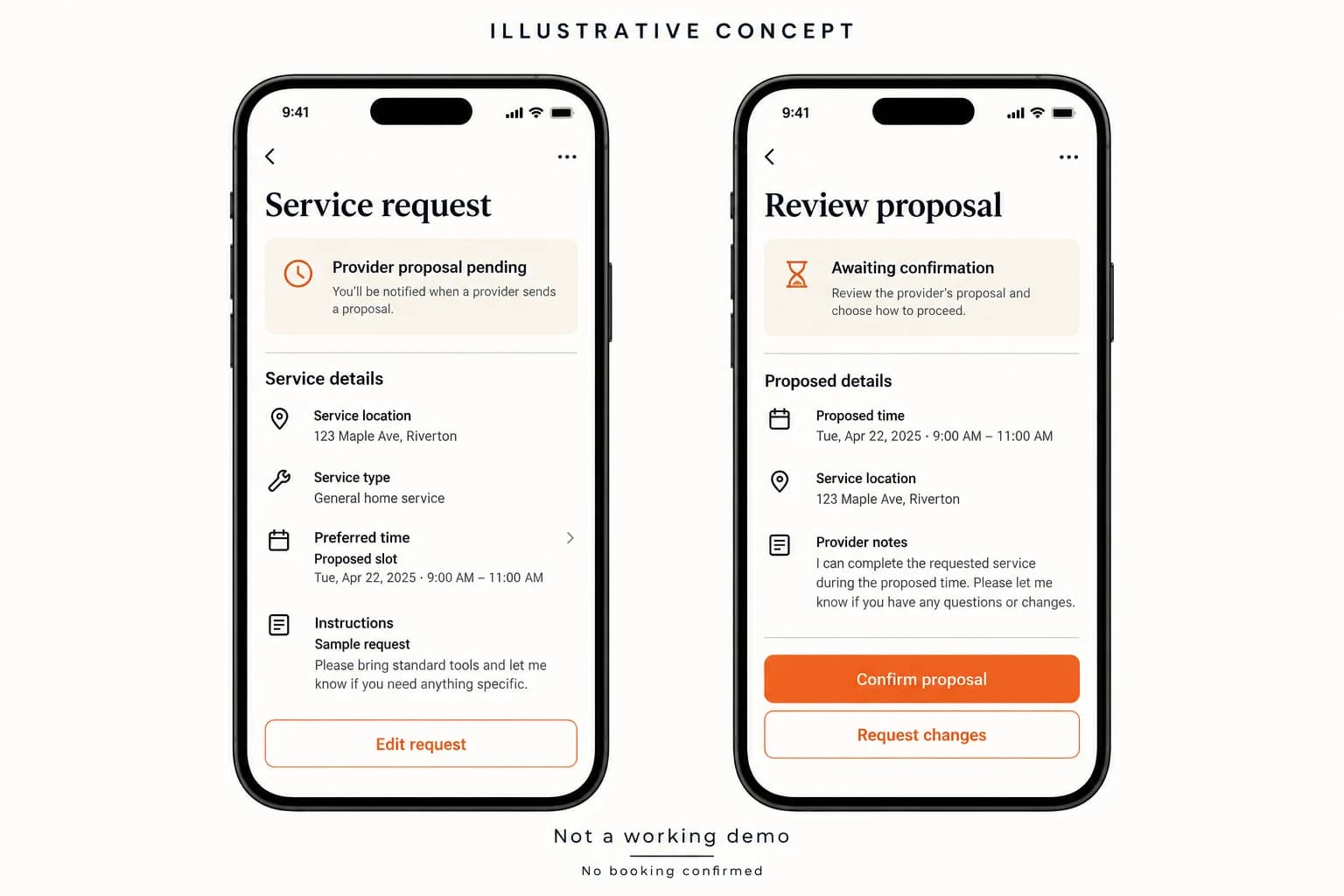
A booked service package is not permission for an unapproved repair
A customer books an appliance assessment. At the home, the technician finds a damaged component and adds a replacement to the invoice. The customer thought the booking covered a completed repair; the technician understood it as inspection only. A managed home-services app must make that difference visible before the visit, then preserve the customer’s approval for any additional work. Otherwise, a convenient booking screen simply moves an unresolved price dispute into the household.
An Urban Company-style product organizes a curated service catalog, professional assignment and household service recovery. Its value comes from understandable packages and accountable operations, not from copying another brand’s layout. This independent implementation does not include Urban Company’s workforce, training network, protection programs or proprietary systems. Buyers should evaluate what their own operator will define, supervise and support for each launch category.
Choose managed packages rather than silently borrowing a lead-marketplace promise
The official Urban Company service catalog presents home-service categories and a pricing-led customer proposition. It helps explain the reference model; its claims, personnel and remedies are not evidence for an independent business or included software capability.
Contrast this with a Thumbtack-style project marketplace where the starting transaction can be an introduction and a negotiated proposal. A managed catalog needs the operator to define service boundaries, assignment rules and support responsibility. Combining both models requires explicit labels rather than one generic book button.
Write the service package before designing its booking card
A package should identify the task, expected service boundaries, exclusions and relevant property assumptions. State whether materials, equipment movement or follow-up visits are included. For cleaning, room count and access conditions may change scope; for repair, diagnosis and completed work may be separate purchases. Avoid a single attractive price that only becomes understandable after the professional arrives. Keep the version accepted by the customer with the booking.
Use intake questions that affect the service decision, not an oversized questionnaire for every household. Let customers mark equipment condition or dimensions as unknown when that is honest. Explain whether uncertainty means assessment first or a possible quote revision. Test a package update after booking: existing customers should retain their accepted terms or receive an explicit change proposal, rather than inheriting a new exclusion without notice.
Offer appointment capacity that includes skills, equipment and travel
An available calendar slot is not sufficient if the assigned professional lacks the category permission or necessary equipment. Capacity should consider service duration assumptions, travel buffers and approved working areas. Distinguish a requested window from a confirmed appointment. If assignment happens after checkout, explain that state and the recovery path when no suitable professional can accept. Do not imply that every catalog item is instantly fulfillable everywhere.
Recheck capacity when the customer changes category, location or package size. A replacement worker may need different eligibility, equipment and travel time. Operations should see why an assignment failed without exposing sensitive screening information. Rehearse two customers selecting the last slot, a worker withdrawing and a delayed prior visit. The customer needs a credible reschedule or cancellation decision, not a status that remains confirmed while the operator has no delivery plan.
Arrival also needs a clear household decision. A professional may reach the building but be unable to enter, or the named customer may be unavailable to approve an assessment. Keep arrival, permitted entry and work commencement as separate events. Disclose any relevant waiting or unsuccessful-visit charges under the reviewed service terms instead of inventing them at the door. Support should be able to inspect the appointment window, contact attempts and customer instructions without demanding continuous location surveillance. Test a concierge denying entry and a customer requesting a different worker: neither situation should create a false completed service or expose access details to an unassigned replacement.
Professional eligibility must match the category and assigned person
Training attendance, assessed competence, occupational credentials and identity review answer different questions. Record the subject, source, relevant category, review date and any expiry or restriction. A company account can send a different person from the registered owner; establish the requirements for the person entering the home. Do not turn a general verified badge into an unsupported statement that every worker can perform every trade safely.
Keep eligibility changes actionable. An expired credential or suspended category should prevent new incompatible assignments and flag affected future visits for review. Provide a controlled correction process when records are disputed or attached to the wrong person. The software can record training and review decisions, but the operator must establish qualified assessment and supervision. A rating average cannot replace that responsibility or guarantee professional conduct.
Inspection findings become a quote, not an automatic charge
The assessment result should separate observed facts from the proposed remedy. Show labor, replacement items, relevant exclusions and the effect on scheduling. Identify who may accept the quote when a tenant books for a landlord or a family member pays. Preserve the original booking charge and the revised work proposal independently. A customer declining repair may still owe a disclosed assessment fee, but the app must explain that arrangement before booking.
When a quote changes, request approval for the new version rather than editing an accepted total in place. Handle partial acceptance, customer disconnection and a quote that expires before a part arrives. Work awaiting approval should remain identifiable as pending. Test a technician trying to close the visit while a change is unresolved; the system should not manufacture consent from an opened message or a generic completion code.