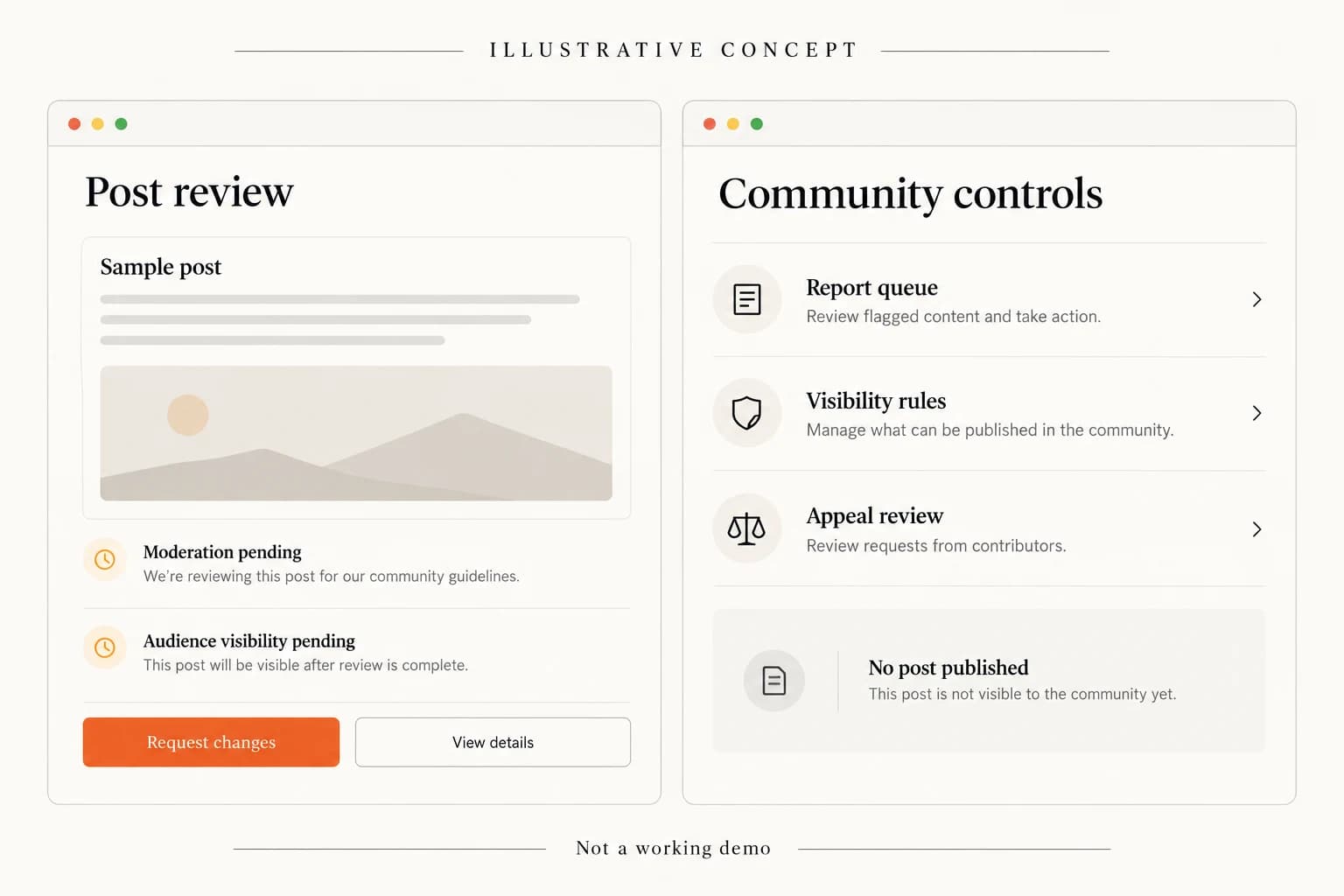
A paid subscriber can still lose permission to speak
A creator hosts a live conversation beside a subscriber-only video. A paying member joins the room, requests the microphone and is removed after disrupting the session. Their subscription may remain active while their speaking permission ends. If the platform treats payment as universal participation authority, it cannot explain that result or keep the removed speaker from reconnecting. Multi-format creator software needs separate decisions for access, interaction and safety.
An X-style concept combines long media, live audio, communities and creator subscriptions in independently branded software. This is a broader operating brief than reproducing a short-post timeline. The reference does not supply X affiliation, accounts, proprietary ranking, API approval, payment arrangements or an audience. Define a complete first interaction that can be demonstrated with fictional participants, then identify the licensed services and staffed responsibilities needed to operate it.
A long video, written discussion and live room ask different things of the viewer. Show duration, availability, captions and audience boundaries before directing someone into a session. A live invitation should distinguish a room that is scheduled, active, interrupted or ended. An uploaded media item needs processing and publication states; a saved record alone is not evidence that playback is ready.
Define how members choose formats and control recommendations. Do not make paid placement indistinguishable from organic discovery or promise predictable reach. Cross-format cards should reflect current eligibility instead of retaining removed previews. Test an ended room appearing in a notification and a video whose original is restricted while a recommendation card remains cached. Discovery must guide the member to the current outcome, not manufacture a live session or reveal a protected preview simply because an older card exists.
A short clip extracted from a long recording is another distributed asset with its own context and permitted uses. Preserve its relationship to the original, relevant participants and publication authority. Copyright permission, speaker consent and audience entitlement answer different questions. A creator owning the upload account does not automatically authorize every incorporated asset or another person’s recorded contribution.
Choose who may create excerpts, edit captions and change visibility. An alteration can require renewed review rather than inheriting the original’s earlier status. Map previews and delivery renditions alongside the main object so a restriction can reach the surfaces the operator controls. Test a source recording becoming unavailable while a clip is still recommended. A derivative’s shorter length does not make it exempt from rights or moderation rules, and a completed payment cannot establish missing publication authority.
Give live hosts authority that can survive interruption
Listening, speaking, co-hosting and ending a room need explicit authority. Establish speaker requests and invitations, initial mute behavior and how microphone removal takes effect. Define what happens when the host disconnects and who can interrupt the session if an urgent report arrives. Public room presence may expose identity or activity, so describe the visibility model before a member joins.
Scoped community moderators may manage membership without permission to end every room or inspect restricted evidence. Rehearse a removed speaker reconnecting from another device and a host dropping out while a moderator acts. The service must recover current session authority rather than privileges cached on a client. Live safety depends on accountable coverage and usable intervention tools. Adding an audio button does not establish that somebody can respond when the session needs immediate review or that every network interruption has a clean resolution.
Recording notice does not settle every consent and replay decision
The X Spaces hosting guide describes visible recording indicators, host and co-host controls, and publicly available recordings that hosts can delete. It also distinguishes public availability from limited retained audio for abuse review. Those are useful reference mechanics, not a permission grant or an independent product’s ready-made operating policy.
Establish applicable speaker consent, capture notice, retention and replay authority through qualified review. A listener becoming a speaker needs the current capture status explained, and captions or transcripts introduce additional records. Define how removal affects controlled recordings and clips without promising to erase copies held outside the platform. Test a participant joining after recording starts, a withdrawn replay and a restricted evidence exception. Keep those states visible to authorized operators instead of treating the host’s delete action as proof that all storage disappeared.
Creator renewal and community membership are separate contracts
A recurring creator subscription should state benefits, billing frequency and the effective cancellation date. Community joining, moderator appointment and room invitations need their own permissions. Paying for a creator’s material does not guarantee admission to every community, a microphone, a private reply or unrestricted publication. Preserve accepted terms when a creator changes the offering rather than silently rewriting historical agreements.
Explain failed renewal and pending cancellation without revealing confidential safety decisions. Recheck entitlement and asset eligibility when delivering paid media. A subscriber removed from a community may still have a financial contract that requires reconciliation; removal should not erase its history. Test cancellation while a room remains active and a paid asset becomes restricted. The member should understand current access and the available support route. Finance, community administrators and safety reviewers may need different views of the same sequence.
Treat creator eligibility and payout arrangements as launch dependencies
The X creator Subscriptions guide describes recurring subscriber access, eligibility to apply and earnings subject to applicable platform fees. It is evidence that creator monetization has a commercial boundary. It does not grant an independent operator access to X’s program or establish payment approval, creator eligibility or a guaranteed income.
Select eligible providers only after reviewing the actual markets, content model and transaction types. Define creator verification, accepted subscription terms, platform deductions and withdrawal responsibilities. A successful sandbox payment is integration evidence, not approval to accept live money. Keep estimated revenue distinguishable from eligible funds and confirmed payout receipt. If a commercial arrangement changes, the operator needs a controlled response for affected acceptance and unresolved balances. Do not advertise automatic provider switching as a way to avoid an eligibility decision.