Editorial dossier / Fintech Apps
Banking App Admin Review Flows: Cases, Approvals and Audit Evidence
Design banking administration around identity review, transaction cases, risk alerts, maker-checker approvals, restricted actions, audit evidence and incident recovery.
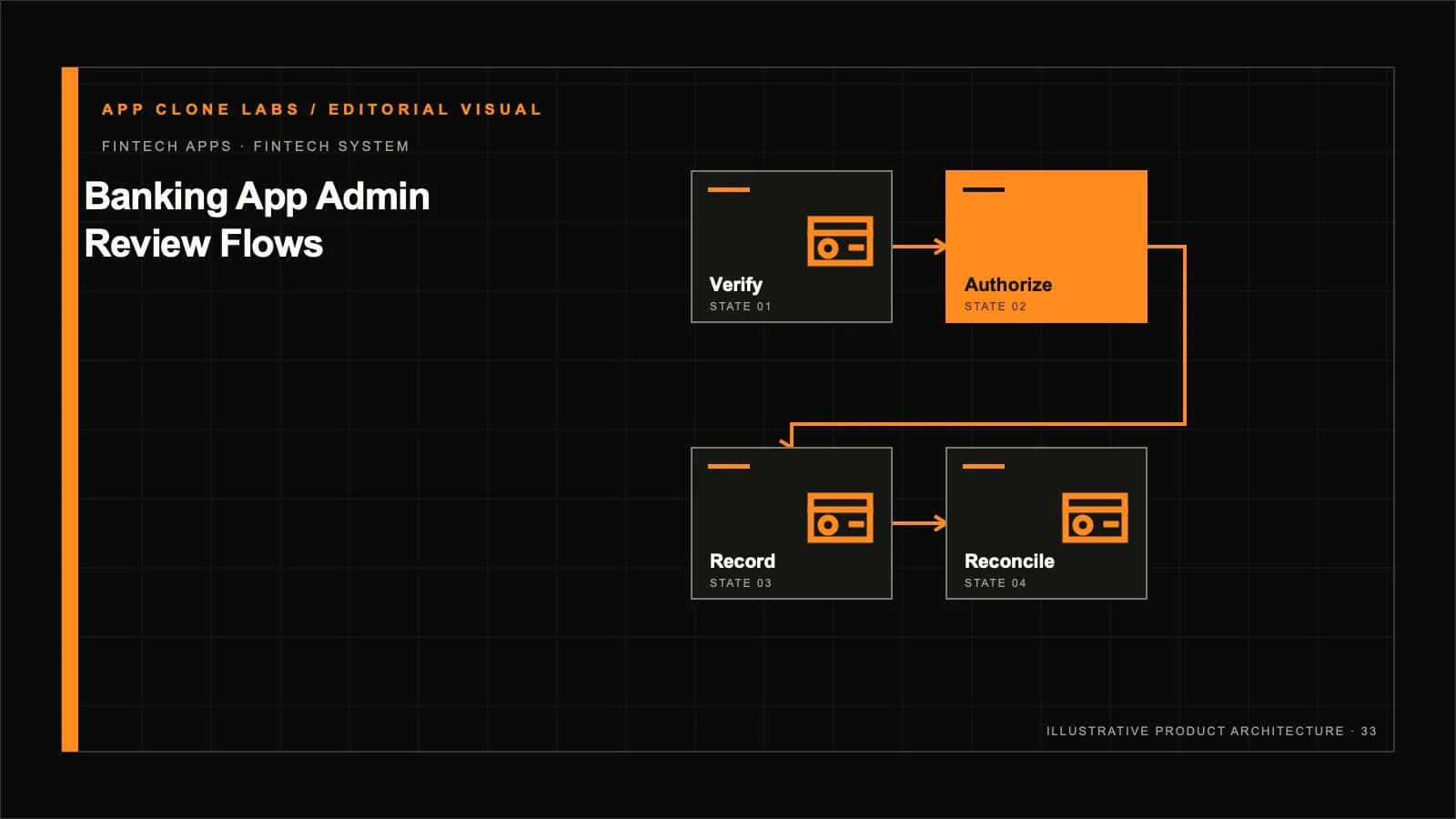
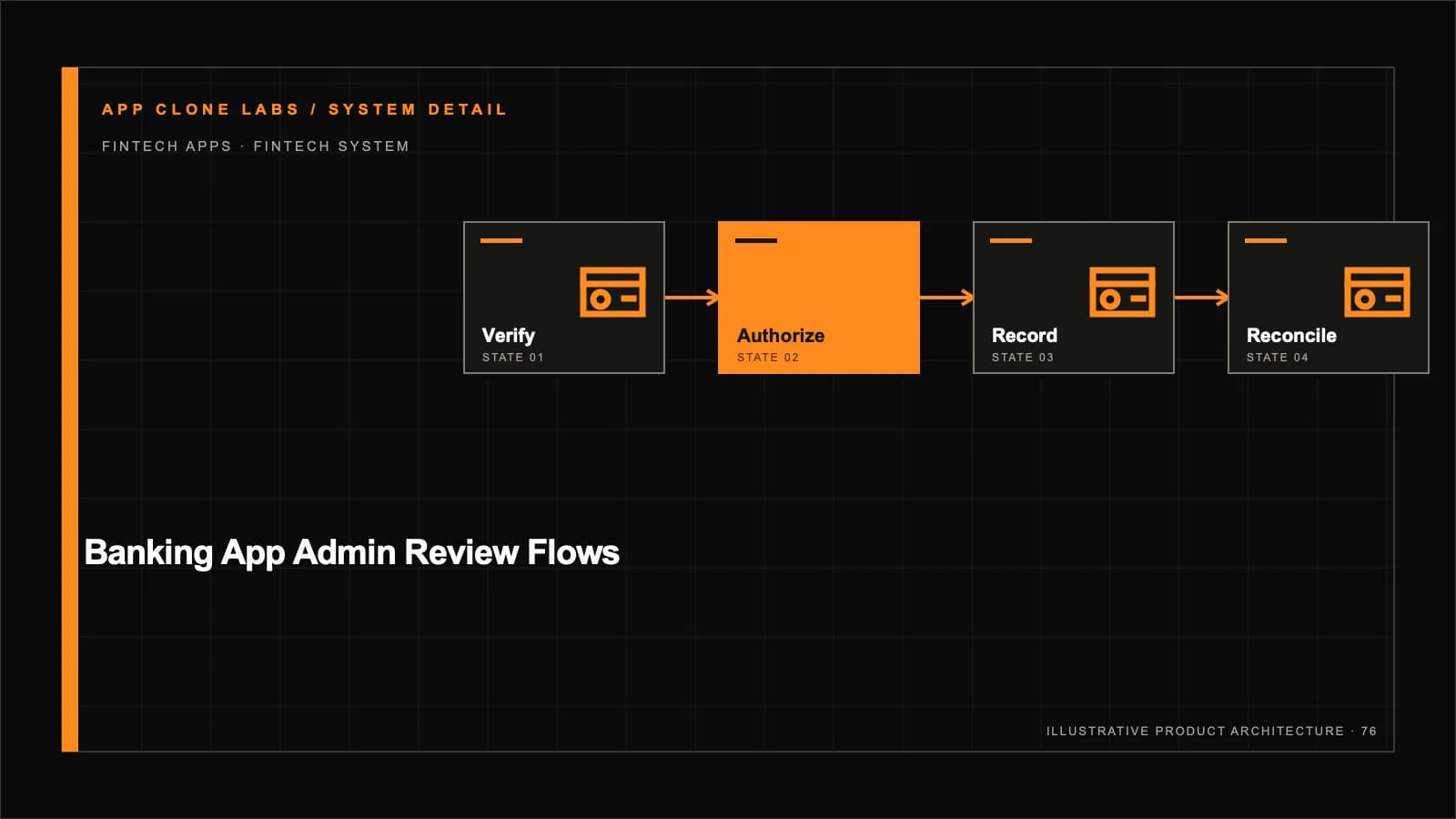
A review queue can be fast and still be dangerous. An analyst approves an identity with missing evidence, a supervisor cannot see what changed since the first review, or an urgent account restriction is delayed because the case is mixed into a generic task list.
Banking administration is a decision system. It must assemble evidence, limit authority, record policy context and make reversals or escalation possible. A CRUD dashboard that exposes customer and transaction tables is not an adequate control surface.
This guide maps the workflows that let operators make high-impact decisions consistently and prove what happened afterward.
Define case types and outcomes
Identity, transaction, sanctions, dispute and support cases need different evidence and authority.
The failure mode is concrete: one generic review status erases the decision context. This is not solved by adding another screen or background job. The product has to define ownership, permitted transitions, and the evidence retained when the transition occurs.
For the first release, publish a case taxonomy with allowed outcomes and escalation. Write that decision as an enforceable server-side rule, not guidance that depends on a client, operator, or AI model remembering the intended boundary.
Implementation should include type, trigger, severity, subject, evidence requirements, decision options, SLA and policy version. Keep the public response smaller than the internal record: users need a clear outcome and recovery path, while authorized operators need correlation IDs, policy versions, timestamps, and the before-and-after state.
Validate it with one case of each type plus an ambiguous trigger. Test the ordinary path, then repeat under timeout, duplicate delivery, stale state, partial failure, revoked authority, and concurrent requests. A feature is not ready when only the demonstration succeeds.
- Owner: risk operations lead
- Release evidence: Define case types and outcomes acceptance record
- Stop condition: define case types and outcomes cannot be explained or recovered
Separate alerts from cases
Automated signals are not themselves human decisions.
The failure mode is concrete: every alert creates a duplicate customer restriction. This is not solved by adding another screen or background job. The product has to define ownership, permitted transitions, and the evidence retained when the transition occurs.
For the first release, deduplicate and group alerts before opening a reviewable case. Write that decision as an enforceable server-side rule, not guidance that depends on a client, operator, or AI model remembering the intended boundary.
Implementation should include signal source, rule or model version, score, entities, time window, grouping key and disposition. Keep the public response smaller than the internal record: users need a clear outcome and recovery path, while authorized operators need correlation IDs, policy versions, timestamps, and the before-and-after state.
Validate it with repeated signal and linked transactions. Test the ordinary path, then repeat under timeout, duplicate delivery, stale state, partial failure, revoked authority, and concurrent requests. A feature is not ready when only the demonstration succeeds.
- Owner: risk systems owner
- Release evidence: Separate alerts from cases acceptance record
- Stop condition: separate alerts from cases cannot be explained or recovered
Apply maker-checker controls
Some actions require independent preparation and approval.
The failure mode is concrete: one operator proposes and approves a consequential change. This is not solved by adding another screen or background job. The product has to define ownership, permitted transitions, and the evidence retained when the transition occurs.
For the first release, configure action-specific separation of duties. Write that decision as an enforceable server-side rule, not guidance that depends on a client, operator, or AI model remembering the intended boundary.
Implementation should include requester, proposal, evidence, approver eligibility, decision, expiry and execution result. Keep the public response smaller than the internal record: users need a clear outcome and recovery path, while authorized operators need correlation IDs, policy versions, timestamps, and the before-and-after state.
Validate it with self-approval and changed evidence. Test the ordinary path, then repeat under timeout, duplicate delivery, stale state, partial failure, revoked authority, and concurrent requests. A feature is not ready when only the demonstration succeeds.
- Owner: control owner
- Release evidence: Apply maker-checker controls acceptance record
- Stop condition: apply maker-checker controls cannot be explained or recovered
Show evidence provenance
Reviewers must know where a document or signal originated.
The failure mode is concrete: screens flatten current and stale evidence together. This is not solved by adding another screen or background job. The product has to define ownership, permitted transitions, and the evidence retained when the transition occurs.
For the first release, retain source, collection time, version and verification state. Write that decision as an enforceable server-side rule, not guidance that depends on a client, operator, or AI model remembering the intended boundary.
Implementation should include evidence ID, provider, owner, received time, effective time, checksum and status. Keep the public response smaller than the internal record: users need a clear outcome and recovery path, while authorized operators need correlation IDs, policy versions, timestamps, and the before-and-after state.
Validate it with replaced document and provider correction. Test the ordinary path, then repeat under timeout, duplicate delivery, stale state, partial failure, revoked authority, and concurrent requests. A feature is not ready when only the demonstration succeeds.
- Owner: case platform owner
- Release evidence: Show evidence provenance acceptance record
- Stop condition: show evidence provenance cannot be explained or recovered
Checkpoint 4: reconcile the product promise with the recorded state. Support, finance, security, and delivery teams should be able to reach the same conclusion from the same identifiers without reconstructing events from chat messages or screenshots.
Use explicit identity-review states
Collection, verification, enhanced review and rejection are separate stages.
The failure mode is concrete: verified is one editable checkbox. This is not solved by adding another screen or background job. The product has to define ownership, permitted transitions, and the evidence retained when the transition occurs.
For the first release, define transition prerequisites and reason codes. Write that decision as an enforceable server-side rule, not guidance that depends on a client, operator, or AI model remembering the intended boundary.
Implementation should include subject, required checks, evidence, reviewer, state, policy version and timestamps. Keep the public response smaller than the internal record: users need a clear outcome and recovery path, while authorized operators need correlation IDs, policy versions, timestamps, and the before-and-after state.
Validate it with expired document and mismatched identity. Test the ordinary path, then repeat under timeout, duplicate delivery, stale state, partial failure, revoked authority, and concurrent requests. A feature is not ready when only the demonstration succeeds.
- Owner: identity operations
- Release evidence: Use explicit identity-review states acceptance record
- Stop condition: use explicit identity-review states cannot be explained or recovered
Design transaction review around chronology
Risk decisions depend on linked movement and account history.
The failure mode is concrete: reviewers see isolated rows without ledger impact. This is not solved by adding another screen or background job. The product has to define ownership, permitted transitions, and the evidence retained when the transition occurs.
For the first release, present a permissioned timeline and related entities. Write that decision as an enforceable server-side rule, not guidance that depends on a client, operator, or AI model remembering the intended boundary.
Implementation should include transaction references, accounts, counterparties, amounts, devices, alerts, holds and prior cases. Keep the public response smaller than the internal record: users need a clear outcome and recovery path, while authorized operators need correlation IDs, policy versions, timestamps, and the before-and-after state.
Validate it with split transactions and shared device. Test the ordinary path, then repeat under timeout, duplicate delivery, stale state, partial failure, revoked authority, and concurrent requests. A feature is not ready when only the demonstration succeeds.
- Owner: transaction monitoring lead
- Release evidence: Design transaction review around chronology acceptance record
- Stop condition: design transaction review around chronology cannot be explained or recovered
Make restrictions scoped and time-bound
Blocking an account, payment rail or feature has different customer consequences.
The failure mode is concrete: operators use a permanent global freeze for every concern. This is not solved by adding another screen or background job. The product has to define ownership, permitted transitions, and the evidence retained when the transition occurs.
For the first release, select the narrowest authorized restriction with review and expiry. Write that decision as an enforceable server-side rule, not guidance that depends on a client, operator, or AI model remembering the intended boundary.
Implementation should include scope, reason, subject, start, expiry, owner, customer communication and release condition. Keep the public response smaller than the internal record: users need a clear outcome and recovery path, while authorized operators need correlation IDs, policy versions, timestamps, and the before-and-after state.
Validate it with urgent freeze, false positive and expired review. Test the ordinary path, then repeat under timeout, duplicate delivery, stale state, partial failure, revoked authority, and concurrent requests. A feature is not ready when only the demonstration succeeds.
- Owner: risk policy owner
- Release evidence: Make restrictions scoped and time-bound acceptance record
- Stop condition: make restrictions scoped and time-bound cannot be explained or recovered
Protect sensitive searches
Admin search can expose financial and identity data.
The failure mode is concrete: broad partial searches return full customer records. This is not solved by adding another screen or background job. The product has to define ownership, permitted transitions, and the evidence retained when the transition occurs.
For the first release, authorize purpose and minimize previews before query results. Write that decision as an enforceable server-side rule, not guidance that depends on a client, operator, or AI model remembering the intended boundary.
Implementation should include operator, purpose, tenant, fields, query, result access and audit. Keep the public response smaller than the internal record: users need a clear outcome and recovery path, while authorized operators need correlation IDs, policy versions, timestamps, and the before-and-after state.
Validate it with enumeration attempt and copied identifier. Test the ordinary path, then repeat under timeout, duplicate delivery, stale state, partial failure, revoked authority, and concurrent requests. A feature is not ready when only the demonstration succeeds.
- Owner: privacy owner
- Release evidence: Protect sensitive searches acceptance record
- Stop condition: protect sensitive searches cannot be explained or recovered
Checkpoint 8: reconcile the product promise with the recorded state. Support, finance, security, and delivery teams should be able to reach the same conclusion from the same identifiers without reconstructing events from chat messages or screenshots.
Constrain support impersonation
Viewing a customer journey can help but creates exceptional power.
The failure mode is concrete: agents enter accounts with ordinary credentials. This is not solved by adding another screen or background job. The product has to define ownership, permitted transitions, and the evidence retained when the transition occurs.
For the first release, issue time-limited support sessions tied to cases and blocked financial actions. Write that decision as an enforceable server-side rule, not guidance that depends on a client, operator, or AI model remembering the intended boundary.
Implementation should include case, approver, scope, start, expiry, prohibited actions and visible indicator. Keep the public response smaller than the internal record: users need a clear outcome and recovery path, while authorized operators need correlation IDs, policy versions, timestamps, and the before-and-after state.
Validate it with expired session and attempted transfer. Test the ordinary path, then repeat under timeout, duplicate delivery, stale state, partial failure, revoked authority, and concurrent requests. A feature is not ready when only the demonstration succeeds.
- Owner: support security lead
- Release evidence: Constrain support impersonation acceptance record
- Stop condition: constrain support impersonation cannot be explained or recovered
Design queues around risk and SLA
Priority combines potential harm, time and operational dependency.
The failure mode is concrete: oldest-first queues hide urgent cases. This is not solved by adding another screen or background job. The product has to define ownership, permitted transitions, and the evidence retained when the transition occurs.
For the first release, use explainable prioritization and workload ownership. Write that decision as an enforceable server-side rule, not guidance that depends on a client, operator, or AI model remembering the intended boundary.
Implementation should include severity, ageing, value, customer impact, dependency, assignee and due time. Keep the public response smaller than the internal record: users need a clear outcome and recovery path, while authorized operators need correlation IDs, policy versions, timestamps, and the before-and-after state.
Validate it with surge, reassignment and linked critical case. Test the ordinary path, then repeat under timeout, duplicate delivery, stale state, partial failure, revoked authority, and concurrent requests. A feature is not ready when only the demonstration succeeds.
- Owner: operations manager
- Release evidence: Design queues around risk and SLA acceptance record
- Stop condition: design queues around risk and sla cannot be explained or recovered
Record decision rationale
A decision needs more than approved or rejected.
The failure mode is concrete: free-text notes omit required policy reasoning. This is not solved by adding another screen or background job. The product has to define ownership, permitted transitions, and the evidence retained when the transition occurs.
For the first release, capture structured findings plus bounded narrative. Write that decision as an enforceable server-side rule, not guidance that depends on a client, operator, or AI model remembering the intended boundary.
Implementation should include decision, reason codes, policy clause, evidence references, uncertainties, reviewer and timestamp. Keep the public response smaller than the internal record: users need a clear outcome and recovery path, while authorized operators need correlation IDs, policy versions, timestamps, and the before-and-after state.
Validate it with policy exception and insufficient evidence. Test the ordinary path, then repeat under timeout, duplicate delivery, stale state, partial failure, revoked authority, and concurrent requests. A feature is not ready when only the demonstration succeeds.
- Owner: governance lead
- Release evidence: Record decision rationale acceptance record
- Stop condition: record decision rationale cannot be explained or recovered
Handle appeals and reopened cases
New evidence may justify review without erasing the original result.
The failure mode is concrete: operators overwrite closed decisions. This is not solved by adding another screen or background job. The product has to define ownership, permitted transitions, and the evidence retained when the transition occurs.
For the first release, link appeal and reopen events to immutable prior decisions. Write that decision as an enforceable server-side rule, not guidance that depends on a client, operator, or AI model remembering the intended boundary.
Implementation should include prior case, appellant, grounds, new evidence, reviewer independence, outcome and communication. Keep the public response smaller than the internal record: users need a clear outcome and recovery path, while authorized operators need correlation IDs, policy versions, timestamps, and the before-and-after state.
Validate it with duplicate appeal and materially new evidence. Test the ordinary path, then repeat under timeout, duplicate delivery, stale state, partial failure, revoked authority, and concurrent requests. A feature is not ready when only the demonstration succeeds.
- Owner: complaints owner
- Release evidence: Handle appeals and reopened cases acceptance record
- Stop condition: handle appeals and reopened cases cannot be explained or recovered
Checkpoint 12: reconcile the product promise with the recorded state. Support, finance, security, and delivery teams should be able to reach the same conclusion from the same identifiers without reconstructing events from chat messages or screenshots.
Audit administrative actions
Viewing, exporting and changing sensitive records may all be material.
The failure mode is concrete: logs record only successful updates. This is not solved by adding another screen or background job. The product has to define ownership, permitted transitions, and the evidence retained when the transition occurs.
For the first release, capture security-relevant reads, attempts and outcomes centrally. Write that decision as an enforceable server-side rule, not guidance that depends on a client, operator, or AI model remembering the intended boundary.
Implementation should include actor, session, capability, target, action, before and after, reason, time and correlation. Keep the public response smaller than the internal record: users need a clear outcome and recovery path, while authorized operators need correlation IDs, policy versions, timestamps, and the before-and-after state.
Validate it with denied action and bulk export. Test the ordinary path, then repeat under timeout, duplicate delivery, stale state, partial failure, revoked authority, and concurrent requests. A feature is not ready when only the demonstration succeeds.
- Owner: security operations
- Release evidence: Audit administrative actions acceptance record
- Stop condition: audit administrative actions cannot be explained or recovered
Design degraded operations
Identity providers and risk services may be unavailable.
The failure mode is concrete: staff bypass controls during outages. This is not solved by adding another screen or background job. The product has to define ownership, permitted transitions, and the evidence retained when the transition occurs.
For the first release, define queued, read-only and emergency paths with later reconciliation. Write that decision as an enforceable server-side rule, not guidance that depends on a client, operator, or AI model remembering the intended boundary.
Implementation should include dependency health, fallback authority, temporary decision, expiry, queue and recovery review. Keep the public response smaller than the internal record: users need a clear outcome and recovery path, while authorized operators need correlation IDs, policy versions, timestamps, and the before-and-after state.
Validate it with provider outage and delayed callback. Test the ordinary path, then repeat under timeout, duplicate delivery, stale state, partial failure, revoked authority, and concurrent requests. A feature is not ready when only the demonstration succeeds.
- Owner: resilience owner
- Release evidence: Design degraded operations acceptance record
- Stop condition: design degraded operations cannot be explained or recovered
Rehearse high-impact scenarios
Control design must survive human error and coordinated pressure.
The failure mode is concrete: acceptance testing checks only the normal approval button. This is not solved by adding another screen or background job. The product has to define ownership, permitted transitions, and the evidence retained when the transition occurs.
For the first release, run tabletop and system tests for abuse and recovery. Write that decision as an enforceable server-side rule, not guidance that depends on a client, operator, or AI model remembering the intended boundary.
Implementation should include scenario, participants, seeded evidence, expected controls, observed actions, gaps and remediation. Keep the public response smaller than the internal record: users need a clear outcome and recovery path, while authorized operators need correlation IDs, policy versions, timestamps, and the before-and-after state.
Validate it with compromised operator, false positive and mass alert surge. Test the ordinary path, then repeat under timeout, duplicate delivery, stale state, partial failure, revoked authority, and concurrent requests. A feature is not ready when only the demonstration succeeds.
- Owner: delivery lead
- Release evidence: Rehearse high-impact scenarios acceptance record
- Stop condition: rehearse high-impact scenarios cannot be explained or recovered
Implementation references
Use NIST Cybersecurity Framework 2.0 and record the version applied to this release.
Validate implementation against OWASP Authorization Cheat Sheet and record the version applied to this release.
Review OWASP API Security Top 10 and record the version applied to this release.
Compare with FATF risk-based approach guidance and record the version applied to this release.
Continue with Banking App Development when translating this guide into delivery scope.
Frequently asked questions
What is a maker-checker workflow?
One eligible operator prepares an action and an independent eligible operator reviews it before execution.
Should every alert become a case?
No. Alerts should be deduplicated and grouped so cases represent reviewable decisions.
How should account restrictions work?
Apply the narrowest necessary scope, record the reason and authority, set review or expiry conditions and communicate appropriately.
Can closed cases be edited?
Preserve the original decision and use linked appeal, reopening or correction records.
What should an audit log contain?
Actor, session, capability, target, action, reason, before-and-after state, outcome, timestamp and correlation identifier.
How should review queues be prioritized?
By explainable risk, ageing, customer impact and dependencies—not only arrival time.
Can support impersonate customers?
Only through controlled, time-limited sessions tied to a case, with sensitive actions blocked and fully audited.
What must be tested?
Self-approval attempts, stale evidence, false positives, provider outages, mass alerts, appeals and compromised operator scenarios.
Turn the plan into release evidence
A credible release connects the public promise to durable state, scoped authority and recoverable operations. Ordinary journeys and important exceptions should be explainable from the same evidence.
Keep the initial scope narrow enough to rehearse end to end. Expand only after permissions, financial consequences, data integrity and support outcomes remain consistent under retries, failures and human mistakes.
- 01
- 02
- 03
- 04
- 05
- 06
Reviewed by the App Clone Labs product strategy team
This guide is written for founders and operators planning clone-inspired platforms, SaaS products, marketplaces, and mobile apps. It is reviewed against App Clone Labs delivery patterns, product scoping standards, and current implementation realities before being published.
Review the editorial team structureRelated product paths
Continue with the services, solutions, guides, and articles that connect this topic to a real software build.
Services, solutions, and guides
Read next