Editorial dossier / Fintech Apps
Fintech Wallet Ledger Basics: Balances, Holds and Reconciliation
Design a fintech wallet around an immutable ledger, available and pending balances, holds, transfers, reversals, idempotency, reconciliation and operational controls.
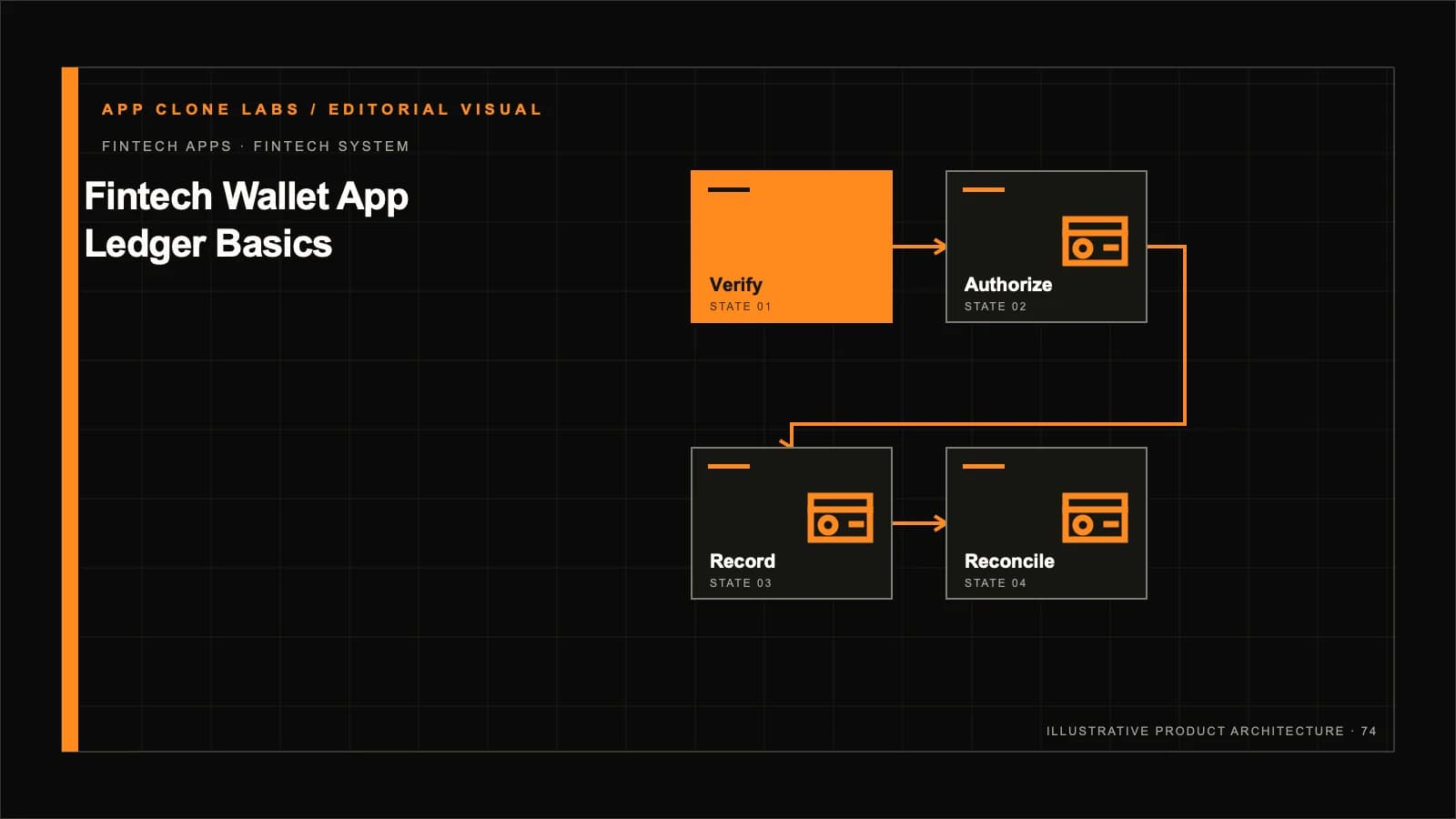
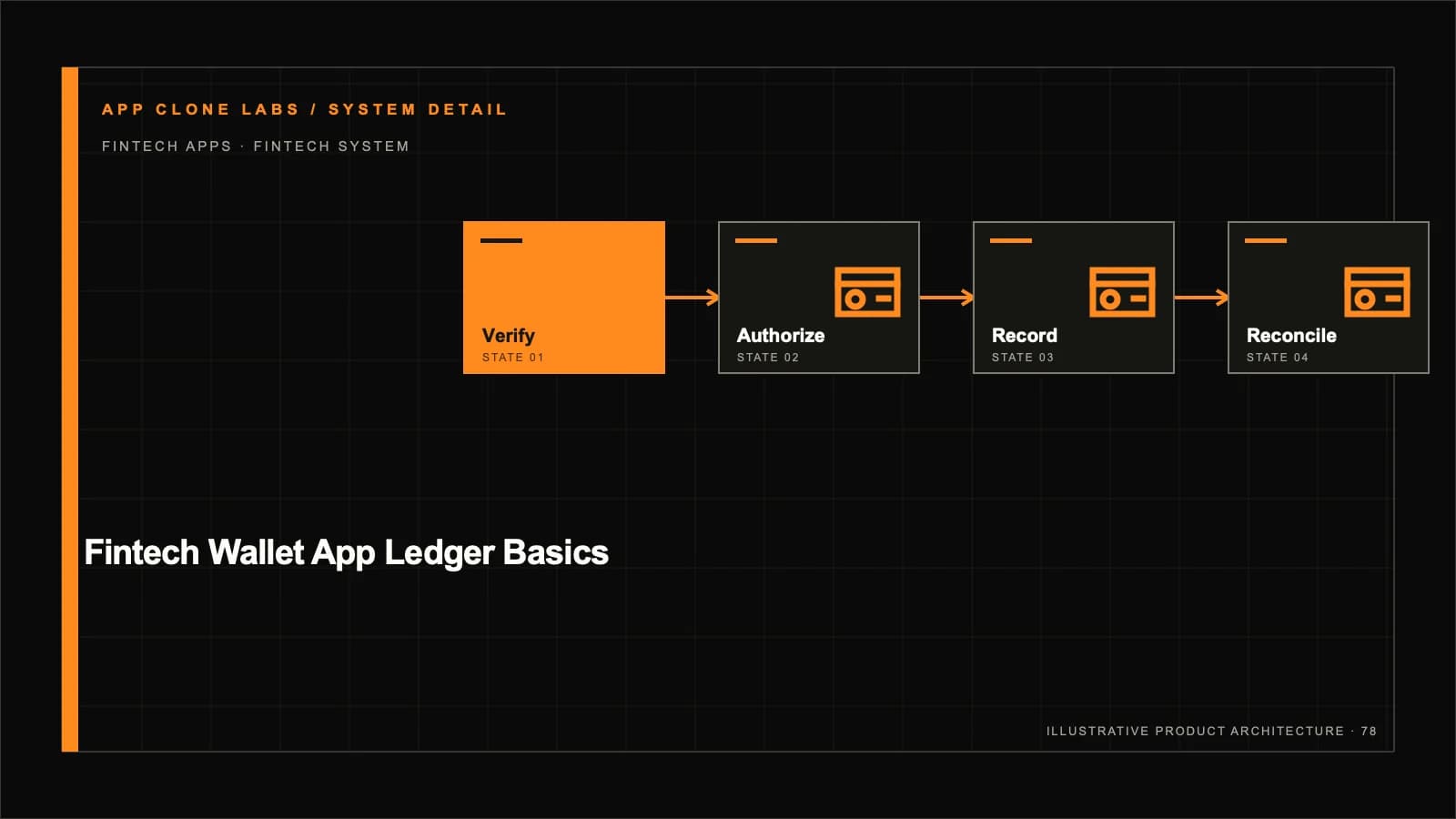
A wallet balance can look correct while the accounting underneath is already broken. A retry posts the same transfer twice, a failed payout releases a hold too early, or an operator edits a balance without a corresponding entry. The screen still shows a number; the business can no longer prove what that number means.
A wallet should derive balances from durable entries and explicit obligations. Pending funds, available funds, reserved funds and money moving through an external rail are different states. Treating them as one mutable field creates reconciliation and support failures.
This guide defines the ledger, transaction lifecycle and operating controls required before a wallet is trusted with real value.
Define the wallet boundary
Stored value, a payment account and a display-only balance create different legal and technical obligations.
The failure mode is concrete: the product calls every amount a wallet without defining custody or settlement. This is not solved by adding another screen or background job. The product has to define ownership, permitted transitions, and the evidence retained when the transition occurs.
For the first release, document the money flow, regulated parties and system of record before implementation. Write that decision as an enforceable server-side rule, not guidance that depends on a client, operator, or AI model remembering the intended boundary.
Implementation should include currency, owner, custodian, rail, settlement timing, restrictions and disclosures. Keep the public response smaller than the internal record: users need a clear outcome and recovery path, while authorized operators need correlation IDs, policy versions, timestamps, and the before-and-after state.
Validate it with trace three representative deposits and withdrawals end to end. Test the ordinary path, then repeat under timeout, duplicate delivery, stale state, partial failure, revoked authority, and concurrent requests. A feature is not ready when only the demonstration succeeds.
- Owner: product and compliance lead
- Release evidence: Define the wallet boundary acceptance record
- Stop condition: define the wallet boundary cannot be explained or recovered
Use immutable double-entry records
Every value movement needs equal debits and credits within a balanced transaction.
The failure mode is concrete: application code directly increments user balances. This is not solved by adding another screen or background job. The product has to define ownership, permitted transitions, and the evidence retained when the transition occurs.
For the first release, post append-only journal entries and correct mistakes with compensating entries. Write that decision as an enforceable server-side rule, not guidance that depends on a client, operator, or AI model remembering the intended boundary.
Implementation should include transaction ID, accounts, currency, amount, direction, effective time, source and description. Keep the public response smaller than the internal record: users need a clear outcome and recovery path, while authorized operators need correlation IDs, policy versions, timestamps, and the before-and-after state.
Validate it with duplicate, partial and concurrent postings. Test the ordinary path, then repeat under timeout, duplicate delivery, stale state, partial failure, revoked authority, and concurrent requests. A feature is not ready when only the demonstration succeeds.
- Owner: ledger engineer
- Release evidence: Use immutable double-entry records acceptance record
- Stop condition: use immutable double-entry records cannot be explained or recovered
Separate ledger accounts from users
A user may own several currency or purpose-specific accounts.
The failure mode is concrete: user ID is treated as the accounting account. This is not solved by adding another screen or background job. The product has to define ownership, permitted transitions, and the evidence retained when the transition occurs.
For the first release, model accounts with explicit type, currency, owner and status. Write that decision as an enforceable server-side rule, not guidance that depends on a client, operator, or AI model remembering the intended boundary.
Implementation should include asset, liability, clearing, fee, reserve and suspense account classifications. Keep the public response smaller than the internal record: users need a clear outcome and recovery path, while authorized operators need correlation IDs, policy versions, timestamps, and the before-and-after state.
Validate it with closed user, currency mismatch and platform fee. Test the ordinary path, then repeat under timeout, duplicate delivery, stale state, partial failure, revoked authority, and concurrent requests. A feature is not ready when only the demonstration succeeds.
- Owner: finance systems owner
- Release evidence: Separate ledger accounts from users acceptance record
- Stop condition: separate ledger accounts from users cannot be explained or recovered
Derive balance types
Posted, pending, available and reserved balances answer different questions.
The failure mode is concrete: one cached balance authorizes spending. This is not solved by adding another screen or background job. The product has to define ownership, permitted transitions, and the evidence retained when the transition occurs.
For the first release, define each balance formula from entries and active holds. Write that decision as an enforceable server-side rule, not guidance that depends on a client, operator, or AI model remembering the intended boundary.
Implementation should include posted total, credits, debits, holds, release time, overdraft rule and cache version. Keep the public response smaller than the internal record: users need a clear outcome and recovery path, while authorized operators need correlation IDs, policy versions, timestamps, and the before-and-after state.
Validate it with simultaneous spend and delayed settlement. Test the ordinary path, then repeat under timeout, duplicate delivery, stale state, partial failure, revoked authority, and concurrent requests. A feature is not ready when only the demonstration succeeds.
- Owner: ledger architect
- Release evidence: Derive balance types acceptance record
- Stop condition: derive balance types cannot be explained or recovered
Checkpoint 4: reconcile the product promise with the recorded state. Support, finance, security, and delivery teams should be able to reach the same conclusion from the same identifiers without reconstructing events from chat messages or screenshots.
Make transaction commands idempotent
Networks and clients retry after ambiguous timeouts.
The failure mode is concrete: a repeated request creates a second transfer. This is not solved by adding another screen or background job. The product has to define ownership, permitted transitions, and the evidence retained when the transition occurs.
For the first release, require a stable idempotency key within a documented scope. Write that decision as an enforceable server-side rule, not guidance that depends on a client, operator, or AI model remembering the intended boundary.
Implementation should include key, actor, intent hash, first result, expiry, conflict behavior and audit. Keep the public response smaller than the internal record: users need a clear outcome and recovery path, while authorized operators need correlation IDs, policy versions, timestamps, and the before-and-after state.
Validate it with same key same payload and same key changed payload. Test the ordinary path, then repeat under timeout, duplicate delivery, stale state, partial failure, revoked authority, and concurrent requests. A feature is not ready when only the demonstration succeeds.
- Owner: payments engineer
- Release evidence: Make transaction commands idempotent acceptance record
- Stop condition: make transaction commands idempotent cannot be explained or recovered
Model holds explicitly
Authorization or review can reserve funds without completing movement.
The failure mode is concrete: pending transactions subtract value inconsistently. This is not solved by adding another screen or background job. The product has to define ownership, permitted transitions, and the evidence retained when the transition occurs.
For the first release, create hold, capture, release and expiry transitions with ownership. Write that decision as an enforceable server-side rule, not guidance that depends on a client, operator, or AI model remembering the intended boundary.
Implementation should include hold ID, account, amount, reason, source, expiry, captured amount and state. Keep the public response smaller than the internal record: users need a clear outcome and recovery path, while authorized operators need correlation IDs, policy versions, timestamps, and the before-and-after state.
Validate it with partial capture, expired hold and late capture. Test the ordinary path, then repeat under timeout, duplicate delivery, stale state, partial failure, revoked authority, and concurrent requests. A feature is not ready when only the demonstration succeeds.
- Owner: wallet engineer
- Release evidence: Model holds explicitly acceptance record
- Stop condition: model holds explicitly cannot be explained or recovered
Treat transfers as workflows
A transfer crosses validation, reservation, posting and external settlement stages.
The failure mode is concrete: one success flag hides uncertain rail state. This is not solved by adding another screen or background job. The product has to define ownership, permitted transitions, and the evidence retained when the transition occurs.
For the first release, use explicit states and permitted transitions tied to evidence. Write that decision as an enforceable server-side rule, not guidance that depends on a client, operator, or AI model remembering the intended boundary.
Implementation should include intent, source, destination, fees, rail reference, state, timestamps and failure reason. Keep the public response smaller than the internal record: users need a clear outcome and recovery path, while authorized operators need correlation IDs, policy versions, timestamps, and the before-and-after state.
Validate it with rail timeout, rejection and delayed callback. Test the ordinary path, then repeat under timeout, duplicate delivery, stale state, partial failure, revoked authority, and concurrent requests. A feature is not ready when only the demonstration succeeds.
- Owner: transfer owner
- Release evidence: Treat transfers as workflows acceptance record
- Stop condition: treat transfers as workflows cannot be explained or recovered
Handle reversals with compensating entries
A settled or posted movement should not disappear from history.
The failure mode is concrete: operators delete erroneous transactions. This is not solved by adding another screen or background job. The product has to define ownership, permitted transitions, and the evidence retained when the transition occurs.
For the first release, reverse through linked entries and preserve both economic events. Write that decision as an enforceable server-side rule, not guidance that depends on a client, operator, or AI model remembering the intended boundary.
Implementation should include original transaction, reversal, reason, approver, amount, effective date and customer display. Keep the public response smaller than the internal record: users need a clear outcome and recovery path, while authorized operators need correlation IDs, policy versions, timestamps, and the before-and-after state.
Validate it with partial reversal and already-reversed request. Test the ordinary path, then repeat under timeout, duplicate delivery, stale state, partial failure, revoked authority, and concurrent requests. A feature is not ready when only the demonstration succeeds.
- Owner: finance operations
- Release evidence: Handle reversals with compensating entries acceptance record
- Stop condition: handle reversals with compensating entries cannot be explained or recovered
Checkpoint 8: reconcile the product promise with the recorded state. Support, finance, security, and delivery teams should be able to reach the same conclusion from the same identifiers without reconstructing events from chat messages or screenshots.
Prevent currency ambiguity
Amounts are meaningful only with currency and precision.
The failure mode is concrete: floating-point values or implicit currency enter the ledger. This is not solved by adding another screen or background job. The product has to define ownership, permitted transitions, and the evidence retained when the transition occurs.
For the first release, store integer minor units with validated currency rules. Write that decision as an enforceable server-side rule, not guidance that depends on a client, operator, or AI model remembering the intended boundary.
Implementation should include currency code, exponent, rounding policy, display format and conversion reference. Keep the public response smaller than the internal record: users need a clear outcome and recovery path, while authorized operators need correlation IDs, policy versions, timestamps, and the before-and-after state.
Validate it with zero-decimal currency and fractional fee. Test the ordinary path, then repeat under timeout, duplicate delivery, stale state, partial failure, revoked authority, and concurrent requests. A feature is not ready when only the demonstration succeeds.
- Owner: platform engineer
- Release evidence: Prevent currency ambiguity acceptance record
- Stop condition: prevent currency ambiguity cannot be explained or recovered
Design fees as ledger movements
Fees affect the customer, platform revenue and settlement.
The failure mode is concrete: fees are subtracted only in presentation code. This is not solved by adding another screen or background job. The product has to define ownership, permitted transitions, and the evidence retained when the transition occurs.
For the first release, post transparent fee entries under a versioned schedule. Write that decision as an enforceable server-side rule, not guidance that depends on a client, operator, or AI model remembering the intended boundary.
Implementation should include fee type, rule version, base amount, calculated amount, payer, recipient and tax context. Keep the public response smaller than the internal record: users need a clear outcome and recovery path, while authorized operators need correlation IDs, policy versions, timestamps, and the before-and-after state.
Validate it with waiver, refund and fee cap. Test the ordinary path, then repeat under timeout, duplicate delivery, stale state, partial failure, revoked authority, and concurrent requests. A feature is not ready when only the demonstration succeeds.
- Owner: monetization owner
- Release evidence: Design fees as ledger movements acceptance record
- Stop condition: design fees as ledger movements cannot be explained or recovered
Reconcile external rails
Provider statements and internal books will drift without active comparison.
The failure mode is concrete: webhooks are assumed complete. This is not solved by adding another screen or background job. The product has to define ownership, permitted transitions, and the evidence retained when the transition occurs.
For the first release, match rail events, bank statements and ledger transactions in a daily queue. Write that decision as an enforceable server-side rule, not guidance that depends on a client, operator, or AI model remembering the intended boundary.
Implementation should include external reference, amount, currency, date, match status, variance, owner and resolution. Keep the public response smaller than the internal record: users need a clear outcome and recovery path, while authorized operators need correlation IDs, policy versions, timestamps, and the before-and-after state.
Validate it with missing webhook, duplicate statement line and timing difference. Test the ordinary path, then repeat under timeout, duplicate delivery, stale state, partial failure, revoked authority, and concurrent requests. A feature is not ready when only the demonstration succeeds.
- Owner: reconciliation lead
- Release evidence: Reconcile external rails acceptance record
- Stop condition: reconcile external rails cannot be explained or recovered
Control negative balances
Refunds, disputes and fees can create obligations beyond available funds.
The failure mode is concrete: the system silently clamps balances to zero. This is not solved by adding another screen or background job. The product has to define ownership, permitted transitions, and the evidence retained when the transition occurs.
For the first release, define credit, collection, restriction and recovery policy. Write that decision as an enforceable server-side rule, not guidance that depends on a client, operator, or AI model remembering the intended boundary.
Implementation should include negative amount, cause, account status, recovery source, notices and write-off approval. Keep the public response smaller than the internal record: users need a clear outcome and recovery path, while authorized operators need correlation IDs, policy versions, timestamps, and the before-and-after state.
Validate it with chargeback after withdrawal and fee reversal. Test the ordinary path, then repeat under timeout, duplicate delivery, stale state, partial failure, revoked authority, and concurrent requests. A feature is not ready when only the demonstration succeeds.
- Owner: risk owner
- Release evidence: Control negative balances acceptance record
- Stop condition: control negative balances cannot be explained or recovered
Checkpoint 12: reconcile the product promise with the recorded state. Support, finance, security, and delivery teams should be able to reach the same conclusion from the same identifiers without reconstructing events from chat messages or screenshots.
Protect operator adjustments
Manual entries are powerful and sometimes necessary.
The failure mode is concrete: support edits balances directly. This is not solved by adding another screen or background job. The product has to define ownership, permitted transitions, and the evidence retained when the transition occurs.
For the first release, use typed adjustments with separation of duties and evidence. Write that decision as an enforceable server-side rule, not guidance that depends on a client, operator, or AI model remembering the intended boundary.
Implementation should include requester, approver, accounts, amount, reason, case, attachments and audit. Keep the public response smaller than the internal record: users need a clear outcome and recovery path, while authorized operators need correlation IDs, policy versions, timestamps, and the before-and-after state.
Validate it with self-approval and repeated request. Test the ordinary path, then repeat under timeout, duplicate delivery, stale state, partial failure, revoked authority, and concurrent requests. A feature is not ready when only the demonstration succeeds.
- Owner: financial control owner
- Release evidence: Protect operator adjustments acceptance record
- Stop condition: protect operator adjustments cannot be explained or recovered
Give support a financial timeline
Customers experience deposits, holds, transfers and reversals as one story.
The failure mode is concrete: agents reconstruct events from several dashboards. This is not solved by adding another screen or background job. The product has to define ownership, permitted transitions, and the evidence retained when the transition occurs.
For the first release, show an authorized read-only timeline with narrow recovery actions. Write that decision as an enforceable server-side rule, not guidance that depends on a client, operator, or AI model remembering the intended boundary.
Implementation should include transaction links, balance impact, rail state, notifications, cases and reconciliation status. Keep the public response smaller than the internal record: users need a clear outcome and recovery path, while authorized operators need correlation IDs, policy versions, timestamps, and the before-and-after state.
Validate it with pending transfer and disputed fee. Test the ordinary path, then repeat under timeout, duplicate delivery, stale state, partial failure, revoked authority, and concurrent requests. A feature is not ready when only the demonstration succeeds.
- Owner: support lead
- Release evidence: Give support a financial timeline acceptance record
- Stop condition: give support a financial timeline cannot be explained or recovered
Prove ledger invariants continuously
Accounting correctness must survive concurrency and recovery.
The failure mode is concrete: testing covers only successful API responses. This is not solved by adding another screen or background job. The product has to define ownership, permitted transitions, and the evidence retained when the transition occurs.
For the first release, monitor balanced postings, uniqueness, currency consistency and unexplained variances. Write that decision as an enforceable server-side rule, not guidance that depends on a client, operator, or AI model remembering the intended boundary.
Implementation should include invariant name, query, threshold, alert, incident owner, correction and evidence. Keep the public response smaller than the internal record: users need a clear outcome and recovery path, while authorized operators need correlation IDs, policy versions, timestamps, and the before-and-after state.
Validate it with load burst, failover and replay. Test the ordinary path, then repeat under timeout, duplicate delivery, stale state, partial failure, revoked authority, and concurrent requests. A feature is not ready when only the demonstration succeeds.
- Owner: reliability lead
- Release evidence: Prove ledger invariants continuously acceptance record
- Stop condition: prove ledger invariants continuously cannot be explained or recovered
Implementation references
Use Stripe Treasury documentation and record the version applied to this release.
Validate implementation against OWASP API Security Top 10 and record the version applied to this release.
Review OWASP Authorization Cheat Sheet and record the version applied to this release.
Compare with PostgreSQL transaction isolation and record the version applied to this release.
Continue with Fintech Industry when translating this guide into delivery scope.
Frequently asked questions
Why is a mutable balance unsafe?
It cannot explain the movements that created the number and is vulnerable to retries, concurrency and manual edits.
What is double-entry accounting in a wallet?
Every transaction posts equal debits and credits across ledger accounts so the journal remains balanced.
What is the difference between pending and available balance?
Pending reflects unsettled activity; available reflects the amount permitted for new spending after holds and policy.
How should duplicate payment requests be handled?
Use scoped idempotency keys and return the original result for an identical retry.
Should incorrect entries be deleted?
No. Post linked compensating entries so both the mistake and correction remain auditable.
What is reconciliation?
Matching internal ledger records to external provider or bank evidence and resolving differences.
Can support staff adjust balances?
Only through a controlled, reasoned, approved adjustment workflow that posts ledger entries.
What must be tested before launch?
Concurrency, retries, partial failures, holds, reversals, currency precision, provider outages and reconciliation.
Turn the plan into release evidence
A credible release connects the public promise to durable state, scoped authority and recoverable operations. Ordinary journeys and important exceptions should be explainable from the same evidence.
Keep the initial scope narrow enough to rehearse end to end. Expand only after permissions, financial consequences, data integrity and support outcomes remain consistent under retries, failures and human mistakes.
- 01
- 02
- 03
- 04
- 05
- 06
Reviewed by the App Clone Labs product strategy team
This guide is written for founders and operators planning clone-inspired platforms, SaaS products, marketplaces, and mobile apps. It is reviewed against App Clone Labs delivery patterns, product scoping standards, and current implementation realities before being published.
Review the editorial team structureRelated product paths
Continue with the services, solutions, guides, and articles that connect this topic to a real software build.
Services, solutions, and guides
Read next