Editorial dossier / Community Apps
Discord-Style Community Platform Requirements: Permissions, Realtime and Safety
Plan a Discord-style community product across servers, channels, roles, realtime messaging, voice, moderation, notifications, privacy, scale and incident recovery.
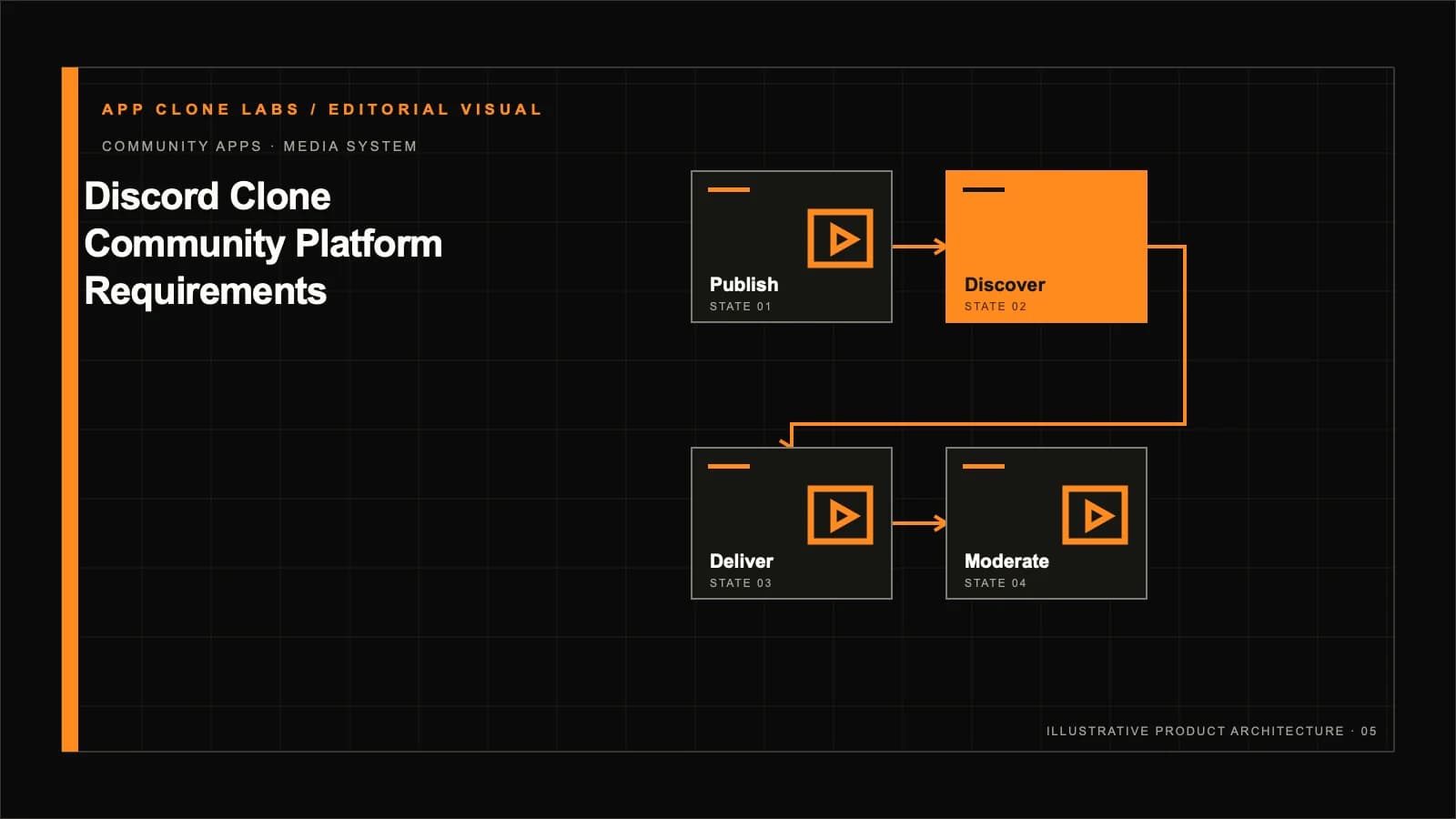
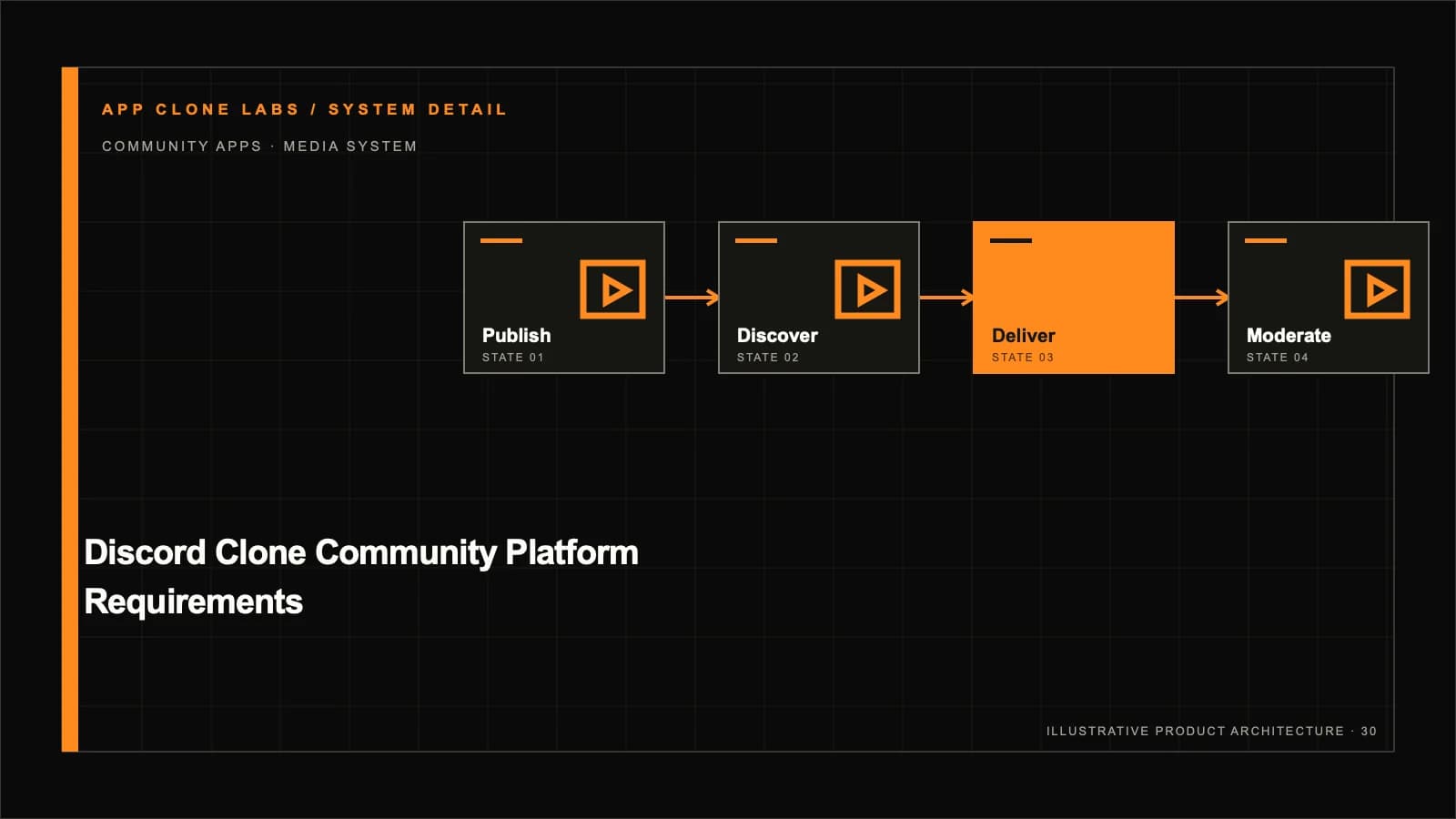
The dangerous bug in a community platform is rarely a missing emoji. It is a private channel appearing in search, a removed moderator retaining authority through a stale socket, a blocked user reaching someone through a thread, or a raid overwhelming the report queue while operators have no reversible response.
A Discord-style product combines hierarchical authorization, high-volume realtime state and human conflict. Those systems must agree at every boundary. The member list, channel tree, notification service, search index, media pipeline and voice layer cannot each invent their own permission interpretation.
This guide defines the platform as a safety-critical communication system, starting with authority and recovery before adding engagement mechanics.
Choose the community boundary
Communities may be public networks, private workspaces, paid groups or invitation-only programs.
The failure mode is concrete: one product tries to support incompatible privacy expectations. This is not solved by adding another screen or background job. The product has to define ownership, permitted transitions, and the evidence retained when the transition occurs.
For the first release, declare the first community model and membership promise. Write that decision as an enforceable server-side rule, not guidance that depends on a client, operator, or AI model remembering the intended boundary.
Implementation should include discovery, joining, identity visibility, retention, ownership, commercial access and export. Keep the public response smaller than the internal record: users need a clear outcome and recovery path, while authorized operators need correlation IDs, policy versions, timestamps, and the before-and-after state.
Validate it with public visitor, invited member and removed member. Test the ordinary path, then repeat under timeout, duplicate delivery, stale state, partial failure, revoked authority, and concurrent requests. A feature is not ready when only the demonstration succeeds.
- Owner: product lead
- Release evidence: community contract
- Stop condition: users cannot tell who can see their activity
Model servers and channels separately
A server owns membership and policy; channels create scoped conversation contexts.
The failure mode is concrete: channel membership becomes an unrelated duplicate ACL. This is not solved by adding another screen or background job. The product has to define ownership, permitted transitions, and the evidence retained when the transition occurs.
For the first release, inherit from the server with explicit channel overrides. Write that decision as an enforceable server-side rule, not guidance that depends on a client, operator, or AI model remembering the intended boundary.
Implementation should include server, category, channel type, parent, visibility, lifecycle and policy version. Keep the public response smaller than the internal record: users need a clear outcome and recovery path, while authorized operators need correlation IDs, policy versions, timestamps, and the before-and-after state.
Validate it with moved channel, archived category and private override. Test the ordinary path, then repeat under timeout, duplicate delivery, stale state, partial failure, revoked authority, and concurrent requests. A feature is not ready when only the demonstration succeeds.
- Owner: domain architect
- Release evidence: hierarchy invariants
- Stop condition: moving a channel silently exposes history
Build permissions from capabilities
Named roles are understandable labels but enforcement needs explicit capabilities.
The failure mode is concrete: code checks whether a user is called moderator. This is not solved by adding another screen or background job. The product has to define ownership, permitted transitions, and the evidence retained when the transition occurs.
For the first release, resolve capabilities from memberships, roles and bounded overrides. Write that decision as an enforceable server-side rule, not guidance that depends on a client, operator, or AI model remembering the intended boundary.
Implementation should include view, send, manage, invite, moderate, stream, mention and audit permissions. Keep the public response smaller than the internal record: users need a clear outcome and recovery path, while authorized operators need correlation IDs, policy versions, timestamps, and the before-and-after state.
Validate it with multiple roles, deny override and ownership transfer. Test the ordinary path, then repeat under timeout, duplicate delivery, stale state, partial failure, revoked authority, and concurrent requests. A feature is not ready when only the demonstration succeeds.
- Owner: security owner
- Release evidence: permission truth table
- Stop condition: two services resolve the same member differently
Reauthorize every realtime connection
A socket can outlive login, membership and role changes.
The failure mode is concrete: authorization happens only during connection. This is not solved by adding another screen or background job. The product has to define ownership, permitted transitions, and the evidence retained when the transition occurs.
For the first release, authenticate the session and recheck channel authority for subscription and sensitive actions. Write that decision as an enforceable server-side rule, not guidance that depends on a client, operator, or AI model remembering the intended boundary.
Implementation should include session ID, user, server, channel, capability version, expiry and revocation signal. Keep the public response smaller than the internal record: users need a clear outcome and recovery path, while authorized operators need correlation IDs, policy versions, timestamps, and the before-and-after state.
Validate it with role removal, device logout and channel closure. Test the ordinary path, then repeat under timeout, duplicate delivery, stale state, partial failure, revoked authority, and concurrent requests. A feature is not ready when only the demonstration succeeds.
- Owner: realtime lead
- Release evidence: revocation latency test
- Stop condition: a removed member keeps receiving events
Checkpoint 4: reconcile the product promise with the recorded state. Support, finance, security, and delivery teams should be able to reach the same conclusion from the same identifiers without reconstructing events from chat messages or screenshots.
Give messages stable identity
Create, edit, delete, reply and reaction events may arrive out of order.
The failure mode is concrete: the client timestamp determines canonical history. This is not solved by adding another screen or background job. The product has to define ownership, permitted transitions, and the evidence retained when the transition occurs.
For the first release, assign server-side identifiers and versions with idempotent commands. Write that decision as an enforceable server-side rule, not guidance that depends on a client, operator, or AI model remembering the intended boundary.
Implementation should include message ID, channel, author, body version, reply target, status and timestamps. Keep the public response smaller than the internal record: users need a clear outcome and recovery path, while authorized operators need correlation IDs, policy versions, timestamps, and the before-and-after state.
Validate it with duplicate send, offline retry and concurrent edit. Test the ordinary path, then repeat under timeout, duplicate delivery, stale state, partial failure, revoked authority, and concurrent requests. A feature is not ready when only the demonstration succeeds.
- Owner: messaging engineer
- Release evidence: ordering and idempotency tests
- Stop condition: one action produces duplicate visible messages
Define deletion and retention honestly
Soft deletion, moderator removal and legal retention have different meanings.
The failure mode is concrete: the UI says deleted while indexes and attachments remain public. This is not solved by adding another screen or background job. The product has to define ownership, permitted transitions, and the evidence retained when the transition occurs.
For the first release, publish deletion semantics and propagate each state to every derived store. Write that decision as an enforceable server-side rule, not guidance that depends on a client, operator, or AI model remembering the intended boundary.
Implementation should include tombstone, actor, reason, retention class, attachment disposition and purge job. Keep the public response smaller than the internal record: users need a clear outcome and recovery path, while authorized operators need correlation IDs, policy versions, timestamps, and the before-and-after state.
Validate it with account deletion, moderation hold and search-cache lag. Test the ordinary path, then repeat under timeout, duplicate delivery, stale state, partial failure, revoked authority, and concurrent requests. A feature is not ready when only the demonstration succeeds.
- Owner: privacy owner
- Release evidence: deletion reconciliation
- Stop condition: removed content remains retrievable without authorization
Protect attachments and link previews
User-controlled files and URLs cross security boundaries.
The failure mode is concrete: the application fetches arbitrary URLs and serves uploads inline. This is not solved by adding another screen or background job. The product has to define ownership, permitted transitions, and the evidence retained when the transition occurs.
For the first release, scan, transform and serve media through constrained pipelines. Write that decision as an enforceable server-side rule, not guidance that depends on a client, operator, or AI model remembering the intended boundary.
Implementation should include type detection, size, malware status, safe filename, storage key, preview status and expiry. Keep the public response smaller than the internal record: users need a clear outcome and recovery path, while authorized operators need correlation IDs, policy versions, timestamps, and the before-and-after state.
Validate it with polyglot file, decompression bomb and internal-network URL. Test the ordinary path, then repeat under timeout, duplicate delivery, stale state, partial failure, revoked authority, and concurrent requests. A feature is not ready when only the demonstration succeeds.
- Owner: media security lead
- Release evidence: adversarial upload suite
- Stop condition: untrusted content executes in the application origin
Treat voice as a separate subsystem
Voice requires signalling, media transport, device permissions and degraded-network behavior.
The failure mode is concrete: a room record is assumed to deliver reliable audio. This is not solved by adding another screen or background job. The product has to define ownership, permitted transitions, and the evidence retained when the transition occurs.
For the first release, separate membership authorization from WebRTC signalling and media operations. Write that decision as an enforceable server-side rule, not guidance that depends on a client, operator, or AI model remembering the intended boundary.
Implementation should include room, participant, capability, mute state, region, quality and moderation action. Keep the public response smaller than the internal record: users need a clear outcome and recovery path, while authorized operators need correlation IDs, policy versions, timestamps, and the before-and-after state.
Validate it with network handoff, reconnect, device loss and removed speaker. Test the ordinary path, then repeat under timeout, duplicate delivery, stale state, partial failure, revoked authority, and concurrent requests. A feature is not ready when only the demonstration succeeds.
- Owner: voice lead
- Release evidence: network impairment matrix
- Stop condition: leaving or removal does not stop media access
Checkpoint 8: reconcile the product promise with the recorded state. Support, finance, security, and delivery teams should be able to reach the same conclusion from the same identifiers without reconstructing events from chat messages or screenshots.
Design presence as approximate
Online indicators are useful but inherently delayed across devices and regions.
The failure mode is concrete: presence is treated as durable truth or employee surveillance. This is not solved by adding another screen or background job. The product has to define ownership, permitted transitions, and the evidence retained when the transition occurs.
For the first release, define freshness, privacy and aggregation boundaries. Write that decision as an enforceable server-side rule, not guidance that depends on a client, operator, or AI model remembering the intended boundary.
Implementation should include device session, heartbeat, last activity, visibility preference and expiry. Keep the public response smaller than the internal record: users need a clear outcome and recovery path, while authorized operators need correlation IDs, policy versions, timestamps, and the before-and-after state.
Validate it with sleeping device, abrupt disconnect and invisible mode. Test the ordinary path, then repeat under timeout, duplicate delivery, stale state, partial failure, revoked authority, and concurrent requests. A feature is not ready when only the demonstration succeeds.
- Owner: platform lead
- Release evidence: staleness simulation
- Stop condition: presence claims precision the system cannot provide
Make notifications a policy engine
Mentions, replies, server defaults and user overrides compete.
The failure mode is concrete: every event becomes a push notification. This is not solved by adding another screen or background job. The product has to define ownership, permitted transitions, and the evidence retained when the transition occurs.
For the first release, resolve notification eligibility from event, membership and preference context. Write that decision as an enforceable server-side rule, not guidance that depends on a client, operator, or AI model remembering the intended boundary.
Implementation should include event type, channel policy, mute, quiet hours, digest, device and dedupe key. Keep the public response smaller than the internal record: users need a clear outcome and recovery path, while authorized operators need correlation IDs, policy versions, timestamps, and the before-and-after state.
Validate it with role mention storm, edited message and multi-device delivery. Test the ordinary path, then repeat under timeout, duplicate delivery, stale state, partial failure, revoked authority, and concurrent requests. A feature is not ready when only the demonstration succeeds.
- Owner: engagement owner
- Release evidence: notification decision table
- Stop condition: one message produces repeated or unauthorized alerts
Create layered anti-abuse controls
Spam, raids and harassment operate at account, server, channel and relationship levels.
The failure mode is concrete: one global rate limit blocks ordinary members but misses coordinated abuse. This is not solved by adding another screen or background job. The product has to define ownership, permitted transitions, and the evidence retained when the transition occurs.
For the first release, combine bounded rate limits, trust signals and reversible friction. Write that decision as an enforceable server-side rule, not guidance that depends on a client, operator, or AI model remembering the intended boundary.
Implementation should include account age, join velocity, message velocity, invite source, similarity, challenge and review. Keep the public response smaller than the internal record: users need a clear outcome and recovery path, while authorized operators need correlation IDs, policy versions, timestamps, and the before-and-after state.
Validate it with new-member burst, compromised moderator and false positive. Test the ordinary path, then repeat under timeout, duplicate delivery, stale state, partial failure, revoked authority, and concurrent requests. A feature is not ready when only the demonstration succeeds.
- Owner: trust and safety lead
- Release evidence: raid exercise
- Stop condition: operators can only shut down the whole service
Build reports as cases
A report needs context, evidence, priority, decision and appeal.
The failure mode is concrete: report buttons send unstructured emails. This is not solved by adding another screen or background job. The product has to define ownership, permitted transitions, and the evidence retained when the transition occurs.
For the first release, create permissioned case records with preserved evidence and policy references. Write that decision as an enforceable server-side rule, not guidance that depends on a client, operator, or AI model remembering the intended boundary.
Implementation should include reporter, target, content snapshot, category, severity, owner, action and appeal. Keep the public response smaller than the internal record: users need a clear outcome and recovery path, while authorized operators need correlation IDs, policy versions, timestamps, and the before-and-after state.
Validate it with deleted message, repeat offender and reporter block. Test the ordinary path, then repeat under timeout, duplicate delivery, stale state, partial failure, revoked authority, and concurrent requests. A feature is not ready when only the demonstration succeeds.
- Owner: moderation operations
- Release evidence: case audit sample
- Stop condition: a serious allegation loses its evidence
Checkpoint 12: reconcile the product promise with the recorded state. Support, finance, security, and delivery teams should be able to reach the same conclusion from the same identifiers without reconstructing events from chat messages or screenshots.
Keep automated moderation bounded
Classification can triage volume but should not invent policy or irreversible punishment.
The failure mode is concrete: a model silently bans users from an opaque score. This is not solved by adding another screen or background job. The product has to define ownership, permitted transitions, and the evidence retained when the transition occurs.
For the first release, use automation for signals and queues with thresholds, explanations and human review. Write that decision as an enforceable server-side rule, not guidance that depends on a client, operator, or AI model remembering the intended boundary.
Implementation should include model version, labels, confidence, rule, reviewer, action and reversal. Keep the public response smaller than the internal record: users need a clear outcome and recovery path, while authorized operators need correlation IDs, policy versions, timestamps, and the before-and-after state.
Validate it with coded harassment, multilingual text and adversarial formatting. Test the ordinary path, then repeat under timeout, duplicate delivery, stale state, partial failure, revoked authority, and concurrent requests. A feature is not ready when only the demonstration succeeds.
- Owner: moderation systems owner
- Release evidence: labelled evaluation set
- Stop condition: model change alters sanctions without review
Make search permission-safe
Search indexes replicate message content outside the primary store.
The failure mode is concrete: results are filtered only after snippets are returned. This is not solved by adding another screen or background job. The product has to define ownership, permitted transitions, and the evidence retained when the transition occurs.
For the first release, apply server and channel authorization before retrieval and remove stale documents. Write that decision as an enforceable server-side rule, not guidance that depends on a client, operator, or AI model remembering the intended boundary.
Implementation should include document ACL, channel state, message version, deletion status and index timestamp. Keep the public response smaller than the internal record: users need a clear outcome and recovery path, while authorized operators need correlation IDs, policy versions, timestamps, and the before-and-after state.
Validate it with private channel change, deleted post and removed member. Test the ordinary path, then repeat under timeout, duplicate delivery, stale state, partial failure, revoked authority, and concurrent requests. A feature is not ready when only the demonstration succeeds.
- Owner: search owner
- Release evidence: negative access tests
- Stop condition: unauthorized text reaches the result pipeline
Operate incidents and ownership transfer
Communities persist through abuse events, outages and owner departure.
The failure mode is concrete: one irreplaceable owner account controls recovery. This is not solved by adding another screen or background job. The product has to define ownership, permitted transitions, and the evidence retained when the transition occurs.
For the first release, define transfer, emergency restriction, audit export and staged restoration. Write that decision as an enforceable server-side rule, not guidance that depends on a client, operator, or AI model remembering the intended boundary.
Implementation should include successor eligibility, quorum or support proof, freeze, rollback and communications. Keep the public response smaller than the internal record: users need a clear outcome and recovery path, while authorized operators need correlation IDs, policy versions, timestamps, and the before-and-after state.
Validate it with compromised owner, regional outage and moderator revolt. Test the ordinary path, then repeat under timeout, duplicate delivery, stale state, partial failure, revoked authority, and concurrent requests. A feature is not ready when only the demonstration succeeds.
- Owner: operations lead
- Release evidence: tabletop rehearsal
- Stop condition: no authorized person can restore safe control
Implementation references
Use Discord permissions documentation and record the version used for the release.
Validate the implementation against Discord channel resource and record the version used for the release.
Review IETF WebSocket Protocol RFC 6455 and record the version used for the release.
Compare with WebRTC 1.0 specification and record the version used for the release.
Continue with Discord Clone Blueprint when turning the operating model into delivery scope.
Frequently asked questions
What is the minimum Discord-style MVP?
Server membership, a channel hierarchy, capability-based roles, realtime text, basic media controls, notifications, block and report flows, moderation cases, audit history and operational recovery.
Can authorization be checked only when a socket connects?
No. Membership and permissions change while connections live, so sensitive subscriptions and actions need reauthorization and fast revocation.
Should permissions be role-name checks?
No. Roles are labels that grant explicit capabilities; enforcement should evaluate capabilities within server and channel context.
Is presence always accurate?
No. It is eventually consistent and can be private. Define freshness and avoid presenting it as precise surveillance data.
How should message deletion work?
Define user deletion, moderator removal, retention and legal hold separately, then propagate the chosen state to attachments, search and caches.
Can AI handle all moderation?
It can classify and prioritize, but policy decisions need measured thresholds, retained evidence, human review and reversible actions.
What makes voice harder than text chat?
It introduces signalling, media transport, devices, network degradation, regional routing and real-time revocation requirements.
What should an incident rehearsal include?
Permission revocation, private-channel exposure, raid controls, owner compromise, search removal, evidence preservation, rollback and member communication.
Turn the plan into release evidence
A credible release connects the public promise to durable states, explicit permissions and recoverable operations. Teams should be able to explain an ordinary journey and every high-impact exception from the same records.
Keep the first scope narrow enough to rehearse end to end. Add breadth only after access, money, evidence and support outcomes remain consistent under retries, failures and human mistakes.
- 01
- 02
- 03
- 04
- 05
- 06
Reviewed by the App Clone Labs product strategy team
This guide is written for founders and operators planning clone-inspired platforms, SaaS products, marketplaces, and mobile apps. It is reviewed against App Clone Labs delivery patterns, product scoping standards, and current implementation realities before being published.
Review the editorial team structureRelated product paths
Continue with the services, solutions, guides, and articles that connect this topic to a real software build.