Editorial dossier / Media Apps
OTT Subscription and Profile Management: Entitlements, Devices and Recovery
Design OTT subscriptions across plans, billing, entitlements, profiles, devices, concurrency, parental controls, renewals, cancellations and support.
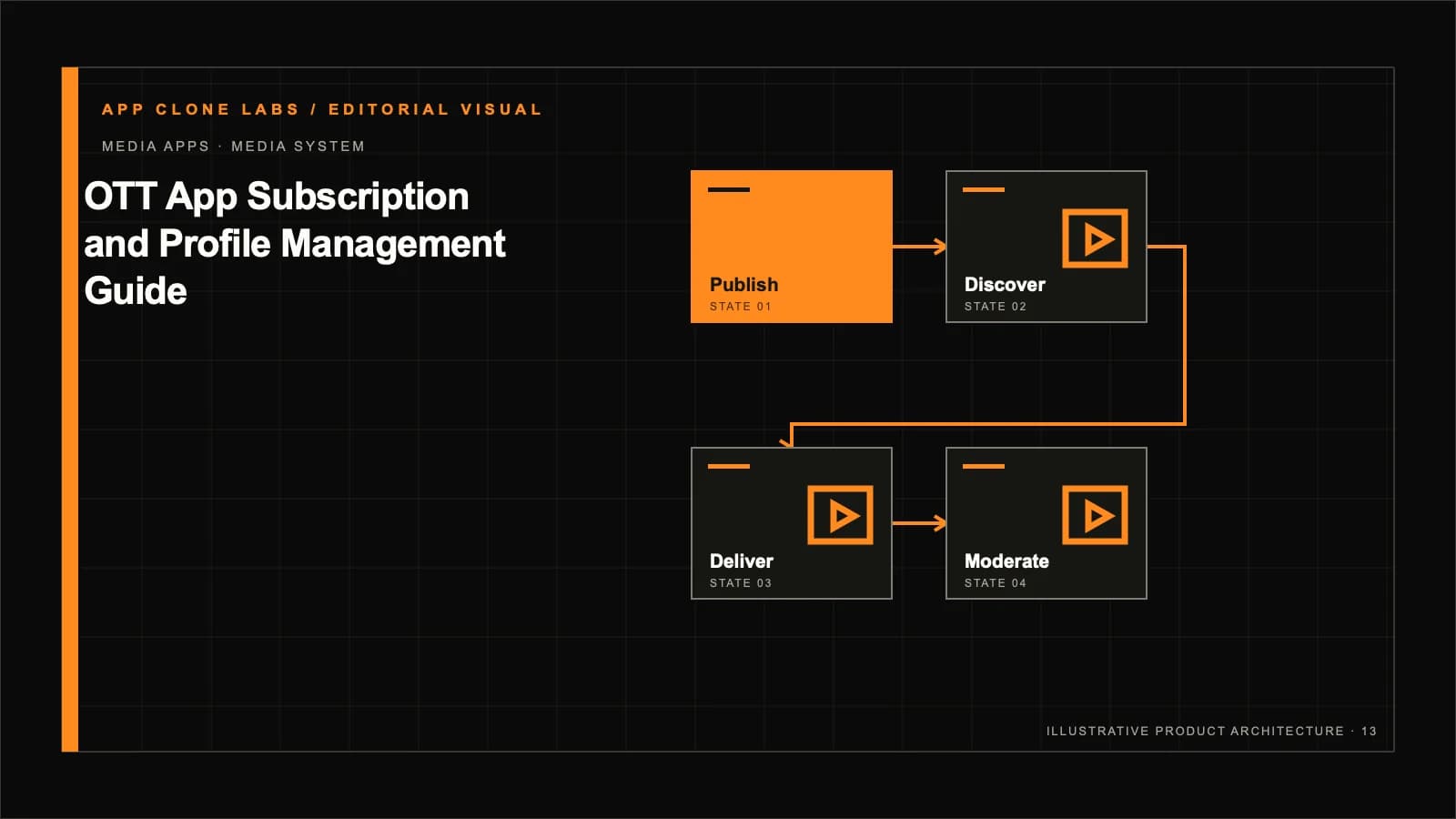
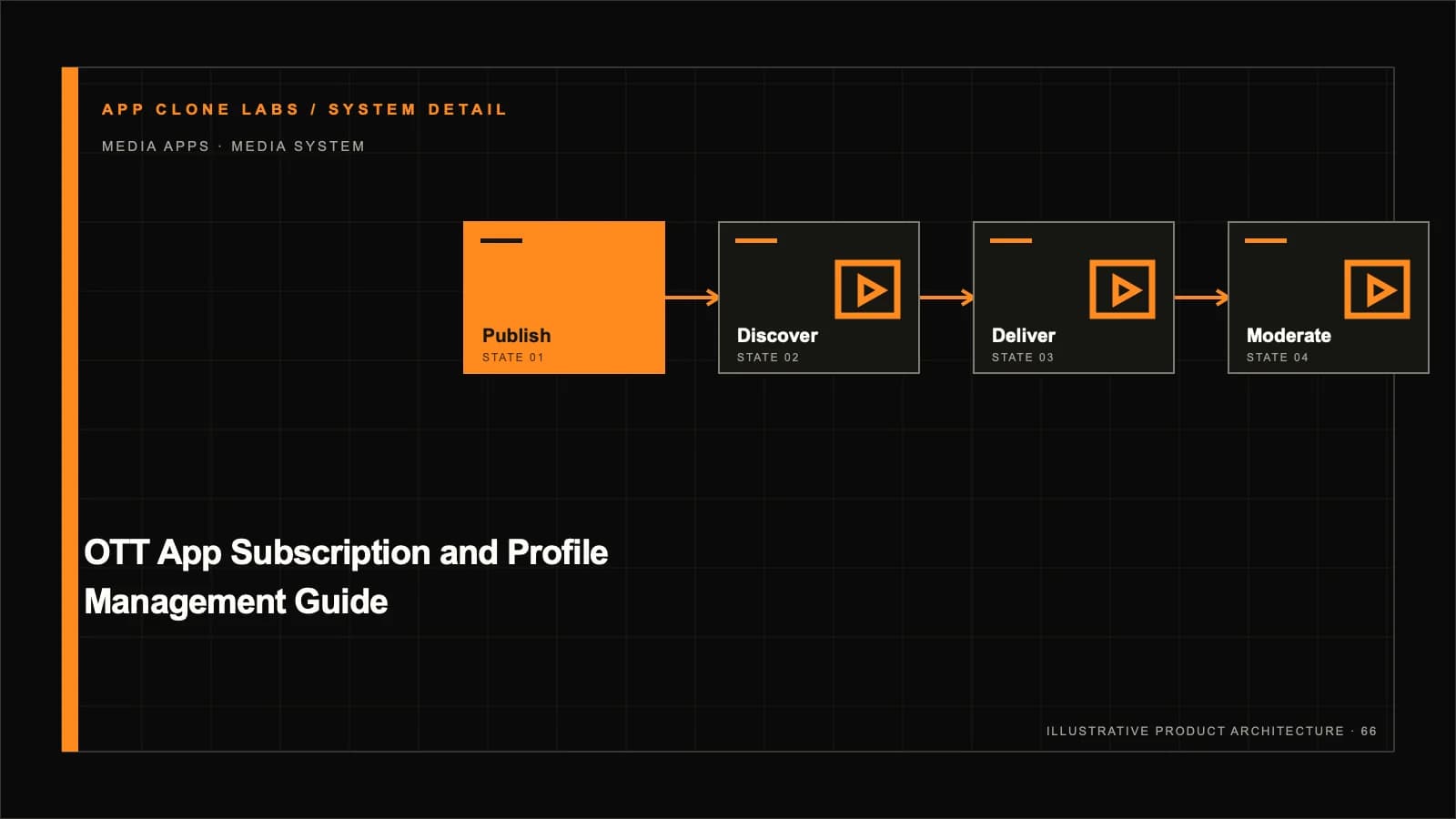
A successful charge does not itself authorize playback. An OTT platform has to translate purchases from several billing channels into one current entitlement, then apply device, concurrency, territory and content rules consistently.
Profiles personalize history and controls but normally do not own the commercial subscription. Confusing account, profile and device identities creates privacy leaks and inexplicable access failures.
This guide separates billing evidence from playback authority and designs the recovery paths customers actually need.
Separate accounts profiles and devices
Separate accounts profiles and devices is a separate product and operating decision within a streaming product selling account-level access while personalizing viewing through household profiles. It changes the promise made to users, the authority of each role, the evidence the platform retains and the recovery route when normal processing fails.
The failure mode is concrete: the team treats separate accounts profiles and devices as a screen requirement while lifecycle, permissions, downstream consequences and exception ownership remain implicit. This is not solved by adding another screen or background job. The product has to define ownership, permitted transitions, and the evidence retained when the transition occurs.
For the first release, define the authoritative lifecycle, accountable owner, allowed transitions, user-visible result and exception route for separate accounts profiles and devices before implementation. Write that decision as an enforceable server-side rule, not guidance that depends on a client, operator, or AI model remembering the intended boundary.
Implementation should include For separate accounts profiles and devices, retain stable identifiers, explicit states, server-side authorization, version checks, event and processing timestamps, reason codes, correlation IDs, audit history and a bounded recovery command. Keep the public response smaller than the internal record: users need a clear outcome and recovery path, while authorized operators need correlation IDs, policy versions, timestamps, and the before-and-after state.
Validate it with For separate accounts profiles and devices, test the successful journey followed by stale state, duplicate delivery, concurrent commands, revoked authority, dependency timeout, partial completion, operator correction and reconciliation. Test the ordinary path, then repeat under timeout, duplicate delivery, stale state, partial failure, revoked authority, and concurrent requests. A feature is not ready when only the demonstration succeeds.
- Owner: product owner
- Release evidence: versioned separate accounts profiles and devices decision, acceptance criteria and recovery record
- Stop condition: separate accounts profiles and devices cannot be explained or restored from durable evidence
Define plans and benefits
Define plans and benefits is a separate product and operating decision within a streaming product selling account-level access while personalizing viewing through household profiles. It changes the promise made to users, the authority of each role, the evidence the platform retains and the recovery route when normal processing fails.
The failure mode is concrete: the team treats define plans and benefits as a screen requirement while lifecycle, permissions, downstream consequences and exception ownership remain implicit. This is not solved by adding another screen or background job. The product has to define ownership, permitted transitions, and the evidence retained when the transition occurs.
For the first release, define the authoritative lifecycle, accountable owner, allowed transitions, user-visible result and exception route for define plans and benefits before implementation. Write that decision as an enforceable server-side rule, not guidance that depends on a client, operator, or AI model remembering the intended boundary.
Implementation should include For define plans and benefits, retain stable identifiers, explicit states, server-side authorization, version checks, event and processing timestamps, reason codes, correlation IDs, audit history and a bounded recovery command. Keep the public response smaller than the internal record: users need a clear outcome and recovery path, while authorized operators need correlation IDs, policy versions, timestamps, and the before-and-after state.
Validate it with For define plans and benefits, test the successful journey followed by stale state, duplicate delivery, concurrent commands, revoked authority, dependency timeout, partial completion, operator correction and reconciliation. Test the ordinary path, then repeat under timeout, duplicate delivery, stale state, partial failure, revoked authority, and concurrent requests. A feature is not ready when only the demonstration succeeds.
- Owner: engineering owner
- Release evidence: versioned define plans and benefits decision, acceptance criteria and recovery record
- Stop condition: define plans and benefits cannot be explained or restored from durable evidence
Normalize billing providers
Normalize billing providers is a separate product and operating decision within a streaming product selling account-level access while personalizing viewing through household profiles. It changes the promise made to users, the authority of each role, the evidence the platform retains and the recovery route when normal processing fails.
The failure mode is concrete: the team treats normalize billing providers as a screen requirement while lifecycle, permissions, downstream consequences and exception ownership remain implicit. This is not solved by adding another screen or background job. The product has to define ownership, permitted transitions, and the evidence retained when the transition occurs.
For the first release, define the authoritative lifecycle, accountable owner, allowed transitions, user-visible result and exception route for normalize billing providers before implementation. Write that decision as an enforceable server-side rule, not guidance that depends on a client, operator, or AI model remembering the intended boundary.
Implementation should include For normalize billing providers, retain stable identifiers, explicit states, server-side authorization, version checks, event and processing timestamps, reason codes, correlation IDs, audit history and a bounded recovery command. Keep the public response smaller than the internal record: users need a clear outcome and recovery path, while authorized operators need correlation IDs, policy versions, timestamps, and the before-and-after state.
Validate it with For normalize billing providers, test the successful journey followed by stale state, duplicate delivery, concurrent commands, revoked authority, dependency timeout, partial completion, operator correction and reconciliation. Test the ordinary path, then repeat under timeout, duplicate delivery, stale state, partial failure, revoked authority, and concurrent requests. A feature is not ready when only the demonstration succeeds.
- Owner: operations owner
- Release evidence: versioned normalize billing providers decision, acceptance criteria and recovery record
- Stop condition: normalize billing providers cannot be explained or restored from durable evidence
Build an entitlement ledger
Build an entitlement ledger is a separate product and operating decision within a streaming product selling account-level access while personalizing viewing through household profiles. It changes the promise made to users, the authority of each role, the evidence the platform retains and the recovery route when normal processing fails.
The failure mode is concrete: the team treats build an entitlement ledger as a screen requirement while lifecycle, permissions, downstream consequences and exception ownership remain implicit. This is not solved by adding another screen or background job. The product has to define ownership, permitted transitions, and the evidence retained when the transition occurs.
For the first release, define the authoritative lifecycle, accountable owner, allowed transitions, user-visible result and exception route for build an entitlement ledger before implementation. Write that decision as an enforceable server-side rule, not guidance that depends on a client, operator, or AI model remembering the intended boundary.
Implementation should include For build an entitlement ledger, retain stable identifiers, explicit states, server-side authorization, version checks, event and processing timestamps, reason codes, correlation IDs, audit history and a bounded recovery command. Keep the public response smaller than the internal record: users need a clear outcome and recovery path, while authorized operators need correlation IDs, policy versions, timestamps, and the before-and-after state.
Validate it with For build an entitlement ledger, test the successful journey followed by stale state, duplicate delivery, concurrent commands, revoked authority, dependency timeout, partial completion, operator correction and reconciliation. Test the ordinary path, then repeat under timeout, duplicate delivery, stale state, partial failure, revoked authority, and concurrent requests. A feature is not ready when only the demonstration succeeds.
- Owner: product owner
- Release evidence: versioned build an entitlement ledger decision, acceptance criteria and recovery record
- Stop condition: build an entitlement ledger cannot be explained or restored from durable evidence
Checkpoint 4: reconcile the product promise with the recorded state. Support, finance, security, and delivery teams should be able to reach the same conclusion from the same identifiers without reconstructing events from chat messages or screenshots.
Process renewals idempotently
Process renewals idempotently is a separate product and operating decision within a streaming product selling account-level access while personalizing viewing through household profiles. It changes the promise made to users, the authority of each role, the evidence the platform retains and the recovery route when normal processing fails.
The failure mode is concrete: the team treats process renewals idempotently as a screen requirement while lifecycle, permissions, downstream consequences and exception ownership remain implicit. This is not solved by adding another screen or background job. The product has to define ownership, permitted transitions, and the evidence retained when the transition occurs.
For the first release, define the authoritative lifecycle, accountable owner, allowed transitions, user-visible result and exception route for process renewals idempotently before implementation. Write that decision as an enforceable server-side rule, not guidance that depends on a client, operator, or AI model remembering the intended boundary.
Implementation should include For process renewals idempotently, retain stable identifiers, explicit states, server-side authorization, version checks, event and processing timestamps, reason codes, correlation IDs, audit history and a bounded recovery command. Keep the public response smaller than the internal record: users need a clear outcome and recovery path, while authorized operators need correlation IDs, policy versions, timestamps, and the before-and-after state.
Validate it with For process renewals idempotently, test the successful journey followed by stale state, duplicate delivery, concurrent commands, revoked authority, dependency timeout, partial completion, operator correction and reconciliation. Test the ordinary path, then repeat under timeout, duplicate delivery, stale state, partial failure, revoked authority, and concurrent requests. A feature is not ready when only the demonstration succeeds.
- Owner: engineering owner
- Release evidence: versioned process renewals idempotently decision, acceptance criteria and recovery record
- Stop condition: process renewals idempotently cannot be explained or restored from durable evidence
Handle grace periods
Handle grace periods is a separate product and operating decision within a streaming product selling account-level access while personalizing viewing through household profiles. It changes the promise made to users, the authority of each role, the evidence the platform retains and the recovery route when normal processing fails.
The failure mode is concrete: the team treats handle grace periods as a screen requirement while lifecycle, permissions, downstream consequences and exception ownership remain implicit. This is not solved by adding another screen or background job. The product has to define ownership, permitted transitions, and the evidence retained when the transition occurs.
For the first release, define the authoritative lifecycle, accountable owner, allowed transitions, user-visible result and exception route for handle grace periods before implementation. Write that decision as an enforceable server-side rule, not guidance that depends on a client, operator, or AI model remembering the intended boundary.
Implementation should include For handle grace periods, retain stable identifiers, explicit states, server-side authorization, version checks, event and processing timestamps, reason codes, correlation IDs, audit history and a bounded recovery command. Keep the public response smaller than the internal record: users need a clear outcome and recovery path, while authorized operators need correlation IDs, policy versions, timestamps, and the before-and-after state.
Validate it with For handle grace periods, test the successful journey followed by stale state, duplicate delivery, concurrent commands, revoked authority, dependency timeout, partial completion, operator correction and reconciliation. Test the ordinary path, then repeat under timeout, duplicate delivery, stale state, partial failure, revoked authority, and concurrent requests. A feature is not ready when only the demonstration succeeds.
- Owner: operations owner
- Release evidence: versioned handle grace periods decision, acceptance criteria and recovery record
- Stop condition: handle grace periods cannot be explained or restored from durable evidence
Apply cancellation timing
Apply cancellation timing is a separate product and operating decision within a streaming product selling account-level access while personalizing viewing through household profiles. It changes the promise made to users, the authority of each role, the evidence the platform retains and the recovery route when normal processing fails.
The failure mode is concrete: the team treats apply cancellation timing as a screen requirement while lifecycle, permissions, downstream consequences and exception ownership remain implicit. This is not solved by adding another screen or background job. The product has to define ownership, permitted transitions, and the evidence retained when the transition occurs.
For the first release, define the authoritative lifecycle, accountable owner, allowed transitions, user-visible result and exception route for apply cancellation timing before implementation. Write that decision as an enforceable server-side rule, not guidance that depends on a client, operator, or AI model remembering the intended boundary.
Implementation should include For apply cancellation timing, retain stable identifiers, explicit states, server-side authorization, version checks, event and processing timestamps, reason codes, correlation IDs, audit history and a bounded recovery command. Keep the public response smaller than the internal record: users need a clear outcome and recovery path, while authorized operators need correlation IDs, policy versions, timestamps, and the before-and-after state.
Validate it with For apply cancellation timing, test the successful journey followed by stale state, duplicate delivery, concurrent commands, revoked authority, dependency timeout, partial completion, operator correction and reconciliation. Test the ordinary path, then repeat under timeout, duplicate delivery, stale state, partial failure, revoked authority, and concurrent requests. A feature is not ready when only the demonstration succeeds.
- Owner: product owner
- Release evidence: versioned apply cancellation timing decision, acceptance criteria and recovery record
- Stop condition: apply cancellation timing cannot be explained or restored from durable evidence
Restore purchases safely
Restore purchases safely is a separate product and operating decision within a streaming product selling account-level access while personalizing viewing through household profiles. It changes the promise made to users, the authority of each role, the evidence the platform retains and the recovery route when normal processing fails.
The failure mode is concrete: the team treats restore purchases safely as a screen requirement while lifecycle, permissions, downstream consequences and exception ownership remain implicit. This is not solved by adding another screen or background job. The product has to define ownership, permitted transitions, and the evidence retained when the transition occurs.
For the first release, define the authoritative lifecycle, accountable owner, allowed transitions, user-visible result and exception route for restore purchases safely before implementation. Write that decision as an enforceable server-side rule, not guidance that depends on a client, operator, or AI model remembering the intended boundary.
Implementation should include For restore purchases safely, retain stable identifiers, explicit states, server-side authorization, version checks, event and processing timestamps, reason codes, correlation IDs, audit history and a bounded recovery command. Keep the public response smaller than the internal record: users need a clear outcome and recovery path, while authorized operators need correlation IDs, policy versions, timestamps, and the before-and-after state.
Validate it with For restore purchases safely, test the successful journey followed by stale state, duplicate delivery, concurrent commands, revoked authority, dependency timeout, partial completion, operator correction and reconciliation. Test the ordinary path, then repeat under timeout, duplicate delivery, stale state, partial failure, revoked authority, and concurrent requests. A feature is not ready when only the demonstration succeeds.
- Owner: engineering owner
- Release evidence: versioned restore purchases safely decision, acceptance criteria and recovery record
- Stop condition: restore purchases safely cannot be explained or restored from durable evidence
Checkpoint 8: reconcile the product promise with the recorded state. Support, finance, security, and delivery teams should be able to reach the same conclusion from the same identifiers without reconstructing events from chat messages or screenshots.
Register and manage devices
Register and manage devices is a separate product and operating decision within a streaming product selling account-level access while personalizing viewing through household profiles. It changes the promise made to users, the authority of each role, the evidence the platform retains and the recovery route when normal processing fails.
The failure mode is concrete: the team treats register and manage devices as a screen requirement while lifecycle, permissions, downstream consequences and exception ownership remain implicit. This is not solved by adding another screen or background job. The product has to define ownership, permitted transitions, and the evidence retained when the transition occurs.
For the first release, define the authoritative lifecycle, accountable owner, allowed transitions, user-visible result and exception route for register and manage devices before implementation. Write that decision as an enforceable server-side rule, not guidance that depends on a client, operator, or AI model remembering the intended boundary.
Implementation should include For register and manage devices, retain stable identifiers, explicit states, server-side authorization, version checks, event and processing timestamps, reason codes, correlation IDs, audit history and a bounded recovery command. Keep the public response smaller than the internal record: users need a clear outcome and recovery path, while authorized operators need correlation IDs, policy versions, timestamps, and the before-and-after state.
Validate it with For register and manage devices, test the successful journey followed by stale state, duplicate delivery, concurrent commands, revoked authority, dependency timeout, partial completion, operator correction and reconciliation. Test the ordinary path, then repeat under timeout, duplicate delivery, stale state, partial failure, revoked authority, and concurrent requests. A feature is not ready when only the demonstration succeeds.
- Owner: operations owner
- Release evidence: versioned register and manage devices decision, acceptance criteria and recovery record
- Stop condition: register and manage devices cannot be explained or restored from durable evidence
Enforce concurrent streams
Enforce concurrent streams is a separate product and operating decision within a streaming product selling account-level access while personalizing viewing through household profiles. It changes the promise made to users, the authority of each role, the evidence the platform retains and the recovery route when normal processing fails.
The failure mode is concrete: the team treats enforce concurrent streams as a screen requirement while lifecycle, permissions, downstream consequences and exception ownership remain implicit. This is not solved by adding another screen or background job. The product has to define ownership, permitted transitions, and the evidence retained when the transition occurs.
For the first release, define the authoritative lifecycle, accountable owner, allowed transitions, user-visible result and exception route for enforce concurrent streams before implementation. Write that decision as an enforceable server-side rule, not guidance that depends on a client, operator, or AI model remembering the intended boundary.
Implementation should include For enforce concurrent streams, retain stable identifiers, explicit states, server-side authorization, version checks, event and processing timestamps, reason codes, correlation IDs, audit history and a bounded recovery command. Keep the public response smaller than the internal record: users need a clear outcome and recovery path, while authorized operators need correlation IDs, policy versions, timestamps, and the before-and-after state.
Validate it with For enforce concurrent streams, test the successful journey followed by stale state, duplicate delivery, concurrent commands, revoked authority, dependency timeout, partial completion, operator correction and reconciliation. Test the ordinary path, then repeat under timeout, duplicate delivery, stale state, partial failure, revoked authority, and concurrent requests. A feature is not ready when only the demonstration succeeds.
- Owner: product owner
- Release evidence: versioned enforce concurrent streams decision, acceptance criteria and recovery record
- Stop condition: enforce concurrent streams cannot be explained or restored from durable evidence
Design household profiles
Design household profiles is a separate product and operating decision within a streaming product selling account-level access while personalizing viewing through household profiles. It changes the promise made to users, the authority of each role, the evidence the platform retains and the recovery route when normal processing fails.
The failure mode is concrete: the team treats design household profiles as a screen requirement while lifecycle, permissions, downstream consequences and exception ownership remain implicit. This is not solved by adding another screen or background job. The product has to define ownership, permitted transitions, and the evidence retained when the transition occurs.
For the first release, define the authoritative lifecycle, accountable owner, allowed transitions, user-visible result and exception route for design household profiles before implementation. Write that decision as an enforceable server-side rule, not guidance that depends on a client, operator, or AI model remembering the intended boundary.
Implementation should include For design household profiles, retain stable identifiers, explicit states, server-side authorization, version checks, event and processing timestamps, reason codes, correlation IDs, audit history and a bounded recovery command. Keep the public response smaller than the internal record: users need a clear outcome and recovery path, while authorized operators need correlation IDs, policy versions, timestamps, and the before-and-after state.
Validate it with For design household profiles, test the successful journey followed by stale state, duplicate delivery, concurrent commands, revoked authority, dependency timeout, partial completion, operator correction and reconciliation. Test the ordinary path, then repeat under timeout, duplicate delivery, stale state, partial failure, revoked authority, and concurrent requests. A feature is not ready when only the demonstration succeeds.
- Owner: engineering owner
- Release evidence: versioned design household profiles decision, acceptance criteria and recovery record
- Stop condition: design household profiles cannot be explained or restored from durable evidence
Protect child profiles
Protect child profiles is a separate product and operating decision within a streaming product selling account-level access while personalizing viewing through household profiles. It changes the promise made to users, the authority of each role, the evidence the platform retains and the recovery route when normal processing fails.
The failure mode is concrete: the team treats protect child profiles as a screen requirement while lifecycle, permissions, downstream consequences and exception ownership remain implicit. This is not solved by adding another screen or background job. The product has to define ownership, permitted transitions, and the evidence retained when the transition occurs.
For the first release, define the authoritative lifecycle, accountable owner, allowed transitions, user-visible result and exception route for protect child profiles before implementation. Write that decision as an enforceable server-side rule, not guidance that depends on a client, operator, or AI model remembering the intended boundary.
Implementation should include For protect child profiles, retain stable identifiers, explicit states, server-side authorization, version checks, event and processing timestamps, reason codes, correlation IDs, audit history and a bounded recovery command. Keep the public response smaller than the internal record: users need a clear outcome and recovery path, while authorized operators need correlation IDs, policy versions, timestamps, and the before-and-after state.
Validate it with For protect child profiles, test the successful journey followed by stale state, duplicate delivery, concurrent commands, revoked authority, dependency timeout, partial completion, operator correction and reconciliation. Test the ordinary path, then repeat under timeout, duplicate delivery, stale state, partial failure, revoked authority, and concurrent requests. A feature is not ready when only the demonstration succeeds.
- Owner: operations owner
- Release evidence: versioned protect child profiles decision, acceptance criteria and recovery record
- Stop condition: protect child profiles cannot be explained or restored from durable evidence
Checkpoint 12: reconcile the product promise with the recorded state. Support, finance, security, and delivery teams should be able to reach the same conclusion from the same identifiers without reconstructing events from chat messages or screenshots.
Synchronize watch history
Synchronize watch history is a separate product and operating decision within a streaming product selling account-level access while personalizing viewing through household profiles. It changes the promise made to users, the authority of each role, the evidence the platform retains and the recovery route when normal processing fails.
The failure mode is concrete: the team treats synchronize watch history as a screen requirement while lifecycle, permissions, downstream consequences and exception ownership remain implicit. This is not solved by adding another screen or background job. The product has to define ownership, permitted transitions, and the evidence retained when the transition occurs.
For the first release, define the authoritative lifecycle, accountable owner, allowed transitions, user-visible result and exception route for synchronize watch history before implementation. Write that decision as an enforceable server-side rule, not guidance that depends on a client, operator, or AI model remembering the intended boundary.
Implementation should include For synchronize watch history, retain stable identifiers, explicit states, server-side authorization, version checks, event and processing timestamps, reason codes, correlation IDs, audit history and a bounded recovery command. Keep the public response smaller than the internal record: users need a clear outcome and recovery path, while authorized operators need correlation IDs, policy versions, timestamps, and the before-and-after state.
Validate it with For synchronize watch history, test the successful journey followed by stale state, duplicate delivery, concurrent commands, revoked authority, dependency timeout, partial completion, operator correction and reconciliation. Test the ordinary path, then repeat under timeout, duplicate delivery, stale state, partial failure, revoked authority, and concurrent requests. A feature is not ready when only the demonstration succeeds.
- Owner: product owner
- Release evidence: versioned synchronize watch history decision, acceptance criteria and recovery record
- Stop condition: synchronize watch history cannot be explained or restored from durable evidence
Explain access failures
Explain access failures is a separate product and operating decision within a streaming product selling account-level access while personalizing viewing through household profiles. It changes the promise made to users, the authority of each role, the evidence the platform retains and the recovery route when normal processing fails.
The failure mode is concrete: the team treats explain access failures as a screen requirement while lifecycle, permissions, downstream consequences and exception ownership remain implicit. This is not solved by adding another screen or background job. The product has to define ownership, permitted transitions, and the evidence retained when the transition occurs.
For the first release, define the authoritative lifecycle, accountable owner, allowed transitions, user-visible result and exception route for explain access failures before implementation. Write that decision as an enforceable server-side rule, not guidance that depends on a client, operator, or AI model remembering the intended boundary.
Implementation should include For explain access failures, retain stable identifiers, explicit states, server-side authorization, version checks, event and processing timestamps, reason codes, correlation IDs, audit history and a bounded recovery command. Keep the public response smaller than the internal record: users need a clear outcome and recovery path, while authorized operators need correlation IDs, policy versions, timestamps, and the before-and-after state.
Validate it with For explain access failures, test the successful journey followed by stale state, duplicate delivery, concurrent commands, revoked authority, dependency timeout, partial completion, operator correction and reconciliation. Test the ordinary path, then repeat under timeout, duplicate delivery, stale state, partial failure, revoked authority, and concurrent requests. A feature is not ready when only the demonstration succeeds.
- Owner: engineering owner
- Release evidence: versioned explain access failures decision, acceptance criteria and recovery record
- Stop condition: explain access failures cannot be explained or restored from durable evidence
Build subscription support tools
Build subscription support tools is a separate product and operating decision within a streaming product selling account-level access while personalizing viewing through household profiles. It changes the promise made to users, the authority of each role, the evidence the platform retains and the recovery route when normal processing fails.
The failure mode is concrete: the team treats build subscription support tools as a screen requirement while lifecycle, permissions, downstream consequences and exception ownership remain implicit. This is not solved by adding another screen or background job. The product has to define ownership, permitted transitions, and the evidence retained when the transition occurs.
For the first release, define the authoritative lifecycle, accountable owner, allowed transitions, user-visible result and exception route for build subscription support tools before implementation. Write that decision as an enforceable server-side rule, not guidance that depends on a client, operator, or AI model remembering the intended boundary.
Implementation should include For build subscription support tools, retain stable identifiers, explicit states, server-side authorization, version checks, event and processing timestamps, reason codes, correlation IDs, audit history and a bounded recovery command. Keep the public response smaller than the internal record: users need a clear outcome and recovery path, while authorized operators need correlation IDs, policy versions, timestamps, and the before-and-after state.
Validate it with For build subscription support tools, test the successful journey followed by stale state, duplicate delivery, concurrent commands, revoked authority, dependency timeout, partial completion, operator correction and reconciliation. Test the ordinary path, then repeat under timeout, duplicate delivery, stale state, partial failure, revoked authority, and concurrent requests. A feature is not ready when only the demonstration succeeds.
- Owner: operations owner
- Release evidence: versioned build subscription support tools decision, acceptance criteria and recovery record
- Stop condition: build subscription support tools cannot be explained or restored from durable evidence
Implementation references
Use Apple auto-renewable subscriptions and record the version applied during release review.
Validate against Google Play subscriptions and record the version applied during release review.
Review W3C Encrypted Media Extensions and record the version applied during release review.
Compare with OWASP API Security Top 10 and record the version applied during release review.
Continue with OTT App Development when converting this operating model into delivery scope.
Frequently asked questions
Who owns the subscription?
The account owns commercial access; profiles personalize use within that entitlement.
What is an entitlement?
The current, explainable right to access benefits based on billing and policy evidence.
How should duplicate webhooks be handled?
Idempotently, using provider event identifiers and version-aware state transitions.
What happens after cancellation?
Access follows the disclosed end-of-term or immediate-cancellation policy.
How are purchases restored?
Validate provider evidence and map it to the correct authenticated account.
Should profiles have passwords?
Use profile locks or stronger controls according to privacy and parental needs.
How should stream limits work?
Reserve playback sessions and expire or reconcile stale sessions.
What should support see?
Billing events, entitlement history, devices, sessions and bounded recovery actions.
Turn the plan into release evidence
A credible release joins the customer promise to durable state, scoped authority and an owned recovery route. Product, engineering, operations, security and support should reach the same conclusion from the same identifiers.
Keep the first scope narrow enough to rehearse under failure. Expand only after permissions, data, financial consequences and customer remedies stay consistent through retries, dependency outages and human mistakes.
- 01
- 02
- 03
- 04
- 05
- 06
Reviewed by the App Clone Labs product strategy team
This guide is written for founders and operators planning clone-inspired platforms, SaaS products, marketplaces, and mobile apps. It is reviewed against App Clone Labs delivery patterns, product scoping standards, and current implementation realities before being published.
Review the editorial team structureRelated product paths
Continue with the services, solutions, guides, and articles that connect this topic to a real software build.
Services, solutions, and guides
Related articles
Read next