Editorial dossier / SaaS Development
SaaS Billing and Subscription Workflows: States, Entitlements and Recovery
A complete SaaS billing architecture covering plans, prices, trials, invoices, verified webhooks, entitlements, upgrades, failed payments, cancellation and reconciliation.
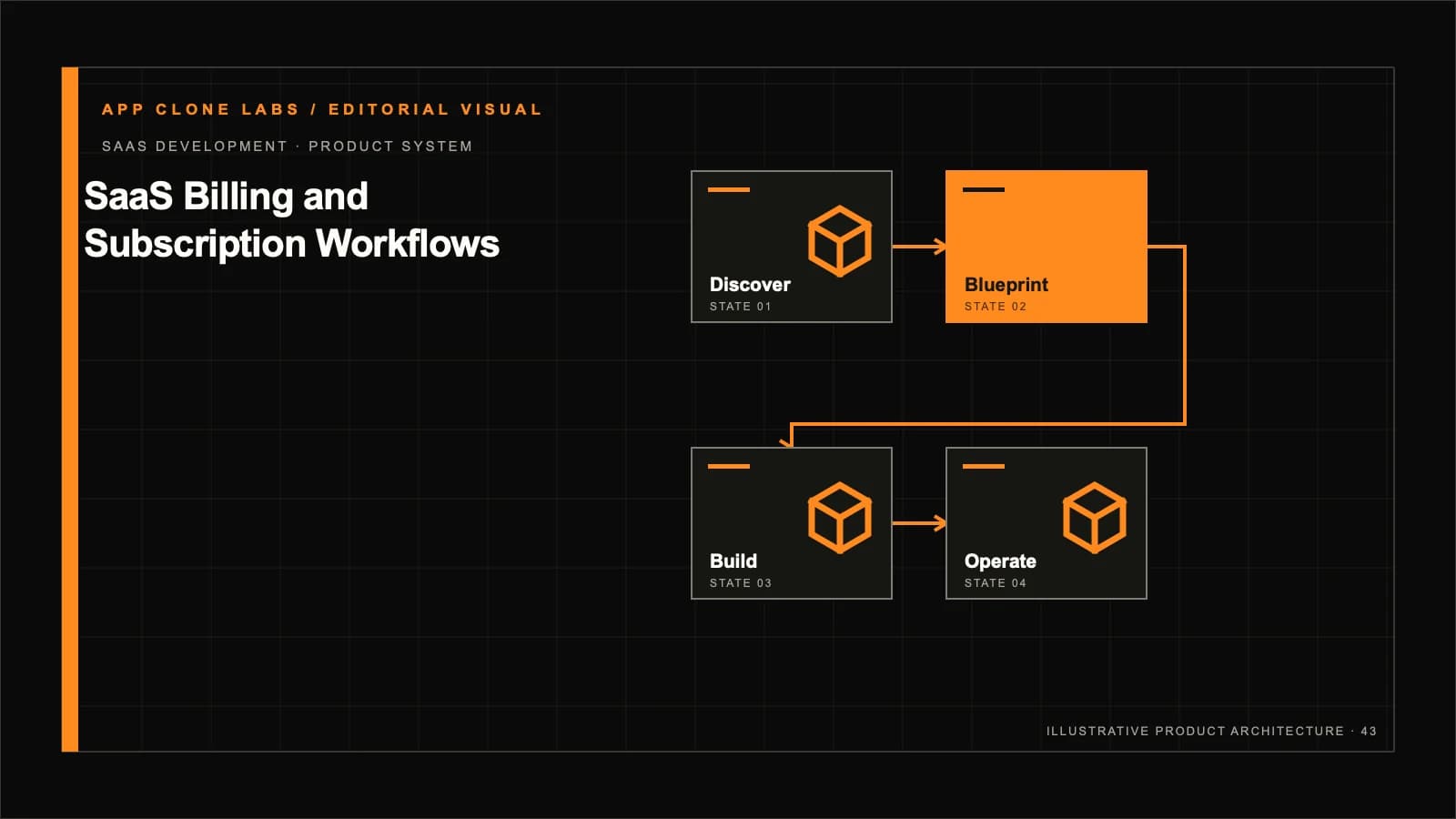
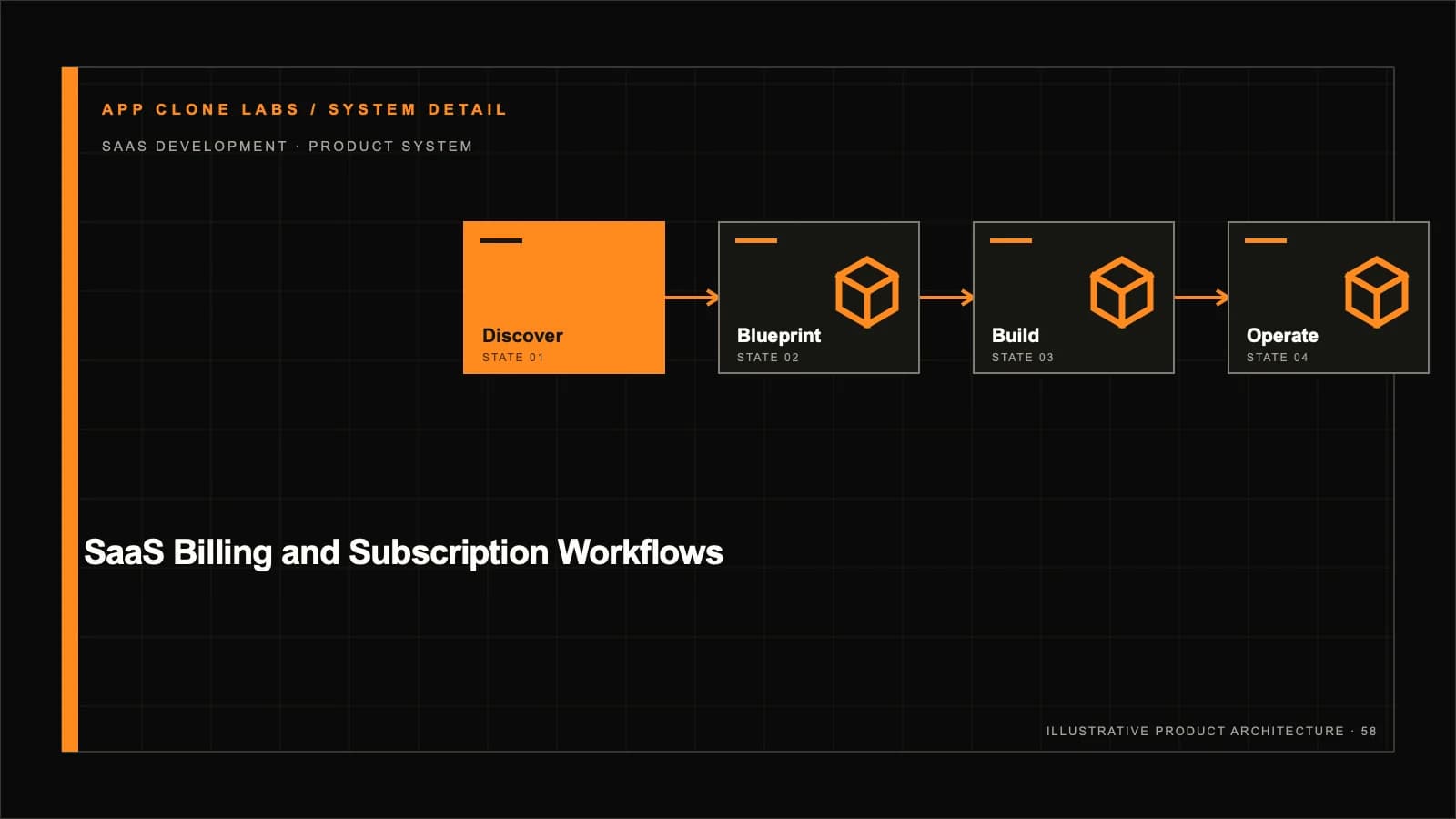
A customer can have an active subscription, an open invoice, a failed payment attempt, a scheduled cancellation, a temporary grace period and valid product access at the same time. Collapsing those facts into paid=true guarantees confusing support and brittle access control.
Billing works when provider objects, commercial packaging and application entitlements are connected but not treated as identical. The provider reports financial events; the product applies a reviewed policy; internal records retain the state needed for support and reconciliation.
This guide maps the complete lifecycle from catalog design through cancellation and recovery without pretending the checkout success page is the system of record.
Separate products, prices and plans
A feature package, provider price and marketing plan change at different rates.
The failure mode is concrete: price IDs are scattered through application code. This is not solved by adding another screen or background job. The product has to define ownership, permitted transitions, and the evidence retained when the transition occurs.
For the first release, use an internal versioned catalog mapped to provider objects. Write that decision as an enforceable server-side rule, not guidance that depends on a client, operator, or AI model remembering the intended boundary.
Implementation should include product, price, currency, interval, tax behavior, effective dates and display copy. Keep the public response smaller than the internal record: users need a clear outcome and recovery path, while authorized operators need correlation IDs, policy versions, timestamps, and the before-and-after state.
Validate it with retired price, new currency and grandfathered customer. Test the ordinary path, then repeat under timeout, duplicate delivery, stale state, partial failure, revoked authority, and concurrent requests. A feature is not ready when only the demonstration succeeds.
- Owner: monetization owner
- Release evidence: catalog mapping
- Stop condition: unknown provider price grants access
Model subscriptions independently
Provider subscription state is external truth but the application needs durable references and policy decisions.
The failure mode is concrete: one local status is overwritten without event history. This is not solved by adding another screen or background job. The product has to define ownership, permitted transitions, and the evidence retained when the transition occurs.
For the first release, retain provider state, timestamps and an internal access decision. Write that decision as an enforceable server-side rule, not guidance that depends on a client, operator, or AI model remembering the intended boundary.
Implementation should include customer, tenant, subscription, items, status, period and cancellation fields. Keep the public response smaller than the internal record: users need a clear outcome and recovery path, while authorized operators need correlation IDs, policy versions, timestamps, and the before-and-after state.
Validate it with reordered event and provider fetch. Test the ordinary path, then repeat under timeout, duplicate delivery, stale state, partial failure, revoked authority, and concurrent requests. A feature is not ready when only the demonstration succeeds.
- Owner: billing engineer
- Release evidence: state reconciliation
- Stop condition: local and provider state drift silently
Design trial entry and exit
Trials need eligibility, start, end, payment method and post-trial behavior.
The failure mode is concrete: users create repeated trials or lose work unexpectedly. This is not solved by adding another screen or background job. The product has to define ownership, permitted transitions, and the evidence retained when the transition occurs.
For the first release, define eligibility and transition behavior before launch. Write that decision as an enforceable server-side rule, not guidance that depends on a client, operator, or AI model remembering the intended boundary.
Implementation should include trial source, end time, conversion, reminder, abuse control and read-only option. Keep the public response smaller than the internal record: users need a clear outcome and recovery path, while authorized operators need correlation IDs, policy versions, timestamps, and the before-and-after state.
Validate it with no card, failed first invoice and repeated signup. Test the ordinary path, then repeat under timeout, duplicate delivery, stale state, partial failure, revoked authority, and concurrent requests. A feature is not ready when only the demonstration succeeds.
- Owner: growth owner
- Release evidence: trial matrix
- Stop condition: trial expiry has no customer-safe outcome
Treat checkout as initiation
A redirect can be abandoned, replayed or completed asynchronously.
The failure mode is concrete: the success URL grants premium access. This is not solved by adding another screen or background job. The product has to define ownership, permitted transitions, and the evidence retained when the transition occurs.
For the first release, create an attempt and wait for verified provider state. Write that decision as an enforceable server-side rule, not guidance that depends on a client, operator, or AI model remembering the intended boundary.
Implementation should include session ID, tenant, intended price, expiry, idempotency and return handling. Keep the public response smaller than the internal record: users need a clear outcome and recovery path, while authorized operators need correlation IDs, policy versions, timestamps, and the before-and-after state.
Validate it with back button, duplicate click and delayed authentication. Test the ordinary path, then repeat under timeout, duplicate delivery, stale state, partial failure, revoked authority, and concurrent requests. A feature is not ready when only the demonstration succeeds.
- Owner: commerce lead
- Release evidence: checkout replay tests
- Stop condition: client-controlled data grants entitlement
Checkpoint 4: reconcile the product promise with the recorded state. Support, finance, security, and delivery teams should be able to reach the same conclusion from the same identifiers without reconstructing events from chat messages or screenshots.
Verify and deduplicate webhooks
Subscription activity arrives asynchronously and may be retried.
The failure mode is concrete: duplicate events send repeated actions or reorder access. This is not solved by adding another screen or background job. The product has to define ownership, permitted transitions, and the evidence retained when the transition occurs.
For the first release, verify signatures and store unique events before transitions. Write that decision as an enforceable server-side rule, not guidance that depends on a client, operator, or AI model remembering the intended boundary.
Implementation should include raw payload, event ID, type, received time, processing state and retry. Keep the public response smaller than the internal record: users need a clear outcome and recovery path, while authorized operators need correlation IDs, policy versions, timestamps, and the before-and-after state.
Validate it with bad signature, duplicate, delay and unknown type. Test the ordinary path, then repeat under timeout, duplicate delivery, stale state, partial failure, revoked authority, and concurrent requests. A feature is not ready when only the demonstration succeeds.
- Owner: platform lead
- Release evidence: webhook invariant
- Stop condition: one replay creates a second effect
Separate invoice and payment state
An invoice can be draft, open, paid, void or uncollectible while payment attempts have their own outcomes.
The failure mode is concrete: subscription status is used as a receipt. This is not solved by adding another screen or background job. The product has to define ownership, permitted transitions, and the evidence retained when the transition occurs.
For the first release, retain invoice and payment references and show accurate customer language. Write that decision as an enforceable server-side rule, not guidance that depends on a client, operator, or AI model remembering the intended boundary.
Implementation should include amount due, paid, currency, attempt, failure reason and receipt. Keep the public response smaller than the internal record: users need a clear outcome and recovery path, while authorized operators need correlation IDs, policy versions, timestamps, and the before-and-after state.
Validate it with partial credit, retry and manual invoice. Test the ordinary path, then repeat under timeout, duplicate delivery, stale state, partial failure, revoked authority, and concurrent requests. A feature is not ready when only the demonstration succeeds.
- Owner: finance systems owner
- Release evidence: invoice trace
- Stop condition: support cannot identify what was charged
Map verified state to entitlements
Features should not check arbitrary provider IDs.
The failure mode is concrete: controller code hardcodes plan names. This is not solved by adding another screen or background job. The product has to define ownership, permitted transitions, and the evidence retained when the transition occurs.
For the first release, derive versioned internal entitlements from catalog and subscription policy. Write that decision as an enforceable server-side rule, not guidance that depends on a client, operator, or AI model remembering the intended boundary.
Implementation should include feature key, limit, source, effective time, expiry and override. Keep the public response smaller than the internal record: users need a clear outcome and recovery path, while authorized operators need correlation IDs, policy versions, timestamps, and the before-and-after state.
Validate it with upgrade, downgrade, custom contract and stale cache. Test the ordinary path, then repeat under timeout, duplicate delivery, stale state, partial failure, revoked authority, and concurrent requests. A feature is not ready when only the demonstration succeeds.
- Owner: product platform owner
- Release evidence: entitlement tests
- Stop condition: pricing changes require broad code edits
Define failed-payment recovery
Past-due behavior is a customer and risk decision.
The failure mode is concrete: access is removed instantly or retained forever. This is not solved by adding another screen or background job. The product has to define ownership, permitted transitions, and the evidence retained when the transition occurs.
For the first release, publish grace, notification, retry, read-only and suspension rules. Write that decision as an enforceable server-side rule, not guidance that depends on a client, operator, or AI model remembering the intended boundary.
Implementation should include attempt count, next action, grace end, owner contacts and recovery. Keep the public response smaller than the internal record: users need a clear outcome and recovery path, while authorized operators need correlation IDs, policy versions, timestamps, and the before-and-after state.
Validate it with payment recovery, exhausted retries and dispute. Test the ordinary path, then repeat under timeout, duplicate delivery, stale state, partial failure, revoked authority, and concurrent requests. A feature is not ready when only the demonstration succeeds.
- Owner: customer operations
- Release evidence: dunning playbook
- Stop condition: support improvises access policy
Checkpoint 8: reconcile the product promise with the recorded state. Support, finance, security, and delivery teams should be able to reach the same conclusion from the same identifiers without reconstructing events from chat messages or screenshots.
Specify upgrade timing
Immediate upgrades may need proration and immediate access.
The failure mode is concrete: customers receive ambiguous credits or duplicate charges. This is not solved by adding another screen or background job. The product has to define ownership, permitted transitions, and the evidence retained when the transition occurs.
For the first release, define effective time, proration preview and confirmation. Write that decision as an enforceable server-side rule, not guidance that depends on a client, operator, or AI model remembering the intended boundary.
Implementation should include old and new price, credit, charge, invoice and entitlement time. Keep the public response smaller than the internal record: users need a clear outcome and recovery path, while authorized operators need correlation IDs, policy versions, timestamps, and the before-and-after state.
Validate it with upgrade near renewal and failed proration payment. Test the ordinary path, then repeat under timeout, duplicate delivery, stale state, partial failure, revoked authority, and concurrent requests. A feature is not ready when only the demonstration succeeds.
- Owner: billing product owner
- Release evidence: upgrade calculations
- Stop condition: displayed amount differs from provider invoice
Specify downgrade timing
Downgrades can violate current usage limits.
The failure mode is concrete: features disappear while data exceeds the new plan. This is not solved by adding another screen or background job. The product has to define ownership, permitted transitions, and the evidence retained when the transition occurs.
For the first release, apply at period end or provide a controlled resolution path. Write that decision as an enforceable server-side rule, not guidance that depends on a client, operator, or AI model remembering the intended boundary.
Implementation should include scheduled change, impacted resources, notice, export and cancellation. Keep the public response smaller than the internal record: users need a clear outcome and recovery path, while authorized operators need correlation IDs, policy versions, timestamps, and the before-and-after state.
Validate it with over-limit seats, storage and scheduled renewal. Test the ordinary path, then repeat under timeout, duplicate delivery, stale state, partial failure, revoked authority, and concurrent requests. A feature is not ready when only the demonstration succeeds.
- Owner: product owner
- Release evidence: downgrade simulation
- Stop condition: data is deleted automatically without policy
Handle quantity and usage
Seat or metered billing requires authoritative measurement.
The failure mode is concrete: client-reported counts become billable truth. This is not solved by adding another screen or background job. The product has to define ownership, permitted transitions, and the evidence retained when the transition occurs.
For the first release, define the source, aggregation window, correction and audit. Write that decision as an enforceable server-side rule, not guidance that depends on a client, operator, or AI model remembering the intended boundary.
Implementation should include meter event ID, quantity, timestamp, tenant, dedupe and adjustment. Keep the public response smaller than the internal record: users need a clear outcome and recovery path, while authorized operators need correlation IDs, policy versions, timestamps, and the before-and-after state.
Validate it with late event, duplicate, timezone boundary and correction. Test the ordinary path, then repeat under timeout, duplicate delivery, stale state, partial failure, revoked authority, and concurrent requests. A feature is not ready when only the demonstration succeeds.
- Owner: usage billing lead
- Release evidence: recomputable usage
- Stop condition: invoice quantity cannot be reconstructed
Make cancellation explicit
Cancel now and cancel at period end produce different access and refund consequences.
The failure mode is concrete: one cancel button hides timing and retention. This is not solved by adding another screen or background job. The product has to define ownership, permitted transitions, and the evidence retained when the transition occurs.
For the first release, show effective date, retained access, data handling and reactivation. Write that decision as an enforceable server-side rule, not guidance that depends on a client, operator, or AI model remembering the intended boundary.
Implementation should include requester authority, reason, schedule, confirmation and audit. Keep the public response smaller than the internal record: users need a clear outcome and recovery path, while authorized operators need correlation IDs, policy versions, timestamps, and the before-and-after state.
Validate it with owner cancellation, undo and past-due cancel. Test the ordinary path, then repeat under timeout, duplicate delivery, stale state, partial failure, revoked authority, and concurrent requests. A feature is not ready when only the demonstration succeeds.
- Owner: retention owner
- Release evidence: cancellation journey
- Stop condition: customer cannot tell when access ends
Checkpoint 12: reconcile the product promise with the recorded state. Support, finance, security, and delivery teams should be able to reach the same conclusion from the same identifiers without reconstructing events from chat messages or screenshots.
Control billing permissions
Billing viewers, payment managers and tenant owners need different authority.
The failure mode is concrete: every admin changes payment and cancellation. This is not solved by adding another screen or background job. The product has to define ownership, permitted transitions, and the evidence retained when the transition occurs.
For the first release, apply capability checks and stronger confirmation for high-impact actions. Write that decision as an enforceable server-side rule, not guidance that depends on a client, operator, or AI model remembering the intended boundary.
Implementation should include role, reauthentication, before-and-after summary and audit. Keep the public response smaller than the internal record: users need a clear outcome and recovery path, while authorized operators need correlation IDs, policy versions, timestamps, and the before-and-after state.
Validate it with member direct API and support impersonation. Test the ordinary path, then repeat under timeout, duplicate delivery, stale state, partial failure, revoked authority, and concurrent requests. A feature is not ready when only the demonstration succeeds.
- Owner: security owner
- Release evidence: billing authorization tests
- Stop condition: UI hiding is the only control
Reconcile provider and product
Events can be missed and configuration can drift.
The failure mode is concrete: webhooks are assumed infallible. This is not solved by adding another screen or background job. The product has to define ownership, permitted transitions, and the evidence retained when the transition occurs.
For the first release, run periodic reconciliation of subscriptions, invoices, payments and entitlements. Write that decision as an enforceable server-side rule, not guidance that depends on a client, operator, or AI model remembering the intended boundary.
Implementation should include cursor, mismatches, ageing, owner, correction and evidence. Keep the public response smaller than the internal record: users need a clear outcome and recovery path, while authorized operators need correlation IDs, policy versions, timestamps, and the before-and-after state.
Validate it with missing event, manual dashboard change and outage. Test the ordinary path, then repeat under timeout, duplicate delivery, stale state, partial failure, revoked authority, and concurrent requests. A feature is not ready when only the demonstration succeeds.
- Owner: finance operations
- Release evidence: zero unexplained aged mismatch
- Stop condition: drift has no queue
Give support one billing timeline
Support needs checkout, subscription, invoice, payment, entitlement and communications together.
The failure mode is concrete: staff search separate dashboards and edit records. This is not solved by adding another screen or background job. The product has to define ownership, permitted transitions, and the evidence retained when the transition occurs.
For the first release, build read-first diagnostics and bounded recovery actions. Write that decision as an enforceable server-side rule, not guidance that depends on a client, operator, or AI model remembering the intended boundary.
Implementation should include correlation IDs, resend, retry link, entitlement refresh, note and audit. Keep the public response smaller than the internal record: users need a clear outcome and recovery path, while authorized operators need correlation IDs, policy versions, timestamps, and the before-and-after state.
Validate it with duplicate action and unauthorized operator. Test the ordinary path, then repeat under timeout, duplicate delivery, stale state, partial failure, revoked authority, and concurrent requests. A feature is not ready when only the demonstration succeeds.
- Owner: support manager
- Release evidence: support drill
- Stop condition: routine recovery requires database edits
Implementation references
Use Stripe Subscriptions Overview and record the version applied to this release.
Validate decisions against Stripe Subscription Webhooks and record the version applied to this release.
Review Stripe Entitlements and record the version applied to this release.
Compare with Stripe Invoicing Lifecycle and record the version applied to this release.
Continue with SaaS Development when translating this guide into delivery scope.
Frequently asked questions
Should the checkout success page activate features?
No. Use it for customer experience, but provision from verified provider events or confirmed server-side state.
What is the difference between a plan and an entitlement?
A plan is commercial packaging. An entitlement is the internal feature or limit currently granted to the customer.
How should failed payments affect access?
Apply a documented policy with retry communication, grace or read-only behavior, suspension timing and recovery—not an improvised status check.
When should upgrades take effect?
Define whether access and proration are immediate or scheduled, preview the amount and test payment failure during the change.
When should downgrades take effect?
Often at period end, especially when current usage exceeds the new limit. Explain impacted data and provide a resolution path.
Why reconcile if webhooks work?
Events can be delayed, missed or changed manually in a provider dashboard. Reconciliation detects drift and repairs it under control.
Who should control billing?
Use explicit billing capabilities rather than assuming every tenant administrator may view invoices, change payment methods or cancel service.
What should be tested before launch?
Checkout, duplicate events, renewals, failures, trial exit, upgrades, downgrades, cancellation, reconciliation and support recovery.
Turn the design into operating evidence
The release is credible when ordinary users can complete the promised journey and operators can explain and recover every important exception from durable state. A polished demonstration is not a substitute for those properties.
Keep the scope narrow, the language accurate and the acceptance evidence visible. That creates a better foundation for expansion than features whose permissions, financial consequences or quality thresholds remain implicit.
- 01
- 02
- 03
- 04
- 05
- 06
Reviewed by the App Clone Labs product strategy team
This guide is written for founders and operators planning clone-inspired platforms, SaaS products, marketplaces, and mobile apps. It is reviewed against App Clone Labs delivery patterns, product scoping standards, and current implementation realities before being published.
Review the editorial team structureRelated product paths
Continue with the services, solutions, guides, and articles that connect this topic to a real software build.
Services, solutions, and guides
Read next