
01Approve the program
Record the sponsor mandate before enabling features
Map institutions, processors, markets, disclosures and delegated permissions. Keep draft configurations unavailable until the designated approval owners accept them.
Banking and financial operations
Program-management layer connecting customer experiences to sponsor institutions. Planned for authorized program managers and financial institutions launching embedded account services with role-specific workflows, operator controls, integrations, and a handover boundary defined for the selected market.
See product screens and demo accessCustom workflows
Brand-safe product strategy
Admin and operations tooling
Reference walkthrough by arrangement
Workflow
Each workflow stage is mapped to a role, screen, API, notification, admin control, and measurable launch outcome.
Map institutions, processors, markets, disclosures and delegated permissions. Keep draft configurations unavailable until the designated approval owners accept them.
Collect required information, preserve pending and denied outcomes and route permitted account or payment instructions. Display provider confirmation and its freshness.
Match instructions, provider events and settlement records. Assign discrepancies, complaints and closure cases to accountable owners with bounded escalation authority.
Deployable Product Architecture
Workflow / system register
Product delivery loop
A focused release proves one complete workflow
Record the sponsor mandate before enabling features
Separate application review from account activation
Resolve customer issues against external evidence
Control note
Scope the customer action and the operator response as one system.
Operator controls
The control center is scoped as a first-class product surface, not an afterthought.
Version program permissions, product limits and approval evidence. Require appropriate review for sensitive configuration changes and remove access when responsibility ends.
Verify event origin, prevent duplicate effects and retain external references. Investigate unmatched settlement records without creating a fictional success state.
Use reviewed institution, fee and protection wording for the actual arrangement. Route complaints, restrictions and closure decisions to authorized owners with access controls.
Integrations
External systems that determine launch readiness, data flow, and operational continuity.
Contractually authorized sponsor bank and processor interfaces with program permissions, documented account states and controlled access
Approved card, payment and account-validation services with external references, event verification and explicit uncertain outcomes
Restricted compliance cases, reconciliation reports and customer communications with accountable ownership, retention and disclosure versions
Scope drivers
The variables that most influence build effort, cost, and launch readiness.
Define markets, customer types, account products and processor responsibilities. Every additional program requires its own approval and permission mapping.
Map instruction submission, acceptance, posting and settlement to the responsible provider. Scope exception handling and reconciliation access before adding transaction volume.
Define complaints, restrictions, outages and closure procedures with the sponsor. Include communication approvals, escalation coverage and access to residual records.
Deployable Product Architecture
Scope drivers / system register
Product delivery loop
A focused release proves one complete workflow
Choose a supported sponsor arrangement
Identify authoritative records at each transition
Establish who handles difficult customer outcomes
Control note
Scope the customer action and the operator response as one system.
V1 scope
Launch the smallest complete operating loop first, then scale the product with confidence.
Use a bounded customer segment and approved disclosure set. Test missing documents, denial and pending review without presenting a completed account.
Show account state, payment evidence and assigned exceptions. Rehearse duplicate events, unmatched settlement and a partner outage using synthetic records.
Record escalation, notifications and provider-confirmed closure. Test residual funds, unresolved disputes and restricted access after the customer journey ends.
Later phases
Capabilities that should usually wait until real usage proves the core loop.
Add supported account or card experiences after documenting eligibility, disclosures, funds flow and servicing ownership for each product.
Add program-specific reports, entitlements and reconciliation queues. Do not infer permission portability between institutions or processors.
Introduce approved matching and case-routing rules after measuring the initial workflow. Retain evidence and human escalation for ambiguous provider outcomes.
Deployable Product Architecture
Later phases / system register
Product delivery loop
A focused release proves one complete workflow
Expand within a renewed approval boundary
Compare operations without mixing customer records
Automate understood exceptions with review
Control note
Scope the customer action and the operator response as one system.
Regulatory review
Each flag must be reviewed by qualified counsel for your target market before build or launch.
Reference walkthrough
Ask us to confirm which reference surfaces are currently available for this product model. Rather than publishing shared demo credentials, we schedule a private guided walkthrough for qualified buyers.
Request a role-specific demonstration and confirm which capabilities are currently available. Review the proposed responsibility: Provide consented eligibility information, read approved disclosures and request supported services. An application receipt does not mean an account is open or funds have settled.
Request a role-specific demonstration and confirm which capabilities are currently available. Review the proposed responsibility: Route customer requests, maintain sponsor-approved configuration and investigate reconciliation exceptions. Escalate restricted decisions rather than overriding provider outcomes.
Request a role-specific demonstration and confirm which capabilities are currently available. Review the proposed responsibility: Establish eligibility, supported products, permissions and oversight responsibilities. Confirm account, card and payment states through agreed records and escalation channels.
Request a live, private walkthrough of the reference implementation. We will confirm scope and discuss configured deployment versus custom build for your market.
Open registerDeployable Product Architecture
Reference walkthrough / system register
Product delivery loop
A focused release proves one complete workflow
Customer and authorized representative: Apply and inspect the actual program state
Program manager and servicing team: Orchestrate approved workflows and own customer cases
Sponsor institution and authorized providers: Approve the program and supply authoritative outcomes
Book a walkthrough
Control note
Scope the customer action and the operator response as one system.
User roles
Clone-inspired platforms usually need several coordinated interfaces, not just a customer app.
Provide consented eligibility information, read approved disclosures and request supported services. An application receipt does not mean an account is open or funds have settled.
Route customer requests, maintain sponsor-approved configuration and investigate reconciliation exceptions. Escalate restricted decisions rather than overriding provider outcomes.
Establish eligibility, supported products, permissions and oversight responsibilities. Confirm account, card and payment states through agreed records and escalation channels.
Use this generic finance operations planning illustration to scope a banking program intended to operate with licensed providers. Ask to connect the sample review queue to a banking demo showing which institution owns each account service, what the program manager can change and how provider status reaches customers. Licensing, provider authority and responsibilities in each jurisdiction must be demonstrated separately.
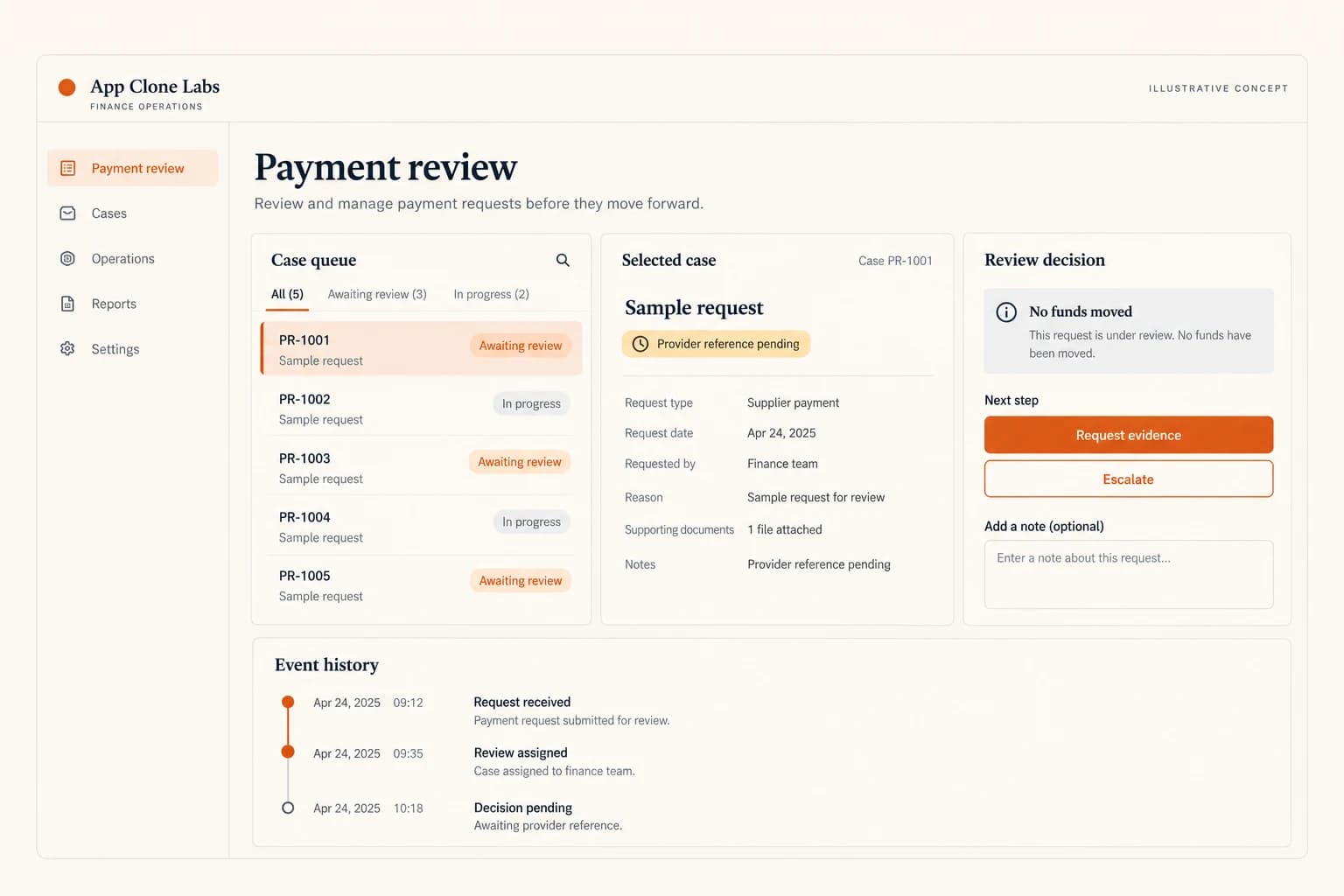
Original App Clone Labs generic finance operations planning illustration at 1536×1024. The sample supplier-payment request and case event history show a pending provider reference and no funds moved. They do not depict retail banking accounts or cards, prove licensed-provider participation, or demonstrate account opening, custody or actual transfers. Request a scoped banking demo and separate evidence of institution, vendor and jurisdiction responsibilities.
Product flow
A visual map of how each role interacts with each workflow stage, with operator controls and integration boundaries.
Deployable Product Architecture
Embedded Banking Program Hub
Monetization
We model monetization early so payments, admin controls, and reporting support the business.
Define included programs, oversight reports and servicing capacity. Software fees do not provide a banking license or sponsor approval.
Version fee schedules and exemptions with sponsor review. Reconcile actual charges and reversals against provider records rather than expected revenue.
State staffing, reporting frequency and escalation coverage. Do not imply that a support subscription guarantees settlement or resolves restricted bank decisions.
Artifact register
Reference screens illustrate workflows, not a contracted feature list. Sample prices, data, and responses are demonstration content; confirm the current scope during a walkthrough.
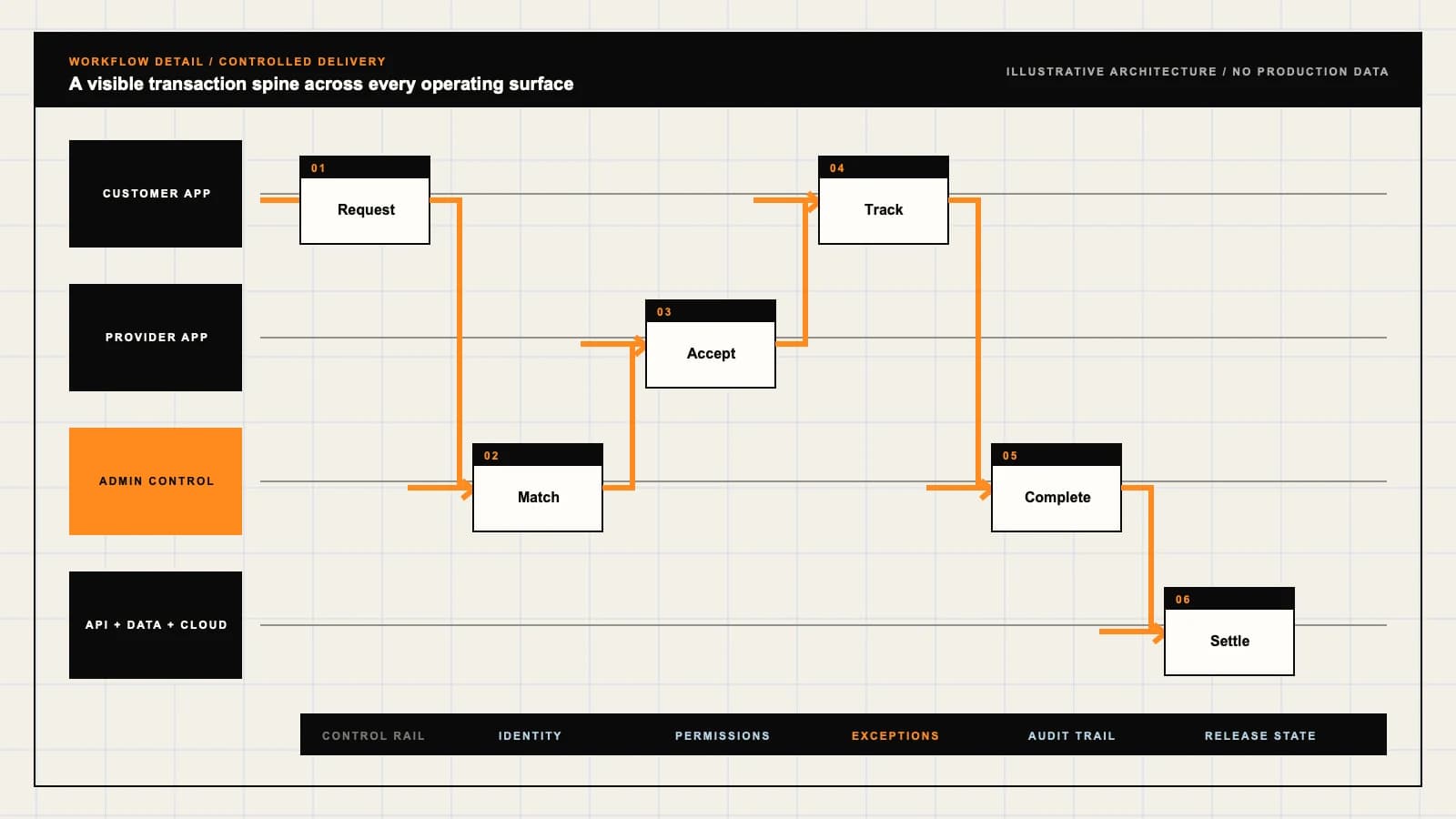
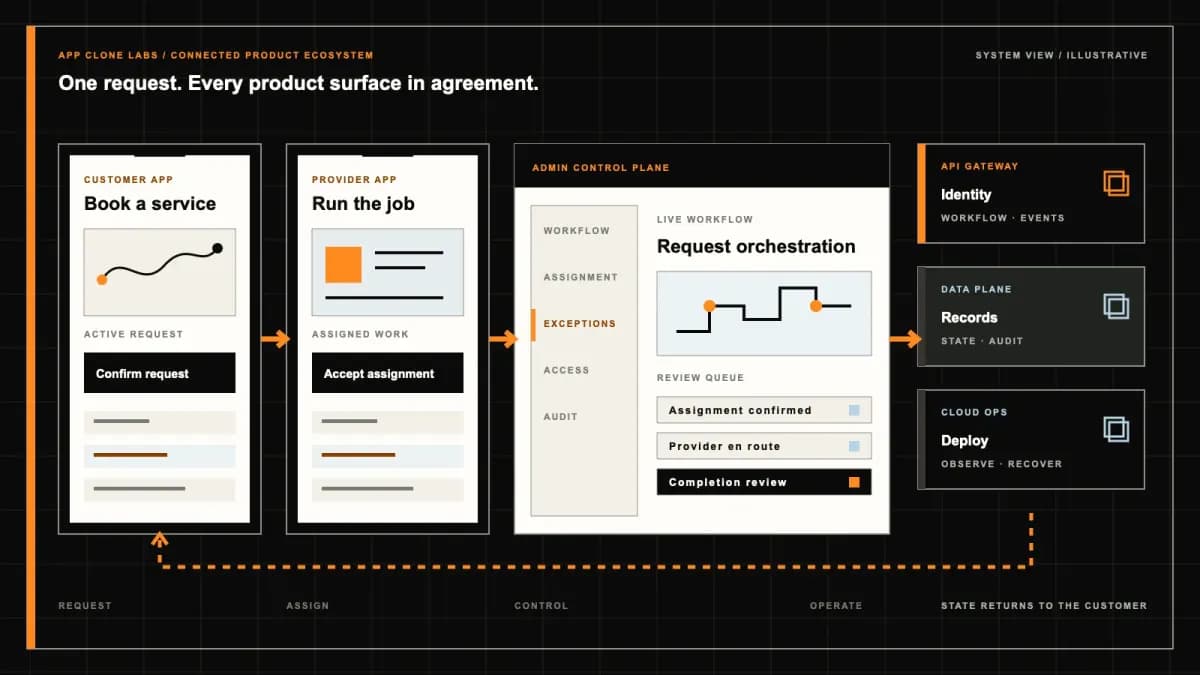
A customer submits an account application, sees a pending review message and contacts support about a transfer that has not settled. The program manager needs to explain all three states without pretending to be the institution holding the account. An embedded banking program hub connects those customer experiences to sponsor approvals, provider records and staffed operations. Its first useful screen shows who owns the next decision, which evidence is available and what the customer can safely do now.
The FDIC-hosted interagency statement explains that using third parties does not diminish a bank’s responsibility to comply with applicable laws and regulations. That narrow principle supports explicit responsibility mapping. It does not approve this software, establish a sponsor relationship or settle requirements for a particular market. App Clone Labs scopes the program workflow around arrangements the buyer separately establishes.
Write down the proposed institution, program manager, processor and customer segment before enabling an account-opening journey. Identify who approves eligibility rules, customer notices, products and operational changes. A signed software proposal is not evidence that a sponsor has accepted the program. Keep draft configuration distinguishable from approved configuration, with a named reviewer, approval reference and effective date that operations can inspect.
Map each customer action to a responsible institution or contracted provider. Include servicing, fraud review, complaints and reconciliation rather than limiting the map to account creation. Establish which decisions the program team may make and which it must escalate. Rehearse a sponsor withdrawing approval for a feature while another product remains supported. The hub should disable the affected action and preserve the reason without silently expanding another provider’s responsibility to fill the gap.
An eligibility questionnaire should reflect the approved program and customer type. Collect the information needed for that application, explain its purpose and protect supporting documents with restricted access. Completing a form does not establish identity verification, an approved application or an active account. Show missing information and review states with a useful next step, including a support route when further information cannot be supplied.
Unit’s application lifecycle documentation describes pending evaluation, document requests and final application outcomes, and notes that onboarding requirements can differ by bank partner. It illustrates why states need distinct handling; it does not establish Unit availability or an integration agreement for this project. Confirm the selected provider’s actual contract and behavior. Test a delayed decision, a denied application and documents submitted after a request expires before describing onboarding as complete.
The hub routes permitted instructions and presents their outcomes. Define the allowed sequence for opening accounts, requesting cards or submitting payments under the selected program. Preserve external references and distinguish an instruction waiting locally from one accepted by a provider. An operator should see why an action is unavailable, whether because eligibility is unresolved, the product is unsupported or permission has been withdrawn.
Use the configurable banking operations platform when the brief centers on institution-controlled account and ledger workflows. This program hub instead coordinates sponsor mandates, provider transitions and customer servicing across an established arrangement. Avoid duplicating a processor’s decision engine merely to make a local dashboard appear complete. Test permission changes during a queued request and require an authorized resolution before the request can continue.
Record the authoritative source and last confirmed time alongside customer-facing account or transaction states. A received webhook, a successful request response and confirmed settlement answer different questions. Verify incoming events, correlate them with the right program and prevent repeated notifications from applying the same effect twice. Preserve unresolved status when records disagree rather than choosing whichever message produces the most reassuring screen.
Define what support can explain while a fresh provider response is unavailable. Use accurate language such as awaiting confirmation when the evidence supports it, and offer an accountable follow-up path. Rehearse events arriving out of order and an account restriction that appears after a payment request. Keep sensitive investigation details away from public messages. Customer communication should describe permitted next steps without revealing confidential review logic or promising that a restriction will be removed.
Map the funds flow and identify the records needed to reconcile each supported instruction. Match program references to processor reports and the institution’s agreed settlement evidence. Expected amounts, posted entries and settled funds should remain distinguishable. A difference belongs in an assigned exception with supporting records, an investigation owner and a documented next action, not in a manual balance adjustment made to hide the discrepancy.
Decide how often records become available and how operations will handle missing or corrected files. Separate customer-visible transaction status from the accounting review of an aggregate settlement batch. Rehearse an unmatched record, a duplicated report and a correction received after a prior review closed. Preserve the original evidence and record the resolution. Acceptance should demonstrate that an unresolved difference remains visible until an authorized reviewer can explain it using the agreed source records.
The customer needs to understand which entity operates the interface, which institution provides the account and who handles support. Use sponsor-reviewed wording for fees, restrictions and any applicable deposit protection statements. Software does not confer a banking license or deposit insurance. Do not imply that every balance shown in the app has the same protection, or that an insurance statement covers a program manager’s failure.
Keep disclosure versions with the relevant acceptance record and define when changed terms require another customer action. Review onboarding screens, transaction notices, support replies and promotional content together so their descriptions remain consistent. These product considerations are not legal advice; the buyer and its institution must establish appropriate terms for the chosen market. Test a fee change and an application started before a disclosure update. Support should identify which version the customer saw without exposing another customer’s records.
A support agent should distinguish a product question, a transaction investigation and a formal complaint according to the agreed operating procedures. Assign an owner, preserve relevant customer communication and route restricted decisions to the sponsor or provider. An escalation is not a resolved case. Show the handoff, expected next action and approved customer communication without inventing a response deadline that the responsible institution has not accepted.
Give each role only the information and actions needed for its responsibility. A program manager may collect evidence without having authority to remove an account restriction or decide a dispute. Rehearse a complaint concerning a fee while the related payment remains unsettled. Preserve both threads and their references so one team cannot close the customer issue simply because another completed a technical task. Review access when staff change roles or leave the program.
When a processor cannot confirm an instruction, explain uncertainty and the supported recovery route. Do not encourage repeated submissions without checking whether the first request reached the provider. Establish safe retries, duplicate protection and a way to reconcile requests after service returns. Identify which customer actions can continue and which must pause under the approved incident procedure.
Give operations a program-specific incident view with affected requests, evidence gaps and communication ownership. Rehearse a timeout after provider acceptance, unavailable settlement reports and recovery events arriving together. The useful outcome is an explainable set of confirmed and unresolved records, not a green status banner. Agree who may publish an incident notice and who approves any compensating action. A partner outage should remain attributable even after routine request processing resumes and the customer-facing service appears available.
Program administration agreements can price defined services, reporting and servicing capacity. Customer charges require the agreed institution review and clear disclosure before acceptance. Specify which entity collects each fee and how adjustments are confirmed. Do not calculate earned revenue from a submitted instruction when the underlying transaction may still fail, reverse or remain unconfirmed.
Compare the digital banking front-end brief when the primary need is the mobile account experience. The program hub emphasizes oversight and operational evidence behind that experience. Scope revenue reporting around contracted entitlements rather than assumed interchange participation or guaranteed account growth. Test an exempt customer, a reversed fee and a provider correction after reporting. Financial summaries should retain the source references that explain their changes to an authorized reviewer.
A customer closing an account may still have unsettled payments, a complaint or a restricted balance. Define the sponsor-approved sequence for requesting closure, handling residual funds and communicating the actual outcome. A locally hidden account is not evidence of provider-confirmed closure. Retain the customer’s route to the responsible support team while limiting new activity according to the approved program rules.
Establish access and retention for records needed after closure, including relevant statements, notices and unresolved cases. Rehearse a closure request during a partner outage and a late transaction correction. Keep closure progress separate from deletion requests; the team must explain what information remains restricted and why under the established policy. Program exit also needs an institution-agreed plan for customer communication, operational handover and evidence access rather than an assumption that stopping the interface ends every obligation.
An illustrative demo should use synthetic customers, fictional balances and sandbox events. It demonstrates proposed behavior, not a licensed banking business, secured sponsor relationship or available provider integration. Buyer acceptance should follow a pending application through approved onboarding, an unresolved transfer, settlement reconciliation and a complaint. Interrupt the provider connection, restore events and request closure with residual activity still present.
Bring the sponsor responsibility map to a program scope discussion to identify approved products, evidence sources and staffed exception ownership. Include reviewers from the institution and the program team where appropriate.
Use the delivery process to agree source-code terms, provider permissions, deployment responsibility, disclosure review and acceptance evidence. Release approval should depend on demonstrated failure handling and an accountable operating arrangement alongside the successful customer journey.
FAQ
It coordinates approved onboarding, provider-backed servicing, sponsor oversight, reconciliation and customer cases. It operates around separately established institution and provider arrangements.
No. The buyer must separately establish the institution relationship, approvals, contracts and permissions needed for its program and market.
This hub emphasizes program orchestration across sponsor, processor and servicing responsibilities. The banking operations brief centers on institution-controlled account and ledger workflows.
No. Preserve review, document requests and denied outcomes. Confirm the selected provider’s separate requirements for an approved application and an active account.
No. Public documentation illustrates a state model. Availability, contracts, access and supported behavior must be established separately with the chosen provider.
Use the agreed authoritative provider evidence and show its freshness. Request acceptance, posting and settlement are distinct; disagreements require investigation.
Match program references to agreed provider records and assign unexplained differences to accountable owners. Preserve corrections and source evidence instead of hiding mismatches.
No. Use institution-reviewed protection wording for the actual arrangement. Neither the software nor an illustrative balance establishes deposit insurance coverage.
Follow the approved responsibility map. Program support collects evidence and communicates permitted next steps; restricted decisions go to the authorized sponsor or provider.
Show uncertainty, pause unsupported actions and check earlier request outcomes before retrying. Reconcile recovered events and keep an accountable incident communication owner.
Use the sponsor-approved sequence and provider confirmation. Residual funds, unsettled transactions and retained cases need defined treatment even after the interface stops new activity.
Use synthetic sandbox evidence for pending onboarding, denied eligibility, duplicate events, reconciliation differences, outages, complaints and closure with residual activity across responsible roles.
Solution reference register
01 / Reference and IP
This page references third-party product names only to describe familiar product models and planning references. App Clone Labs is not affiliated with or endorsed by those brands. Build decisions require independent legal, regulatory, and operational review for your market.
02 / Regulatory caveat
Confirm licensing and market-specific authorization before enabling regulated activity · Define whether assets or funds are held by the operator, a qualified custodian, or not held at all · Apply security review, strong authentication, encryption, audit logging, recovery, and incident response · Present educational product information only and prohibit personalized financial, legal, tax, or wagering advice · Apply identity, sanctions, transaction monitoring, complaint, and suspicious-activity procedures · Document sponsor, program-manager, processor, and customer responsibilities in each market
Primary sources
Dated official documentation, standards, and research that support the factual claims on this page.
How to read this page
Scope, cost and timeline figures are planning guidance until confirmed in a written proposal. Diagrams and screens are illustrations, not client deliverables, and source-code rights and handover follow the signed agreement. See the delivery process and the full disclaimer.
Next decision
Define outcomes, constraints, evidence, rights and handover before delivery begins.
Commercial rights, repositories, environments, documentation, acceptance and handover remain contract-defined.
