
01Review and admit
Approve customers, assets and individual markets
Establish account eligibility, listing review, precision and limits before enabling a pair. Recheck permissions when an order reaches the venue rather than trusting a stale screen.
Digital-asset exchange
Centralized spot exchange with conversion, wallet, and market-surveillance operations. Planned for authorized digital-asset venues supporting multiple markets and custody models with role-specific workflows, operator controls, integrations, and a handover boundary defined for the selected market.
See product screens and demo accessCustom workflows
Brand-safe product strategy
Admin and operations tooling
Reference walkthrough by arrangement
Workflow
Each workflow stage is mapped to a role, screen, API, notification, admin control, and measurable launch outcome.
Establish account eligibility, listing review, precision and limits before enabling a pair. Recheck permissions when an order reaches the venue rather than trusting a stale screen.
Validate filters, reserve funds and expose matching states. Record each partial fill and fee in the trade ledger, then release only the unexecuted reservation after cancellation.
Screen withdrawal requests, collect required approvals and track external confirmation. Compare ledger liabilities with custody records and investigate differences before restoring affected activity.
Deployable Product Architecture
Workflow / system register
Product delivery loop
A focused release proves one complete workflow
Approve customers, assets and individual markets
Keep acceptance distinct from execution
Resolve custody outcomes independently
Control note
Scope the customer action and the operator response as one system.
Operator controls
The control center is scoped as a first-class product surface, not an afterthought.
Enforce price and quantity precision, order limits and eligible market access at the server boundary. Pausing a market must have a defined effect on existing orders.
Restrict wallet administration and signing authority independently of support access. Preserve withdrawal reviews, destination checks and approval evidence with protected operational records.
Investigate suspicious order patterns, duplicate events and reconciliation breaks. Record accountable resolutions and escalation owners; a monitoring dashboard alone is not a compliance certification.
Integrations
External systems that determine launch readiness, data flow, and operational continuity.
Selected matching and market-data systems with documented event contracts, replay handling and independently established liquidity arrangements
Permitted custody and blockchain services with signing boundaries, withdrawal review, network confirmation and balance reconciliation
Authorized identity, sanctions, surveillance and reporting systems with restricted case access and named operational escalation owners
Scope drivers
The variables that most influence build effort, cost, and launch readiness.
Count assets, pairs, trading filters and review responsibilities separately. Each additional chain or market introduces precision, liquidity, maintenance and exception decisions.
Choose approved custody relationships, supported networks and review thresholds. Establish recovery and reconciliation responsibilities before collecting customer funds.
Determine eligible customers, legal review, surveillance staffing and measured order capacity. A familiar trading interface does not establish authorization to run an exchange.
Deployable Product Architecture
Scope drivers / system register
Product delivery loop
A focused release proves one complete workflow
Decide which spot pairs can operate
Document who can move assets
Bound access by jurisdiction and capability
Control note
Scope the customer action and the operator response as one system.
V1 scope
Launch the smallest complete operating loop first, then scale the product with confidence.
Include reviewed listings, verified account permissions, supported order types and server-side filters. Demonstrate a rejected precision value and an order submitted during a market pause.
Track accepted, partially filled, filled and cancelled outcomes with fees and balance evidence. Replay duplicate events and reconcile a cancellation racing the final fill.
Provide restricted withdrawal review and custody reconciliation with staffed exceptions. Rehearse an uncertain broadcast and a ledger difference without automatically retrying an asset transfer.
Later phases
Capabilities that should usually wait until real usage proves the core loop.
Add pairs or chains after validating precision, liquidity arrangements, custody support and market-abuse response for the new scope.
Add bounded institutional access or custodian redundancy with measured capacity and rehearsed recovery. Preserve event identity and accounting across failover.
Consider derivatives only under separately established permissions, eligibility and risk operations. Margin, liquidation and funding behavior are not standard spot-release features.
Deployable Product Architecture
Later phases / system register
Product delivery loop
A focused release proves one complete workflow
Expand the reviewed operating envelope
Extend tested interfaces and recovery
Treat leverage as a new product decision
Control note
Scope the customer action and the operator response as one system.
Regulatory review
Each flag must be reviewed by qualified counsel for your target market before build or launch.
Reference walkthrough
Ask us to confirm which reference surfaces are currently available for this product model. Rather than publishing shared demo credentials, we schedule a private guided walkthrough for qualified buyers.
Request a role-specific demonstration and confirm which capabilities are currently available. Review the proposed responsibility: Place supported orders, review partial fills and distinguish available balances from funds reserved for orders or pending transfers. Eligibility and withdrawal access remain separately controlled.
Request a role-specific demonstration and confirm which capabilities are currently available. Review the proposed responsibility: Publish reviewed pairs and trading filters while treasury staff manage permitted custody actions. A market configuration role must not silently acquire withdrawal signing authority.
Request a role-specific demonstration and confirm which capabilities are currently available. Review the proposed responsibility: Review market-abuse alerts, transfer cases and ledger differences. Record decisions and restrict remediation permissions without rewriting executions to make a balance appear correct.
Request a live, private walkthrough of the reference implementation. We will confirm scope and discuss configured deployment versus custom build for your market.
Open registerDeployable Product Architecture
Reference walkthrough / system register
Product delivery loop
A focused release proves one complete workflow
Eligible spot customer: Inspect market rules and account permissions
Market and treasury operators: Own listings and custody instructions separately
Risk, surveillance and reconciliation teams: Investigate exceptions with attributable evidence
Book a walkthrough
Control note
Scope the customer action and the operator response as one system.
User roles
Clone-inspired platforms usually need several coordinated interfaces, not just a customer app.
Place supported orders, review partial fills and distinguish available balances from funds reserved for orders or pending transfers. Eligibility and withdrawal access remain separately controlled.
Publish reviewed pairs and trading filters while treasury staff manage permitted custody actions. A market configuration role must not silently acquire withdrawal signing authority.
Review market-abuse alerts, transfer cases and ledger differences. Record decisions and restrict remediation permissions without rewriting executions to make a balance appear correct.
Use this original withdrawal-review concept to discuss a Binance-style exchange product. A working demo must separately establish the proposed market scope, asset and network mapping, balance records and provider responsibilities. Ask to trace a sample withdrawal held for manual review, with explicit approval ownership and a pending provider reference, before accepting a connected transfer scope.
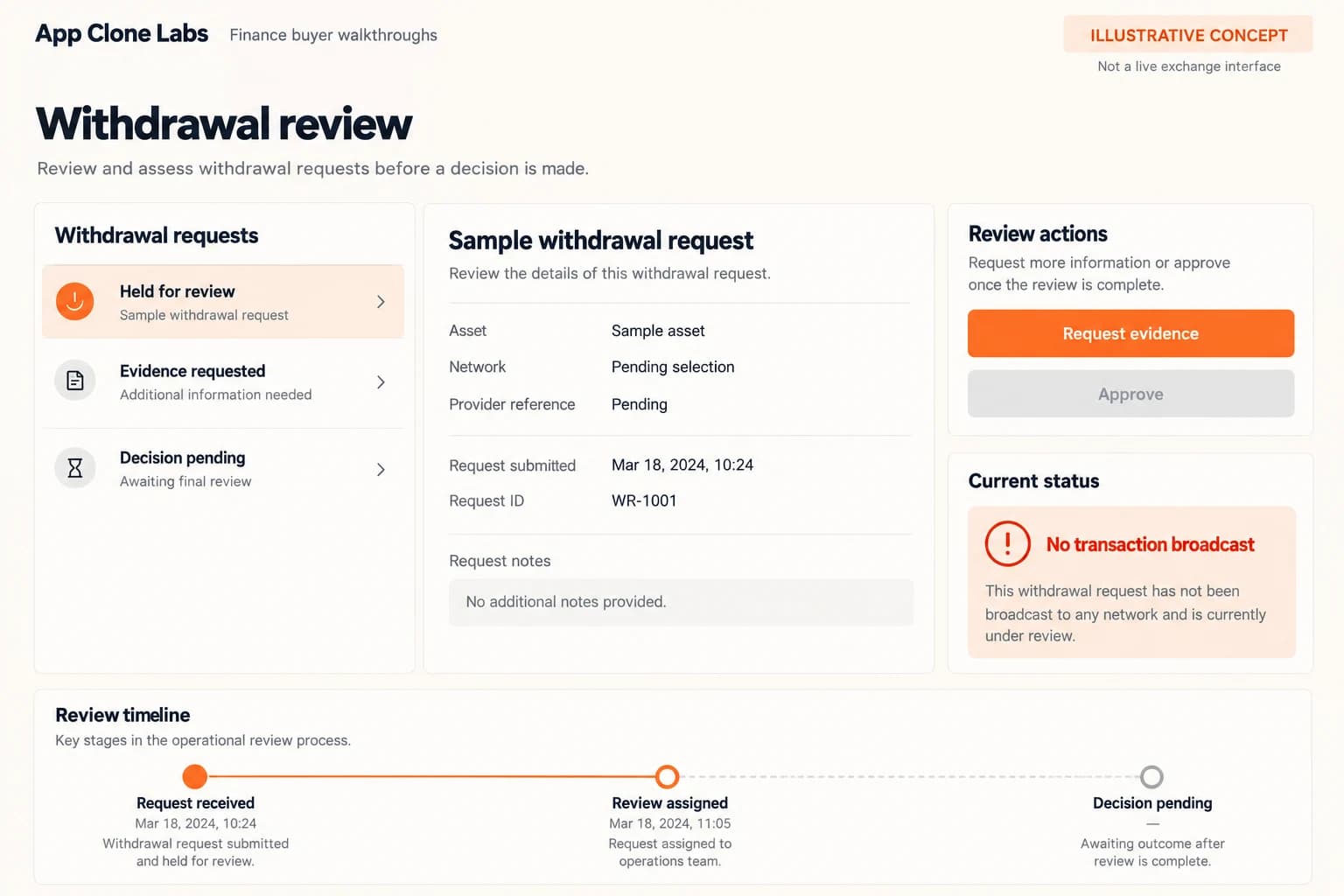
Original App Clone Labs withdrawal-review planning concept at 1536×1024. The sample request, review hold, pending provider reference and manual approval boundary illustrate proposed states; no transaction has been broadcast. This is not a Binance interface, endorsement or affiliation claim, and it does not demonstrate an operating exchange, custody, transfer execution, authorization or tested security controls.
Product flow
A visual map of how each role interacts with each workflow stage, with operator controls and integration boundaries.
Deployable Product Architecture
Binance-style Multi-market Asset Exchange
Monetization
We model monetization early so payments, admin controls, and reporting support the business.
Show the applicable fee schedule, asset and rounding policy. Calculate charged fees from confirmed executions rather than unfilled order values or projected trading profits.
Scope a separately disclosed conversion journey with quote expiry and fees. Establish lawful operating arrangements and liquidity relationships instead of assuming an order book supplies them.
Specify permitted interfaces, usage limits and incident support. A paid account must not bypass market controls or imply preferential execution, guaranteed returns or unrestricted custody access.
Artifact register
Reference screens illustrate workflows, not a contracted feature list. Sample prices, data, and responses are demonstration content; confirm the current scope during a walkthrough.
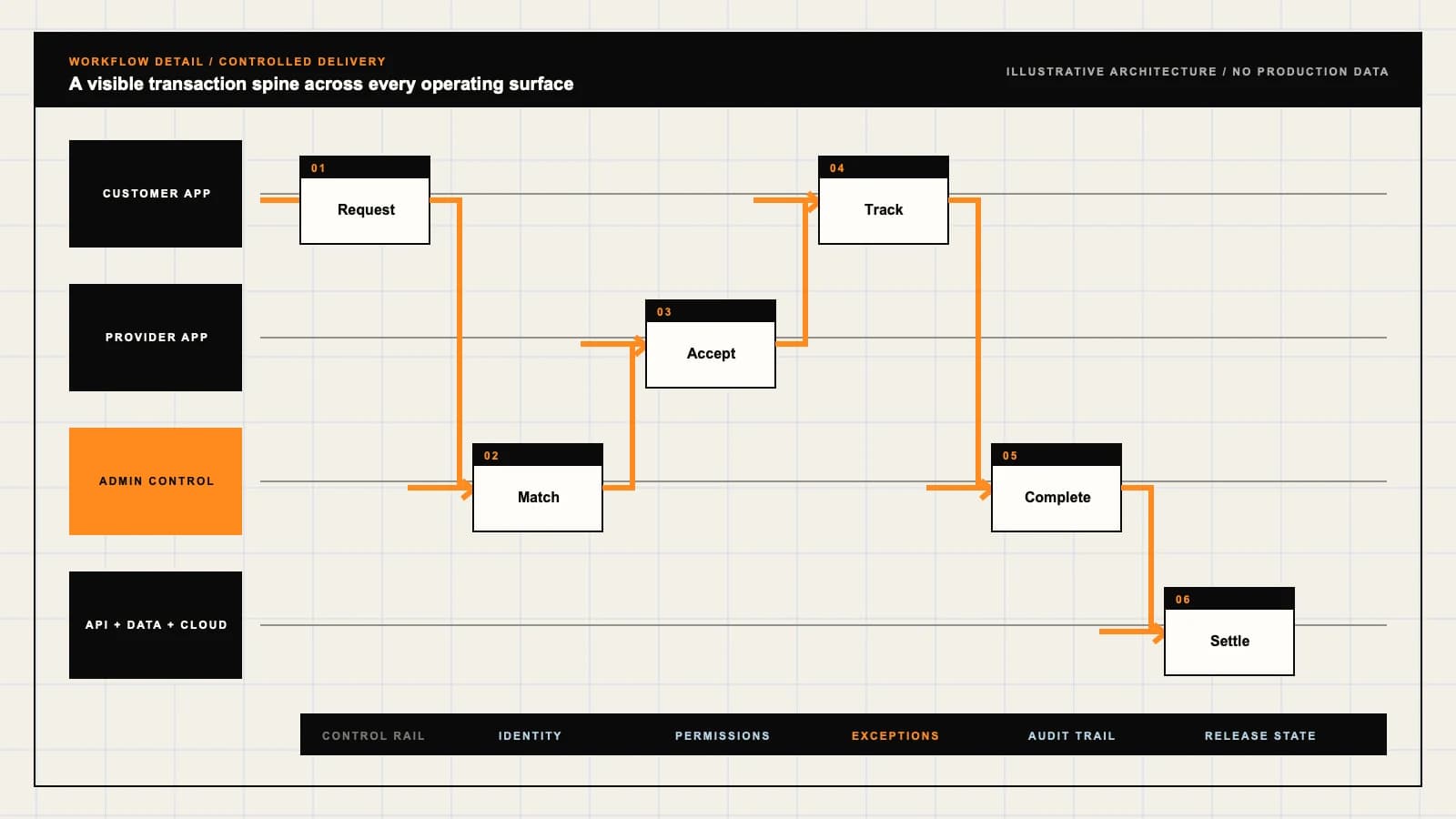
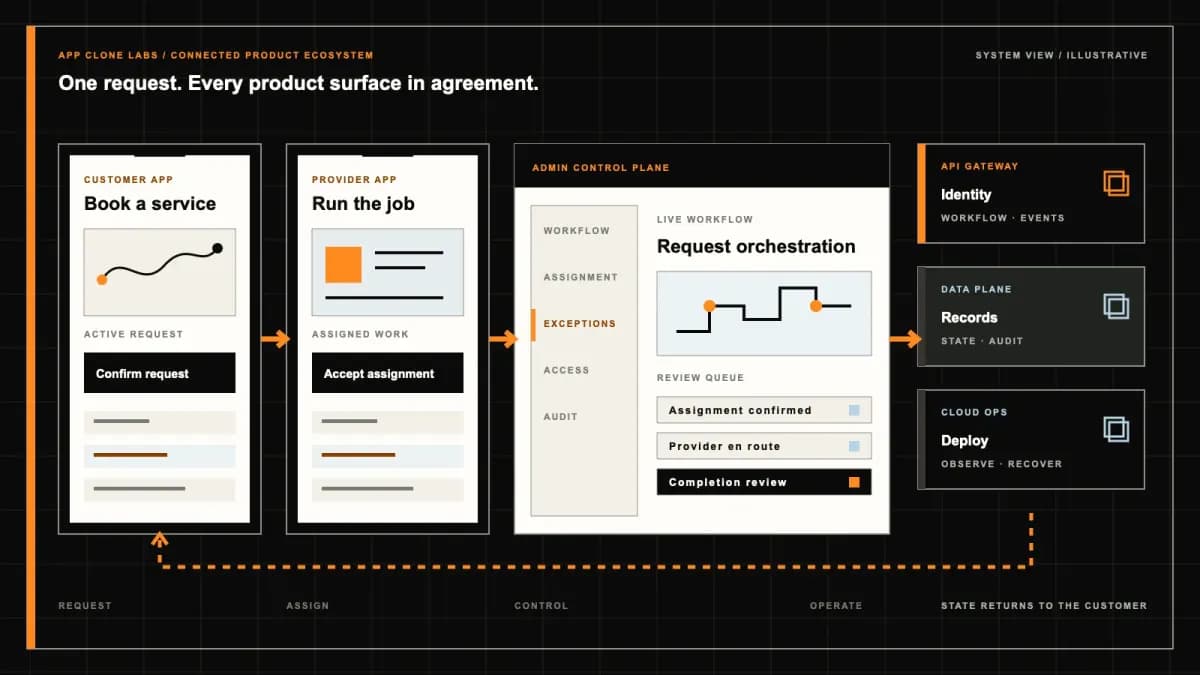
A customer submits an order across one of several listed spot pairs. It fills partly, the customer cancels the remainder, and a withdrawal then enters review. The account must explain the executed quantity, trading fee, released reservation and remaining restriction. A Binance-style exchange brief begins with those observable states. Charts and an active order book cannot establish whether the platform knows what it owes each customer or who may authorize movement of the underlying assets.
App Clone Labs scopes independently branded exchange software around selected spot markets, custody boundaries and accountable operations. The reference does not imply Binance affiliation, brand assets, account access, liquidity or approval. No trading returns are guaranteed. Software delivery cannot confer operating permissions or compliance certification; the buyer must establish those arrangements for the intended jurisdictions, customers and assets before real funds enter the service.
Create a review record for each proposed asset and pair. Identify the supported network, custody compatibility, precision, market-data source and responsible decision makers. An asset appearing in a public directory is not sufficient reason to enable deposits or trading. Specify the evidence needed to approve, restrict, suspend or remove a listing, including what customers see while a decision remains pending.
Separate asset admission from permission to operate a specific market. A pair can require different order limits or customer eligibility even when both assets already exist elsewhere on the venue. Rehearse a suspended asset with open orders and a network maintenance window during an incoming transfer. Preserve the listing version that governed an earlier execution. Support needs a clear explanation of the restriction, while operations needs authority to act without silently changing historical trade records.
Binance’s official Spot API trading filters describe price increments, quantity steps, notional constraints and order limits. These are useful references for specifying validation behavior, not a promise that this independent platform inherits Binance market settings or execution infrastructure.
Define price and quantity precision for every supported pair and use exact decimal handling for financial values. Show invalid increments before submission, then enforce the same rules at the server boundary. Reject an unsupported value with a useful correction rather than quietly rounding it into a different trade. Test minimum notional values, a changed filter while a customer edits an order, and quantities near the smallest supported unit. Store the applicable rule version with acceptance evidence so an operator can explain why two submissions received different outcomes.
An accepted order may wait without executing. Define supported order types, time conditions, reservation behavior and the authoritative matching component before adding trading controls to the screen. The customer should distinguish a pending submission from an accepted order and a rejection from an expired request. A timed-out response leaves an uncertain submission, not automatic permission to create another order with the same economic effect.
Give each submission a stable identity and recover its outcome before retrying. Establish deterministic matching rules and explain how a market pause affects existing orders and new requests. Rehearse a connection loss after acceptance, a duplicate submission and an operator halting a pair during activity. The acceptance review should show customer and operations views agreeing on order identity and reserved funds. Claimed throughput requires measurements under the chosen workload; a smooth animation is not evidence of matching capacity.
A partially filled order contains completed trades and an unexecuted remainder. Cancelling the remainder must not reverse earlier executions or return funds already spent. Present executed quantity, remaining quantity, fees and final state together. Establish the ordering of competing fill and cancellation events and retain enough evidence to investigate a customer who clicked cancel immediately before the last execution.
The official Spot API user data stream documentation distinguishes account, balance and order updates, including execution reports. Use that distinction as a reference when specifying your own event contracts. Test a duplicated fill, a delayed cancellation response and a reconnect that replays earlier events. The same execution must not create two trades or two fee charges. Customers should see a reconciled outcome instead of a temporary success message becoming the only evidence of what happened.
Record each execution with the order identity, market, quantities, price, fee asset and timestamps needed for reconciliation. Separate available balances, reservations and completed movements. An order history table is insufficient if balance changes cannot be traced back to the underlying event. Define decimal precision and rounding at the accounting boundary, including what happens when fees are charged in a different asset.
Require balanced ledger postings and protection against replayed events. Corrections should create attributable accounting entries instead of editing the original trade until totals appear plausible. Rehearse a worker stopping between execution capture and ledger posting, then recovering without duplicate charges. Compare customer statements with operational records after recovery. Market-data candles can help explain price movement but should never serve as the source of truth for individual holdings. Establish a named owner for unresolved discrepancies before opening another market.
Document whether the operating model uses an approved custodian, controlled wallets or another separately assessed arrangement. Map who can request transfers, change destinations, approve instructions and sign them. A support agent resolving an account question should not gain treasury authority. Keep signing material outside ordinary customer administration and define how access changes when a staff member leaves or a service credential is revoked.
Deposit detection, ledger credit and custody availability require their own states. Set network-specific confirmation and exception policies, then explain pending deposits without promising immediate finality. Rehearse a wrong network, maintenance interruption and conflicting provider status. Restrict sensitive address and account details in support exports. The custody model, incident recovery and customer disclosures require qualified review; a wallet balance displayed in a prototype is not evidence that customer assets are secured or recoverable in production.
Show withdrawal requests separately from approved instructions, broadcasts and confirmed transfers. Apply the selected identity, destination, sanctions and account-risk checks under the operator’s established obligations. Define review thresholds and who may release or reject a request. A customer changing a destination during review should trigger the appropriate recheck, not inherit approval granted to an earlier instruction.
Treat an uncertain broadcast carefully: investigate the external outcome before creating another transfer. Preserve the decision, reviewers, destination version and transaction evidence with restricted access. Rehearse a provider timeout after submission, an approval revoked before signing and a transfer delayed beyond the support window. Explain what the customer can do and who owns the next action. Review automation can prioritize cases, but it must not manufacture permission or obscure why assets remain unavailable to the account holder.
Compare the trade ledger, customer liabilities, custody records and relevant external transaction evidence on a defined schedule. Differences need a case owner, affected assets and an escalation path. A single aggregated wallet total can conceal a missing credit or duplicated reservation across many accounts. Choose reconciliation boundaries that make individual discrepancies traceable without granting every analyst unrestricted access to private customer records.
Decide which breaks pause trading, deposits or withdrawals and which permit bounded investigation. Rehearse a delayed deposit credit, duplicate fee and custody balance disagreement. Recovery must identify the original event and record the correction rather than overwriting totals. Keep evidence of checks and unresolved items available for review. Reconciliation supports accountable operations but does not by itself establish solvency, authorization or protection from loss. Customers need accurate status messages when an operational restriction changes what they can trade or transfer.
Define controls for self-trading, suspicious order patterns, concentrated activity and misuse of connected accounts. Market-abuse alerts need evidence, triage priorities and reviewers authorized to take proportionate action. Thresholds depend on the admitted markets and operating model; copying another venue’s interface cannot determine appropriate limits. Account restrictions should have documented reasons and a support route consistent with applicable obligations.
Separate customer exposure limits, open-order limits and interface usage limits. An institutional plan must not bypass the underlying controls. Test repeated cancellations, a suspected coordinated pattern and an outage while an alert awaits review. Preserve relevant orders and actions without claiming that automated detection proves misconduct. Measure alert volume against staffed capacity before expanding market coverage. Disclose trading fees and material service limits clearly; activity incentives should not encourage customers to mistake turnover or displayed gains for guaranteed earnings.
Use the configurable crypto exchange core to compare infrastructure responsibilities such as ledgering, custody adapters and market configuration. This multi-market brief emphasizes the customer and operator journey across approved spot pairs. Select a bounded asset list, explicit order types and reconciled transfers before widening the product.
Compare the Coinbase-style retail brokerage when a quoted purchase journey is more appropriate than an order-book venue. Conversion services need their own quote and execution terms. Optional derivatives belong to a separately permissioned future scope with eligibility, margin, funding and liquidation decisions. They are not standard features of this spot release. Independent legal, security and operational assessment must address the actual offering rather than rely on resemblance to a reference brand.
Illustrative screens and synthetic markets demonstrate intended behavior, not live liquidity, provider availability or regulatory approval. Ask for a sandbox walkthrough using fictional customers and assets. Reject an invalid quantity, partly fill a valid order, cancel its remainder and replay an execution event. Then request a withdrawal, interrupt the provider response and introduce a custody reconciliation difference. Buyer acceptance should show the resulting balances, restrictions and accountable next actions across customer, treasury and risk views.
Bring selected markets and the intended custody model to an exchange scope discussion to define review responsibilities and measurable acceptance evidence.
Use the delivery process to agree source-code terms, deployment access, provider permissions and incident ownership. Establish the operating arrangements before any release handles customer assets.
FAQ
An independently branded multi-market spot exchange with reviewed listings, order filters, matching states, trade ledger, custody permissions, withdrawals and surveillance operations.
No. Establish independent branding, market participation, liquidity arrangements and authorized provider access. Reference documentation does not supply brand approval or operating permissions.
Asset eligibility, network support and custody compatibility do not automatically authorize every pair. Version listing decisions, trading rules and suspension behavior for each admitted market.
Specify exact decimal increments and supported quantities per pair. Enforce filters at the server boundary and reject invalid submissions without silently changing the requested trade.
No. Keep submission, acceptance, matching and final outcomes distinct. Recover an uncertain submission by its stable identity before retrying it.
Completed trades remain recorded. Cancel only the unexecuted remainder and release its reservation after resolving any concurrent execution, including associated fees.
Balances must trace to executions, reservations, fees and transfers. Balanced postings and replay protection let operations investigate differences without rewriting historical trades.
Use restricted roles for requests, review, destination changes and signing. Establish the selected custody model and recovery responsibilities independently before handling real customer assets.
Separate review, approval, broadcast and confirmation. Investigate an uncertain external outcome before retrying, preserve evidence and assign a support owner for unresolved requests.
No. They support accountable investigation and financial operations. Required permissions, qualified assessments and jurisdiction-specific obligations remain separately established responsibilities.
No. The initial scope is spot focused. Derivatives require separately established permissions and eligibility, plus margin, funding, liquidation and risk operations.
Use synthetic markets to test invalid filters, partial fills, cancellation races, duplicate events, restricted withdrawals and reconciliation breaks. Show accurate balances and named exception owners.
Solution reference register
01 / Reference and IP
This page references third-party product names only to describe familiar product models and planning references. App Clone Labs is not affiliated with or endorsed by those brands. Build decisions require independent legal, regulatory, and operational review for your market.
02 / Regulatory caveat
Confirm licensing and market-specific authorization before enabling regulated activity · Define whether assets or funds are held by the operator, a qualified custodian, or not held at all · Apply security review, strong authentication, encryption, audit logging, recovery, and incident response · Present educational product information only and prohibit personalized financial, legal, tax, or wagering advice · Apply customer verification, sanctions screening, blockchain monitoring, asset-listing review, and travel-rule processes where required · Separate exchange, broker, custody, and token-listing responsibilities with documented approvals
Primary sources
Dated official documentation, standards, and research that support the factual claims on this page.
How to read this page
Scope, cost and timeline figures are planning guidance until confirmed in a written proposal. Diagrams and screens are illustrations, not client deliverables, and source-code rights and handover follow the signed agreement. See the delivery process and the full disclaimer.
Next decision
Define outcomes, constraints, evidence, rights and handover before delivery begins.
Commercial rights, repositories, environments, documentation, acceptance and handover remain contract-defined.
App Clone Labs is not affiliated with, sponsored by, or endorsed by Binance. The name identifies a familiar product category; every delivered product is independently designed and built, and the mark remains its owner's property. Read the full legal notice.
