
01Review and snapshot
Freeze the approved participant set
Establish offering permissions, eligibility rules, tier evidence and snapshot boundaries. Record exclusions and corrections before calculating entitlements.
Token issuance and launch platforms
Tiered token-sale participation and allocation administration portal. Planned for authorized launch operators coordinating reviewed blockchain offerings with role-specific workflows, operator controls, integrations, and a handover boundary defined for the selected market.
See product screens and demo accessCustom workflows
Brand-safe product strategy
Admin and operations tooling
Reference walkthrough by arrangement
Workflow
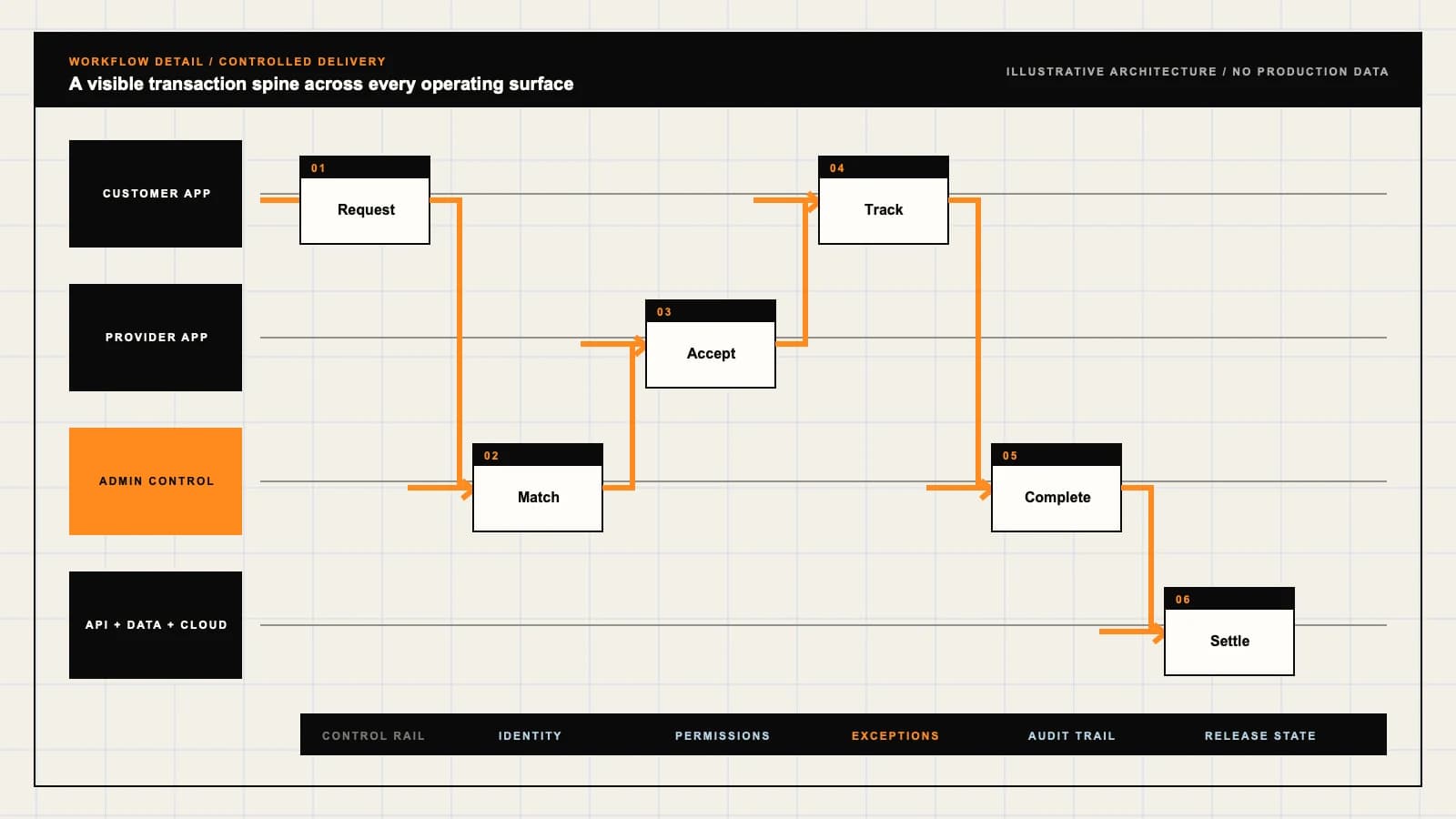
Each workflow stage is mapped to a role, screen, API, notification, admin control, and measurable launch outcome.
Establish offering permissions, eligibility rules, tier evidence and snapshot boundaries. Record exclusions and corrections before calculating entitlements.
Calculate exact allocations under versioned weights and rounding rules. Accept only supported contributions against remaining entitlements and confirmed capacity.
Apply the reviewed vesting schedule, reconcile confirmed claims and resolve failed contributions. Preserve evidence when a sale is paused or cancelled.
Deployable Product Architecture
Workflow / system register
Product delivery loop
A focused release proves one complete workflow
Freeze the approved participant set
Enforce pool limits across concurrent requests
Track release and refunds independently
Control note
Scope the customer action and the operator response as one system.
Operator controls
The control center is scoped as a first-class product surface, not an afterthought.
Retain offering-specific checks, wallet associations and the frozen data version. Token holdings alone do not establish legal eligibility or permission to participate.
Use exact units, explicit rounding and reviewed oversubscription rules. Repeated calculations against the same inputs should produce the same entitlements.
Restrict contract changes, funding, claims and refund approvals. Record independent review and reconcile external outcomes before repeating an uncertain transfer.
Integrations
External systems that determine launch readiness, data flow, and operational continuity.
Authorized identity, sanctions and jurisdiction eligibility services with offering-specific decisions, restricted documents and reviewed exception paths
Supported wallets, reviewed sale and vesting contracts, and separately established custody arrangements with explicit transaction and signing boundaries
Snapshot, allocation and distribution records with exact token units, confirmed contribution references, refund evidence and restricted reporting exports
Scope drivers
The variables that most influence build effort, cost, and launch readiness.
Define snapshot evidence, pool weights, lottery treatment, caps and residual units. More tiers add calculation and support decisions rather than merely extra badges.
Establish issuer review, selling permissions, eligible markets and disclosure versions. Different offerings may require different restrictions and records.
Scope claim funding, vesting, failed transactions, cancellation and refunds. Each additional network needs its own confirmation and recovery acceptance.
Deployable Product Architecture
Scope drivers / system register
Product delivery loop
A focused release proves one complete workflow
Choose explainable qualification rules
Approve the real operating envelope
Decide what happens after contribution
Control note
Scope the customer action and the operator response as one system.
V1 scope
Launch the smallest complete operating loop first, then scale the product with confidence.
Include issuer review, restricted participation and versioned tier inputs. Test a late balance change, failed eligibility check and duplicate wallet association.
Publish the approved calculation policy and reconcile entitlements with accepted contributions. Rehearse oversubscription, rounding and simultaneous final purchases.
Show vested, releasable and released amounts with transaction evidence. Test an unfunded claim, repeated event and cancelled sale requiring an authorized refund.
Later phases
Capabilities that should usually wait until real usage proves the core loop.
Add issuer and market coverage only after review of their specific restrictions, terms and distribution arrangements. Earlier eligibility does not automatically transfer.
Add lottery or residual-round variants after validating caps, tie handling and reproducibility. Keep each offering tied to its approved formula version.
Introduce supported chains and issuer reports with separate contract, decimal and confirmation checks. Rehearse recovery before making the new network selectable.
Deployable Product Architecture
Later phases / system register
Product delivery loop
A focused release proves one complete workflow
Reuse evidence without assuming permission
Expand the reviewed policy set
Extend proven delivery operations
Control note
Scope the customer action and the operator response as one system.
Regulatory review
Each flag must be reviewed by qualified counsel for your target market before build or launch.
Reference walkthrough
Ask us to confirm which reference surfaces are currently available for this product model. Rather than publishing shared demo credentials, we schedule a private guided walkthrough for qualified buyers.
Request a role-specific demonstration and confirm which capabilities are currently available. Review the proposed responsibility: Confirm the reviewed offering terms, wallet and eligibility evidence. Distinguish tier status, purchase entitlement, confirmed contribution and releasable tokens.
Request a role-specific demonstration and confirm which capabilities are currently available. Review the proposed responsibility: Establish classification, disclosures, permissions, inventory and distribution terms before publication. A completed setup form does not authorize a token offering.
Request a role-specific demonstration and confirm which capabilities are currently available. Review the proposed responsibility: Freeze approved inputs, review allocation results and resolve contribution exceptions. Separate support access from contract administration and asset movement.
Request a live, private walkthrough of the reference implementation. We will confirm scope and discuss configured deployment versus custom build for your market.
Open registerDeployable Product Architecture
Reference walkthrough / system register
Product delivery loop
A focused release proves one complete workflow
Eligible participant: Inspect qualification and allocation separately
Issuer and offering reviewer: Approve a bounded sale configuration
Allocation and distribution operator: Reconcile the sale through claim or refund
Book a walkthrough
Control note
Scope the customer action and the operator response as one system.
User roles
Clone-inspired platforms usually need several coordinated interfaces, not just a customer app.
Confirm the reviewed offering terms, wallet and eligibility evidence. Distinguish tier status, purchase entitlement, confirmed contribution and releasable tokens.
Establish classification, disclosures, permissions, inventory and distribution terms before publication. A completed setup form does not authorize a token offering.
Freeze approved inputs, review allocation results and resolve contribution exceptions. Separate support access from contract administration and asset movement.
Use this original allocation concept to scope reviewed offerings and controlled distribution. It is not BSCPad UI or proof of a token, sale, wallet, custody, classification or permission to operate.
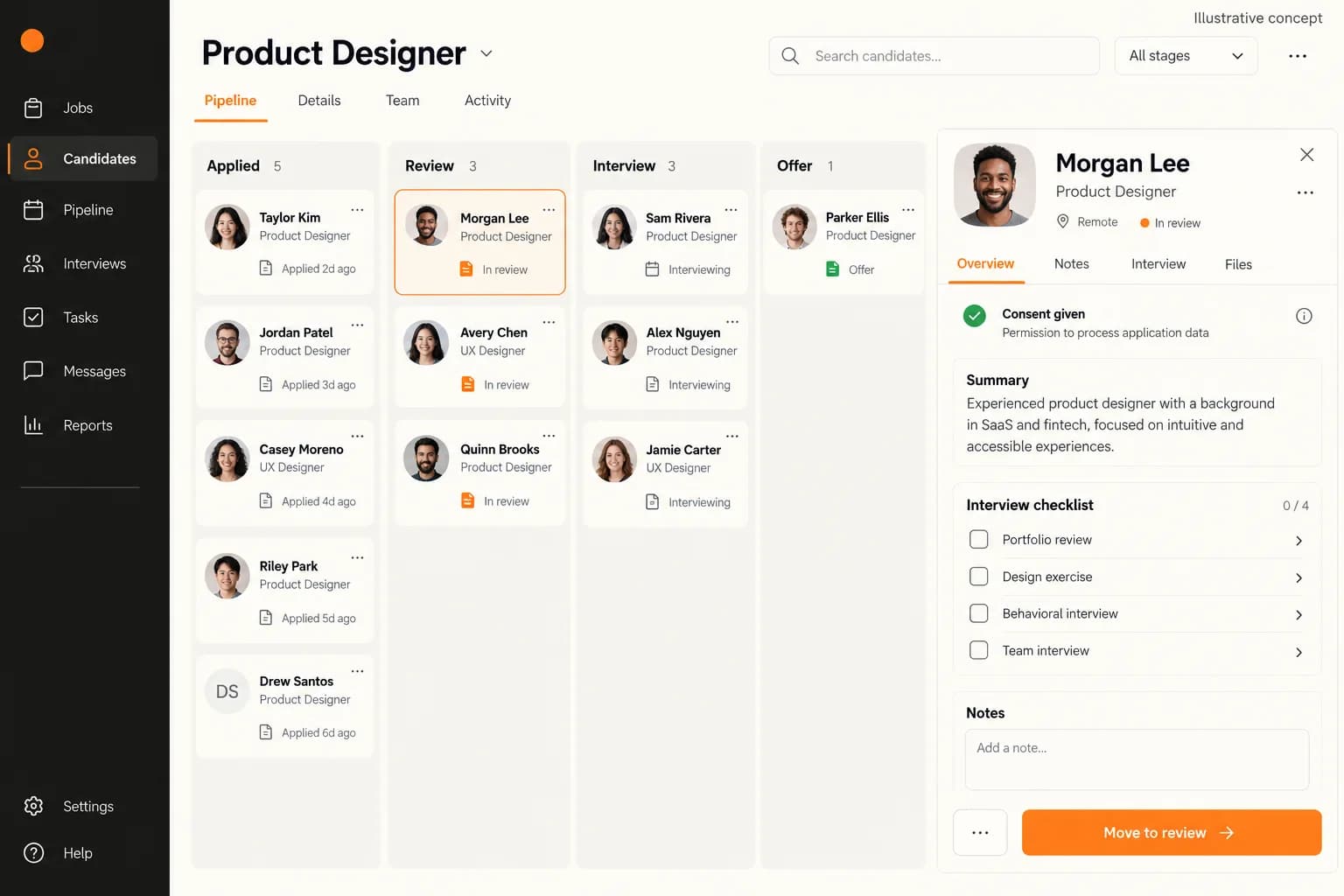
Original App Clone Labs allocation-review concept at 1536×1024. Sample applicants and decisions are illustrative and do not establish a token offering, compliance approval, smart contract or investor outcome.
Product flow
A visual map of how each role interacts with each workflow stage, with operator controls and integration boundaries.
Deployable Product Architecture
BSCPad-style Token Launch Allocation
Monetization
We model monetization early so payments, admin controls, and reporting support the business.
Specify configuration, allocation reporting and participant support deliverables. Payment for administration must not imply listing approval, successful fundraising or token value.
Establish whether paid access is permissible and which services it includes. A plan does not override eligibility or guarantee an allocation, resale market or investment return.
Agree networks, vesting records, exception handling and reporting responsibilities. Custody and provider arrangements require separate authorization and access.
Artifact register
Reference screens illustrate workflows, not a contracted feature list. Sample prices, data, and responses are demonstration content; confirm the current scope during a walkthrough.
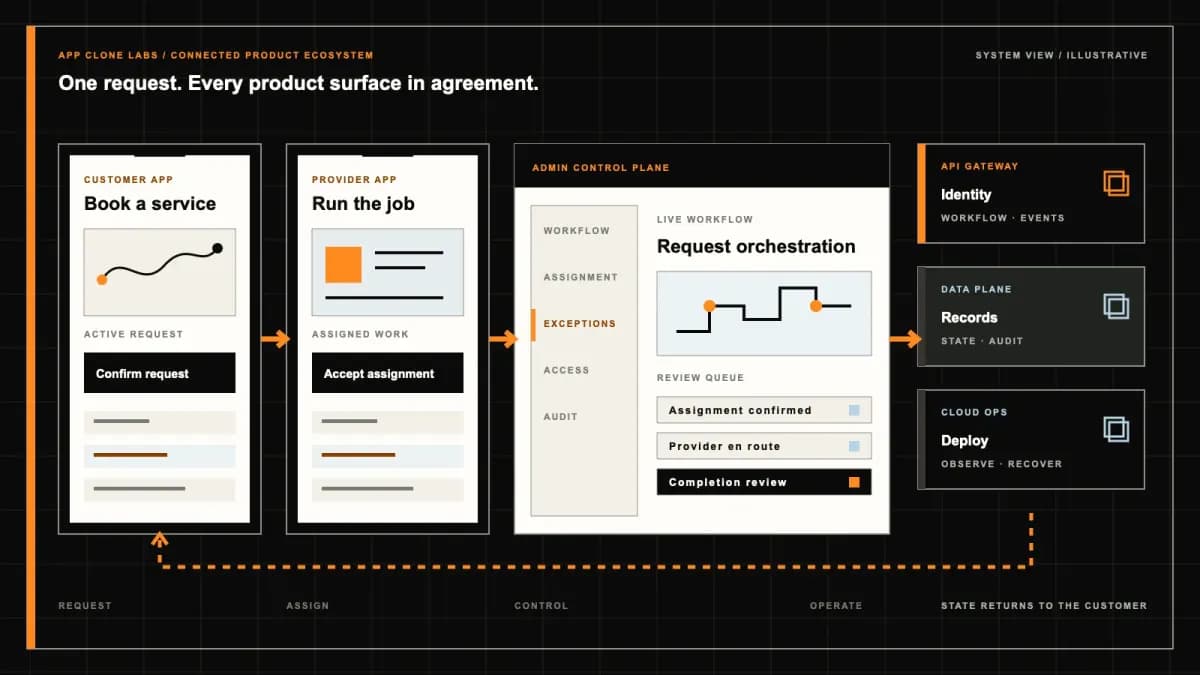
A participant qualifies for a tier, opens a sale and finds that the displayed allocation differs from the amount they can purchase. Another participant submits during the final seconds and receives no confirmed outcome. A BSCPad-style token launch allocation portal must explain qualification, entitlement, contribution and distribution separately. Its operating record should identify the approved rules and the next accountable decision, rather than treating a wallet connection or a successful animation as proof that tokens have been purchased.
BSCpad’s own tiered IDO model article from February 2021 describes lottery and weighted allocation tiers, followed by a round for remaining inventory. This historical reference explains the participation pattern; it does not establish current BSCPad thresholds or this independent platform’s rules. App Clone Labs scopes original software without implying affiliation, provider access, launch authorization or guaranteed returns.
Create an issuer and offering review record before accepting participant funds. Establish token classification, offering documents, selling permissions, marketing limits and responsible reviewers for the intended markets. A contract address or public white paper does not establish that an offering may proceed. Keep draft projects separate from reviewed sale configuration and show the approval reference, effective version and outstanding conditions to authorized operations staff.
Compare the ICO offering administration portal when issuer diligence, documents and subscription administration dominate the brief. This tiered allocation page emphasizes how a reviewed participant pool receives bounded purchase entitlements and later distribution. Approval remains offering specific. Rehearse an issuer changing the token address after review and require the appropriate renewed checks before publication, rather than keeping an approval badge attached to different sale parameters.
Define participation requirements for each offering and distinguish them from tier qualification. Identity, jurisdiction, sanctions and any applicable purchaser restrictions need their own reviewed decisions. A wallet can meet a balance threshold while its owner remains ineligible for the offering. Show understandable outcomes and an accountable support path without exposing private screening details. Do not imply that a paid membership or larger holding can override a restriction.
Record the wallet association and the evidence version used for the decision. Decide how multiple wallets, changed representatives and expired checks are handled under the approved rules. Recheck the required authority at consequential actions rather than trusting a status shown before a restriction changed. Rehearse a participant switching wallets after qualification and a screening result becoming unavailable. Preserve a pending state when required evidence is missing instead of turning an operational outage into automatic acceptance.
Specify the network, token address, qualifying balance or stake, snapshot block and applicable time conditions. A balance observed when the participant opens the page may differ from the approved snapshot. Explain which record controls qualification and retain the underlying reference. If the model uses locking or staking, distinguish an initiated transaction from the confirmed state required by the participation rules. Never silently substitute a current wallet balance for unavailable historical evidence.
Freeze the approved participant set before allocation and document how corrections are reviewed. A snapshot correction should produce an attributable new version with its effect explained, not rewrite eligibility after purchase without evidence. Test a transfer immediately around the boundary, an unsupported network and a delayed indexing service. Compare a sample of tier decisions with the recorded chain evidence. Buyers should be able to reproduce the qualification result without relying on a mutable dashboard label.
Write the formula before configuring tier names. For a synthetic example, a pool contains 900 indivisible units and three eligible participants have weights of one, two and three. The total weight is six, producing entitlements of 150, 300 and 450 units before any additional caps. This illustrates one policy only; real offerings must establish their approved inventory, weights, caps and eligibility set rather than inherit these demonstration values.
Use exact token units and document rounding and residual treatment when division is not exact. Require calculated entitlements to stay within the sale pool and participant limits. Define what happens if a cap leaves units unused or a participant is removed before publication. Rehearse a zero-weight pool, one remaining smallest unit and a changed token precision. The reviewer should see input totals, formula version and residual inventory, with repeat calculation producing the same result.
If lower tiers use a lottery, distinguish eligibility for selection from a purchase entitlement. Specify selection inputs, evidence, tie treatment and the permitted review process. Avoid claiming provable fairness merely because a random-looking result appears on screen. Where demand exceeds the available pool, choose a documented policy such as bounded weighted allocation or another reviewed method. The interface should explain the applicable outcome without suggesting that every qualified participant necessarily receives tokens.
Keep selection and allocation versions together so an operator can reconstruct an excluded participant’s result. Rehearse a draw with fewer eligible participants than slots and an oversubscribed pool containing invalid entries. Publish only the information appropriate for participants; a transparent formula does not require disclosure of everyone’s identity documents. Changes after results are announced need controlled review and communication. A support agent must not quietly award extra inventory to settle a complaint.
Show the payment asset, supported network, purchase price, minimum units, applicable fees and contribution window before the participant signs. Enforce both the individual entitlement and remaining sale capacity when processing the instruction. A locally reserved allocation, submitted transaction and confirmed contribution represent different states. Define reservation expiry and what happens when confirmation arrives after the sale window or after another permitted action changes remaining capacity.
Rehearse simultaneous attempts to buy the final units, repeated submissions and a response lost after external acceptance. Recover the earlier instruction using its reference before inviting another payment. Wrong-network or unsupported-asset transfers need a realistic investigation policy; do not promise recovery of every mistaken transfer. Reconcile accepted contributions against entitlements and actual inventory. The participant should see what was confirmed, what remains pending and who owns the exception without being encouraged to submit again blindly.
A leftover round must begin from confirmed remaining inventory rather than the total initially announced for the sale. Establish who may participate, additional caps, opening time and priority rules. If first-come ordering is selected, define which authoritative acceptance event determines order. Browser clock time or the moment a user clicks does not prove the order in which transactions were accepted by the chosen system.
Keep first-round entitlements, consumed amounts and second-round purchases independently inspectable. A participant should understand whether unused earlier entitlement expired or remains available. Rehearse delayed first-round confirmation when the later round starts and two simultaneous attempts at the final allocation. The sale must not oversell by counting pending inventory twice. If ambiguity requires a pause, show that state and retain the evidence needed for a controlled resolution rather than favoring whichever dashboard refreshed first.
OpenZeppelin’s VestingWallet finance documentation separates vested, releasable and released amounts under a schedule. It also warns that later deposits follow the original schedule and can therefore be partly releasable immediately. These documented mechanics inform contract selection; using a library does not certify an offering or establish that a particular deployed contract matches reviewed terms.
Specify the beneficiary, token address, decimals, start, cliff and release schedule, including any initial distribution. Keep the participant’s purchased entitlement distinct from tokens funded into the distribution contract and those already released. Rehearse immediately before and after a boundary, an unfunded claim and a deposit made after vesting starts. The displayed claim amount should agree with the selected contract’s actual behavior. A countdown ending does not prove funding, transaction success or access to the promised distribution.
A submitted claim is not a completed token receipt. Track the instruction, transaction reference and confirmed outcome under the supported network policy. Prevent duplicate effects when an event is replayed and explain a failed transaction separately from an exhausted entitlement. A participant changing wallets must follow the approved beneficiary process; support access should not automatically permit redirecting a distribution to a new address.
Define cancellation and refund terms before accepting contributions, including supported triggers, approval authority, fees and the destination policy. Separate an approved refund from submitted and confirmed asset movement. Rehearse a cancelled offering with one claim already processed, a partial refund and an uncertain transfer response. Reconcile contributions, delivered tokens and remaining obligations before closing the case. Neither a refund button nor an audit report guarantees recovery where the actual custody or contract arrangement cannot execute the agreed remedy.
Separate issuer editing, offering approval, allocation publication, contract administration and asset movement. Require appropriate independent review for consequential changes and preserve the effective permissions with each action. A customer-support role can investigate a missing claim without acquiring signing authority. Restrict exports of eligibility evidence and record access changes when staff leave. Review the operational consequences of emergency pause and contract upgrade powers before those controls become available.
Compare the reviewed self-service token launch brief when issuer configuration is the central workflow. Tiered allocation needs its own frozen inputs, result review and distribution reconciliation even if project setup is familiar. Rehearse a revoked operator with an open session, a changed allocation file awaiting publication and a contract pause during claims. Keep pending actions attributable and provide an approved customer communication route without promising uninterrupted distribution.
Request a sandbox buyer walkthrough with fictional participants and synthetic token units. Freeze a snapshot, exclude an ineligible wallet, calculate a capped pool and submit competing final purchases. Then interrupt a contribution response, advance the vesting boundary, replay a claim event and cancel a separate test offering. Buyer acceptance should reconcile qualified participants, entitlements, contributions, released units, refunds and residual inventory across participant and operator views.
Bring one offering policy and an allocation exception to a launch allocation scope discussion to establish reviewed rules, distribution authority and staffed remedies.
Use the delivery process to agree contract review, source-code terms, provider permissions and acceptance evidence. Illustrative screens do not demonstrate a licensed offering, available liquidity, integration access or future token value.
FAQ
It manages reviewed offering participation, tier evidence, frozen snapshots, purchase allocations, contributions and distribution records. The operating policy and permissions must be established separately for each offering.
No. Issuer review, classification, offering documents, selling permissions and marketing restrictions require qualified review. A portal, contract or completed setup form does not establish launch authorization.
No. The cited 2021 article is a historical explanation of the tiered model. Establish independent thresholds, weights, eligibility and round rules for the proposed offering.
Not by itself. Offering-specific identity, jurisdiction and other applicable restrictions remain separate from token holdings. A participant may qualify for a tier while being ineligible for the sale.
Record the supported network, token, qualifying evidence, block boundary and approved participant-set version. Explain correction handling and retain references so qualification can be reproduced after balances change.
Use exact smallest units with an approved rounding and residual policy. Check pool totals and individual caps, and require identical frozen inputs to produce identical entitlements.
No. Distinguish eligibility for selection from a purchase entitlement. Document selection evidence, oversubscription behavior and review rules without making unsupported guarantees of fairness or financial returns.
Enforce participant entitlement and remaining inventory at authoritative acceptance. Preserve pending contributions, prevent duplicate effects and investigate uncertain outcomes before asking the participant to submit another payment.
Yes, under explicitly approved eligibility, timing, caps and acceptance rules. Base capacity on confirmed remaining inventory and handle delayed earlier contributions without counting the same units twice.
Vested tokens follow the agreed schedule; releasable amounts reflect what can currently be claimed; released amounts record completed distribution. Actual funding and contract behavior must also be verified.
No blanket guarantee is appropriate. Establish supported cancellation remedies, custody capability and approval responsibilities before contributions, then reconcile approved, submitted and confirmed refunds against actual external evidence.
Use synthetic snapshots, oversubscription, smallest-unit rounding, concurrent purchases, uncertain contributions, vesting boundaries, repeated claims, revoked operators and cancelled offerings. Reconcile inventory and outstanding obligations across all responsible roles.
Solution reference register
01 / Reference and IP
This page references third-party product names only to describe familiar product models and planning references. App Clone Labs is not affiliated with or endorsed by those brands. Build decisions require independent legal, regulatory, and operational review for your market.
02 / Regulatory caveat
Confirm licensing and market-specific authorization before enabling regulated activity · Define whether assets or funds are held by the operator, a qualified custodian, or not held at all · Apply security review, strong authentication, encryption, audit logging, recovery, and incident response · Present educational product information only and prohibit personalized financial, legal, tax, or wagering advice · Obtain legal classification of each token and offering and enforce investor, marketing, sanctions, and distribution restrictions · Do not list or distribute a token until classification, offering documents, and selling permissions are approved
Primary sources
Dated official documentation, standards, and research that support the factual claims on this page.
How to read this page
Scope, cost and timeline figures are planning guidance until confirmed in a written proposal. Diagrams and screens are illustrations, not client deliverables, and source-code rights and handover follow the signed agreement. See the delivery process and the full disclaimer.
Next decision
Define outcomes, constraints, evidence, rights and handover before delivery begins.
Commercial rights, repositories, environments, documentation, acceptance and handover remain contract-defined.
App Clone Labs is not affiliated with, sponsored by, or endorsed by BSCPad. The name identifies a familiar product category; every delivered product is independently designed and built, and the mark remains its owner's property. Read the full legal notice.
