
01Discover and inspect
Identify the exact collectible
Bind discovery to chain, contract and token identifier. Show ownership evidence, metadata freshness and collection review status before displaying an actionable order.
Digital collectible marketplace
Multi-chain collectible discovery and non-custodial transaction interface. Planned for marketplace operators supporting creator collections and eligible wallet users with role-specific workflows, operator controls, integrations, and a handover boundary defined for the selected market.
See product screens and demo accessCustom workflows
Brand-safe product strategy
Admin and operations tooling
Reference walkthrough by arrangement
Workflow
Each workflow stage is mapped to a role, screen, API, notification, admin control, and measurable launch outcome.
Bind discovery to chain, contract and token identifier. Show ownership evidence, metadata freshness and collection review status before displaying an actionable order.
Set currency, amount, expiry and recipients. Explain approvals and simulate supported fulfillment, with invalidation when ownership, balance or permissions change.
Track rejected signatures, pending submissions, replacements and confirmed transfers. Reconcile indexing without duplicating purchases or describing uncertain results as completed sales.
Deployable Product Architecture
Workflow / system register
Product delivery loop
A focused release proves one complete workflow
Identify the exact collectible
Describe the signed commitment
Follow the transaction to evidence
Control note
Scope the customer action and the operator response as one system.
Operator controls
The control center is scoped as a first-class product surface, not an afterthought.
Record reviewed collection identity and reported concerns. Token possession does not automatically establish copyright, commercial rights or the truth of a creator claim.
Check supported chains, contracts, amounts, approvals and order status. Do not ask for recovery phrases or conceal broad transfer permissions behind a purchase button.
Validate fetched media and metadata, restrict unsafe resources and retain attributable moderation decisions. A removed listing does not erase an external token or transaction.
Integrations
External systems that determine launch readiness, data flow, and operational continuity.
Selected wallet providers and reviewed marketplace contracts with supported network checks, clear signing requests and transaction simulation
Authorized chain indexers, RPC providers and metadata storage with freshness evidence, bounded retries and untrusted content validation
Collection evidence, rights reporting and support systems with restricted reviewer permissions and attributable incident records
Scope drivers
The variables that most influence build effort, cost, and launch readiness.
Select networks, ERC-721 or ERC-1155 behavior and supported currencies. Additional routes require ownership indexing, contract review and transaction recovery evidence.
Define fixed listings, token offers, expiry and cancellation. Collection offers and partial quantities add eligibility, unit and concurrency decisions.
Estimate media volumes, mutable traits, spoofed collections and rights reports. Discovery scale increases moderation and freshness responsibilities beyond rendering more cards.
Deployable Product Architecture
Scope drivers / system register
Product delivery loop
A focused release proves one complete workflow
Count distinct settlement obligations
Choose which commitments can be explained
Staff collection exceptions
Control note
Scope the customer action and the operator response as one system.
V1 scope
Launch the smallest complete operating loop first, then scale the product with confidence.
Support selected fictional collections with chain, contract, token identifier and ownership evidence. Include a copied collection name and unavailable metadata.
Provide selected currencies, expiry, approval explanations and simulated execution. Test a revoked approval, an expired order and insufficient offer funds.
Track wallet rejection, pending settlement and indexer lag. Demonstrate an external transfer invalidating a listing and a rights report with attributable reviewer action.
Later phases
Capabilities that should usually wait until real usage proves the core loop.
Add networks after validating identity, supported contracts, transaction simulation and recovery. A shared wallet interface does not establish equivalent behavior across chains.
Add criteria and edition quantities after checking eligible identifiers, exact units and concurrent fills. Show remaining commitment without suggesting funds are reserved unless they are.
Add consented publishing, richer evidence and reviewer workflows. Auctions, bridging and custody require separately agreed product boundaries and acceptance scenarios.
Deployable Product Architecture
Later phases / system register
Product delivery loop
A focused release proves one complete workflow
Expand on settlement evidence
Extend matching deliberately
Extend accountable collection operations
Control note
Scope the customer action and the operator response as one system.
Regulatory review
Each flag must be reviewed by qualified counsel for your target market before build or launch.
Reference walkthrough
Ask us to confirm which reference surfaces are currently available for this product model. Rather than publishing shared demo credentials, we schedule a private guided walkthrough for qualified buyers.
Request a role-specific demonstration and confirm which capabilities are currently available. Review the proposed responsibility: Review chain, contract, token identifier, current ownership and transaction details. A collection image or wallet connection does not establish authenticity or a completed purchase.
Request a role-specific demonstration and confirm which capabilities are currently available. Review the proposed responsibility: Create bounded orders for supported assets and maintain collection evidence. Distinguish permission to move a token from rights to reproduce the associated work.
Request a role-specific demonstration and confirm which capabilities are currently available. Review the proposed responsibility: Investigate invalid orders, metadata failures and rights reports with accountable decisions. Moderation access does not confer wallet custody or authority to reverse settled transfers.
Request a live, private walkthrough of the reference implementation. We will confirm scope and discuss configured deployment versus custom build for your market.
Open registerDeployable Product Architecture
Reference walkthrough / system register
Product delivery loop
A focused release proves one complete workflow
Collector and wallet owner: Inspect identity before signing
Seller and collection publisher: Publish attributable listings and metadata
Marketplace operations and reviewers: Resolve order and content exceptions
Book a walkthrough
Control note
Scope the customer action and the operator response as one system.
User roles
Clone-inspired platforms usually need several coordinated interfaces, not just a customer app.
Review chain, contract, token identifier, current ownership and transaction details. A collection image or wallet connection does not establish authenticity or a completed purchase.
Create bounded orders for supported assets and maintain collection evidence. Distinguish permission to move a token from rights to reproduce the associated work.
Investigate invalid orders, metadata failures and rights reports with accountable decisions. Moderation access does not confer wallet custody or authority to reverse settled transfers.
Use this original digital-collectibles concept to scope collections, creator verification and buyer visibility. It is not OpenSea UI or proof of tokens, wallets, ownership, liquidity, custody or platform affiliation.
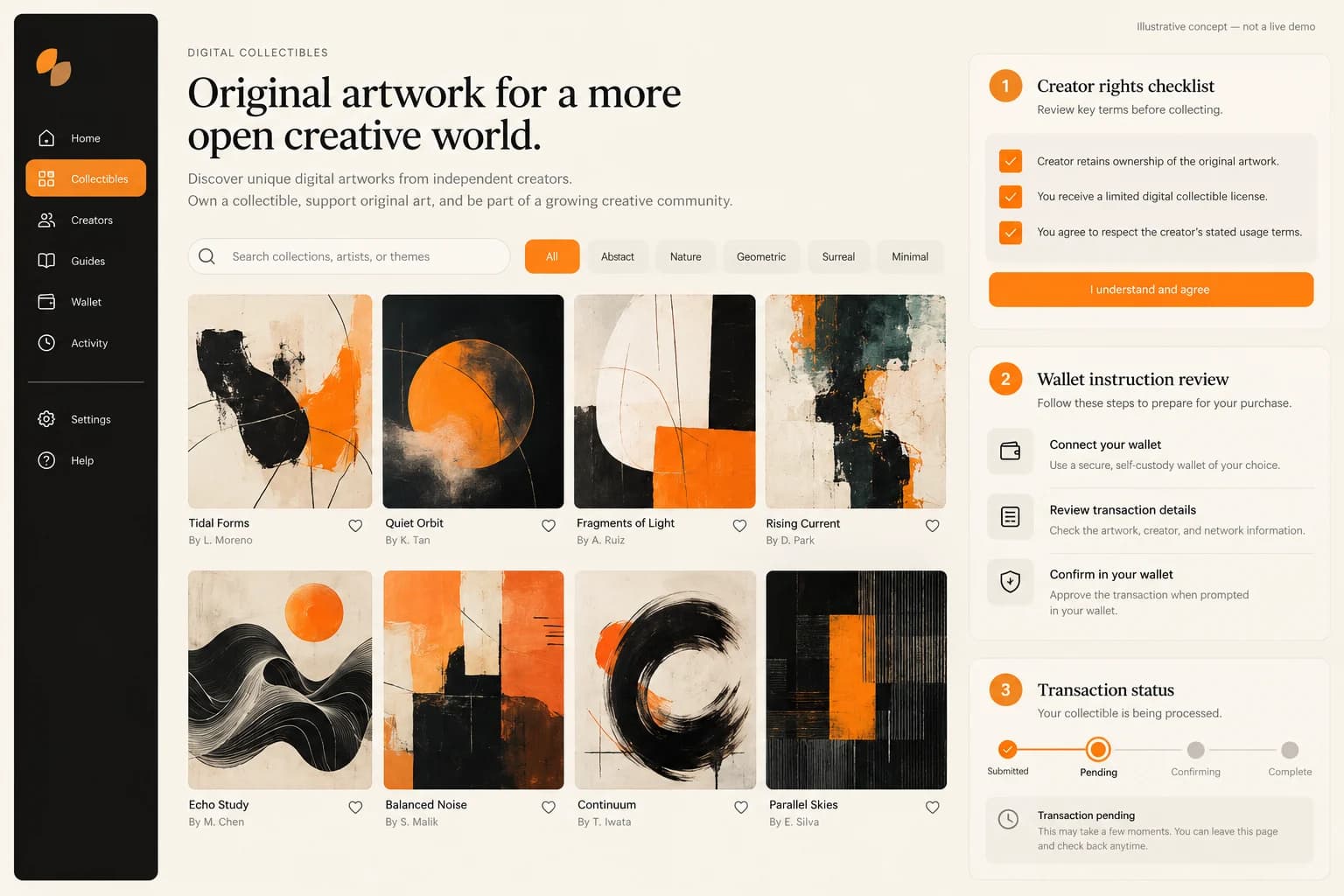
Original digital-collectibles concept. Collections, rights and transaction states are illustrative and do not establish token ownership, authenticity, liquidity, wallet security or investment value.
Product flow
A visual map of how each role interacts with each workflow stage, with operator controls and integration boundaries.
Deployable Product Architecture
OpenSea-style Digital Collectible Market
Monetization
We model monetization early so payments, admin controls, and reporting support the business.
Show platform fees, applicable creator amounts and network costs separately. Fee treatment requires the selected contract and operating arrangement, not a copied reference schedule.
Offer permitted storefront, metadata and reporting capabilities with clear limits. Payment for publishing cannot substitute for authenticity review or rights evidence.
Label sponsored discovery and define placement terms. Promotion cannot imply verified provenance, guaranteed sales, appreciation or preferential resolution of ownership disputes.
Artifact register
Reference screens illustrate workflows, not a contracted feature list. Sample prices, data, and responses are demonstration content; confirm the current scope during a walkthrough.
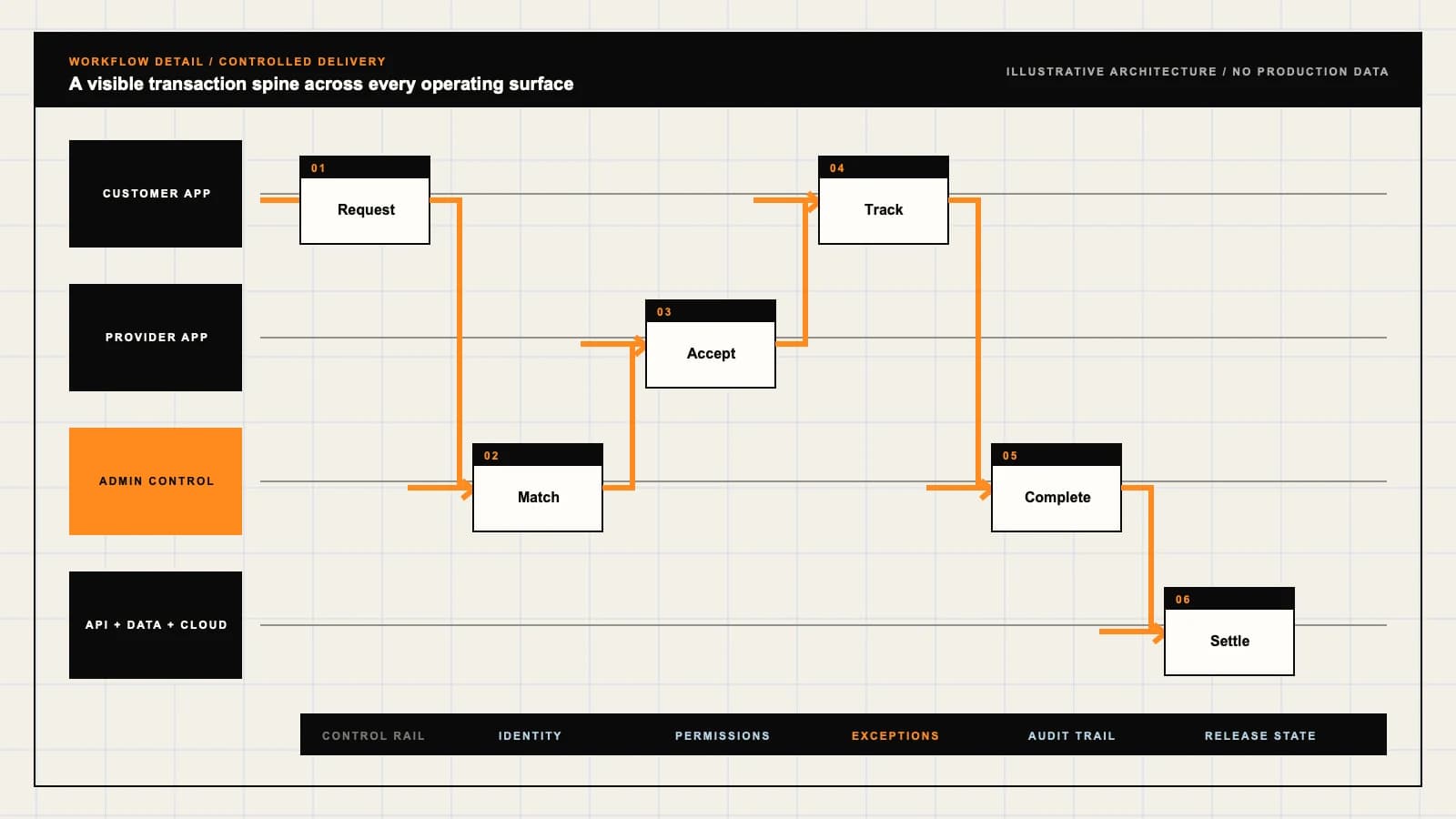
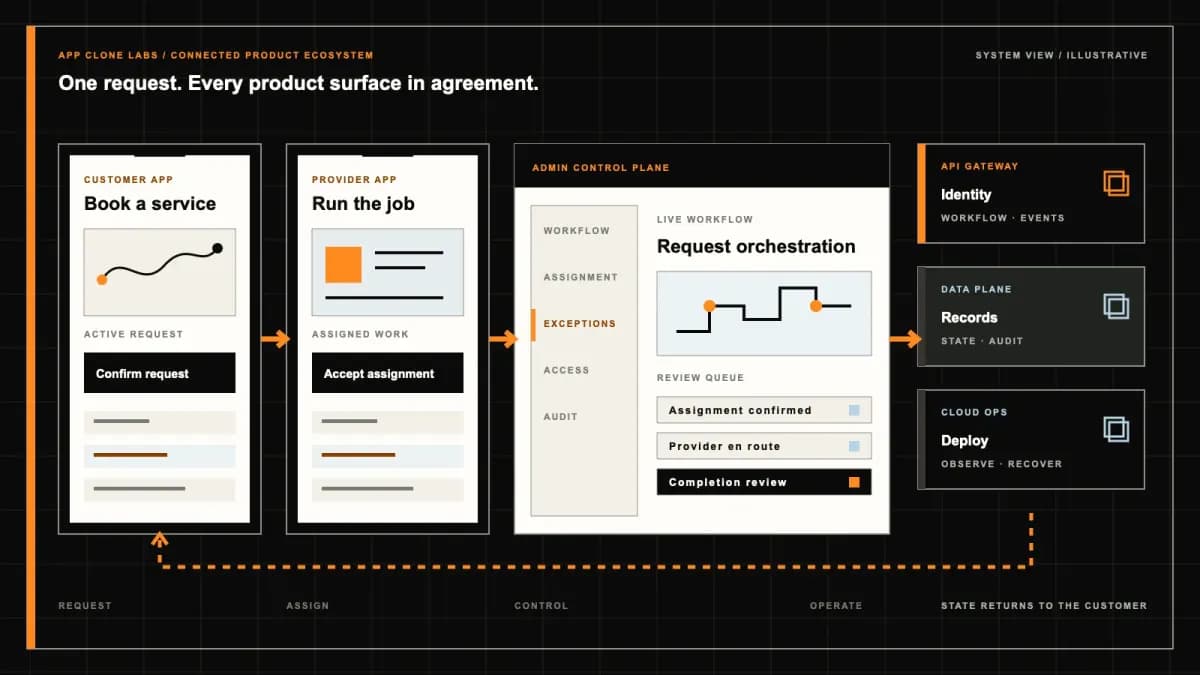
A collector opens the fictional Harbor Lantern collection and selects token 42. The seller signed its listing yesterday, then transferred the token elsewhere. The marketplace still displays the old price because its indexer is behind. An OpenSea clone buyer should ask what happens at the purchase step: whether the interface checks current conditions, explains the invalid order and avoids presenting an attempted transaction as a completed sale.
App Clone Labs scopes independently branded NFT marketplace software around exact collectible identity, understandable wallet decisions and evidenced settlement. This reference does not imply OpenSea affiliation, access to its services or permission to reproduce its branding. Synthetic activity cannot establish demand or liquidity. The operating team must establish provider permissions, eligible markets and rights policies separately; a familiar collection grid supplies none of those decisions.
Bind each collectible to its chain, contract address and token identifier. A display name, thumbnail or ticker cannot distinguish a reviewed collection from a copy. Let collectors inspect identifiers before signing and carry them into transaction records and support cases. Explain the source and age of ownership evidence. If an indexer cannot establish the current owner, present uncertainty instead of converting missing data into an affirmative ownership claim.
Define collection admission and correction responsibilities. Record what reviewers checked, which evidence remains disputed and what a badge actually means. Rehearse a second Harbor Lantern contract using identical artwork and a similar name. Search, collection pages and purchase review should preserve the distinction. Do not promise that a verification label proves every item is authentic, safe to transfer or free of competing rights claims.
A transfer history can describe recorded movement of a token while leaving the origin and permitted use of its associated artwork unresolved. Present provenance as evidence with a stated source, not a blanket endorsement. Keep creator claims, collection review and any published license terms distinguishable. Token ownership alone does not establish copyright or commercial rights. Qualified review should determine the policies appropriate to the actual operator and market.
Provide a rights reporting route that identifies the collection, exact item and disputed material. Preserve the report, reviewer decision and relevant references under an agreed retention policy. Rehearse a creator disputing an uploaded image after several transfers. Restrict marketplace visibility where the reviewed policy requires it, while explaining the limited effect of that action. Removing a page cannot erase an external token or undo a settled transaction.
Keep private evidence available only to the people handling the report. Give the reporting party a case reference and distinguish receipt from a completed review. An appeal should retain the earlier decision and supporting material rather than overwriting it. Marketplace staff need a documented escalation owner when the dispute involves an external contract or inaccessible storage.
OpenSea’s metadata standards describe reading token metadata through contract URI functions, including names, media and traits. That establishes a useful separation between token identity and displayed content. An independent marketplace must verify its own fetching and update behavior.
Treat fetched documents and media as untrusted inputs. Set supported formats, response limits and safe rendering rules. Record freshness and show a useful unavailable state when storage fails. Preserve enough transaction context to investigate what was displayed when the customer reviewed an order. Rehearse Harbor Lantern token 42 changing traits after listing, then returning malformed JSON. Define whether changed content requires renewed review before purchase. Do not silently replace identity evidence with a matching image or claim that remote storage guarantees permanent availability.
Choose the custody boundary before designing account screens. A non-custodial marketplace requests specific wallet actions while the user controls signing. Explain connection, message signing, token approval and transaction submission as separate decisions. Never collect recovery phrases or private keys. Support staff should diagnose transaction references without acquiring signing authority. If custody is requested, scope its permissions, recovery responsibilities and qualified review as a separate operating decision.
Show the selected network and wallet account consistently. Rehearse an account switch between listing review and signing, a wrong network and a wallet refusing a request. Invalidate stale instructions and let the customer restart with current details. Avoid suggesting that disconnecting the website revokes existing token approvals. Provide an understandable route to inspect relevant permissions through the supported wallet or network tools, with clear limits on platform assistance.
Make signing review usable without depending on color or truncated addresses alone. Use clear labels for the asset, spender and recipient, and let people inspect full identifiers. Preserve keyboard access through wallet handoff and return focus after dismissal. A refused request should leave the customer with an explanation and a deliberate next action.
Define a listing as a specific order with asset identity, seller, currency, amount and expiry. Show whether it is a draft, awaiting signature, active, expired, cancelled or no longer fulfillable. Hiding a listing from discovery must not be described as cancelling an enforceable external order unless the selected mechanism establishes that result. Record the order reference and evidence behind each status change for customer and support views.
Explain the supported cancellation action before requesting a wallet transaction. Track a rejected request or pending cancellation separately from confirmed invalidation. Rehearse a buyer attempting fulfillment while the seller cancels, and reconcile the actual result rather than promising cancellation always wins. A new price should produce the intended current commitment without concealing whether an earlier order remains actionable. Keep timestamps and currency units readable across the listing and wallet review.
Start with offers for an identified token and selected currency. Specify expiry, amount and the account receiving the collectible. Explain whether the selected design reserves funds; an observed balance does not mean an offchain offer remains funded until acceptance. Check current balance and permissions when preparing fulfillment. A seller accepting an offer needs a clear view of the net consideration and item being transferred.
Rehearse an offerer spending funds elsewhere, revoking approval and switching accounts after submission. Mark unsupported or invalid offers without presenting them as available demand. For later collection offers, define exactly which token identifiers qualify and how concurrent acceptance affects remaining quantities. ERC-1155 editions need explicit units. A collection floor price or an offer shown in discovery must not become a promise that every owner can sell at that value.
The official Seaport interface reference notes that validated orders can still be unfulfillable and recommends simulating fulfillment before execution. It also documents approval requirements and checking cancellation status. These are protocol references, not evidence that an independent deployment is reviewed or safe.
Agree checks for current ownership, order status, expiry, supported contracts, token amounts and transfer permissions. Simulation can inform a decision but cannot guarantee a later transaction succeeds after state changes. Show a failed simulation with an actionable reason and preserve its context. Rehearse an external transfer after a successful simulation, a revoked approval and an unsupported recipient. Do not automatically retry consequential signing requests or interpret a protocol signature check as proof of asset authenticity.
Separate a wallet signature from a submitted transaction and the confirmations required by the selected network policy. Store transaction references, chain and relevant order identity. When indexing falls behind, explain the difference between observed chain evidence and the marketplace view. The customer needs a way to inspect progress without sending the purchase again simply because the success screen did not appear.
Rehearse a submitted purchase followed by a browser refresh, a replaced transaction and a delayed indexer. Reconcile repeated events into one purchase history entry. Define how chain reorganizations and incomplete evidence affect displayed status and support escalation. A confirmed transfer should update the ownership view using the agreed evidence, while failures retain useful context. Support must not manufacture a successful sale by manually editing an owner field to satisfy a complaint.
Show the selected currency, seller consideration, marketplace fees, applicable creator amounts and network cost estimates separately. Explain which values can change before submission. Royalty treatment depends on the chosen contracts and marketplace arrangement; avoid describing every resale payment as assured. Maintain transaction records that let operations reconcile amounts actually transferred against the reviewed order without assuming a copied commercial schedule fits the independent product.
Price collection tools and disclosed promotion as separate services with defined deliverables. Sponsored placement should remain distinguishable from collection review. Rehearse a fee configuration change while a collector has an older purchase screen open, plus a failed transfer after a network charge. Explain supported outcomes without guaranteeing reimbursement. No sales volume, appreciation or investment return should be implied by synthetic activity, creator payments or a polished marketplace presentation.
Compare the Rarible-style creator marketplace when consented publishing, edition creation and creator curation drive the product. This OpenSea-style brief concentrates on discovery, existing collectible listings, offers and wallet settlement. Start with collections and orders the operator can review and support.
Review the configurable crypto exchange scope if the actual requirement concerns fungible trading, matching and custody accounts. NFT identity and metadata need their own acceptance evidence. Additional chains, auctions, bridging and custodial recovery should follow a separate scoped decision with explicit operating ownership and supported failure paths.
Use a synthetic sandbox with Harbor Lantern token 42, fictional wallets and controlled transaction records. Buyer acceptance should inspect a copied collection, unavailable metadata, a wallet rejection, an expired offer and an external transfer invalidating a listing. Then follow a pending purchase through indexer recovery and review a rights report. Require consistent identifiers and explanations across collector, seller and operations views, with attributable case ownership.
Record each expected outcome before the walkthrough. Require an invalid order to stop before an unnecessary signing request, a pending transaction to retain its reference after refresh and a recovered indexer to produce one consistent history entry. Attach the observed evidence and unresolved exceptions to acceptance. A screen recording alone cannot establish these outcomes without the corresponding state and transaction records.
Bring a collection and one failed order to a marketplace scope discussion to define supported settlement, custody boundaries, review staffing and acceptance records.
Use the delivery process to agree source-code terms, provider access and evidence for release. Demonstration screens describe behavior; they do not establish live inventory, demand or authorization.
FAQ
It centers on collectible discovery, exact token identity, existing listings, offers and wallet settlement, with metadata freshness, invalid order handling and accountable review.
No. The marketplace needs independent branding, provider permissions and legitimate collection sources. Synthetic demonstrations do not provide live inventory, demand or access to OpenSea services.
Names and artwork can be copied across collections and networks. Chain, contract and token identifier preserve the intended collectible throughout discovery, signing and support.
Token possession alone does not establish copyright or commercial rights. Present relevant license evidence and use qualified review for the actual collection and operating policy.
Show a clear unavailable or stale state while retaining exact token identity. Validate fetched content and preserve sufficient context to investigate earlier purchase reviews.
Connection and signing are distinct decisions. Define a non-custodial boundary explicitly, explain approvals and never request private keys or recovery phrases through marketplace support.
Not necessarily. Discovery removal and external order invalidation differ. Show the supported cancellation mechanism and confirm its resulting state before describing the order as cancelled.
That depends on the selected design. Disclose reservation behavior and recheck balance and permissions before fulfillment; a previously observed balance does not guarantee present funding.
No. Ownership, approvals and order conditions can change before execution. Preserve simulation context and explain subsequent failures without automatically requesting another consequential wallet signature.
Retain transaction and order references, distinguish chain evidence from delayed indexing and reconcile repeated events. Let customers inspect progress without creating an accidental duplicate attempt.
No. Treatment depends on the selected contract and marketplace arrangement. Disclose applicable amounts and reconcile actual transfers without promising universal royalty enforcement or reimbursement.
Use fictional collectibles and wallets to test copied collections, changed metadata, invalid orders, approval changes and pending settlement, plus attributable rights reporting and recovery.
Solution reference register
01 / Reference and IP
This page references third-party product names only to describe familiar product models and planning references. App Clone Labs is not affiliated with or endorsed by those brands. Build decisions require independent legal, regulatory, and operational review for your market.
02 / Regulatory caveat
Confirm licensing and market-specific authorization before enabling regulated activity · Define whether assets or funds are held by the operator, a qualified custodian, or not held at all · Apply security review, strong authentication, encryption, audit logging, recovery, and incident response · Present educational product information only and prohibit personalized financial, legal, tax, or wagering advice · Verify collection rights and provide counterfeit, copyright, fraud, sanctions, moderation, and takedown processes · Do not imply ownership of copyright or commercial rights from token possession alone
Primary sources
Dated official documentation, standards, and research that support the factual claims on this page.
How to read this page
Scope, cost and timeline figures are planning guidance until confirmed in a written proposal. Diagrams and screens are illustrations, not client deliverables, and source-code rights and handover follow the signed agreement. See the delivery process and the full disclaimer.
Next decision
Define outcomes, constraints, evidence, rights and handover before delivery begins.
Commercial rights, repositories, environments, documentation, acceptance and handover remain contract-defined.
App Clone Labs is not affiliated with, sponsored by, or endorsed by OpenSea. The name identifies a familiar product category; every delivered product is independently designed and built, and the mark remains its owner's property. Read the full legal notice.