Editorial dossier / Education Apps
E-Learning App Monetization Models: Pricing, Entitlements and Unit Economics
Compare e-learning monetization through course sales, subscriptions, cohorts, memberships, certification, creator revenue share and enterprise licensing.
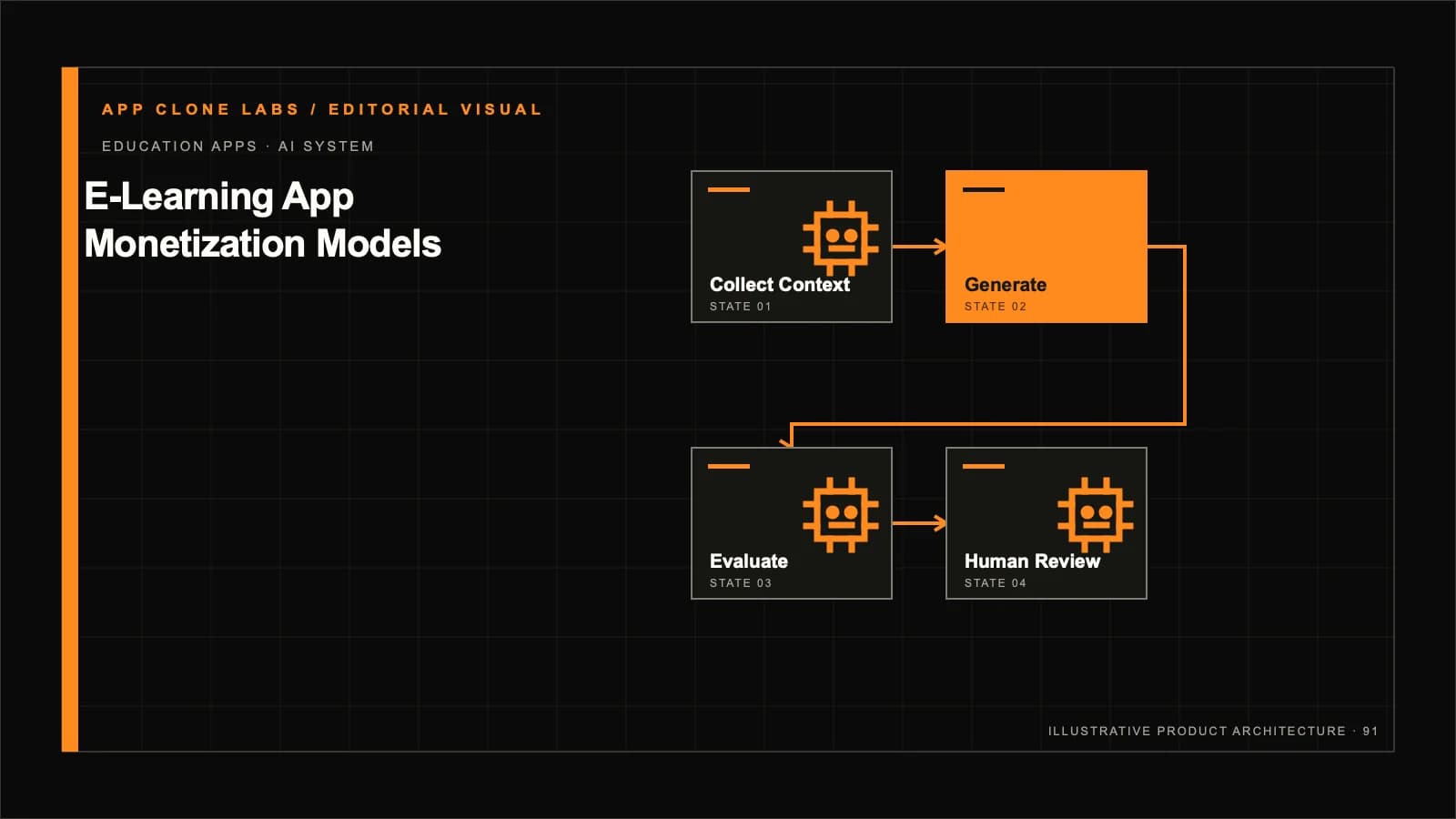
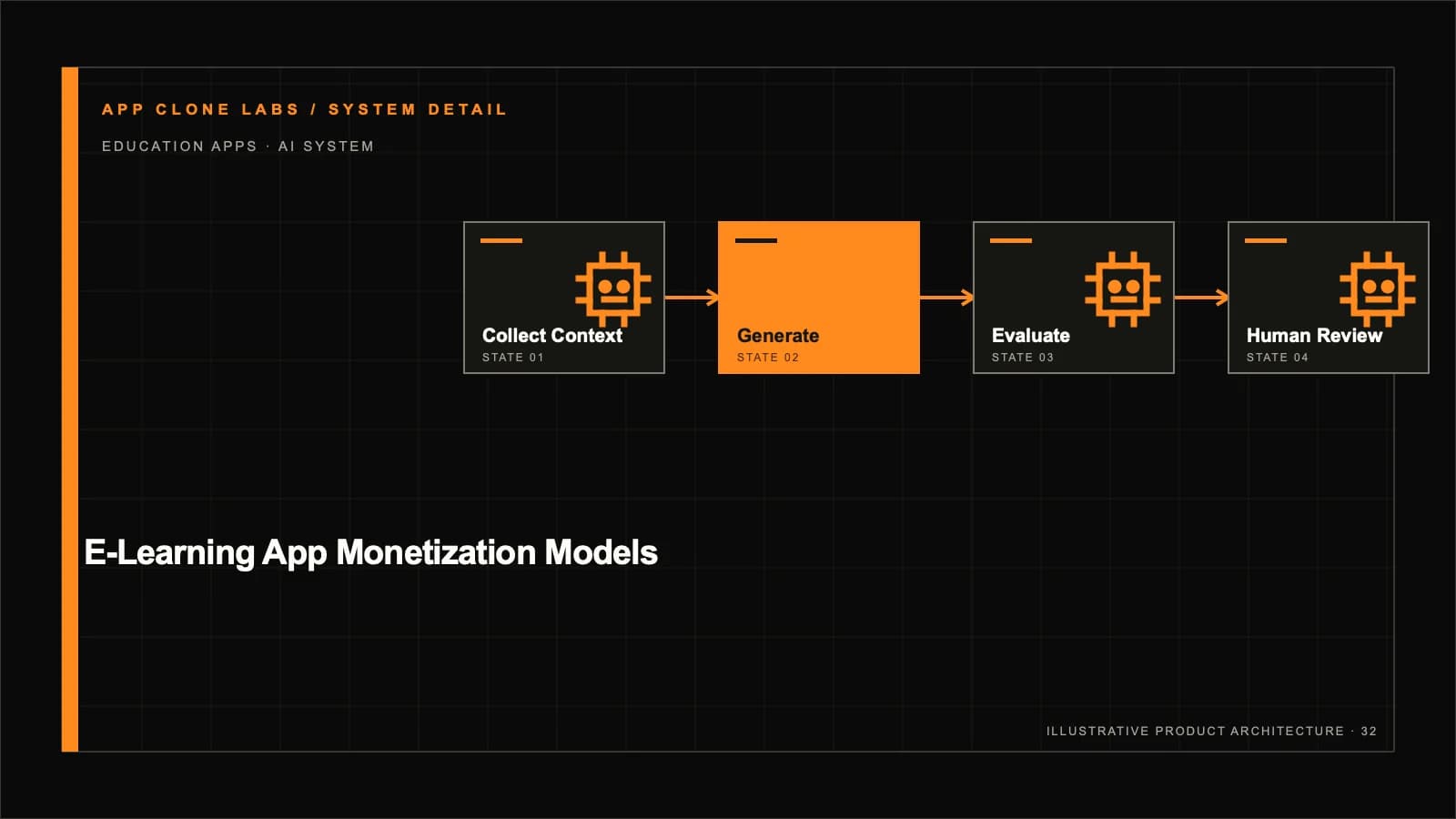
A subscription can produce recurring revenue and still be the wrong model. If learners need one certification, if instructors deliver expensive live feedback, or if an employer buys seats through procurement, forcing every customer into monthly self-service billing creates churn, support disputes and weak unit economics.
Monetization is a contract between price, entitlement and fulfilment. The business must know what is sold, when access begins and ends, which variable costs follow usage, how refunds and creator obligations work, and what evidence supports renewal.
This guide compares the major models by their operating consequences, not by how attractive the pricing page looks.
Begin with the learning transaction
Identify the outcome, delivery cost and buying authority before choosing a price format.
The failure mode is concrete: pricing copies a competitor while the learning promise differs. This is not solved by adding another screen or background job. The product has to define ownership, permitted transitions, and the evidence retained when the transition occurs.
For the first release, write the commercial unit and fulfilment obligation in plain language. Write that decision as an enforceable server-side rule, not guidance that depends on a client, operator, or AI model remembering the intended boundary.
Implementation should include buyer, learner, product, access period, included service, variable cost, success evidence and refund boundary. Keep the public response smaller than the internal record: users need a clear outcome and recovery path, while authorized operators need correlation IDs, policy versions, timestamps, and the before-and-after state.
Validate it with individual course, live cohort and employer purchase. Test the ordinary path, then repeat under timeout, duplicate delivery, stale state, partial failure, revoked authority, and concurrent requests. A feature is not ready when only the demonstration succeeds.
- Owner: monetization lead
- Release evidence: commercial contract map
- Stop condition: finance and learning teams describe different products
Use one-time course sales for bounded value
A fixed curriculum with durable access can support a simple purchase.
The failure mode is concrete: lifetime access is promised without funding ongoing hosting and updates. This is not solved by adding another screen or background job. The product has to define ownership, permitted transitions, and the evidence retained when the transition occurs.
For the first release, define access duration, update policy and support explicitly. Write that decision as an enforceable server-side rule, not guidance that depends on a client, operator, or AI model remembering the intended boundary.
Implementation should include edition, entitlement, start, expiry, downloadable assets, update eligibility and support tier. Keep the public response smaller than the internal record: users need a clear outcome and recovery path, while authorized operators need correlation IDs, policy versions, timestamps, and the before-and-after state.
Validate it with course retirement, content revision and refund. Test the ordinary path, then repeat under timeout, duplicate delivery, stale state, partial failure, revoked authority, and concurrent requests. A feature is not ready when only the demonstration succeeds.
- Owner: course business owner
- Release evidence: course margin model
- Stop condition: future obligations have no cost owner
Use subscriptions for recurring utility
Subscriptions fit libraries, continuous practice or regularly refreshed value.
The failure mode is concrete: a static course is wrapped in monthly billing. This is not solved by adding another screen or background job. The product has to define ownership, permitted transitions, and the evidence retained when the transition occurs.
For the first release, tie renewal to continuing learner value and visible account controls. Write that decision as an enforceable server-side rule, not guidance that depends on a client, operator, or AI model remembering the intended boundary.
Implementation should include billing interval, catalog access, usage limits, renewal notice, cancellation and grace period. Keep the public response smaller than the internal record: users need a clear outcome and recovery path, while authorized operators need correlation IDs, policy versions, timestamps, and the before-and-after state.
Validate it with failed renewal, downgrade and returning learner. Test the ordinary path, then repeat under timeout, duplicate delivery, stale state, partial failure, revoked authority, and concurrent requests. A feature is not ready when only the demonstration succeeds.
- Owner: subscription owner
- Release evidence: retention by cohort report
- Stop condition: renewal depends mainly on cancellation friction
Price cohorts around scarce delivery
Live facilitation, feedback and peer cadence create seat and staffing constraints.
The failure mode is concrete: cohort revenue ignores facilitator capacity and no-shows. This is not solved by adding another screen or background job. The product has to define ownership, permitted transitions, and the evidence retained when the transition occurs.
For the first release, model seats, delivery hours and recovery obligations per intake. Write that decision as an enforceable server-side rule, not guidance that depends on a client, operator, or AI model remembering the intended boundary.
Implementation should include capacity, facilitator ratio, session cost, feedback SLA, transfer, cancellation and reserve. Keep the public response smaller than the internal record: users need a clear outcome and recovery path, while authorized operators need correlation IDs, policy versions, timestamps, and the before-and-after state.
Validate it with underfilled cohort, instructor absence and learner transfer. Test the ordinary path, then repeat under timeout, duplicate delivery, stale state, partial failure, revoked authority, and concurrent requests. A feature is not ready when only the demonstration succeeds.
- Owner: programme finance owner
- Release evidence: cohort contribution statement
- Stop condition: a full cohort remains loss-making without explanation
Checkpoint 4: reconcile the product promise with the recorded state. Support, finance, security, and delivery teams should be able to reach the same conclusion from the same identifiers without reconstructing events from chat messages or screenshots.
Design memberships as community products
Community, office hours and ongoing resources can create durable value.
The failure mode is concrete: membership access becomes an unmoderated chat add-on. This is not solved by adding another screen or background job. The product has to define ownership, permitted transitions, and the evidence retained when the transition occurs.
For the first release, define recurring programming, moderation and participation boundaries. Write that decision as an enforceable server-side rule, not guidance that depends on a client, operator, or AI model remembering the intended boundary.
Implementation should include member tier, events, archives, community access, conduct, moderation and expiry. Keep the public response smaller than the internal record: users need a clear outcome and recovery path, while authorized operators need correlation IDs, policy versions, timestamps, and the before-and-after state.
Validate it with member removal, event cancellation and tier change. Test the ordinary path, then repeat under timeout, duplicate delivery, stale state, partial failure, revoked authority, and concurrent requests. A feature is not ready when only the demonstration succeeds.
- Owner: community owner
- Release evidence: membership service calendar
- Stop condition: the recurring promise has no delivery plan
Treat certification as an assessed service
A certificate has value only when identity, assessment and issuance are credible.
The failure mode is concrete: payment automatically creates a credential. This is not solved by adding another screen or background job. The product has to define ownership, permitted transitions, and the evidence retained when the transition occurs.
For the first release, separate learning access from assessment eligibility and certificate issuance. Write that decision as an enforceable server-side rule, not guidance that depends on a client, operator, or AI model remembering the intended boundary.
Implementation should include identity check, prerequisites, attempt policy, rubric, reviewer, credential ID and revocation. Keep the public response smaller than the internal record: users need a clear outcome and recovery path, while authorized operators need correlation IDs, policy versions, timestamps, and the before-and-after state.
Validate it with failed attempt, appeal and revoked credential. Test the ordinary path, then repeat under timeout, duplicate delivery, stale state, partial failure, revoked authority, and concurrent requests. A feature is not ready when only the demonstration succeeds.
- Owner: assessment owner
- Release evidence: credential lineage
- Stop condition: a certificate cannot be tied to valid evidence
Build creator revenue share from a ledger
Marketplace commissions interact with refunds, taxes and reserves.
The failure mode is concrete: creator payout is a percentage of checkout totals in a spreadsheet. This is not solved by adding another screen or background job. The product has to define ownership, permitted transitions, and the evidence retained when the transition occurs.
For the first release, record every financial obligation and release funds on policy. Write that decision as an enforceable server-side rule, not guidance that depends on a client, operator, or AI model remembering the intended boundary.
Implementation should include charge, platform fee, creator share, tax, refund, adjustment, reserve and transfer. Keep the public response smaller than the internal record: users need a clear outcome and recovery path, while authorized operators need correlation IDs, policy versions, timestamps, and the before-and-after state.
Validate it with partial refund, dispute and negative balance. Test the ordinary path, then repeat under timeout, duplicate delivery, stale state, partial failure, revoked authority, and concurrent requests. A feature is not ready when only the demonstration succeeds.
- Owner: marketplace finance lead
- Release evidence: settlement reconciliation
- Stop condition: a creator statement cannot be reproduced
Use enterprise licensing for organizational value
Employers and institutions buy seats, administration, reporting and contractual service.
The failure mode is concrete: consumer checkout is stretched into a procurement workflow. This is not solved by adding another screen or background job. The product has to define ownership, permitted transitions, and the evidence retained when the transition occurs.
For the first release, model contracts, allocations and renewal separately from learner accounts. Write that decision as an enforceable server-side rule, not guidance that depends on a client, operator, or AI model remembering the intended boundary.
Implementation should include organization, agreement, term, seat pool, administrator, SSO, reporting, support and renewal. Keep the public response smaller than the internal record: users need a clear outcome and recovery path, while authorized operators need correlation IDs, policy versions, timestamps, and the before-and-after state.
Validate it with seat reassignment, overage and contract termination. Test the ordinary path, then repeat under timeout, duplicate delivery, stale state, partial failure, revoked authority, and concurrent requests. A feature is not ready when only the demonstration succeeds.
- Owner: enterprise product owner
- Release evidence: license utilization report
- Stop condition: contract terms cannot be enforced in entitlements
Checkpoint 8: reconcile the product promise with the recorded state. Support, finance, security, and delivery teams should be able to reach the same conclusion from the same identifiers without reconstructing events from chat messages or screenshots.
Connect every purchase to entitlements
Payment state should not be scattered through content routes.
The failure mode is concrete: client-side plan names decide access. This is not solved by adding another screen or background job. The product has to define ownership, permitted transitions, and the evidence retained when the transition occurs.
For the first release, derive versioned server-side entitlements from verified commercial state. Write that decision as an enforceable server-side rule, not guidance that depends on a client, operator, or AI model remembering the intended boundary.
Implementation should include resource, source purchase, learner or organization, effective time, expiry, limit and revocation. Keep the public response smaller than the internal record: users need a clear outcome and recovery path, while authorized operators need correlation IDs, policy versions, timestamps, and the before-and-after state.
Validate it with refund, failed renewal, transfer and complimentary grant. Test the ordinary path, then repeat under timeout, duplicate delivery, stale state, partial failure, revoked authority, and concurrent requests. A feature is not ready when only the demonstration succeeds.
- Owner: platform owner
- Release evidence: entitlement decision tests
- Stop condition: direct URLs bypass commercial access
Model trials as experiments with obligations
Trials can demonstrate value but introduce eligibility, messaging and conversion risk.
The failure mode is concrete: users are charged after an unclear or unusable trial. This is not solved by adding another screen or background job. The product has to define ownership, permitted transitions, and the evidence retained when the transition occurs.
For the first release, define eligibility, useful activation, reminders and post-trial outcome. Write that decision as an enforceable server-side rule, not guidance that depends on a client, operator, or AI model remembering the intended boundary.
Implementation should include source, start, end, payment requirement, conversion, cancellation and retained data. Keep the public response smaller than the internal record: users need a clear outcome and recovery path, while authorized operators need correlation IDs, policy versions, timestamps, and the before-and-after state.
Validate it with repeat trial, failed first payment and no activity. Test the ordinary path, then repeat under timeout, duplicate delivery, stale state, partial failure, revoked authority, and concurrent requests. A feature is not ready when only the demonstration succeeds.
- Owner: growth owner
- Release evidence: trial conversion by activation
- Stop condition: trial design relies on surprise billing
Coordinate mobile-store and web commerce
Platform rules and user expectations may differ across surfaces and regions.
The failure mode is concrete: the app hides or misrepresents purchase paths. This is not solved by adding another screen or background job. The product has to define ownership, permitted transitions, and the evidence retained when the transition occurs.
For the first release, review current store policies and keep entitlements channel-neutral. Write that decision as an enforceable server-side rule, not guidance that depends on a client, operator, or AI model remembering the intended boundary.
Implementation should include store product, web product, price display, purchase source, receipt verification, restoration and support. Keep the public response smaller than the internal record: users need a clear outcome and recovery path, while authorized operators need correlation IDs, policy versions, timestamps, and the before-and-after state.
Validate it with device change, family account and refunded store purchase. Test the ordinary path, then repeat under timeout, duplicate delivery, stale state, partial failure, revoked authority, and concurrent requests. A feature is not ready when only the demonstration succeeds.
- Owner: mobile commerce lead
- Release evidence: cross-channel entitlement test
- Stop condition: support cannot identify or restore a valid purchase
Make refunds a complete workflow
A refund affects cash, access, educator share and progress expectations.
The failure mode is concrete: finance reverses payment while the learner retains unexplained access. This is not solved by adding another screen or background job. The product has to define ownership, permitted transitions, and the evidence retained when the transition occurs.
For the first release, coordinate eligibility, approval, reversal, entitlement and ledger correction. Write that decision as an enforceable server-side rule, not guidance that depends on a client, operator, or AI model remembering the intended boundary.
Implementation should include policy version, request, evidence, approver, provider result, access outcome and notification. Keep the public response smaller than the internal record: users need a clear outcome and recovery path, while authorized operators need correlation IDs, policy versions, timestamps, and the before-and-after state.
Validate it with partial completion, duplicate purchase and cancelled cohort. Test the ordinary path, then repeat under timeout, duplicate delivery, stale state, partial failure, revoked authority, and concurrent requests. A feature is not ready when only the demonstration succeeds.
- Owner: customer operations
- Release evidence: refund reconciliation
- Stop condition: financial and product state disagree
Checkpoint 12: reconcile the product promise with the recorded state. Support, finance, security, and delivery teams should be able to reach the same conclusion from the same identifiers without reconstructing events from chat messages or screenshots.
Measure unit economics by model
Revenue without delivery, acquisition and support costs conceals weak economics.
The failure mode is concrete: one blended margin combines self-paced and live products. This is not solved by adding another screen or background job. The product has to define ownership, permitted transitions, and the evidence retained when the transition occurs.
For the first release, attribute variable costs and obligations to commercial units. Write that decision as an enforceable server-side rule, not guidance that depends on a client, operator, or AI model remembering the intended boundary.
Implementation should include net revenue, payment fee, creator share, facilitation, media, support, refund, acquisition and contribution. Keep the public response smaller than the internal record: users need a clear outcome and recovery path, while authorized operators need correlation IDs, policy versions, timestamps, and the before-and-after state.
Validate it with discount, annual plan and high-support cohort. Test the ordinary path, then repeat under timeout, duplicate delivery, stale state, partial failure, revoked authority, and concurrent requests. A feature is not ready when only the demonstration succeeds.
- Owner: finance lead
- Release evidence: model-level contribution report
- Stop condition: growth decisions use gross revenue alone
Test pricing without corrupting trust
Experiments need stable eligibility and honest presentation.
The failure mode is concrete: customers see arbitrary prices or lose promised terms. This is not solved by adding another screen or background job. The product has to define ownership, permitted transitions, and the evidence retained when the transition occurs.
For the first release, version offers and define segmentation, duration and grandfathering. Write that decision as an enforceable server-side rule, not guidance that depends on a client, operator, or AI model remembering the intended boundary.
Implementation should include offer ID, audience, price, currency, start, end, disclosure, assignment and analysis. Keep the public response smaller than the internal record: users need a clear outcome and recovery path, while authorized operators need correlation IDs, policy versions, timestamps, and the before-and-after state.
Validate it with shared device, returning customer and expired experiment. Test the ordinary path, then repeat under timeout, duplicate delivery, stale state, partial failure, revoked authority, and concurrent requests. A feature is not ready when only the demonstration succeeds.
- Owner: growth analytics owner
- Release evidence: experiment integrity review
- Stop condition: support cannot explain a customer price
Choose a portfolio deliberately
Several models can coexist only if catalog, entitlement and reporting remain understandable.
The failure mode is concrete: every feature launches a separate plan and exception. This is not solved by adding another screen or background job. The product has to define ownership, permitted transitions, and the evidence retained when the transition occurs.
For the first release, use a decision matrix and retire redundant offers. Write that decision as an enforceable server-side rule, not guidance that depends on a client, operator, or AI model remembering the intended boundary.
Implementation should include customer segment, learning job, delivery cost, buying motion, retention logic, operational load and strategic role. Keep the public response smaller than the internal record: users need a clear outcome and recovery path, while authorized operators need correlation IDs, policy versions, timestamps, and the before-and-after state.
Validate it with overlapping plans, migration and discontinued tier. Test the ordinary path, then repeat under timeout, duplicate delivery, stale state, partial failure, revoked authority, and concurrent requests. A feature is not ready when only the demonstration succeeds.
- Owner: executive owner
- Release evidence: quarterly offer review
- Stop condition: customers and staff cannot distinguish packages
Implementation references
Use Stripe subscriptions overview and record the version used for the release.
Validate implementation against Stripe Connect documentation and record the version used for the release.
Review Apple App Store Review Guidelines and record the version used for the release.
Compare with Google Play payments policy and record the version used for the release.
Continue with E-Learning App Development when translating the operating model into delivery scope.
Frequently asked questions
Which monetization model is best for an e-learning app?
The one aligned with the learning transaction and fulfilment economics. Static courses, live cohorts and enterprise programs need different models.
When does a subscription make sense?
When the product delivers recurring value through new content, practice, tools, community or ongoing support—not merely recurring billing.
Should course access be lifetime?
Only if the business defines what lifetime means, how updates and support work, and how future delivery costs are funded.
How should instructor payouts be calculated?
From a reconciled ledger that accounts for fees, refunds, disputes, taxes, reserves and the contractual release policy.
Can certificates be sold directly?
Payment may buy assessment eligibility, but issuance should depend on identity and valid assessment evidence.
How should enterprise seats work?
Use an organization agreement and seat pool with allocation, reassignment, SSO, reporting and renewal rules separate from learner identity.
What happens after a refund?
The workflow should reconcile payment, entitlement, learner communication, creator obligations and any continuing access required by policy.
What metrics should compare models?
Net revenue, conversion, retention where applicable, refunds, delivery cost, support cost, creator share, acquisition cost and contribution margin by cohort.
Turn the model into release evidence
A credible release connects its public promise to durable states, scoped authority and recoverable operations. The team should be able to explain ordinary journeys and important exceptions without reconstructing truth from screenshots or chat.
Keep the initial scope narrow enough to rehearse. Expand only after access, money, evidence and support outcomes remain consistent under retries, stale data, partial failures and human mistakes.
- 01
- 02
- 03
- 04
- 05
- 06
Reviewed by the App Clone Labs product strategy team
This guide is written for founders and operators planning clone-inspired platforms, SaaS products, marketplaces, and mobile apps. It is reviewed against App Clone Labs delivery patterns, product scoping standards, and current implementation realities before being published.
Review the editorial team structureRelated product paths
Continue with the services, solutions, guides, and articles that connect this topic to a real software build.
Services, solutions, and guides
Read next