Editorial dossier / Quality and Launch
Release Management for Founder-Led Product Teams: Gates, Rollback and Evidence
Build a lightweight release-management system for founder-led teams covering release scope, testing, migrations, approvals, observability, rollback and incident learning.
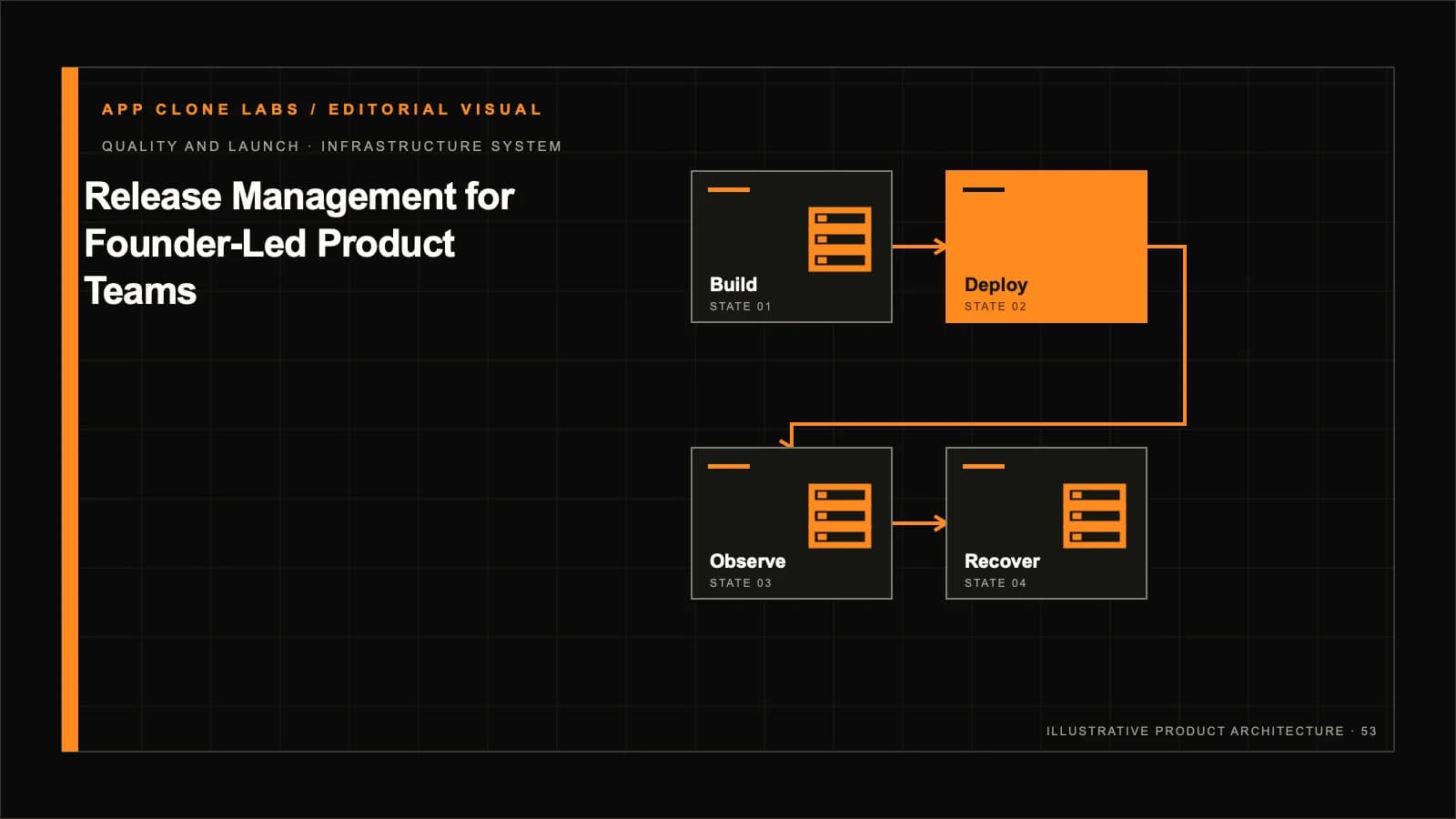
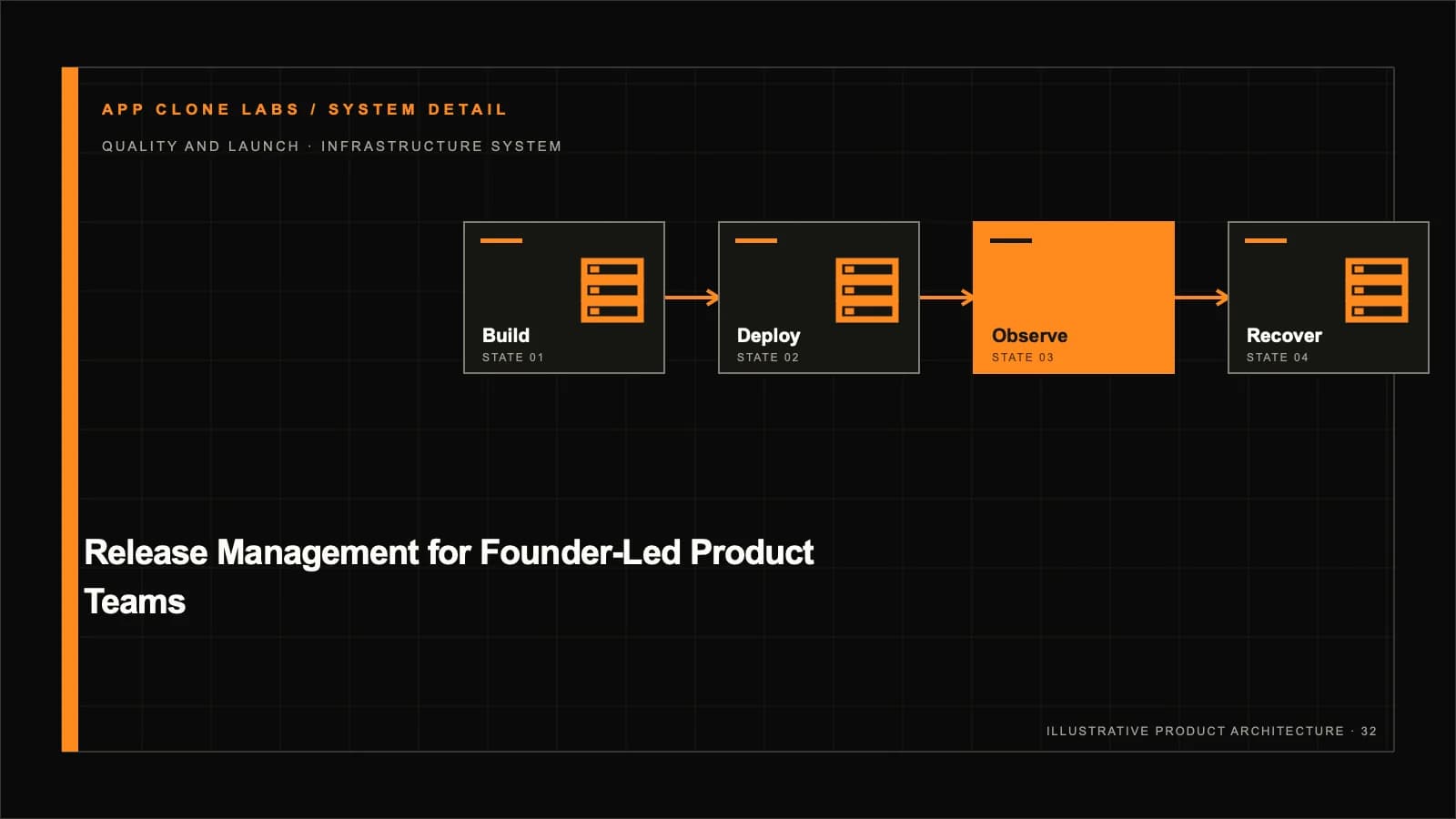
A deployment can complete successfully and still be a failed release. The new code is running, but old mobile clients cannot submit orders, a migration locks a busy table, support has not seen the changed refund flow, and nobody knows which metric should trigger rollback.
Release management is the agreement that connects intended change, verified evidence and production recovery. Small teams do not need ceremony for its own sake, but they do need repeatability where mistakes affect customers, data or money.
This guide builds a practical release system that remains lightweight without relying on memory or heroics.
Define the release unit
A release should identify exactly which customer and operational changes travel together.
The failure mode is concrete: unrelated work accumulates in a risky bundle. This is not solved by adding another screen or background job. The product has to define ownership, permitted transitions, and the evidence retained when the transition occurs.
For the first release, create a candidate with explicit scope and owners. Write that decision as an enforceable server-side rule, not guidance that depends on a client, operator, or AI model remembering the intended boundary.
Implementation should include version, included changes, exclusions, dependencies, migrations, flags, owner and target window. Keep the public response smaller than the internal record: users need a clear outcome and recovery path, while authorized operators need correlation IDs, policy versions, timestamps, and the before-and-after state.
Validate it with remove one late feature. Test the ordinary path, then repeat under timeout, duplicate delivery, stale state, partial failure, revoked authority, and concurrent requests. A feature is not ready when only the demonstration succeeds.
- Owner: release lead
- Release evidence: Define the release unit acceptance record
- Stop condition: define the release unit cannot be explained or recovered
Use risk-based gates
A copy edit and a payment-state change need different evidence.
The failure mode is concrete: one checklist is either excessive or inadequate. This is not solved by adding another screen or background job. The product has to define ownership, permitted transitions, and the evidence retained when the transition occurs.
For the first release, classify change impact and attach proportional gates. Write that decision as an enforceable server-side rule, not guidance that depends on a client, operator, or AI model remembering the intended boundary.
Implementation should include data, money, permissions, availability, reversibility, customer reach and compliance. Keep the public response smaller than the internal record: users need a clear outcome and recovery path, while authorized operators need correlation IDs, policy versions, timestamps, and the before-and-after state.
Validate it with low-risk and high-risk examples. Test the ordinary path, then repeat under timeout, duplicate delivery, stale state, partial failure, revoked authority, and concurrent requests. A feature is not ready when only the demonstration succeeds.
- Owner: engineering lead
- Release evidence: Use risk-based gates acceptance record
- Stop condition: use risk-based gates cannot be explained or recovered
Protect the main branch
The deployable branch should reflect reviewed, reproducible state.
The failure mode is concrete: direct changes bypass review and checks. This is not solved by adding another screen or background job. The product has to define ownership, permitted transitions, and the evidence retained when the transition occurs.
For the first release, require scoped review and successful automation. Write that decision as an enforceable server-side rule, not guidance that depends on a client, operator, or AI model remembering the intended boundary.
Implementation should include reviewers, status checks, signed history where appropriate, merge policy and emergency exception. Keep the public response smaller than the internal record: users need a clear outcome and recovery path, while authorized operators need correlation IDs, policy versions, timestamps, and the before-and-after state.
Validate it with failed check and administrator bypass. Test the ordinary path, then repeat under timeout, duplicate delivery, stale state, partial failure, revoked authority, and concurrent requests. A feature is not ready when only the demonstration succeeds.
- Owner: repository owner
- Release evidence: Protect the main branch acceptance record
- Stop condition: protect the main branch cannot be explained or recovered
Build a test evidence pack
Tests should map to the release promise and known risks.
The failure mode is concrete: a green unit-test count substitutes for journey validation. This is not solved by adding another screen or background job. The product has to define ownership, permitted transitions, and the evidence retained when the transition occurs.
For the first release, retain automated and manual acceptance evidence. Write that decision as an enforceable server-side rule, not guidance that depends on a client, operator, or AI model remembering the intended boundary.
Implementation should include change, test level, environment, data fixture, result, reviewer, defect and waiver. Keep the public response smaller than the internal record: users need a clear outcome and recovery path, while authorized operators need correlation IDs, policy versions, timestamps, and the before-and-after state.
Validate it with critical path and negative permission test. Test the ordinary path, then repeat under timeout, duplicate delivery, stale state, partial failure, revoked authority, and concurrent requests. A feature is not ready when only the demonstration succeeds.
- Owner: QA lead
- Release evidence: Build a test evidence pack acceptance record
- Stop condition: build a test evidence pack cannot be explained or recovered
Checkpoint 4: reconcile the product promise with the recorded state. Support, finance, security, and delivery teams should be able to reach the same conclusion from the same identifiers without reconstructing events from chat messages or screenshots.
Plan database migrations
Schema changes can affect compatibility, locking and rollback.
The failure mode is concrete: migration behavior is discovered during deployment. This is not solved by adding another screen or background job. The product has to define ownership, permitted transitions, and the evidence retained when the transition occurs.
For the first release, review expand-contract sequence and recovery. Write that decision as an enforceable server-side rule, not guidance that depends on a client, operator, or AI model remembering the intended boundary.
Implementation should include schema change, duration estimate, lock risk, compatibility, backup, verification and reversal. Keep the public response smaller than the internal record: users need a clear outcome and recovery path, while authorized operators need correlation IDs, policy versions, timestamps, and the before-and-after state.
Validate it with large table and old application version. Test the ordinary path, then repeat under timeout, duplicate delivery, stale state, partial failure, revoked authority, and concurrent requests. A feature is not ready when only the demonstration succeeds.
- Owner: database owner
- Release evidence: Plan database migrations acceptance record
- Stop condition: plan database migrations cannot be explained or recovered
Control configuration and secrets
A code release may depend on external configuration.
The failure mode is concrete: production values are edited manually without trace. This is not solved by adding another screen or background job. The product has to define ownership, permitted transitions, and the evidence retained when the transition occurs.
For the first release, version configuration intent and validate required secrets. Write that decision as an enforceable server-side rule, not guidance that depends on a client, operator, or AI model remembering the intended boundary.
Implementation should include variable, environment, owner, source, rotation, validation and rollback value. Keep the public response smaller than the internal record: users need a clear outcome and recovery path, while authorized operators need correlation IDs, policy versions, timestamps, and the before-and-after state.
Validate it with missing secret and wrong endpoint. Test the ordinary path, then repeat under timeout, duplicate delivery, stale state, partial failure, revoked authority, and concurrent requests. A feature is not ready when only the demonstration succeeds.
- Owner: platform owner
- Release evidence: Control configuration and secrets acceptance record
- Stop condition: control configuration and secrets cannot be explained or recovered
Use feature flags deliberately
Flags can separate deployment from exposure but add state.
The failure mode is concrete: old flags become permanent hidden branches. This is not solved by adding another screen or background job. The product has to define ownership, permitted transitions, and the evidence retained when the transition occurs.
For the first release, assign owner, audience, expiry and removal plan. Write that decision as an enforceable server-side rule, not guidance that depends on a client, operator, or AI model remembering the intended boundary.
Implementation should include flag, default, targeting, dependency, metric, kill switch, expiry and cleanup. Keep the public response smaller than the internal record: users need a clear outcome and recovery path, while authorized operators need correlation IDs, policy versions, timestamps, and the before-and-after state.
Validate it with stale client and flag service outage. Test the ordinary path, then repeat under timeout, duplicate delivery, stale state, partial failure, revoked authority, and concurrent requests. A feature is not ready when only the demonstration succeeds.
- Owner: product engineer
- Release evidence: Use feature flags deliberately acceptance record
- Stop condition: use feature flags deliberately cannot be explained or recovered
Define the deployment sequence
Services, workers and clients may require ordered compatibility.
The failure mode is concrete: components deploy in arbitrary order. This is not solved by adding another screen or background job. The product has to define ownership, permitted transitions, and the evidence retained when the transition occurs.
For the first release, document safe sequencing and pause points. Write that decision as an enforceable server-side rule, not guidance that depends on a client, operator, or AI model remembering the intended boundary.
Implementation should include component, version, prerequisite, health check, wait condition, owner and abort condition. Keep the public response smaller than the internal record: users need a clear outcome and recovery path, while authorized operators need correlation IDs, policy versions, timestamps, and the before-and-after state.
Validate it with worker before schema and mobile lag. Test the ordinary path, then repeat under timeout, duplicate delivery, stale state, partial failure, revoked authority, and concurrent requests. A feature is not ready when only the demonstration succeeds.
- Owner: release engineer
- Release evidence: Define the deployment sequence acceptance record
- Stop condition: define the deployment sequence cannot be explained or recovered
Checkpoint 8: reconcile the product promise with the recorded state. Support, finance, security, and delivery teams should be able to reach the same conclusion from the same identifiers without reconstructing events from chat messages or screenshots.
Observe customer journeys
Infrastructure health alone misses functional failure.
The failure mode is concrete: CPU looks normal while checkout breaks. This is not solved by adding another screen or background job. The product has to define ownership, permitted transitions, and the evidence retained when the transition occurs.
For the first release, monitor critical journey outcomes and error budgets. Write that decision as an enforceable server-side rule, not guidance that depends on a client, operator, or AI model remembering the intended boundary.
Implementation should include journey, indicator, baseline, threshold, segmentation, alert and dashboard. Keep the public response smaller than the internal record: users need a clear outcome and recovery path, while authorized operators need correlation IDs, policy versions, timestamps, and the before-and-after state.
Validate it with partial payment-provider failure. Test the ordinary path, then repeat under timeout, duplicate delivery, stale state, partial failure, revoked authority, and concurrent requests. A feature is not ready when only the demonstration succeeds.
- Owner: reliability owner
- Release evidence: Observe customer journeys acceptance record
- Stop condition: observe customer journeys cannot be explained or recovered
Set rollback triggers before launch
Teams hesitate when production evidence is ambiguous.
The failure mode is concrete: rollback decisions are invented during pressure. This is not solved by adding another screen or background job. The product has to define ownership, permitted transitions, and the evidence retained when the transition occurs.
For the first release, agree measurable triggers and decision authority. Write that decision as an enforceable server-side rule, not guidance that depends on a client, operator, or AI model remembering the intended boundary.
Implementation should include metric, threshold, window, customer harm, approver, rollback method and communication. Keep the public response smaller than the internal record: users need a clear outcome and recovery path, while authorized operators need correlation IDs, policy versions, timestamps, and the before-and-after state.
Validate it with fast spike and slow degradation. Test the ordinary path, then repeat under timeout, duplicate delivery, stale state, partial failure, revoked authority, and concurrent requests. A feature is not ready when only the demonstration succeeds.
- Owner: incident commander
- Release evidence: Set rollback triggers before launch acceptance record
- Stop condition: set rollback triggers before launch cannot be explained or recovered
Make rollback technically credible
Code, data and external side effects recover differently.
The failure mode is concrete: rollback means redeploying an old binary only. This is not solved by adding another screen or background job. The product has to define ownership, permitted transitions, and the evidence retained when the transition occurs.
For the first release, test compensating or forward-fix paths for each change. Write that decision as an enforceable server-side rule, not guidance that depends on a client, operator, or AI model remembering the intended boundary.
Implementation should include artifact, schema compatibility, queued jobs, third-party effects, flags, cache and verification. Keep the public response smaller than the internal record: users need a clear outcome and recovery path, while authorized operators need correlation IDs, policy versions, timestamps, and the before-and-after state.
Validate it with irreversible migration and sent notification. Test the ordinary path, then repeat under timeout, duplicate delivery, stale state, partial failure, revoked authority, and concurrent requests. A feature is not ready when only the demonstration succeeds.
- Owner: technical lead
- Release evidence: Make rollback technically credible acceptance record
- Stop condition: make rollback technically credible cannot be explained or recovered
Prepare support and communication
Customer-facing changes need accurate internal and external language.
The failure mode is concrete: support learns about behavior from tickets. This is not solved by adding another screen or background job. The product has to define ownership, permitted transitions, and the evidence retained when the transition occurs.
For the first release, publish change impact and recovery guidance before exposure. Write that decision as an enforceable server-side rule, not guidance that depends on a client, operator, or AI model remembering the intended boundary.
Implementation should include audience, change, effective time, known limitations, support steps, status channel and owner. Keep the public response smaller than the internal record: users need a clear outcome and recovery path, while authorized operators need correlation IDs, policy versions, timestamps, and the before-and-after state.
Validate it with delayed rollout and rollback. Test the ordinary path, then repeat under timeout, duplicate delivery, stale state, partial failure, revoked authority, and concurrent requests. A feature is not ready when only the demonstration succeeds.
- Owner: customer operations
- Release evidence: Prepare support and communication acceptance record
- Stop condition: prepare support and communication cannot be explained or recovered
Checkpoint 12: reconcile the product promise with the recorded state. Support, finance, security, and delivery teams should be able to reach the same conclusion from the same identifiers without reconstructing events from chat messages or screenshots.
Use canaries where useful
Limited exposure reduces blast radius when metrics are meaningful.
The failure mode is concrete: percentage rollout is used without comparable cohorts. This is not solved by adding another screen or background job. The product has to define ownership, permitted transitions, and the evidence retained when the transition occurs.
For the first release, define audience, duration and success measures. Write that decision as an enforceable server-side rule, not guidance that depends on a client, operator, or AI model remembering the intended boundary.
Implementation should include segment, allocation, baseline, guardrails, sample limitations, expansion and stop. Keep the public response smaller than the internal record: users need a clear outcome and recovery path, while authorized operators need correlation IDs, policy versions, timestamps, and the before-and-after state.
Validate it with low traffic and biased tenant. Test the ordinary path, then repeat under timeout, duplicate delivery, stale state, partial failure, revoked authority, and concurrent requests. A feature is not ready when only the demonstration succeeds.
- Owner: product analytics
- Release evidence: Use canaries where useful acceptance record
- Stop condition: use canaries where useful cannot be explained or recovered
Run incident handoff
A failing release needs fast ownership and preserved context.
The failure mode is concrete: developers debug independently while customer harm continues. This is not solved by adding another screen or background job. The product has to define ownership, permitted transitions, and the evidence retained when the transition occurs.
For the first release, switch from release to incident roles explicitly. Write that decision as an enforceable server-side rule, not guidance that depends on a client, operator, or AI model remembering the intended boundary.
Implementation should include commander, technical lead, communications, timeline, mitigations, decisions and status cadence. Keep the public response smaller than the internal record: users need a clear outcome and recovery path, while authorized operators need correlation IDs, policy versions, timestamps, and the before-and-after state.
Validate it with after-hours failure. Test the ordinary path, then repeat under timeout, duplicate delivery, stale state, partial failure, revoked authority, and concurrent requests. A feature is not ready when only the demonstration succeeds.
- Owner: operations lead
- Release evidence: Run incident handoff acceptance record
- Stop condition: run incident handoff cannot be explained or recovered
Close with learning and cleanup
A release remains incomplete while flags, temporary access and unresolved defects persist.
The failure mode is concrete: teams move immediately to the next feature. This is not solved by adding another screen or background job. The product has to define ownership, permitted transitions, and the evidence retained when the transition occurs.
For the first release, review evidence and complete operational cleanup. Write that decision as an enforceable server-side rule, not guidance that depends on a client, operator, or AI model remembering the intended boundary.
Implementation should include outcomes, incidents, escaped defects, metrics, flags, access, documentation and follow-up owners. Keep the public response smaller than the internal record: users need a clear outcome and recovery path, while authorized operators need correlation IDs, policy versions, timestamps, and the before-and-after state.
Validate it with successful release with hidden debt. Test the ordinary path, then repeat under timeout, duplicate delivery, stale state, partial failure, revoked authority, and concurrent requests. A feature is not ready when only the demonstration succeeds.
- Owner: release owner
- Release evidence: Close with learning and cleanup acceptance record
- Stop condition: close with learning and cleanup cannot be explained or recovered
Implementation references
Use DORA research program and record the version applied to this release.
Validate implementation against Google SRE Workbook and record the version applied to this release.
Review NIST Cybersecurity Framework 2.0 and record the version applied to this release.
Compare with OWASP ASVS and record the version applied to this release.
Continue with QA Testing when translating this guide into delivery scope.
Frequently asked questions
How much release process does a small team need?
Enough to identify scope, risk, evidence, ownership, monitoring and recovery consistently.
Is deployment the same as release?
No. Deployment moves software; release exposes behavior to users and operations.
What should trigger rollback?
Pre-agreed evidence of unacceptable customer harm, integrity risk or service degradation.
Can every database migration be rolled back?
No. Use compatibility patterns, backups, compensating operations or forward fixes depending on the change.
Are feature flags always safer?
Only when they have owners, defaults, metrics, kill switches, expiry and cleanup.
What belongs in release evidence?
Scope, approvals, automated checks, acceptance results, migration review, observability and rollback readiness.
How should support be included?
Share behavior changes, limitations, effective timing and recovery steps before customer exposure.
When is a release finished?
After outcome review, incident or defect follow-up, temporary-control removal and documentation updates.
Turn the plan into release evidence
A credible release connects the public promise to durable state, scoped authority and recoverable operations. Ordinary journeys and important exceptions should be explainable from the same evidence.
Keep the initial scope narrow enough to rehearse end to end. Expand only after permissions, financial consequences, data integrity and support outcomes remain consistent under retries, failures and human mistakes.
- 01
- 02
- 03
- 04
- 05
- 06
Reviewed by the App Clone Labs product strategy team
This guide is written for founders and operators planning clone-inspired platforms, SaaS products, marketplaces, and mobile apps. It is reviewed against App Clone Labs delivery patterns, product scoping standards, and current implementation realities before being published.
Review the editorial team structureRelated product paths
Continue with the services, solutions, guides, and articles that connect this topic to a real software build.
Services, solutions, and guides
Read next