Editorial dossier / On-Demand Apps
Uber-Style App Architecture for a Fast, Safe MVP Launch
Plan a focused ride-booking MVP architecture across scope, architecture, permissions, operations, quality, recovery and measurable outcomes.
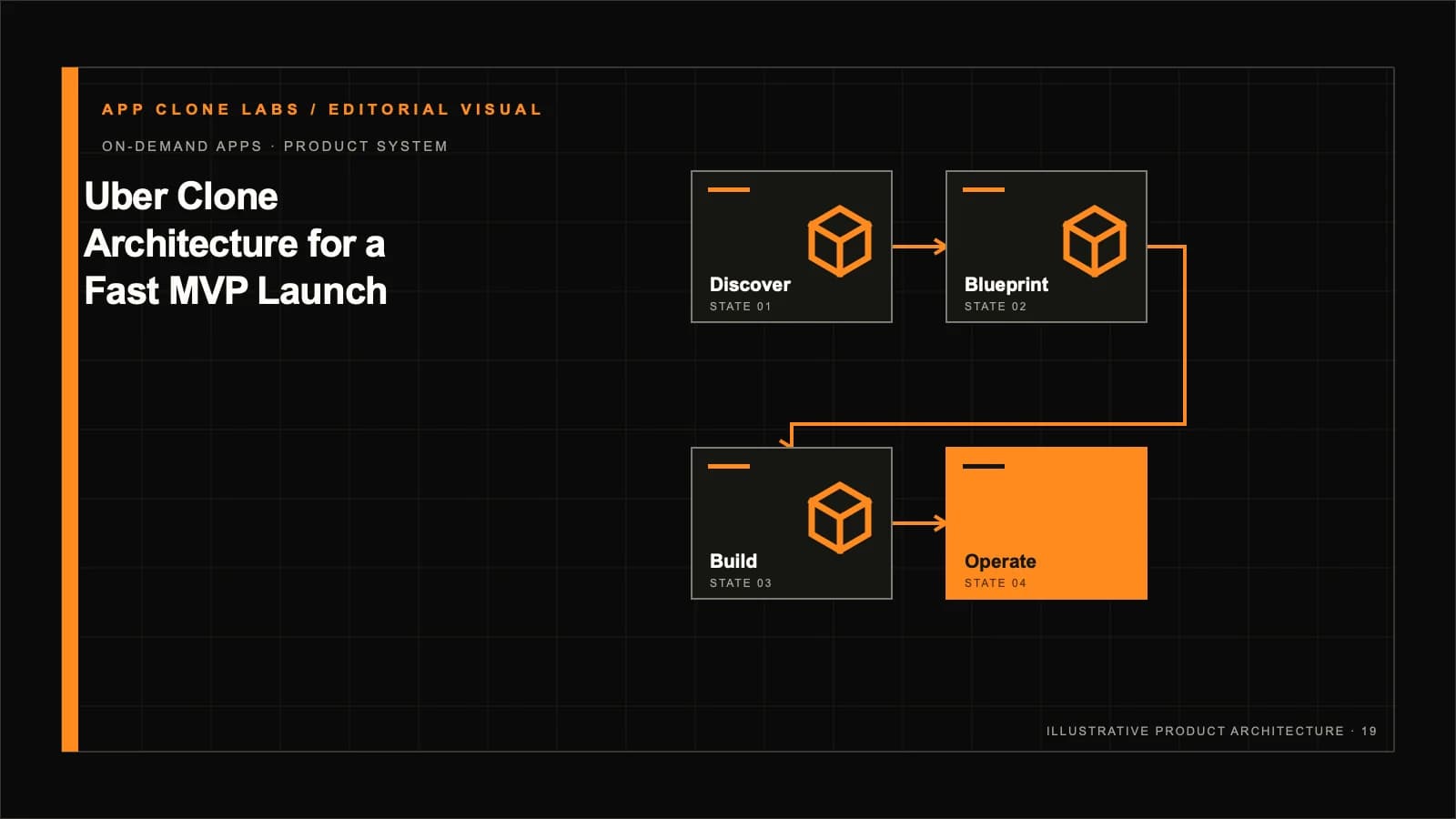
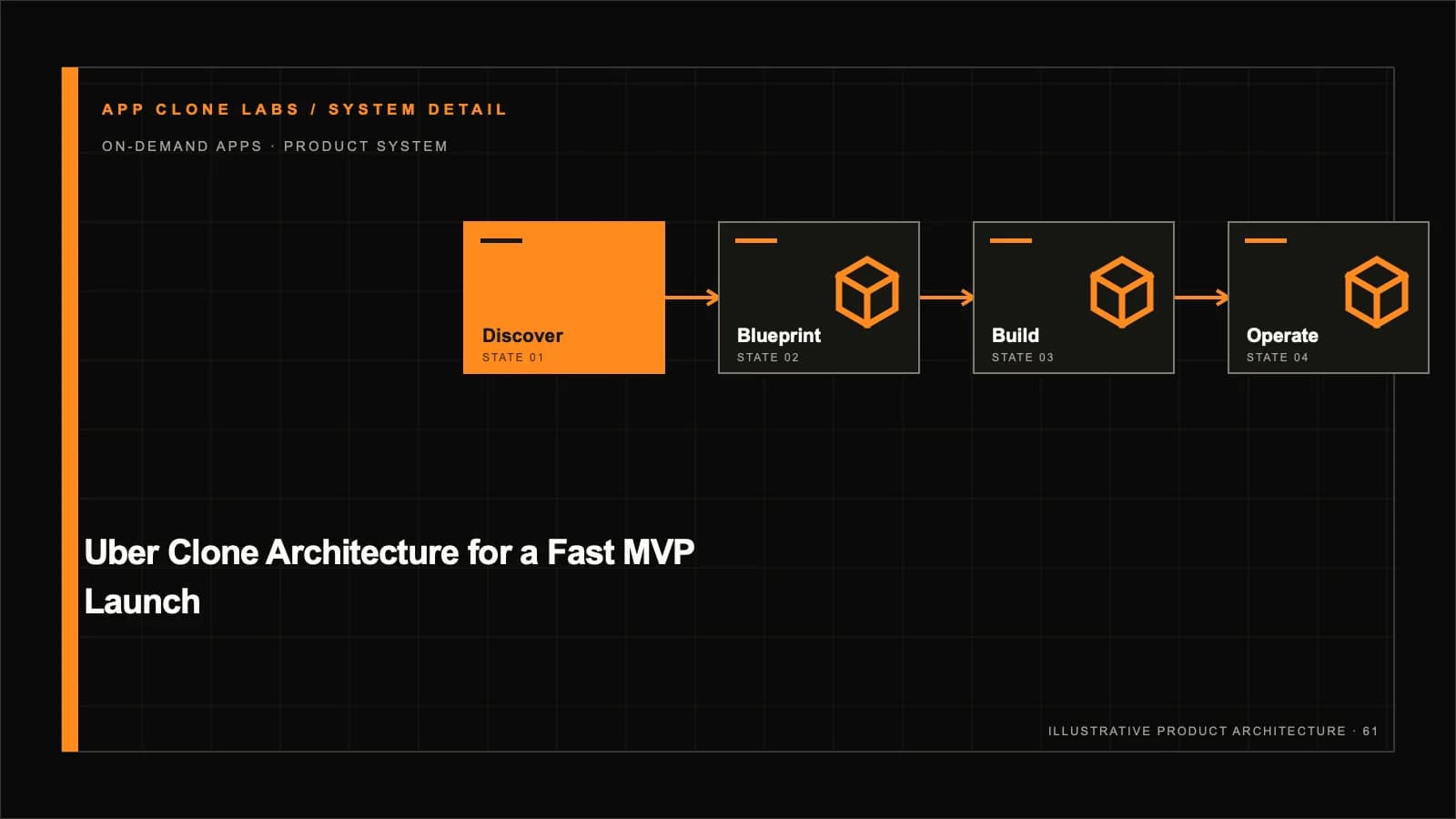
A fast ride-booking MVP does not need dozens of services. It does need one authoritative trip lifecycle, transactional assignment and enough evidence to recover when two phones disagree.
The architecture should optimize learning without making safety, payment or dispatch correctness temporary.
This guide keeps the runtime small while preserving boundaries that can grow from real demand.
Define the first service area
Define the first service area is a separate decision within a mobility marketplace coordinating riders, drivers, dispatch, location, payments and operators. It changes the customer promise, role authority, durable evidence and recovery path.
The failure mode is concrete: the team treats define the first service area as a feature label while lifecycle, permissions, consequences and ownership remain implicit. This is not solved by adding another screen or background job. The product has to define ownership, permitted transitions, and the evidence retained when the transition occurs.
For the first release, define the lifecycle, owner, allowed transitions, visible result and exception route for define the first service area before implementation. Write that decision as an enforceable server-side rule, not guidance that depends on a client, operator, or AI model remembering the intended boundary.
Implementation should include For define the first service area, retain stable identifiers, explicit states, server authorization, version checks, timestamps, reason codes, correlation IDs, audit history and a bounded recovery action. Keep the public response smaller than the internal record: users need a clear outcome and recovery path, while authorized operators need correlation IDs, policy versions, timestamps, and the before-and-after state.
Validate it with Test define the first service area through success, retry, stale state, concurrency, revoked authority, timeout, partial failure, correction and reconciliation. Test the ordinary path, then repeat under timeout, duplicate delivery, stale state, partial failure, revoked authority, and concurrent requests. A feature is not ready when only the demonstration succeeds.
- Owner: product owner
- Release evidence: versioned define the first service area decision and acceptance record
- Stop condition: define the first service area cannot be explained or recovered from durable evidence
Model rider driver and operator roles
Model rider driver and operator roles is a separate decision within a mobility marketplace coordinating riders, drivers, dispatch, location, payments and operators. It changes the customer promise, role authority, durable evidence and recovery path.
The failure mode is concrete: the team treats model rider driver and operator roles as a feature label while lifecycle, permissions, consequences and ownership remain implicit. This is not solved by adding another screen or background job. The product has to define ownership, permitted transitions, and the evidence retained when the transition occurs.
For the first release, define the lifecycle, owner, allowed transitions, visible result and exception route for model rider driver and operator roles before implementation. Write that decision as an enforceable server-side rule, not guidance that depends on a client, operator, or AI model remembering the intended boundary.
Implementation should include For model rider driver and operator roles, retain stable identifiers, explicit states, server authorization, version checks, timestamps, reason codes, correlation IDs, audit history and a bounded recovery action. Keep the public response smaller than the internal record: users need a clear outcome and recovery path, while authorized operators need correlation IDs, policy versions, timestamps, and the before-and-after state.
Validate it with Test model rider driver and operator roles through success, retry, stale state, concurrency, revoked authority, timeout, partial failure, correction and reconciliation. Test the ordinary path, then repeat under timeout, duplicate delivery, stale state, partial failure, revoked authority, and concurrent requests. A feature is not ready when only the demonstration succeeds.
- Owner: engineering owner
- Release evidence: versioned model rider driver and operator roles decision and acceptance record
- Stop condition: model rider driver and operator roles cannot be explained or recovered from durable evidence
Create the trip state machine
Create the trip state machine is a separate decision within a mobility marketplace coordinating riders, drivers, dispatch, location, payments and operators. It changes the customer promise, role authority, durable evidence and recovery path.
The failure mode is concrete: the team treats create the trip state machine as a feature label while lifecycle, permissions, consequences and ownership remain implicit. This is not solved by adding another screen or background job. The product has to define ownership, permitted transitions, and the evidence retained when the transition occurs.
For the first release, define the lifecycle, owner, allowed transitions, visible result and exception route for create the trip state machine before implementation. Write that decision as an enforceable server-side rule, not guidance that depends on a client, operator, or AI model remembering the intended boundary.
Implementation should include For create the trip state machine, retain stable identifiers, explicit states, server authorization, version checks, timestamps, reason codes, correlation IDs, audit history and a bounded recovery action. Keep the public response smaller than the internal record: users need a clear outcome and recovery path, while authorized operators need correlation IDs, policy versions, timestamps, and the before-and-after state.
Validate it with Test create the trip state machine through success, retry, stale state, concurrency, revoked authority, timeout, partial failure, correction and reconciliation. Test the ordinary path, then repeat under timeout, duplicate delivery, stale state, partial failure, revoked authority, and concurrent requests. A feature is not ready when only the demonstration succeeds.
- Owner: operations owner
- Release evidence: versioned create the trip state machine decision and acceptance record
- Stop condition: create the trip state machine cannot be explained or recovered from durable evidence
Build identity and sessions
Build identity and sessions is a separate decision within a mobility marketplace coordinating riders, drivers, dispatch, location, payments and operators. It changes the customer promise, role authority, durable evidence and recovery path.
The failure mode is concrete: the team treats build identity and sessions as a feature label while lifecycle, permissions, consequences and ownership remain implicit. This is not solved by adding another screen or background job. The product has to define ownership, permitted transitions, and the evidence retained when the transition occurs.
For the first release, define the lifecycle, owner, allowed transitions, visible result and exception route for build identity and sessions before implementation. Write that decision as an enforceable server-side rule, not guidance that depends on a client, operator, or AI model remembering the intended boundary.
Implementation should include For build identity and sessions, retain stable identifiers, explicit states, server authorization, version checks, timestamps, reason codes, correlation IDs, audit history and a bounded recovery action. Keep the public response smaller than the internal record: users need a clear outcome and recovery path, while authorized operators need correlation IDs, policy versions, timestamps, and the before-and-after state.
Validate it with Test build identity and sessions through success, retry, stale state, concurrency, revoked authority, timeout, partial failure, correction and reconciliation. Test the ordinary path, then repeat under timeout, duplicate delivery, stale state, partial failure, revoked authority, and concurrent requests. A feature is not ready when only the demonstration succeeds.
- Owner: product owner
- Release evidence: versioned build identity and sessions decision and acceptance record
- Stop condition: build identity and sessions cannot be explained or recovered from durable evidence
Checkpoint 4: reconcile the product promise with the recorded state. Support, finance, security, and delivery teams should be able to reach the same conclusion from the same identifiers without reconstructing events from chat messages or screenshots.
Register driver eligibility
Register driver eligibility is a separate decision within a mobility marketplace coordinating riders, drivers, dispatch, location, payments and operators. It changes the customer promise, role authority, durable evidence and recovery path.
The failure mode is concrete: the team treats register driver eligibility as a feature label while lifecycle, permissions, consequences and ownership remain implicit. This is not solved by adding another screen or background job. The product has to define ownership, permitted transitions, and the evidence retained when the transition occurs.
For the first release, define the lifecycle, owner, allowed transitions, visible result and exception route for register driver eligibility before implementation. Write that decision as an enforceable server-side rule, not guidance that depends on a client, operator, or AI model remembering the intended boundary.
Implementation should include For register driver eligibility, retain stable identifiers, explicit states, server authorization, version checks, timestamps, reason codes, correlation IDs, audit history and a bounded recovery action. Keep the public response smaller than the internal record: users need a clear outcome and recovery path, while authorized operators need correlation IDs, policy versions, timestamps, and the before-and-after state.
Validate it with Test register driver eligibility through success, retry, stale state, concurrency, revoked authority, timeout, partial failure, correction and reconciliation. Test the ordinary path, then repeat under timeout, duplicate delivery, stale state, partial failure, revoked authority, and concurrent requests. A feature is not ready when only the demonstration succeeds.
- Owner: engineering owner
- Release evidence: versioned register driver eligibility decision and acceptance record
- Stop condition: register driver eligibility cannot be explained or recovered from durable evidence
Generate fare quotes
Generate fare quotes is a separate decision within a mobility marketplace coordinating riders, drivers, dispatch, location, payments and operators. It changes the customer promise, role authority, durable evidence and recovery path.
The failure mode is concrete: the team treats generate fare quotes as a feature label while lifecycle, permissions, consequences and ownership remain implicit. This is not solved by adding another screen or background job. The product has to define ownership, permitted transitions, and the evidence retained when the transition occurs.
For the first release, define the lifecycle, owner, allowed transitions, visible result and exception route for generate fare quotes before implementation. Write that decision as an enforceable server-side rule, not guidance that depends on a client, operator, or AI model remembering the intended boundary.
Implementation should include For generate fare quotes, retain stable identifiers, explicit states, server authorization, version checks, timestamps, reason codes, correlation IDs, audit history and a bounded recovery action. Keep the public response smaller than the internal record: users need a clear outcome and recovery path, while authorized operators need correlation IDs, policy versions, timestamps, and the before-and-after state.
Validate it with Test generate fare quotes through success, retry, stale state, concurrency, revoked authority, timeout, partial failure, correction and reconciliation. Test the ordinary path, then repeat under timeout, duplicate delivery, stale state, partial failure, revoked authority, and concurrent requests. A feature is not ready when only the demonstration succeeds.
- Owner: operations owner
- Release evidence: versioned generate fare quotes decision and acceptance record
- Stop condition: generate fare quotes cannot be explained or recovered from durable evidence
Accept ride requests idempotently
Accept ride requests idempotently is a separate decision within a mobility marketplace coordinating riders, drivers, dispatch, location, payments and operators. It changes the customer promise, role authority, durable evidence and recovery path.
The failure mode is concrete: the team treats accept ride requests idempotently as a feature label while lifecycle, permissions, consequences and ownership remain implicit. This is not solved by adding another screen or background job. The product has to define ownership, permitted transitions, and the evidence retained when the transition occurs.
For the first release, define the lifecycle, owner, allowed transitions, visible result and exception route for accept ride requests idempotently before implementation. Write that decision as an enforceable server-side rule, not guidance that depends on a client, operator, or AI model remembering the intended boundary.
Implementation should include For accept ride requests idempotently, retain stable identifiers, explicit states, server authorization, version checks, timestamps, reason codes, correlation IDs, audit history and a bounded recovery action. Keep the public response smaller than the internal record: users need a clear outcome and recovery path, while authorized operators need correlation IDs, policy versions, timestamps, and the before-and-after state.
Validate it with Test accept ride requests idempotently through success, retry, stale state, concurrency, revoked authority, timeout, partial failure, correction and reconciliation. Test the ordinary path, then repeat under timeout, duplicate delivery, stale state, partial failure, revoked authority, and concurrent requests. A feature is not ready when only the demonstration succeeds.
- Owner: product owner
- Release evidence: versioned accept ride requests idempotently decision and acceptance record
- Stop condition: accept ride requests idempotently cannot be explained or recovered from durable evidence
Reserve driver assignments
Reserve driver assignments is a separate decision within a mobility marketplace coordinating riders, drivers, dispatch, location, payments and operators. It changes the customer promise, role authority, durable evidence and recovery path.
The failure mode is concrete: the team treats reserve driver assignments as a feature label while lifecycle, permissions, consequences and ownership remain implicit. This is not solved by adding another screen or background job. The product has to define ownership, permitted transitions, and the evidence retained when the transition occurs.
For the first release, define the lifecycle, owner, allowed transitions, visible result and exception route for reserve driver assignments before implementation. Write that decision as an enforceable server-side rule, not guidance that depends on a client, operator, or AI model remembering the intended boundary.
Implementation should include For reserve driver assignments, retain stable identifiers, explicit states, server authorization, version checks, timestamps, reason codes, correlation IDs, audit history and a bounded recovery action. Keep the public response smaller than the internal record: users need a clear outcome and recovery path, while authorized operators need correlation IDs, policy versions, timestamps, and the before-and-after state.
Validate it with Test reserve driver assignments through success, retry, stale state, concurrency, revoked authority, timeout, partial failure, correction and reconciliation. Test the ordinary path, then repeat under timeout, duplicate delivery, stale state, partial failure, revoked authority, and concurrent requests. A feature is not ready when only the demonstration succeeds.
- Owner: engineering owner
- Release evidence: versioned reserve driver assignments decision and acceptance record
- Stop condition: reserve driver assignments cannot be explained or recovered from durable evidence
Checkpoint 8: reconcile the product promise with the recorded state. Support, finance, security, and delivery teams should be able to reach the same conclusion from the same identifiers without reconstructing events from chat messages or screenshots.
Ingest location with freshness
Ingest location with freshness is a separate decision within a mobility marketplace coordinating riders, drivers, dispatch, location, payments and operators. It changes the customer promise, role authority, durable evidence and recovery path.
The failure mode is concrete: the team treats ingest location with freshness as a feature label while lifecycle, permissions, consequences and ownership remain implicit. This is not solved by adding another screen or background job. The product has to define ownership, permitted transitions, and the evidence retained when the transition occurs.
For the first release, define the lifecycle, owner, allowed transitions, visible result and exception route for ingest location with freshness before implementation. Write that decision as an enforceable server-side rule, not guidance that depends on a client, operator, or AI model remembering the intended boundary.
Implementation should include For ingest location with freshness, retain stable identifiers, explicit states, server authorization, version checks, timestamps, reason codes, correlation IDs, audit history and a bounded recovery action. Keep the public response smaller than the internal record: users need a clear outcome and recovery path, while authorized operators need correlation IDs, policy versions, timestamps, and the before-and-after state.
Validate it with Test ingest location with freshness through success, retry, stale state, concurrency, revoked authority, timeout, partial failure, correction and reconciliation. Test the ordinary path, then repeat under timeout, duplicate delivery, stale state, partial failure, revoked authority, and concurrent requests. A feature is not ready when only the demonstration succeeds.
- Owner: operations owner
- Release evidence: versioned ingest location with freshness decision and acceptance record
- Stop condition: ingest location with freshness cannot be explained or recovered from durable evidence
Coordinate realtime updates
Coordinate realtime updates is a separate decision within a mobility marketplace coordinating riders, drivers, dispatch, location, payments and operators. It changes the customer promise, role authority, durable evidence and recovery path.
The failure mode is concrete: the team treats coordinate realtime updates as a feature label while lifecycle, permissions, consequences and ownership remain implicit. This is not solved by adding another screen or background job. The product has to define ownership, permitted transitions, and the evidence retained when the transition occurs.
For the first release, define the lifecycle, owner, allowed transitions, visible result and exception route for coordinate realtime updates before implementation. Write that decision as an enforceable server-side rule, not guidance that depends on a client, operator, or AI model remembering the intended boundary.
Implementation should include For coordinate realtime updates, retain stable identifiers, explicit states, server authorization, version checks, timestamps, reason codes, correlation IDs, audit history and a bounded recovery action. Keep the public response smaller than the internal record: users need a clear outcome and recovery path, while authorized operators need correlation IDs, policy versions, timestamps, and the before-and-after state.
Validate it with Test coordinate realtime updates through success, retry, stale state, concurrency, revoked authority, timeout, partial failure, correction and reconciliation. Test the ordinary path, then repeat under timeout, duplicate delivery, stale state, partial failure, revoked authority, and concurrent requests. A feature is not ready when only the demonstration succeeds.
- Owner: product owner
- Release evidence: versioned coordinate realtime updates decision and acceptance record
- Stop condition: coordinate realtime updates cannot be explained or recovered from durable evidence
Authorize trip transitions
Authorize trip transitions is a separate decision within a mobility marketplace coordinating riders, drivers, dispatch, location, payments and operators. It changes the customer promise, role authority, durable evidence and recovery path.
The failure mode is concrete: the team treats authorize trip transitions as a feature label while lifecycle, permissions, consequences and ownership remain implicit. This is not solved by adding another screen or background job. The product has to define ownership, permitted transitions, and the evidence retained when the transition occurs.
For the first release, define the lifecycle, owner, allowed transitions, visible result and exception route for authorize trip transitions before implementation. Write that decision as an enforceable server-side rule, not guidance that depends on a client, operator, or AI model remembering the intended boundary.
Implementation should include For authorize trip transitions, retain stable identifiers, explicit states, server authorization, version checks, timestamps, reason codes, correlation IDs, audit history and a bounded recovery action. Keep the public response smaller than the internal record: users need a clear outcome and recovery path, while authorized operators need correlation IDs, policy versions, timestamps, and the before-and-after state.
Validate it with Test authorize trip transitions through success, retry, stale state, concurrency, revoked authority, timeout, partial failure, correction and reconciliation. Test the ordinary path, then repeat under timeout, duplicate delivery, stale state, partial failure, revoked authority, and concurrent requests. A feature is not ready when only the demonstration succeeds.
- Owner: engineering owner
- Release evidence: versioned authorize trip transitions decision and acceptance record
- Stop condition: authorize trip transitions cannot be explained or recovered from durable evidence
Process payments and earnings
Process payments and earnings is a separate decision within a mobility marketplace coordinating riders, drivers, dispatch, location, payments and operators. It changes the customer promise, role authority, durable evidence and recovery path.
The failure mode is concrete: the team treats process payments and earnings as a feature label while lifecycle, permissions, consequences and ownership remain implicit. This is not solved by adding another screen or background job. The product has to define ownership, permitted transitions, and the evidence retained when the transition occurs.
For the first release, define the lifecycle, owner, allowed transitions, visible result and exception route for process payments and earnings before implementation. Write that decision as an enforceable server-side rule, not guidance that depends on a client, operator, or AI model remembering the intended boundary.
Implementation should include For process payments and earnings, retain stable identifiers, explicit states, server authorization, version checks, timestamps, reason codes, correlation IDs, audit history and a bounded recovery action. Keep the public response smaller than the internal record: users need a clear outcome and recovery path, while authorized operators need correlation IDs, policy versions, timestamps, and the before-and-after state.
Validate it with Test process payments and earnings through success, retry, stale state, concurrency, revoked authority, timeout, partial failure, correction and reconciliation. Test the ordinary path, then repeat under timeout, duplicate delivery, stale state, partial failure, revoked authority, and concurrent requests. A feature is not ready when only the demonstration succeeds.
- Owner: operations owner
- Release evidence: versioned process payments and earnings decision and acceptance record
- Stop condition: process payments and earnings cannot be explained or recovered from durable evidence
Checkpoint 12: reconcile the product promise with the recorded state. Support, finance, security, and delivery teams should be able to reach the same conclusion from the same identifiers without reconstructing events from chat messages or screenshots.
Build safety escalation
Build safety escalation is a separate decision within a mobility marketplace coordinating riders, drivers, dispatch, location, payments and operators. It changes the customer promise, role authority, durable evidence and recovery path.
The failure mode is concrete: the team treats build safety escalation as a feature label while lifecycle, permissions, consequences and ownership remain implicit. This is not solved by adding another screen or background job. The product has to define ownership, permitted transitions, and the evidence retained when the transition occurs.
For the first release, define the lifecycle, owner, allowed transitions, visible result and exception route for build safety escalation before implementation. Write that decision as an enforceable server-side rule, not guidance that depends on a client, operator, or AI model remembering the intended boundary.
Implementation should include For build safety escalation, retain stable identifiers, explicit states, server authorization, version checks, timestamps, reason codes, correlation IDs, audit history and a bounded recovery action. Keep the public response smaller than the internal record: users need a clear outcome and recovery path, while authorized operators need correlation IDs, policy versions, timestamps, and the before-and-after state.
Validate it with Test build safety escalation through success, retry, stale state, concurrency, revoked authority, timeout, partial failure, correction and reconciliation. Test the ordinary path, then repeat under timeout, duplicate delivery, stale state, partial failure, revoked authority, and concurrent requests. A feature is not ready when only the demonstration succeeds.
- Owner: product owner
- Release evidence: versioned build safety escalation decision and acceptance record
- Stop condition: build safety escalation cannot be explained or recovered from durable evidence
Create dispatch recovery tools
Create dispatch recovery tools is a separate decision within a mobility marketplace coordinating riders, drivers, dispatch, location, payments and operators. It changes the customer promise, role authority, durable evidence and recovery path.
The failure mode is concrete: the team treats create dispatch recovery tools as a feature label while lifecycle, permissions, consequences and ownership remain implicit. This is not solved by adding another screen or background job. The product has to define ownership, permitted transitions, and the evidence retained when the transition occurs.
For the first release, define the lifecycle, owner, allowed transitions, visible result and exception route for create dispatch recovery tools before implementation. Write that decision as an enforceable server-side rule, not guidance that depends on a client, operator, or AI model remembering the intended boundary.
Implementation should include For create dispatch recovery tools, retain stable identifiers, explicit states, server authorization, version checks, timestamps, reason codes, correlation IDs, audit history and a bounded recovery action. Keep the public response smaller than the internal record: users need a clear outcome and recovery path, while authorized operators need correlation IDs, policy versions, timestamps, and the before-and-after state.
Validate it with Test create dispatch recovery tools through success, retry, stale state, concurrency, revoked authority, timeout, partial failure, correction and reconciliation. Test the ordinary path, then repeat under timeout, duplicate delivery, stale state, partial failure, revoked authority, and concurrent requests. A feature is not ready when only the demonstration succeeds.
- Owner: engineering owner
- Release evidence: versioned create dispatch recovery tools decision and acceptance record
- Stop condition: create dispatch recovery tools cannot be explained or recovered from durable evidence
Instrument and scale measured limits
Instrument and scale measured limits is a separate decision within a mobility marketplace coordinating riders, drivers, dispatch, location, payments and operators. It changes the customer promise, role authority, durable evidence and recovery path.
The failure mode is concrete: the team treats instrument and scale measured limits as a feature label while lifecycle, permissions, consequences and ownership remain implicit. This is not solved by adding another screen or background job. The product has to define ownership, permitted transitions, and the evidence retained when the transition occurs.
For the first release, define the lifecycle, owner, allowed transitions, visible result and exception route for instrument and scale measured limits before implementation. Write that decision as an enforceable server-side rule, not guidance that depends on a client, operator, or AI model remembering the intended boundary.
Implementation should include For instrument and scale measured limits, retain stable identifiers, explicit states, server authorization, version checks, timestamps, reason codes, correlation IDs, audit history and a bounded recovery action. Keep the public response smaller than the internal record: users need a clear outcome and recovery path, while authorized operators need correlation IDs, policy versions, timestamps, and the before-and-after state.
Validate it with Test instrument and scale measured limits through success, retry, stale state, concurrency, revoked authority, timeout, partial failure, correction and reconciliation. Test the ordinary path, then repeat under timeout, duplicate delivery, stale state, partial failure, revoked authority, and concurrent requests. A feature is not ready when only the demonstration succeeds.
- Owner: operations owner
- Release evidence: versioned instrument and scale measured limits decision and acceptance record
- Stop condition: instrument and scale measured limits cannot be explained or recovered from durable evidence
Implementation references
Use OWASP API Security Top 10 and record the version applied during review.
Validate against OWASP Authorization Cheat Sheet and record the version applied during review.
Review NIST Cybersecurity Framework 2.0 and record the version applied during review.
Compare with W3C WCAG 2.2 and record the version applied during review.
Continue with Uber Clone when turning this guide into delivery scope.
Frequently asked questions
What should teams decide first for a focused ride-booking MVP architecture?
Define the user outcome, operating owner and cost of an incorrect result.
What belongs in the first release?
One complete journey plus the controls required to operate and recover it.
How should permissions be handled?
Authorize every consequential action on the server using current role and scope.
What evidence should be retained?
Stable identifiers, actors, timestamps, versions, reasons and before-and-after state.
What should be tested?
Success, duplicates, stale state, concurrency, dependency failure and operator recovery.
How are external integrations governed?
Use explicit contracts, idempotency, timeouts, observability and fallback.
Which metrics matter?
Customer outcome, harmful failure, recovery time, operational effort and unit cost.
When should scope expand?
Only after launch evidence identifies a real constraint or repeatable opportunity.
Turn the plan into release evidence
A credible release connects its promise to durable state, scoped authority and an owned recovery route. Every responsible team should reach the same conclusion from the same identifiers.
Keep the first scope narrow enough to rehearse. Expand only after data, permissions, financial consequences and remedies survive retries, outages and human mistakes.
- 01
- 02
- 03
- 04
- 05
- 06
Reviewed by the App Clone Labs product strategy team
This guide is written for founders and operators planning clone-inspired platforms, SaaS products, marketplaces, and mobile apps. It is reviewed against App Clone Labs delivery patterns, product scoping standards, and current implementation realities before being published.
Review the editorial team structureRelated product paths
Continue with the services, solutions, guides, and articles that connect this topic to a real software build.
Services, solutions, and guides
Read next