Fintech and property

Property Investment Platform — Custom-Built for Your Market

Property offering, investor, and distribution platform. Planned for property sponsors, investment firms, and investor communities with role-specific workflows, operator controls, integrations, and a handover boundary defined for the selected market.

Reviewed · App Clone Labs Editorial Team

Custom workflows

Brand-safe product strategy

Admin and operations tooling

Reference walkthrough by arrangement

Solution reference register

01 / Reference and IP

This page references third-party product names only to describe familiar product models and planning references. App Clone Labs is not affiliated with or endorsed by those brands. Build decisions require independent legal, regulatory, and operational review for your market.

02 / Artifact status

Boards, diagrams, screens and workflow descriptions on this page are illustrative planning artifacts, not evidence of a deployed client product.

03 / Regulatory caveat

Securities, property, AML, tax, and investor-protection review required · No return or liquidity guarantee is implied · Offering and investor records require durable auditability

04 / Rights and handover

Source access, licensing, repositories, environments, documentation, acceptance and handover are defined by the signed contract and accepted scope.

Scope

Operating model defined

Roles, workflows, dependencies, exclusions, and assumptions are made reviewable.

Evidence: illustrative

System

Applications connected

Experience, operations, services, data, integrations, and release controls are planned together.

Evidence: illustrative

Handover

Rights stated in writing

Access, assignment, licensing, dependencies, documentation, and support follow the signed agreement.

Evidence: illustrative

Artifact register

Product screens and planning references.

Reference screens illustrate workflows, not a contracted feature list. Sample prices, data, and responses are demonstration content; confirm the current scope during a walkthrough.

Property Investment Platform connected product workflow planning visual
Connected customer, operations, and data workflowEvidence status not suppliedOpen full-size reference
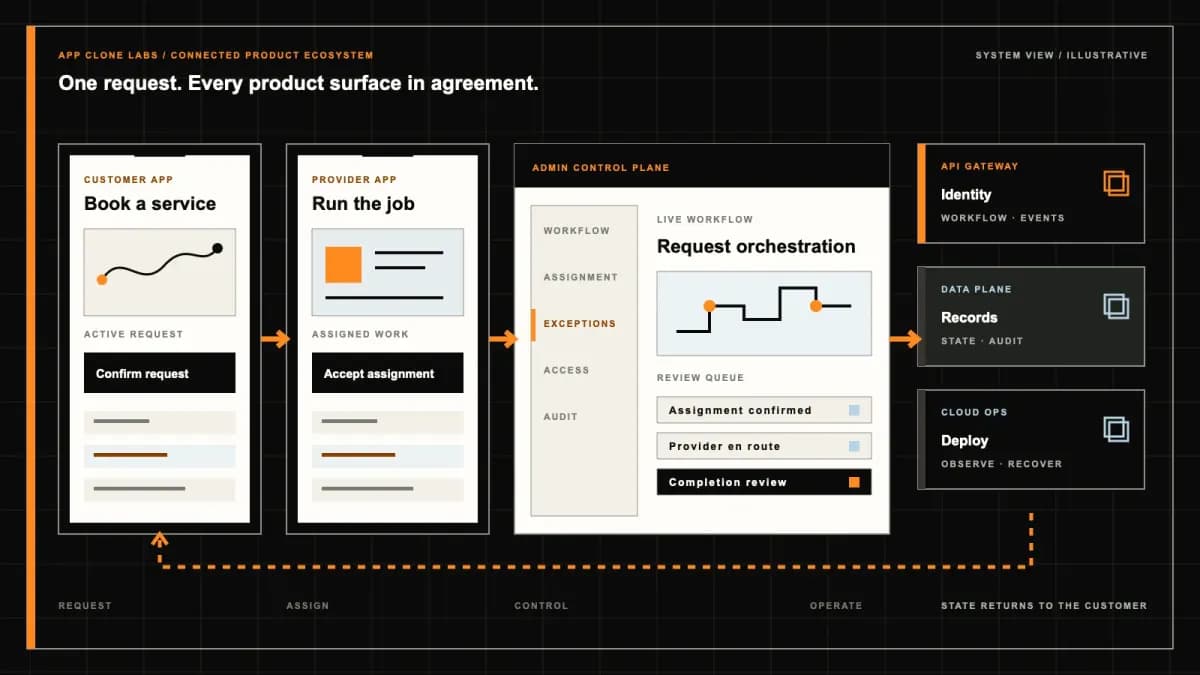
Property Investment Platform product engineering ecosystem visual
Product engineering ecosystem and handover boundaryEvidence status not suppliedOpen full-size reference

A property investment portal needs an offering lifecycle, not just a portfolio graph

A buyer searching for a Fundrise-style product may want an account-based experience for a pooled property strategy rather than a separate purchase of units in each listed building. This reference page scopes that original fund-account model: reviewed subscriptions, underlying asset reporting, investor-level statements, and sponsor communications. It does not assert Fundrise’s current features, reproduce its technology, or offer an investment. The proposed system begins with your reviewed vehicle and accountable administration. A portfolio graph is useful only when its source dates, fees, valuation method, and relationship to the investor’s fund interest can be explained.

Choose the investor’s object of subscription

Here the intended subscription object is an interest in a reviewed pooled vehicle or strategy, not direct allocation of the remaining units in a particular property. Establish the vehicle, permitted audience, subscription conditions, authoritative interest register, and investor reporting obligations with qualified specialists. Fund intake may follow approved windows or another defined acceptance process; it should not inherit a crowdfunding campaign’s target-and-closing workflow automatically. Map the fund to underlying assets separately from investor interests. A property occupancy figure describes an asset, while an account statement describes the investor’s position under the approved methodology. Neither should be substituted for the other.

Compare the white-label fractional real estate platform when the core requirement is a branded asset-level interest register. The pooled portal instead needs fund subscriptions and account-level reporting. For sponsor campaigns that seek commitments toward an offering target, the crowdfunding model is a separate discovery path, not an interchangeable account template.

Prepare the sponsor workspace around the vehicle and its assets

Keep the fund package, underlying property records, and investor accounts as distinct connected objects. The package needs an accountable owner, approval state, document versions, audience, and intake conditions. Sponsor staff can prepare asset updates, operating assumptions, and supporting records without necessarily approving financial disclosures or activating subscriptions. Acquiring or disposing of an underlying asset should not look like an investor buying or selling that property directly. Closing a fund to new subscriptions should preserve existing accounts, statements, and unresolved requests. Administrative continuity matters beyond the period when the strategy is being marketed.

Version the information investors actually received

A revised document uploaded today must not replace evidence of what an investor reviewed last month. Store the accepted version and timestamp alongside the subscription journey. Decide how corrected statements, changed timelines, and material offering updates reach affected investors, and retain delivery evidence where appropriate. Publication controls should cover attachments and exports, not only page text. Internal sponsor commentary may need a different audience from approved investor communications. Legal reviewers determine the necessary disclosure and notification requirements; the software makes those decisions executable and auditable rather than deciding their content independently.

The SEC’s Regulation Crowdfunding issuer guidance describes a specific US exemption with eligibility, intermediary, disclosure, and other conditions. It should not be assumed to fit every property or pooled vehicle. Determine the applicable route with qualified counsel before designing live subscriptions; a platform interface does not supply registration, an exemption, or permission to solicit investors.

Make subscription status precise enough for support

Interested, submitted, under review, awaiting funds, accepted, rejected, and withdrawn mean different things. Define allowed transitions and responsible actors for the chosen offering. An investor should know whether a request is merely recorded or has become effective under the approved terms. A bank transfer with an unmatched reference belongs in reconciliation, not automatically in an accepted account. A signing completion should not bypass outstanding eligibility review. If an opportunity reaches a limit, pauses, or changes before acceptance, preserve the request and its resolution so support can explain the outcome without relying on screenshots.

Reconcile subscriptions against provider records

Funding events can arrive late, be duplicated, or refer to a request that has changed. Keep provider event identifiers, amounts, currency, account mapping, and reviewed resolution separate from the investor-facing status. A retry must not generate a second subscription or payment instruction. Define the process for rejected funds, unmatched deposits, and failed refunds with the responsible financial operator. Never assume a standard ecommerce payment integration accepts investment activity. Provider contracts, intermediary arrangements, access rights, and settlement evidence must be confirmed for the actual business rather than inferred from a familiar payment logo.

Give reporting inputs their own provenance

Fund reporting combines underlying asset inputs and fund-level expenses before applying the approved methodology to investor accounts. Do not simply add property card percentages to create an investor return. Establish valuation dates, fund-interest balances, approved fees, period boundaries, and distribution records. Label estimates separately from realised outcomes and show cash distributed independently from unrealised changes. The operator approves methodology and corrections. A dashboard must not combine mismatched periods or present an old valuation as current. Preserve approved account statements and their inputs, so administration can explain changes without treating a new chart calculation as authority to rewrite an earlier report.

The PostgreSQL concurrency-control reference supports engineering decisions about simultaneous changes to shared records. Subscription acceptance and report publication still require application-level constraints, review rules, and reproducible tests. Database consistency is not evidence that valuations, legal disclosures, or sponsor-supplied figures are accurate.

Define a bounded first release and its difficult cases

Start with one approved offering model, a limited sponsor group, a reviewed subscription journey, and a statement format the operations team can reconcile. Test a changed document, duplicate funding notification, unmatched deposit, rejected request, missing reporting input, and corrected statement. Those cases are more informative than a demonstration containing only successful subscriptions. Keep secondary trading, automatic reinvestment, recommendation engines, and additional jurisdictions outside the initial scope unless their operating rules and permissions are defined. Each introduces responsibilities that cannot be settled by adding a button to an otherwise complete dashboard.

For a catalogue that centres on particular properties and their individual cashflows, review the fractional property investment app. It can help clarify whether you need property-specific allocation views or offering-level sponsor and portfolio administration. Both require original product design and a reviewed financial operating model.

Ask for evidence that the portal can be operated

Supply representative offering documents, sponsor reporting files, provider arrangements, a proposed investor statement, and examples of unresolved subscriptions. A useful walkthrough follows these records from preparation through approval and publication, then shows a failure and correction. Reference screens are illustrative and do not establish authenticated demo access, live funds handling, or an approved financial service. The proposal should specify responsibilities for content accuracy, financial decisions, hosting, backups, support, and handover. Source-code rights depend on the agreement and third-party terms. Neither development work nor a branded portfolio view guarantees investment performance, liquidity, permission, or commercial success.
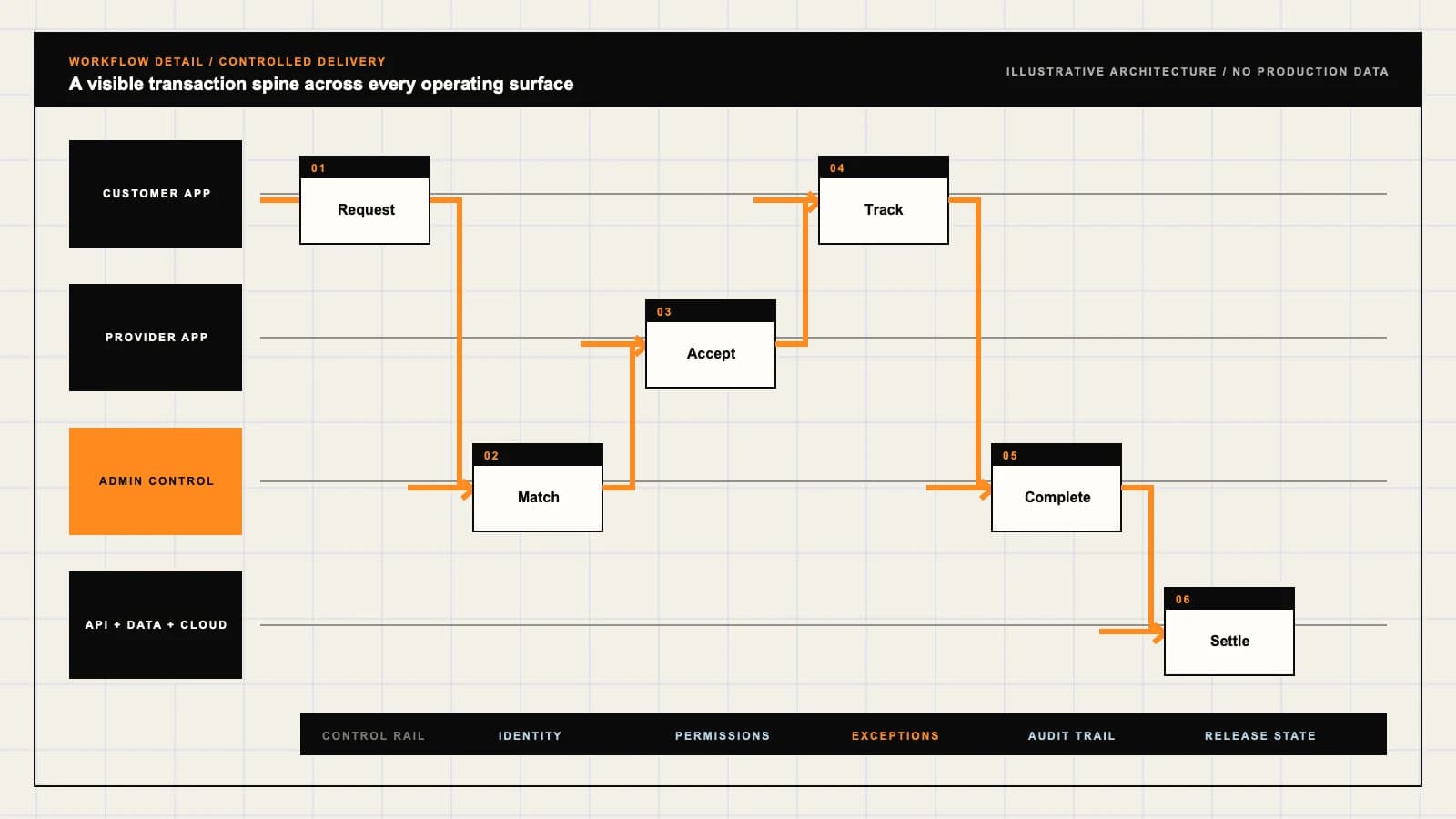
Product flow

Role-workflow flow diagram.

A visual map of how each role interacts with each workflow stage, with operator controls and integration boundaries.

Deployable Product Architecture

Property Investment Platform

APPROVE THE POOLE…RECORD A FUND INT…EXPLAIN ACCOUNT O…Understand the po…Maintain the stra…Review subscripti…INTEGRATIONS: Approved subscription and intermediary records, banking reconciliation, ide…OPERATOR CONTROLS: Documented investor communication · No silent acceptance of pending funds ·…
Illustrative validation artifact — role-workflow flow diagram; final surfaces, boundaries, and integration topology are confirmed during discovery.

User roles

Property Investment Platform roles and workflows.

Clone-inspired platforms usually need several coordinated interfaces, not just a customer app.

Investor

01

Understand the pooled account and reports

Review approved fund terms, account eligibility, subscription status, strategy exposure, and dated investor-level statements.

Sponsor team

02

Maintain the strategy and asset lifecycle

Prepare approved fund disclosures, underlying asset updates, allocation inputs, and period reporting records.

Investor administration

03

Review subscriptions and communications

Approve documentary changes, investigate reconciliation exceptions, maintain access boundaries, and publish approved reports.

Workflow

Property Investment Platform workflow stages.

Each workflow stage is mapped to a role, screen, API, notification, admin control, and measurable launch outcome.

Prepare

01

Approve the pooled strategy package

Version fund terms, risk information, sponsor records, subscription windows, and audience restrictions before intake is enabled.

Subscribe

02

Record a fund interest rather than property units

Track account review, documents, pending funding, acceptance into the reviewed vehicle, and rejected or withdrawn requests.

Report

03

Explain account outcomes and underlying exposure

Keep fund-level assets and expenses separate from each investor’s interest, distributions, and dated statement history.

Deployable Product Architecture

Workflow / system register

Revision EPlanning surface

Product delivery loop

Property Investment Platform workflow stages.

A focused release proves one complete workflow

Product delivery loop: Property Investment Platform workflow stages.A focused release proves one complete workflow. Scope the customer action and the operator response as one system.
01

Approve the pooled strategy package

02

Record a fund interest rather than property units

03

Explain account outcomes and underlying exposure

Control note

Scope the customer action and the operator response as one system.

Illustrative architecture register; validate against the accepted scope.

Operator controls

Property Investment Platform admin and operator controls.

The control center is scoped as a first-class product surface, not an afterthought.

Offering changes

01

Documented investor communication

Preserve the version accepted by each investor and route material corrections through a reviewed notification process.

Subscription review

02

No silent acceptance of pending funds

Separate investor requests, funding records, intermediary confirmations, and approval with a visible exception queue.

Reporting provenance

03

Dated inputs and controlled publication

Show who supplied valuations, performance periods, expense adjustments, and report approvals without rewriting earlier statements.

Monetization

Property Investment Platform monetization models.

We model monetization early so payments, admin controls, and reporting support the business.

Disclosed offering-service charges

Represent approved sponsor and administration charges separately from investment performance.

Build and support responsibilities

Agree the portal scope, reporting adapters, maintenance, provider dependencies, and delivery rights in the contract.

Optional reporting workspaces

Add sponsor communications and partner reporting without making commercial fees a claim about investor outcomes.

Integrations

Property Investment Platform integration surface.

External systems that determine launch readiness, data flow, and operational continuity.

Integration

01

Integration 1

Approved subscription and intermediary records, banking reconciliation, identity review, and signing evidence

Integration

02

Integration 2

Sponsor accounting systems, property reports, document archives, valuation inputs, and statement exports

Integration

03

Integration 3

Scoped investor communications, delivery logs, consent records, and approved analytics

Scope drivers

Property Investment Platform scope drivers.

The variables that most influence build effort, cost, and launch readiness.

Fund structure

01

Pooled strategy and account interests

Define the reviewed vehicle, subscription windows, authoritative interest register, and treatment of underlying assets before designing reports.

Sponsor lifecycle

02

Publication through reporting and closure

Confirm who approves terms, supplies asset updates, reviews reports, and handles withdrawn or changed opportunities.

Reporting

03

Reliable inputs before dashboard summaries

Define valuation sources, period boundaries, fee treatment, correction policy, and approval responsibility.

Deployable Product Architecture

Scope drivers / system register

Revision BPlanning surface

Product delivery loop

Property Investment Platform scope drivers.

A focused release proves one complete workflow

Product delivery loop: Property Investment Platform scope drivers.A focused release proves one complete workflow. Scope the customer action and the operator response as one system.
01

Pooled strategy and account interests

02

Publication through reporting and closure

03

Reliable inputs before dashboard summaries

Control note

Scope the customer action and the operator response as one system.

Illustrative architecture register; validate against the accepted scope.

V1 scope

Property Investment Platform V1 foundation.

Launch the smallest complete operating loop first, then scale the product with confidence.

Offering library

01

Controlled investor-facing disclosure

Start with one approved operating structure, dated documents, audience access, and an accountable sponsor workspace.

Subscriptions

02

Reviewable commitments and funding

Include acceptance conditions, unresolved payments, withdrawals where permitted, and reconciliation evidence.

Statements

03

Understandable periodic reporting

Publish approved reports with source dates, meaningful status explanations, and access to historic versions.

Later phases

Property Investment Platform post-launch expansion.

Capabilities that should usually wait until real usage proves the core loop.

Portfolio breadth

01

Additional sponsors and strategies

Add new offerings through reviewed data mappings and access boundaries rather than copying existing subscription assumptions.

Reporting depth

02

Advanced analytics after provenance

Introduce comparisons and scenario views only with clearly stated inputs and no implied future-performance guarantee.

Exit administration

03

Separate approved request procedures

Support redemption or transfer requests only where governing terms permit them, preserving restrictions and pending outcomes.

Deployable Product Architecture

Later phases / system register

Revision APlanning surface

Product delivery loop

Property Investment Platform post-launch expansion.

A focused release proves one complete workflow

Product delivery loop: Property Investment Platform post-launch expansion.A focused release proves one complete workflow. Scope the customer action and the operator response as one system.
01

Additional sponsors and strategies

02

Advanced analytics after provenance

03

Separate approved request procedures

Control note

Scope the customer action and the operator response as one system.

Illustrative architecture register; validate against the accepted scope.

Regulatory review

Property Investment Platform regulatory and compliance flags.

Each flag must be reviewed by qualified counsel for your target market before build or launch.

Flag 1

Securities, property, AML, tax, and investor-protection review required

Flag 2

No return or liquidity guarantee is implied

Flag 3

Offering and investor records require durable auditability

Reference walkthrough

Request a Property Investment Platform reference walkthrough.

Ask us to confirm which reference surfaces are currently available for this product model. Rather than publishing shared demo credentials, we schedule a private guided walkthrough for qualified buyers.

Reference surface

01

Investor: Understand the pooled account and reports

Request a role-specific demonstration and confirm which capabilities are currently available. Review the proposed responsibility: Review approved fund terms, account eligibility, subscription status, strategy exposure, and dated investor-level statements.

Reference surface

02

Sponsor team: Maintain the strategy and asset lifecycle

Request a role-specific demonstration and confirm which capabilities are currently available. Review the proposed responsibility: Prepare approved fund disclosures, underlying asset updates, allocation inputs, and period reporting records.

Reference surface

03

Investor administration: Review subscriptions and communications

Request a role-specific demonstration and confirm which capabilities are currently available. Review the proposed responsibility: Approve documentary changes, investigate reconciliation exceptions, maintain access boundaries, and publish approved reports.

Next step

04

Book a walkthrough

Request a live, private walkthrough of the reference implementation. We will confirm scope and discuss configured deployment versus custom build for your market.

Open register

Deployable Product Architecture

Reference walkthrough / system register

Revision BPlanning surface

Product delivery loop

Request a Property Investment Platform reference walkthrough.

A focused release proves one complete workflow

Product delivery loop: Request a Property Investment Platform reference walkthrough.A focused release proves one complete workflow. Scope the customer action and the operator response as one system.
01

Investor: Understand the pooled account and reports

02

Sponsor team: Maintain the strategy and asset lifecycle

03

Investor administration: Review subscriptions and communications

04

Book a walkthrough

Control note

Scope the customer action and the operator response as one system.

Illustrative architecture register; validate against the accepted scope.

Process

A traceable path from decision to acceptance.

  1. 01

    Model teardown

    We map the reference business model, user roles, monetization path, regulatory needs, and launch constraints.

    Artifact: Product teardown, risk map, role matrix

  2. 02

    Market-fit blueprint

    We reshape the model around your market, operations, pricing, workflows, and first release priorities.

    Artifact: Feature scope, flows, technical plan

  3. 03

    Design and build

    Product, design, engineering, QA, and cloud delivery move in weekly demo cycles with visible progress.

    Artifact: Working releases, QA notes, sprint demos

  4. 04

    Launch and operate

    We support production release, monitoring, handoff, roadmap decisions, and post-launch improvement.

    Artifact: Launch checklist, docs, growth backlog

FAQ

Questions to resolve before the build.

01Are you reproducing Fundrise’s product or source code?

No. The name identifies a reference search intent. The proposed product uses original design and implementation around the operator’s approved offering model, not another company’s proprietary code, protected branding, or claimed internal workflows.

02Is this for pooled portfolios or individual properties?

This proposed reference centres on a reviewed pooled vehicle or strategy with fund interests and account-level reporting. Individual property-unit allocation and crowdfunding target campaigns are separate models, not assumed features of the same subscription record.

03Can sponsors prepare offerings without publishing them?

A draft and review workspace can be scoped with separate publication authority. Preserve document versions, approvals, and the audience for each communication.

04What happens when funding cannot be matched?

Keep the event in a reconciliation queue with provider evidence and a responsible reviewer. Do not automatically mark the subscription accepted or issue another collection request.

05Can an investor see historical statement versions?

This should be specified with the retention and correction policy. Approved statements need dated inputs and a reconstruction trail rather than silent replacement by a new dashboard calculation.

06Does this page recommend a securities exemption?

No. The SEC source is a qualified US reference, not a recommendation or assertion that a particular offering is eligible. The operator’s advisers must establish the applicable framework.

07Are redemption and instant withdrawals standard features?

No. Any redemption or transfer process depends on governing terms, approvals, restrictions, and scope. A request interface cannot promise available liquidity.

08What does a useful demo need to show?

Confirm availability separately, then request sponsor preparation, document versioning, subscription review, reconciliation exceptions, statement publication, permissions, and recovery using test records.

Primary sources

References behind this page

Dated official documentation, standards, and research that support the factual claims on this page.

  1. 01
  2. 02

Citation readiness

How to interpret this page

Published by App Clone Labs Editorial Team · Updated

Commercial claims
Scope, cost, and timeline claims are planning guidance and require validation in a current proposal.
Evidence status
Diagrams, boards, examples, and estimates are illustrative planning artifacts unless explicitly identified with a source and measured evidence status.