White-label platforms

White-Label Fractional Real Estate Platform — Custom-Built for Your Market

Branded fractional property ownership and portfolio platform. Planned for property operators, investment firms, and real-estate communities with role-specific workflows, operator controls, integrations, and a handover boundary defined for the selected market.

Reviewed · App Clone Labs Editorial Team

Custom workflows

Brand-safe product strategy

Admin and operations tooling

Reference walkthrough by arrangement

Solution reference register

01 / Reference and IP

This page references third-party product names only to describe familiar product models and planning references. App Clone Labs is not affiliated with or endorsed by those brands. Build decisions require independent legal, regulatory, and operational review for your market.

02 / Artifact status

Boards, diagrams, screens and workflow descriptions on this page are illustrative planning artifacts, not evidence of a deployed client product.

03 / Regulatory caveat

Securities, property, tax, AML, and investor-protection review required · No yield, liquidity, or regulatory approval is implied · Ownership and distribution records need immutable auditability

04 / Rights and handover

Source access, licensing, repositories, environments, documentation, acceptance and handover are defined by the signed contract and accepted scope.

Scope

Operating model defined

Roles, workflows, dependencies, exclusions, and assumptions are made reviewable.

Evidence: illustrative

System

Applications connected

Experience, operations, services, data, integrations, and release controls are planned together.

Evidence: illustrative

Handover

Rights stated in writing

Access, assignment, licensing, dependencies, documentation, and support follow the signed agreement.

Evidence: illustrative

Artifact register

Product screens and planning references.

Reference screens illustrate workflows, not a contracted feature list. Sample prices, data, and responses are demonstration content; confirm the current scope during a walkthrough.

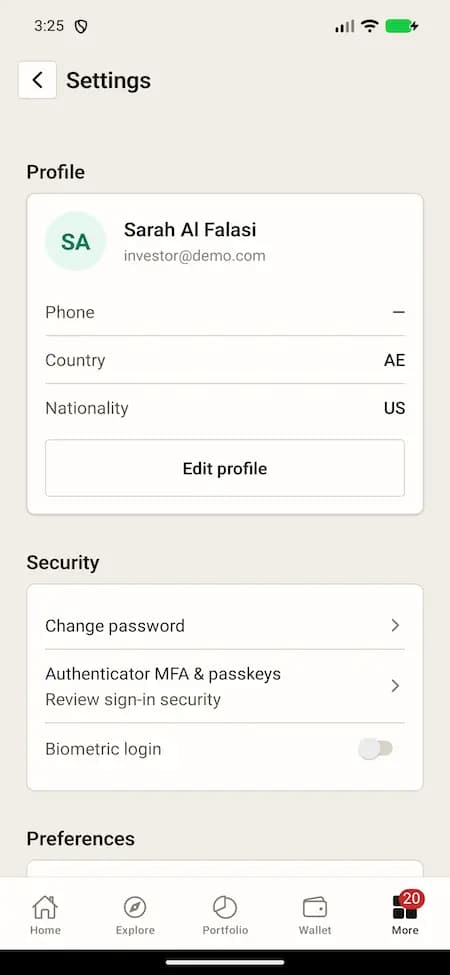
Shared property-platform demo preferences with profile editing, MFA, passkey, and biometric entry points
Shared property-platform reference also used in the crowdfunding brief. It does not establish ownership-unit records, transfer rights, returns, liquidity, or audited security implementation.Evidence status not suppliedOpen full-size reference
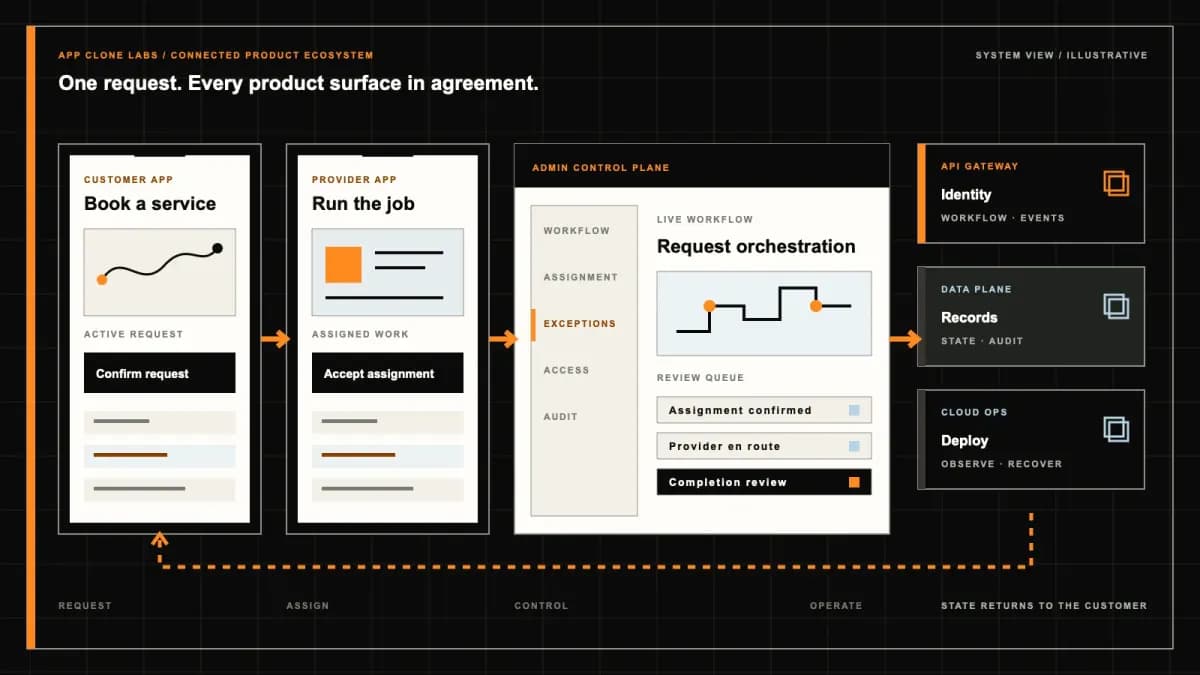
White-Label Fractional Real Estate Platform connected product workflow planning visual
Connected customer, operations, and data workflowEvidence status not suppliedOpen full-size reference
White-Label Fractional Real Estate Platform product engineering ecosystem visual
Product engineering ecosystem and handover boundaryEvidence status not suppliedOpen full-size reference

Build the ownership operating system before the investment screen

A white-label fractional real estate platform is a proposed branded system for administering defined property interests, investor records, and asset-related cashflows. The difficult part is not making a property card attractive. It is explaining what an investor holds, who maintains the authoritative record, how an allocation becomes effective, and what happens when a payment or document is wrong. App Clone Labs can translate an operator-approved model into product workflows and technical controls. This page is a planning reference, not an investment offering, licensed financial service, or assertion that a pictured property is available.

Decide what the fraction represents

Start with the legal and operating documents, not a percentage slider. A fraction might represent an interest in a vehicle, contractual economic rights, or another reviewed structure; the application must not imply direct registered property title unless that is actually the approved arrangement. Identify the issuer, asset holder, property manager, register owner, and investor communication responsibilities. Define units, precision, issue conditions, voting or consent rights where applicable, and restrictions. The engineering specification should preserve these distinctions so a customer-facing balance cannot silently become a legal claim the business never authorised.

For an offering-led model with sponsors and commitment rounds, compare the white-label real estate crowdfunding platform. Its discovery starts with offering administration rather than assuming every property has a direct fractional ownership register. Choosing between them is a business and legal modelling decision, not merely a choice of theme.

Separate the operator brand from the underlying records

White-label deployment requires more than replacing a logo. Decide whether one operator has several brands or independent operators share a software service. Document which property content, investor identities, eligibility results, documents, fee schedules, and statements belong to each boundary. Test isolation in file downloads, search indexes, exports, support impersonation, queues, and backups as well as the main dashboard. Shared infrastructure may be appropriate, but a shared support account must not give unrestricted access to another operator’s investors. A partner portal needs a clearly narrower authority than the platform controller.

Make allocation an explicit, recoverable transition

A reservation, a funding instruction, cleared money, and an issued interest are different records. Establish an expiry rule for reservations, what constitutes funding confirmation, and who approves issuance. Two investors attempting to reserve the final units should not both receive confirmed allocations. A failed payment should not leave permanent ownership, while a delayed confirmation should enter a review queue rather than triggering an automatic second collection. Preserve the offering terms and document versions accepted at the relevant moment. An allocation statement should link back to the actual approved transition, not just the current screen balance.

The PostgreSQL concurrency-control documentation describes transaction isolation and locking mechanisms relevant to protecting shared records. The project must still choose and test its own allocation rules, retries, and constraints. A database feature does not establish legal ownership, regulatory permission, or the correctness of an untested application.

Keep property accounting and investor entitlements connected but separate

Rent received is not automatically distributable income. The operator supplies approved treatment for costs, reserves, management charges, withholding inputs, and period boundaries. Store raw receipts and expense evidence separately from the approved distribution calculation. Use the relevant allocation snapshot so a later unit change does not rewrite an earlier entitlement. Define rounding treatment and where residual amounts are carried. An investor statement should distinguish entitlement, approved payment, pending payment, failed payment, and correction. This makes a missing bank outcome investigable without suggesting the asset generated cash it has not actually received.

Corrections need evidence rather than invisible balance edits

A duplicate receipt, an incorrectly classified cost, or an allocation entered against the wrong account requires a controlled correction. Preserve the original entry, reason, supporting record, preparer, approver, and compensating action. Limit who can prepare a distribution, approve it, execute it, or export the investor register. Review privileged access periodically and make operational overrides visible. The ledger design should support reconstruction of a reported balance after a restore or dispute. Retention periods and deletion restrictions must come from the operator’s reviewed obligations; permanent retention of every identity document is not a sensible default.

Provider access and permission remain operator dependencies

Identity, banking, payment, and signing services need suitable contracts and test access for the intended jurisdiction and operating activity. A generic checkout account is not evidence that investment-related money movement is permitted. Record inconclusive identity results for authorised review, rather than equating a successful upload with an eligibility decision. Confirm who holds funds and which system is authoritative for settlement. Provider callbacks need authenticated processing, duplicate protection, and reconciliation. If a provider is unavailable, the interface should explain that the relevant action is pending; it should not invent confirmation because an expected response time has elapsed.

For a DIFC operating model, the DFSA review of crowdfunding client agreements and disclosures is one jurisdiction-specific reference for questions to discuss with qualified advisers. It is not a universal rulebook or approval for this proposed platform. The operator must establish the applicable legal framework, required permissions, and approved communications before a live financial workflow is enabled.

Treat exits as a separate product decision

An exit request is not a guaranteed buyer, redemption, or sale. Specify whether the initial product merely records enquiries, supports an approved transfer process, or reports proceeds after an independently managed asset sale. Do not use instant withdrawal language for interests with restrictions. Transfer requests may require documentary review, approval, fees, payment confirmation, and updated register evidence. Keep those responsibilities outside the first release if the operator has not approved them. A simulated transfer in a demonstration should be clearly identified as test data and must not imply that a functioning secondary market exists.

The fractional property investment app reference explores individual property allocations and cashflow reporting in more detail. Use that comparison to decide whether your branded service administers specific assets or a broader investor portfolio, without copying another company’s protected interface or proprietary implementation.

Request a walkthrough that tests the operating boundary

Bring one representative property, the proposed interest documents, a sample register, fee policies, reporting examples, and provider assumptions. Ask to trace an allocation, expired reservation, failed distribution, and authorised correction. Then test a staff member attempting access to another operator’s records and restore the test environment from backup. The displayed reference media illustrates interface direction only; authenticated demo access and implemented integrations must be confirmed separately. A proposal should identify agreed modules, exclusions, source and licensing terms, hosting responsibilities, maintenance, and acceptance evidence. Software delivery does not guarantee returns, liquidity, regulatory outcomes, or suitability for any investor.
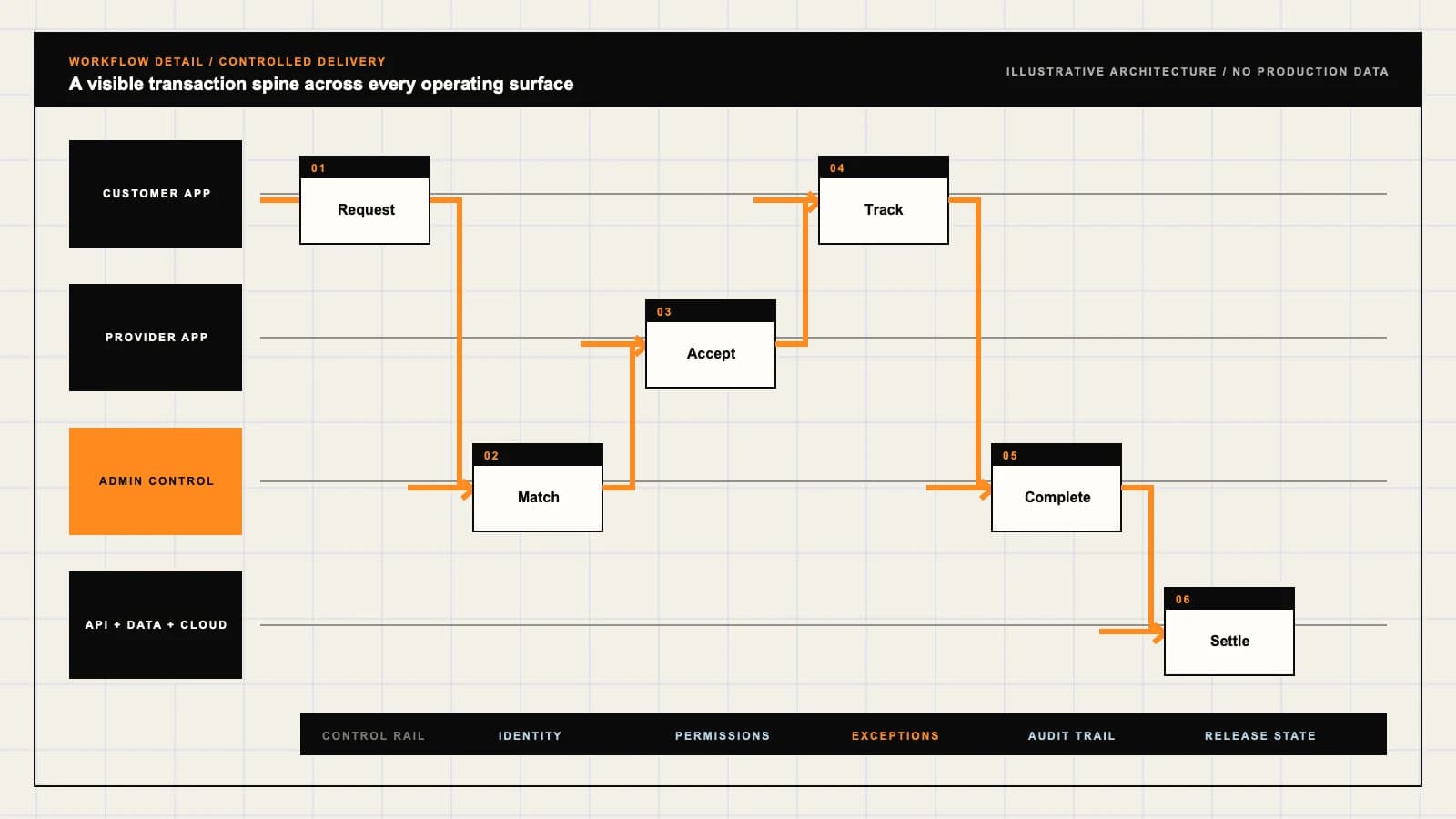
Product flow

Role-workflow flow diagram.

A visual map of how each role interacts with each workflow stage, with operator controls and integration boundaries.

Deployable Product Architecture

White-Label Fractional Real Estate Platform

CONNECT THE LEGAL…SEPARATE COMMITME…RECONCILE OWNERSH…Read the interest…Account for the a…Approve consequen…INTEGRATIONS: Identity and eligibility providers selected for the operator and jurisdicti…OPERATOR CONTROLS: Versioned allocation evidence · Brand and asset boundaries · Maker and appr…
Illustrative validation artifact — role-workflow flow diagram; final surfaces, boundaries, and integration topology are confirmed during discovery.

User roles

White-Label Fractional Real Estate Platform roles and workflows.

Clone-inspired platforms usually need several coordinated interfaces, not just a customer app.

Investor

01

Read the interest being acquired

Review the approved ownership description, governing documents, eligibility decision, allocation record, and subsequent statements.

Property operator

02

Account for the asset separately

Submit property records, approved operating expenses, income evidence, and management updates without changing investor balances.

Platform controller

03

Approve consequential ledger actions

Review offering publication, allocation corrections, distribution batches, restricted access, and reconciliation exceptions.

Workflow

White-Label Fractional Real Estate Platform workflow stages.

Each workflow stage is mapped to a role, screen, API, notification, admin control, and measurable launch outcome.

Define

01

Connect the legal model to records

Identify the issuer or ownership vehicle, investor interest, unit precision, authoritative register, and permitted operational states.

Allocate

02

Separate commitment from issued interest

Confirm eligibility and cleared funding before the approved allocation transition, preserving expired and reversed reservations.

Operate

03

Reconcile ownership and cash independently

Record asset receipts, approved costs, entitlement calculations, provider payment outcomes, and corrections with attributable evidence.

Deployable Product Architecture

Workflow / system register

Revision BPlanning surface

Product delivery loop

White-Label Fractional Real Estate Platform workflow stages.

A focused release proves one complete workflow

Product delivery loop: White-Label Fractional Real Estate Platform workflow stages.A focused release proves one complete workflow. Scope the customer action and the operator response as one system.
01

Connect the legal model to records

02

Separate commitment from issued interest

03

Reconcile ownership and cash independently

Control note

Scope the customer action and the operator response as one system.

Illustrative architecture register; validate against the accepted scope.

Operator controls

White-Label Fractional Real Estate Platform admin and operator controls.

The control center is scoped as a first-class product surface, not an afterthought.

Register integrity

01

Versioned allocation evidence

Prevent over-allocation, preserve supporting documents, and reverse mistakes through reviewed entries instead of editing historic balances.

Operator isolation

02

Brand and asset boundaries

Scope staff access across property records, documents, cached results, exports, support access, and background distribution jobs.

Financial review

03

Maker and approver responsibilities

Separate preparation of a cash batch from approval and execution; make unresolved provider outcomes visible before any retry.

Monetization

White-Label Fractional Real Estate Platform monetization models.

We model monetization early so payments, admin controls, and reporting support the business.

Implementation and operating support

Define branded deployment, tenant configuration, maintenance responsibility, provider costs, and handover rights contractually.

Approved fees with provenance

Display the operator’s disclosed administration and property-service charges separately from investment cashflows.

Optional partner administration

Scope additional reporting and partner workspaces without presenting a software fee as a promised investor return.

Integrations

White-Label Fractional Real Estate Platform integration surface.

External systems that determine launch readiness, data flow, and operational continuity.

Integration

01

Integration 1

Identity and eligibility providers selected for the operator and jurisdiction, with review queues for inconclusive results

Integration

02

Integration 2

Bank and approved payment records, document signing, authoritative ownership registers, and reconciliation exports

Integration

03

Integration 3

Property accounting feeds, controlled document storage, investor notifications, and monitoring for failed scheduled jobs

Scope drivers

White-Label Fractional Real Estate Platform scope drivers.

The variables that most influence build effort, cost, and launch readiness.

Ownership form

01

Economic interest is not automatically title

Legal reviewers must define the interest, vehicle, investor rights, governing register, and permitted transfer process.

Deployment

02

Single operator or isolated brands

Separate databases or scoped shared infrastructure affect access tests, support tooling, migrations, and recovery procedures.

Cash treatment

03

Entitlements and payment execution

Specify calculation periods, approved costs, rounding, withholding inputs, payment authorisation, and unresolved settlement handling.

Deployable Product Architecture

Scope drivers / system register

Revision EPlanning surface

Product delivery loop

White-Label Fractional Real Estate Platform scope drivers.

A focused release proves one complete workflow

Product delivery loop: White-Label Fractional Real Estate Platform scope drivers.A focused release proves one complete workflow. Scope the customer action and the operator response as one system.
01

Economic interest is not automatically title

02

Single operator or isolated brands

03

Entitlements and payment execution

Control note

Scope the customer action and the operator response as one system.

Illustrative architecture register; validate against the accepted scope.

V1 scope

White-Label Fractional Real Estate Platform V1 foundation.

Launch the smallest complete operating loop first, then scale the product with confidence.

Approved catalogue

01

A bounded property and interest model

Include controlled publication, versioned documents, investor review, and one defined allocation lifecycle.

Ledger

02

Traceable interests and distributions

Provide reconciliation, approved corrections, statements, and scoped exports without an implied trading venue.

Operations

03

Recoverable branded deployment

Test backups, restore, staff permissions, incident handover, and provider failures using non-production records.

Later phases

White-Label Fractional Real Estate Platform post-launch expansion.

Capabilities that should usually wait until real usage proves the core loop.

Partner growth

01

More operators with explicit isolation

Extend tenant provisioning only after permission and financial boundaries have been tested across independent operators.

Transfer review

02

A separately approved exit workflow

Add transfer requests, documentary checks, settlement conditions, and ledger updates only where the operating model permits them.

Reporting

03

Additional accounting and regional adapters

Introduce new currencies, tax inputs, and statements through approved mappings rather than changing historic ledger semantics.

Deployable Product Architecture

Later phases / system register

Revision BPlanning surface

Product delivery loop

White-Label Fractional Real Estate Platform post-launch expansion.

A focused release proves one complete workflow

Product delivery loop: White-Label Fractional Real Estate Platform post-launch expansion.A focused release proves one complete workflow. Scope the customer action and the operator response as one system.
01

More operators with explicit isolation

02

A separately approved exit workflow

03

Additional accounting and regional adapters

Control note

Scope the customer action and the operator response as one system.

Illustrative architecture register; validate against the accepted scope.

Regulatory review

White-Label Fractional Real Estate Platform regulatory and compliance flags.

Each flag must be reviewed by qualified counsel for your target market before build or launch.

Flag 1

Securities, property, tax, AML, and investor-protection review required

Flag 2

No yield, liquidity, or regulatory approval is implied

Flag 3

Ownership and distribution records need immutable auditability

Reference walkthrough

Request a White-Label Fractional Real Estate Platform reference walkthrough.

Ask us to confirm which reference surfaces are currently available for this product model. Rather than publishing shared demo credentials, we schedule a private guided walkthrough for qualified buyers.

Reference surface

01

Investor: Read the interest being acquired

Request a role-specific demonstration and confirm which capabilities are currently available. Review the proposed responsibility: Review the approved ownership description, governing documents, eligibility decision, allocation record, and subsequent statements.

Reference surface

02

Property operator: Account for the asset separately

Request a role-specific demonstration and confirm which capabilities are currently available. Review the proposed responsibility: Submit property records, approved operating expenses, income evidence, and management updates without changing investor balances.

Reference surface

03

Platform controller: Approve consequential ledger actions

Request a role-specific demonstration and confirm which capabilities are currently available. Review the proposed responsibility: Review offering publication, allocation corrections, distribution batches, restricted access, and reconciliation exceptions.

Next step

04

Book a walkthrough

Request a live, private walkthrough of the reference implementation. We will confirm scope and discuss configured deployment versus custom build for your market.

Open register

Deployable Product Architecture

Reference walkthrough / system register

Revision EPlanning surface

Product delivery loop

Request a White-Label Fractional Real Estate Platform reference walkthrough.

A focused release proves one complete workflow

Product delivery loop: Request a White-Label Fractional Real Estate Platform reference walkthrough.A focused release proves one complete workflow. Scope the customer action and the operator response as one system.
01

Investor: Read the interest being acquired

02

Property operator: Account for the asset separately

03

Platform controller: Approve consequential ledger actions

04

Book a walkthrough

Control note

Scope the customer action and the operator response as one system.

Illustrative architecture register; validate against the accepted scope.

Process

A traceable path from decision to acceptance.

  1. 01

    Model teardown

    We map the reference business model, user roles, monetization path, regulatory needs, and launch constraints.

    Artifact: Product teardown, risk map, role matrix

  2. 02

    Market-fit blueprint

    We reshape the model around your market, operations, pricing, workflows, and first release priorities.

    Artifact: Feature scope, flows, technical plan

  3. 03

    Design and build

    Product, design, engineering, QA, and cloud delivery move in weekly demo cycles with visible progress.

    Artifact: Working releases, QA notes, sprint demos

  4. 04

    Launch and operate

    We support production release, monitoring, handoff, roadmap decisions, and post-launch improvement.

    Artifact: Launch checklist, docs, growth backlog

FAQ

Questions to resolve before the build.

01Does a fractional balance prove direct property ownership?

No. The approved legal structure and authoritative records determine the interest. The product must describe the actual rights and avoid implying registered title where the arrangement provides a different economic or contractual interest.

02Can several operators use separate brands?

This can be scoped with explicit data boundaries. Permissions must cover documents, search, exports, background jobs, support access, and recovery, not only brand styling.

03When should an interest become allocated?

The operator must define eligibility, funding confirmation, document acceptance, and approval conditions. Reservations and pending payments should remain distinct from effective allocations.

04How are distribution mistakes corrected?

Retain the original entries and apply attributable, approved corrections with supporting evidence. Avoid rewriting historic balances without a reconstruction trail.

05Is a secondary market included?

Not by implication. Transfer, sale, or redemption processes require their own reviewed rules and scope. Recording an exit request does not guarantee liquidity or a buyer.

06Does identity verification establish regulatory compliance?

No. It supplies an input to an operator-defined decision. Applicable permissions, suitability responsibilities, disclosures, and legal obligations require qualified review.

07Do the reference screens prove a working investment demo?

No. Confirm authenticated walkthrough availability separately and test allocation, failed payments, corrections, permissions, and reconciliation with non-production records.

08What should we bring to discovery?

Bring the ownership model, proposed governing documents, representative register and accounting records, operator boundaries, fee rules, jurisdictions, provider arrangements, and handover expectations.

Primary sources

References behind this page

Dated official documentation, standards, and research that support the factual claims on this page.

  1. 01
  2. 02

Citation readiness

How to interpret this page

Published by App Clone Labs Editorial Team · Updated

Commercial claims
Scope, cost, and timeline claims are planning guidance and require validation in a current proposal.
Evidence status
Diagrams, boards, examples, and estimates are illustrative planning artifacts unless explicitly identified with a source and measured evidence status.