White-label platforms

White-Label Real Estate Crowdfunding Platform — Custom-Built for Your Market

Branded property investment and investor administration platform. Planned for property sponsors, investment firms, and regulated marketplaces with role-specific workflows, operator controls, integrations, and a handover boundary defined for the selected market.

Reviewed · App Clone Labs Editorial Team

Custom workflows

Brand-safe product strategy

Admin and operations tooling

Reference walkthrough by arrangement

Solution reference register

01 / Reference and IP

This page references third-party product names only to describe familiar product models and planning references. App Clone Labs is not affiliated with or endorsed by those brands. Build decisions require independent legal, regulatory, and operational review for your market.

02 / Artifact status

Boards, diagrams, screens and workflow descriptions on this page are illustrative planning artifacts, not evidence of a deployed client product.

03 / Regulatory caveat

Securities, AML, tax, investor-protection, and suitability review required · No investment return or approval is implied · Investor and offering records require retention and access controls

04 / Rights and handover

Source access, licensing, repositories, environments, documentation, acceptance and handover are defined by the signed contract and accepted scope.

Scope

Operating model defined

Roles, workflows, dependencies, exclusions, and assumptions are made reviewable.

Evidence: illustrative

System

Applications connected

Experience, operations, services, data, integrations, and release controls are planned together.

Evidence: illustrative

Handover

Rights stated in writing

Access, assignment, licensing, dependencies, documentation, and support follow the signed agreement.

Evidence: illustrative

Artifact register

Product screens and planning references.

Reference screens illustrate workflows, not a contracted feature list. Sample prices, data, and responses are demonstration content; confirm the current scope during a walkthrough.

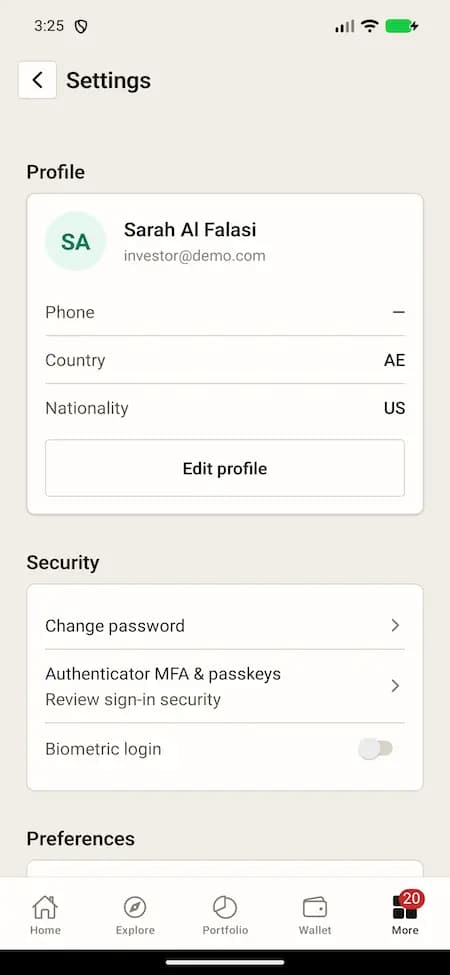
Shared property-platform demo preferences with a demo investor profile and security entry points
Shared property-platform reference also used in the fractional-property brief. This settings screen does not demonstrate offering approvals, crowdfunding permissions, investment execution, or a distinct product implementation.Evidence status not suppliedOpen full-size reference
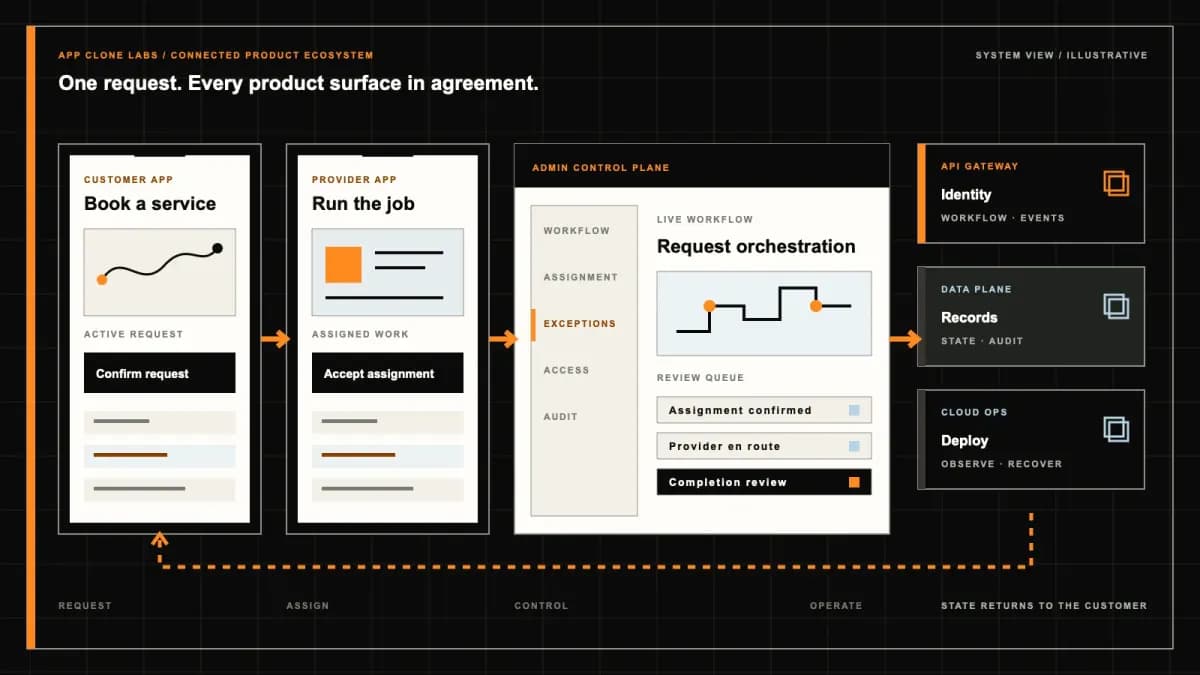
White-Label Real Estate Crowdfunding Platform connected product workflow planning visual
Connected customer, operations, and data workflowEvidence status not suppliedOpen full-size reference
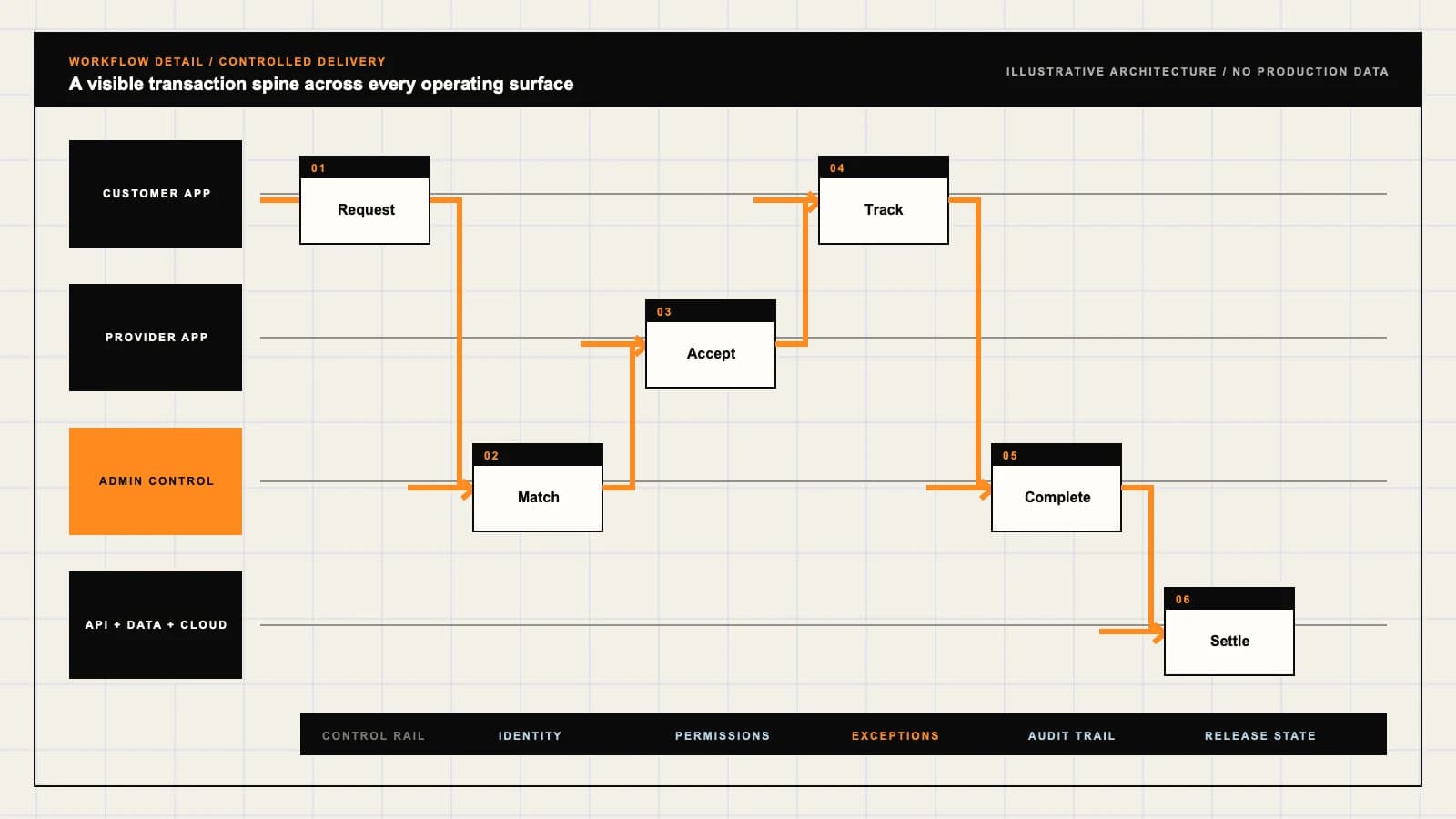
White-Label Real Estate Crowdfunding Platform product engineering ecosystem visual
Product engineering ecosystem and handover boundaryEvidence status not suppliedOpen full-size reference

Property crowdfunding is an offering lifecycle, not a listing checkout

A white-label real estate crowdfunding platform can connect sponsor information, approved offering documents, investor eligibility, commitments, funding records, and post-close reporting in a branded workspace. The product is not a property purchase shortcut or permission to raise capital. The actual issuer, legal vehicle, intermediary arrangements, intended investors, and applicable jurisdiction determine the operating boundary. This reference brief describes software planning; it does not offer an investment, recommend a property, or guarantee regulatory approval.

Start by distinguishing interest registration from a legally meaningful commitment and a funded, closed participation. Those actions require different information, approvals, and records. A progress bar labelled funded can mislead if it includes unverified reservations or unsettled transfers. Discovery should define each stage with the operator’s qualified legal and financial advisers before designing investor calls to action.

An offering needs accountable evidence and version control

The sponsor supplies information about the property, vehicle, project purpose, terms, costs, risks, milestones, and reporting arrangements. The platform needs a named review owner rather than an unrestricted publish button. Identify which materials are draft, approved, superseded, and available to which audience. Preserve the document versions shown to each investor, their acknowledgements, and the publication decision supporting the offering.

Material changes can affect decisions already in progress. Decide what happens when a sponsor changes the timetable, financing structure, target conditions, or underlying property information. A new document should not silently replace the one an investor reviewed. The applicable amendment, notice, reconfirmation, or cancellation process must be established for the actual offering, then represented as a controlled workflow with evidence and accountable staff actions.

Eligibility is more than a successful identity match

Identity verification identifies a person; it does not alone establish that the person can participate in this offering. Investor class, location, applicable limits, entity status, documents, screening, and other reviewed conditions may affect access. Keep a reasoned review state and an owner for unresolved cases. Do not expose restricted documents or enable a funding instruction just because the user finished registration.

For United States offerings using Regulation Crowdfunding, the SEC’s Regulation Crowdfunding overview describes that particular route and intermediary framework. Not every property offering uses it. Specialist review must establish the actual exemption or other route rather than treat a crowdfunding product name as a legal classification.

Collect only the records needed for the approved process and protect them with scoped permissions. Sponsors should not obtain unrestricted access to all investor identity files because they can edit property content. Support staff need enough context to resolve a case without becoming investment decision-makers or bypassing eligibility. Record consequential overrides and review whether a changed investor circumstance affects a pending commitment.

Model commitments, money received, and closing separately

A reservation expresses interest; a signed commitment may still require eligibility review and funding; money received may remain subject to closing conditions. Model these as separate states. Use stable references across signing, payment instructions, received-funds records, and allocation. A repeated callback should not allocate participation twice. A provider acknowledgement should not be shown as cleared money unless the authoritative funding evidence supports that state.

Define deadlines, target conditions, oversubscription, cancelled commitments, failed transfers, and refunds before the first release. If a target is not met, the applicable process may differ from a successful close. If an investor sends the wrong amount or uses a mismatched payment reference, operations needs a traceable exception case. Staff should not edit the requested commitment amount simply to disguise a bank reconciliation difference.

Closing is a controlled decision supported by evidence

The closing checklist should identify approvals, signed records, eligibility decisions, authoritative funds information, allocation rules, and any unresolved items. A public countdown reaching zero does not prove a close occurred. Keep the authorised decision, effective date, participation records, and investor notices connected. Explain incomplete or failed conditions honestly instead of continuing to present the offering as successfully funded.

The SEC’s issuer guidance for Regulation Crowdfunding is a United States reference for teams assessing that route’s disclosures and processes. It is not a certificate for the proposed platform and should not be used to infer that the same workflow is valid in another market.

Distribution reporting must separate forecast from fact

Post-close administration includes sponsor updates, approved financial inputs, participation records, expenses, and distributions. A projected rental yield is not a confirmed payment. Record the source and period of actual results and label forecasts separately. Changes in valuation, vacancies, costs, debt, delays, or exits require truthful reporting rather than a dashboard that always shows a smooth upward line.

For each distribution, preserve the approved calculation, eligible participation records, fees or deductions, payment instructions, provider outcomes, and reconciliation. Failed or returned payments need an exception route and a controlled correction. Tax documents and official statements have named preparers and delivery responsibilities; they should not be implied standard outputs without an agreed specification. Neither the platform nor this brief guarantees income, liquidity, capital preservation, or an exit date.

Evaluate the reference without assuming investment execution

The shared property-platform settings screenshot illustrates preferences and access entry points. It is also used in the fractional-property brief and does not demonstrate a distinct crowdfunding implementation, approved offering, qualified investor, signed commitment, or completed distribution. Request a walkthrough with simulated cases and identify every dependency that remains unconnected. Shared visual language is not evidence that different investment models share the same legal structure.

Compare the white-label fractional real estate brief when the primary need concerns ownership units and ongoing property administration. Crowdfunding procurement places particular emphasis on offering preparation, commitment conditions, closing, and intermediary responsibilities; the two should not become duplicate pages with interchangeable claims.

The property investment platform reference provides another category-level starting point. This white-label brief adds configuration limits, branded deployment, document governance, partner boundaries, and agreement-defined software handover rather than implying affiliation with an existing investment brand.

Bring the operating model to the proposal

Provide the intended jurisdiction, issuer and vehicle model, investor classes, draft offering documents, review responsibilities, funding arrangements, sample reports, and post-close administration process. Agree on which foundation features exist, which are custom engineering, which need provider approval, and which are excluded. Price and timing depend on those boundaries and review readiness; an attractive demo does not establish a fixed delivery promise.

Acceptance should exercise document amendments, ineligible investors, repeated signing callbacks, unmatched funds, unmet targets, oversubscription, cancelled commitments, failed distributions, and permission boundaries. Handover should identify source rights, licensed components, secure document storage, deployment access, credential rotation, monitoring, backups, recovery, staff guidance, and ongoing disclosure maintenance. Publishing or activating an offering remains the responsible operator’s separate decision after qualified review and validation.
Product flow

Role-workflow flow diagram.

A visual map of how each role interacts with each workflow stage, with operator controls and integration boundaries.

Deployable Product Architecture

White-Label Real Estate Crowdfunding Platform

APPROVE A VERSION…DISTINGUISH INTER…REPORT CLOSING AN…Review the actual…Maintain accounta…Govern eligibilit…INTEGRATIONS: Approved identity and investor-eligibility services with document review an…OPERATOR CONTROLS: Approval before publication · Eligibility beyond identity · Commitment and …
Illustrative validation artifact — role-workflow flow diagram; final surfaces, boundaries, and integration topology are confirmed during discovery.

User roles

White-Label Real Estate Crowdfunding Platform roles and workflows.

Clone-inspired platforms usually need several coordinated interfaces, not just a customer app.

Investor

01

Review the actual offering

Read approved documents, eligibility conditions, commitments, funding state, risks, and reporting without treating projected distributions as guaranteed income.

Sponsor

02

Maintain accountable offering information

Submit property evidence, terms, milestones, changes, and periodic reports through a controlled review and publication process.

Platform reviewer

03

Govern eligibility and commitments

Approve publication, review investor eligibility, track funding and closing conditions, investigate exceptions, and maintain distribution records.

Workflow

White-Label Real Estate Crowdfunding Platform workflow stages.

Each workflow stage is mapped to a role, screen, API, notification, admin control, and measurable launch outcome.

Prepare

01

Approve a versioned offering

Connect the legal vehicle, property information, approved disclosures, eligibility rules, target conditions, and publication decision.

Commit

02

Distinguish interest from funded participation

Track reservation, signed documents, eligibility review, received funds, cancellations, and allocation against the actual offering rules.

Administer

03

Report closing and distributions truthfully

Confirm closing conditions, issue participation records, reconcile approved distributions, and preserve updates and unresolved cases.

Deployable Product Architecture

Workflow / system register

Revision DPlanning surface

Product delivery loop

White-Label Real Estate Crowdfunding Platform workflow stages.

A focused release proves one complete workflow

Product delivery loop: White-Label Real Estate Crowdfunding Platform workflow stages.A focused release proves one complete workflow. Scope the customer action and the operator response as one system.
01

Approve a versioned offering

02

Distinguish interest from funded participation

03

Report closing and distributions truthfully

Control note

Scope the customer action and the operator response as one system.

Illustrative architecture register; validate against the accepted scope.

Operator controls

White-Label Real Estate Crowdfunding Platform admin and operator controls.

The control center is scoped as a first-class product surface, not an afterthought.

Offering governance

01

Approval before publication

Version disclosures and material amendments, separate sponsor drafting from approval, and retain what each investor received and acknowledged.

Investor permissions

02

Eligibility beyond identity

Apply the reviewed investor-class and jurisdiction rules; an identity match alone does not determine permission to participate.

Financial evidence

03

Commitment and distribution reconciliation

Track escrow or provider records where applicable, allocations, cancelled commitments, approved adjustments, and reporting evidence with restricted access.

Monetization

White-Label Real Estate Crowdfunding Platform monetization models.

We model monetization early so payments, admin controls, and reporting support the business.

Implementation and administration tooling

Scope branded portals, document workflows, partner adapters, reporting, support, and licensed dependencies separately.

Approved and disclosed charging rules

Record the operator’s permitted platform, offering, or administration charges only after specialist review and clear disclosures.

Investor relations and reporting

Define sponsor reporting and communication tools without promising capital raised, investment performance, liquidity, or participation eligibility.

Integrations

White-Label Real Estate Crowdfunding Platform integration surface.

External systems that determine launch readiness, data flow, and operational continuity.

Integration

01

Integration 1

Approved identity and investor-eligibility services with document review and exception ownership

Integration

02

Integration 2

Document signing, permitted escrow or funding partners, bank records, and reconciliation exports

Integration

03

Integration 3

Sponsor reporting, investor notices, distribution statements, access-controlled document storage, and accounting inputs

Scope drivers

White-Label Real Estate Crowdfunding Platform scope drivers.

The variables that most influence build effort, cost, and launch readiness.

Offering structure

01

The actual security and vehicle

Identify the issuer, investor class, jurisdiction, legal structure, disclosures, intermediary responsibilities, and specialist approvals.

Funding lifecycle

02

Commitments are not closed investments

Define target conditions, deadlines, cancellation rights, amendments, oversubscription, allocation, refunds, and authoritative funding evidence.

Administration

03

Post-close records and obligations

Establish investor reporting, distribution approvals, valuation inputs, tax-document responsibilities, retention, and complaint handling.

Deployable Product Architecture

Scope drivers / system register

Revision EPlanning surface

Product delivery loop

White-Label Real Estate Crowdfunding Platform scope drivers.

A focused release proves one complete workflow

Product delivery loop: White-Label Real Estate Crowdfunding Platform scope drivers.A focused release proves one complete workflow. Scope the customer action and the operator response as one system.
01

The actual security and vehicle

02

Commitments are not closed investments

03

Post-close records and obligations

Control note

Scope the customer action and the operator response as one system.

Illustrative architecture register; validate against the accepted scope.

V1 scope

White-Label Real Estate Crowdfunding Platform V1 foundation.

Launch the smallest complete operating loop first, then scale the product with confidence.

Offering room

01

One reviewed offering model

Begin with approved content, versioned documents, eligibility review, signing, and clear investment-risk disclosures.

Commitment queue

02

Controlled funding and closing states

Give reviewers traceable records for pending documents, funding differences, cancelled commitments, and unmet closing conditions.

Investor records

03

Participation and reporting evidence

Provide approved allocations, notices, distribution reports, scoped access, and reconciled exports with acceptance tests.

Later phases

White-Label Real Estate Crowdfunding Platform post-launch expansion.

Capabilities that should usually wait until real usage proves the core loop.

Sponsor network

01

Additional governed offering pipelines

Expand sponsor onboarding and document templates only after establishing review ownership and consistent investor disclosures.

Portfolio reports

02

More useful reporting without invented returns

Add approved valuation and reporting inputs with dates, methods, limitations, and separation of forecasts from actual outcomes.

Transfers

03

Separate legal and operational workstream

Assess transfer permissions, restrictions, counterparties, pricing, and record updates before proposing any secondary trading or exit facility.

Deployable Product Architecture

Later phases / system register

Revision FPlanning surface

Product delivery loop

White-Label Real Estate Crowdfunding Platform post-launch expansion.

A focused release proves one complete workflow

Product delivery loop: White-Label Real Estate Crowdfunding Platform post-launch expansion.A focused release proves one complete workflow. Scope the customer action and the operator response as one system.
01

Additional governed offering pipelines

02

More useful reporting without invented returns

03

Separate legal and operational workstream

Control note

Scope the customer action and the operator response as one system.

Illustrative architecture register; validate against the accepted scope.

Regulatory review

White-Label Real Estate Crowdfunding Platform regulatory and compliance flags.

Each flag must be reviewed by qualified counsel for your target market before build or launch.

Flag 1

Securities, AML, tax, investor-protection, and suitability review required

Flag 2

No investment return or approval is implied

Flag 3

Investor and offering records require retention and access controls

Reference walkthrough

Request a White-Label Real Estate Crowdfunding Platform reference walkthrough.

Ask us to confirm which reference surfaces are currently available for this product model. Rather than publishing shared demo credentials, we schedule a private guided walkthrough for qualified buyers.

Reference surface

01

Investor: Review the actual offering

Request a role-specific demonstration and confirm which capabilities are currently available. Review the proposed responsibility: Read approved documents, eligibility conditions, commitments, funding state, risks, and reporting without treating projected distributions as guaranteed income.

Reference surface

02

Sponsor: Maintain accountable offering information

Request a role-specific demonstration and confirm which capabilities are currently available. Review the proposed responsibility: Submit property evidence, terms, milestones, changes, and periodic reports through a controlled review and publication process.

Reference surface

03

Platform reviewer: Govern eligibility and commitments

Request a role-specific demonstration and confirm which capabilities are currently available. Review the proposed responsibility: Approve publication, review investor eligibility, track funding and closing conditions, investigate exceptions, and maintain distribution records.

Next step

04

Book a walkthrough

Request a live, private walkthrough of the reference implementation. We will confirm scope and discuss configured deployment versus custom build for your market.

Open register

Deployable Product Architecture

Reference walkthrough / system register

Revision EPlanning surface

Product delivery loop

Request a White-Label Real Estate Crowdfunding Platform reference walkthrough.

A focused release proves one complete workflow

Product delivery loop: Request a White-Label Real Estate Crowdfunding Platform reference walkthrough.A focused release proves one complete workflow. Scope the customer action and the operator response as one system.
01

Investor: Review the actual offering

02

Sponsor: Maintain accountable offering information

03

Platform reviewer: Govern eligibility and commitments

04

Book a walkthrough

Control note

Scope the customer action and the operator response as one system.

Illustrative architecture register; validate against the accepted scope.

Process

A traceable path from decision to acceptance.

  1. 01

    Model teardown

    We map the reference business model, user roles, monetization path, regulatory needs, and launch constraints.

    Artifact: Product teardown, risk map, role matrix

  2. 02

    Market-fit blueprint

    We reshape the model around your market, operations, pricing, workflows, and first release priorities.

    Artifact: Feature scope, flows, technical plan

  3. 03

    Design and build

    Product, design, engineering, QA, and cloud delivery move in weekly demo cycles with visible progress.

    Artifact: Working releases, QA notes, sprint demos

  4. 04

    Launch and operate

    We support production release, monitoring, handoff, roadmap decisions, and post-launch improvement.

    Artifact: Launch checklist, docs, growth backlog

FAQ

Questions to resolve before the build.

01Does this software authorise a property crowdfunding business?

No. Establish the actual issuer, offering route, intermediary, jurisdiction, and required permissions with qualified advisers. Software does not confer capital-raising or investment-service approval.

02Is a reservation the same as a completed investment?

No. Interest, commitment, signed documents, eligibility approval, received funds, allocation, and closing are distinct states. The applicable offering rules define their legal and operational meaning.

03Why is identity verification not enough?

Identity does not establish every investor eligibility condition. Location, investor class, documents, limits, and other applicable requirements need a reviewed decision for the actual offering.

04What happens when offering documents change?

Retain earlier versions and identify which investors reviewed them. The authorised amendment, notice, reconfirmation, or cancellation process must be defined for the offering rather than silently replacing files.

05What if the funding target is not achieved?

Use the agreed closing-condition and cancellation process, supported by authoritative funding records. Refund and notice responsibilities must be established before commitments are accepted.

06Are projected returns or exits guaranteed?

No. Separate forecasts from actual results and record their inputs and limitations. This software brief promises neither income, capital preservation, liquidity, nor an exit date.

07Does the shared settings screenshot prove a crowdfunding demo?

No. It is an illustrative property-platform reference, not evidence of offering permissions, investor qualification, funding, or distributions. Request a scoped walkthrough and confirm what is demonstrable.

08Are secondary transfers included in the first release?

Not by implication. Transfers need separate review of permissions, restrictions, counterparties, pricing, and record changes. A bounded first release can focus on offerings, commitments, and administration.

Primary sources

References behind this page

Dated official documentation, standards, and research that support the factual claims on this page.

  1. 01
  2. 02

Citation readiness

How to interpret this page

Published by App Clone Labs Editorial Team · Updated

Commercial claims
Scope, cost, and timeline claims are planning guidance and require validation in a current proposal.
Evidence status
Diagrams, boards, examples, and estimates are illustrative planning artifacts unless explicitly identified with a source and measured evidence status.