Banking and financial operations

CRED Clone: Credit Member Rewards — Custom-Built for Your Market

Eligibility-led membership hub for bill reminders, payment routing, and partner rewards. Planned for authorized financial programs serving verified credit customers and partner merchants with role-specific workflows, operator controls, integrations, and a handover boundary defined for the selected market.

From $6,999 one-time for the Professional plan. Enterprise customization is quoted on scope.

See product screens and demo access

Custom workflows

Brand-safe product strategy

Admin and operations tooling

Reference walkthrough by arrangement

Workflow

CRED-style Credit Member Rewards workflow stages.

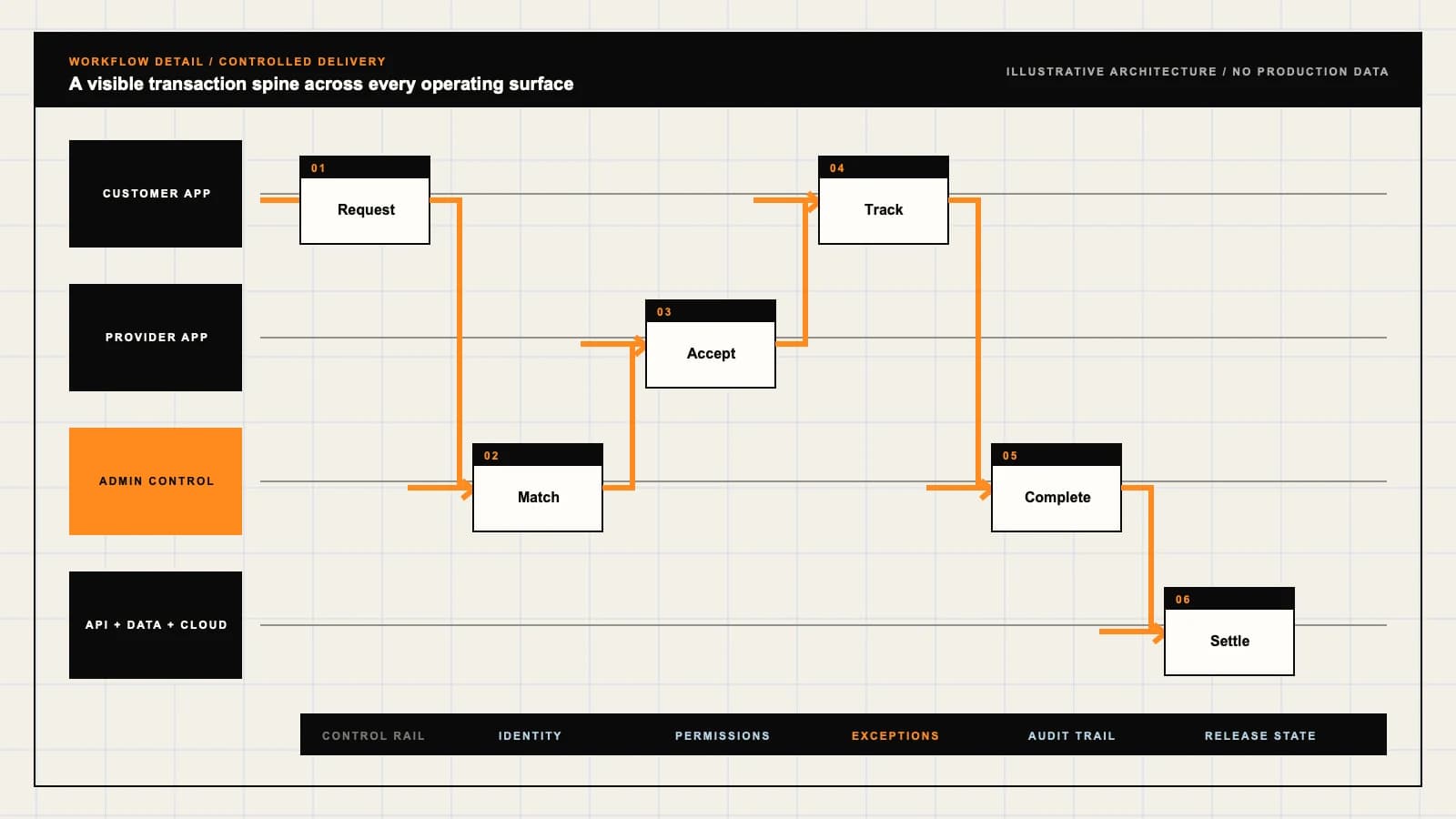
Each workflow stage is mapped to a role, screen, API, notification, admin control, and measurable launch outcome.

01Consent and retrieve

Establish data purpose before linking

Explain supported account access, obtain scoped consent and retrieve a bill with its source and time. Membership eligibility does not authorize recurring payments or unrestricted statement collection.

02Review and route

Confirm the selected bill and payment instruction

Show the destination, amount and disclosed fees before routing through authorized partners. Distinguish submitted, pending, failed and confirmed outcomes using provider evidence.

03Reconcile and reward

Maintain separate payment and benefit records

Resolve uncertain payments before another instruction. Apply disclosed reward rules to qualifying events, then track redemption, expiry, reversal and support decisions in a dedicated reward ledger.

Deployable Product Architecture

Workflow / system register

Revision EPlanning surface

Product delivery loop

CRED-style Credit Member Rewards workflow stages.

A focused release proves one complete workflow

Product delivery loop: CRED-style Credit Member Rewards workflow stages.A focused release proves one complete workflow. Scope the customer action and the operator response as one system.
01

Establish data purpose before linking

02

Confirm the selected bill and payment instruction

03

Maintain separate payment and benefit records

Control note

Scope the customer action and the operator response as one system.

Illustrative architecture register; validate against the accepted scope.

Operator controls

CRED-style Credit Member Rewards admin and operator controls.

The control center is scoped as a first-class product surface, not an afterthought.

01Consent and account data

Minimize access and preserve revocation

Limit imported statements and notifications to explicit purposes. Record consent versions, access expiry and deletion decisions without exposing full card details to partner merchants.

02Payment authority and truth

Keep money movement with permitted entities

Establish the actual Indian BBPS or other authorized partner arrangement and applicable obligations. Software and membership do not confer lending or payment authorization.

03Reward integrity and fraud

Trace benefits to disclosed qualifying events

Prevent duplicate issuance, restrict manual adjustments and review abuse proportionately. A reward notification is not proof of bill payment or guaranteed credit improvement.

Integrations

CRED-style Credit Member Rewards integration surface.

External systems that determine launch readiness, data flow, and operational continuity.

01Integration

Issuer and account-data interfaces

Authorized issuer and account-data interfaces with scoped consent, supported bill retrieval, freshness indicators and revocation handling

02Integration

BBPS and payment partners

Permitted BBPS participants or other authorized payment partners with transaction references, status recovery and financial reconciliation

03Integration

Reward partners and fraud review

Reward partners, fraud review and support systems with campaign versions, restricted member data and attributable reward-ledger adjustments

Scope drivers

CRED-style Credit Member Rewards scope drivers.

The variables that most influence build effort, cost, and launch readiness.

01Account and bill coverage

Verify each supported data source

Choose issuers, retrieval methods and required identifiers with actual permissions. Wider coverage increases consent, freshness and unsupported-account exception work.

02Payment operating model

Assign responsibility for each money movement

Document provider roles, applicable Indian requirements and failure handling. Establish authorization and complaint routing before enabling real bill payments.

03Reward economics and service capacity

Bound campaigns by funded commitments

Define qualifying events, partner inventory, expiry and reversal rules alongside staffed fraud and support queues. An attractive offer catalog cannot supply missing partner agreements.

Deployable Product Architecture

Scope drivers / system register

Revision DPlanning surface

Product delivery loop

CRED-style Credit Member Rewards scope drivers.

A focused release proves one complete workflow

Product delivery loop: CRED-style Credit Member Rewards scope drivers.A focused release proves one complete workflow. Scope the customer action and the operator response as one system.
01

Verify each supported data source

02

Assign responsibility for each money movement

03

Bound campaigns by funded commitments

Control note

Scope the customer action and the operator response as one system.

Illustrative architecture register; validate against the accepted scope.

V1 scope

CRED-style Credit Member Rewards V1 foundation.

Launch the smallest complete operating loop first, then scale the product with confidence.

01Consented card organization

Make bill freshness and permissions visible

Support selected account links, fetched statements and reminders. Rehearse stale data, an unsupported issuer and consent revoked while a retrieval job remains queued.

02Bounded payment routing

Show the authoritative provider outcome

Include confirmation, stable transaction references and exception recovery. Test a timeout after submission and ensure a pending payment does not become an invitation to pay twice.

03Transparent rewards and support

Prove benefit accounting separately

Expose qualifying rules, reward ledger, redemption and expiry with reviewable reversals. Demonstrate a reversed payment and an already redeemed benefit without deleting history.

Later phases

CRED-style Credit Member Rewards post-launch expansion.

Capabilities that should usually wait until real usage proves the core loop.

01Additional issuer connections

Extend only after verifying permissions

Add validated data interfaces and localized bill formats with provider-specific freshness, failure and revocation behavior.

02More partner benefits

Expand funded redemption commitments

Add campaigns after establishing inventory, settlement, expiry and complaint ownership. Keep partner reporting limited to agreed information.

03Consented budgeting tools

Separate organization from regulated offers

Add explainable categorization and budgeting under explicit data purposes. Lending or new payment products require a separate authorized operating model and qualified review.

Deployable Product Architecture

Later phases / system register

Revision EPlanning surface

Product delivery loop

CRED-style Credit Member Rewards post-launch expansion.

A focused release proves one complete workflow

Product delivery loop: CRED-style Credit Member Rewards post-launch expansion.A focused release proves one complete workflow. Scope the customer action and the operator response as one system.
01

Extend only after verifying permissions

02

Expand funded redemption commitments

03

Separate organization from regulated offers

Control note

Scope the customer action and the operator response as one system.

Illustrative architecture register; validate against the accepted scope.

Regulatory review

CRED-style Credit Member Rewards regulatory and compliance flags.

Each flag must be reviewed by qualified counsel for your target market before build or launch.

Confirm licensing and market-specific authorization before enabling regulated activity

Define whether assets or funds are held by the operator, a qualified custodian, or not held at all

Apply security review, strong authentication, encryption, audit logging, recovery, and incident response

Present educational product information only and prohibit personalized financial, legal, tax, or wagering advice

Apply identity, sanctions, transaction monitoring, complaint, and suspicious-activity procedures

Do not present credit scores, eligibility, or rewards as financial advice or approval assurances

Reference walkthrough

Request a CRED-style Credit Member Rewards reference walkthrough.

Ask us to confirm which reference surfaces are currently available for this product model. Rather than publishing shared demo credentials, we schedule a private guided walkthrough for qualified buyers.

01Reference surface

Eligible member: Organize consented accounts and inspect payment status

Request a role-specific demonstration and confirm which capabilities are currently available. Review the proposed responsibility: Link supported card accounts, review fetched bills and authorize permitted payment requests. Read reward eligibility separately from evidence that an issuer received a payment.

02Reference surface

Reward partner and program operator: Publish accountable benefit terms

Request a role-specific demonstration and confirm which capabilities are currently available. Review the proposed responsibility: Define funded offers, redemption limits and expiry rules. Manage campaign availability without gaining unrestricted access to member statements or authority to alter payment outcomes.

03Reference surface

Payment support and risk reviewers: Resolve uncertain transactions and reward exceptions

Request a role-specific demonstration and confirm which capabilities are currently available. Review the proposed responsibility: Reconcile authorized provider records, investigate fraud and attribute reward reversals. Restrict financial adjustments and preserve customer complaint evidence independently of campaign budgets.

04Next step

Book a walkthrough

Request a live, private walkthrough of the reference implementation. We will confirm scope and discuss configured deployment versus custom build for your market.

Open register

Deployable Product Architecture

Reference walkthrough / system register

Revision FPlanning surface

Product delivery loop

Request a CRED-style Credit Member Rewards reference walkthrough.

A focused release proves one complete workflow

Product delivery loop: Request a CRED-style Credit Member Rewards reference walkthrough.A focused release proves one complete workflow. Scope the customer action and the operator response as one system.
01

Eligible member: Organize consented accounts and inspect payment status

02

Reward partner and program operator: Publish accountable benefit terms

03

Payment support and risk reviewers: Resolve uncertain transactions and reward exceptions

04

Book a walkthrough

Control note

Scope the customer action and the operator response as one system.

Illustrative architecture register; validate against the accepted scope.

User roles

CRED-style Credit Member Rewards roles and workflows.

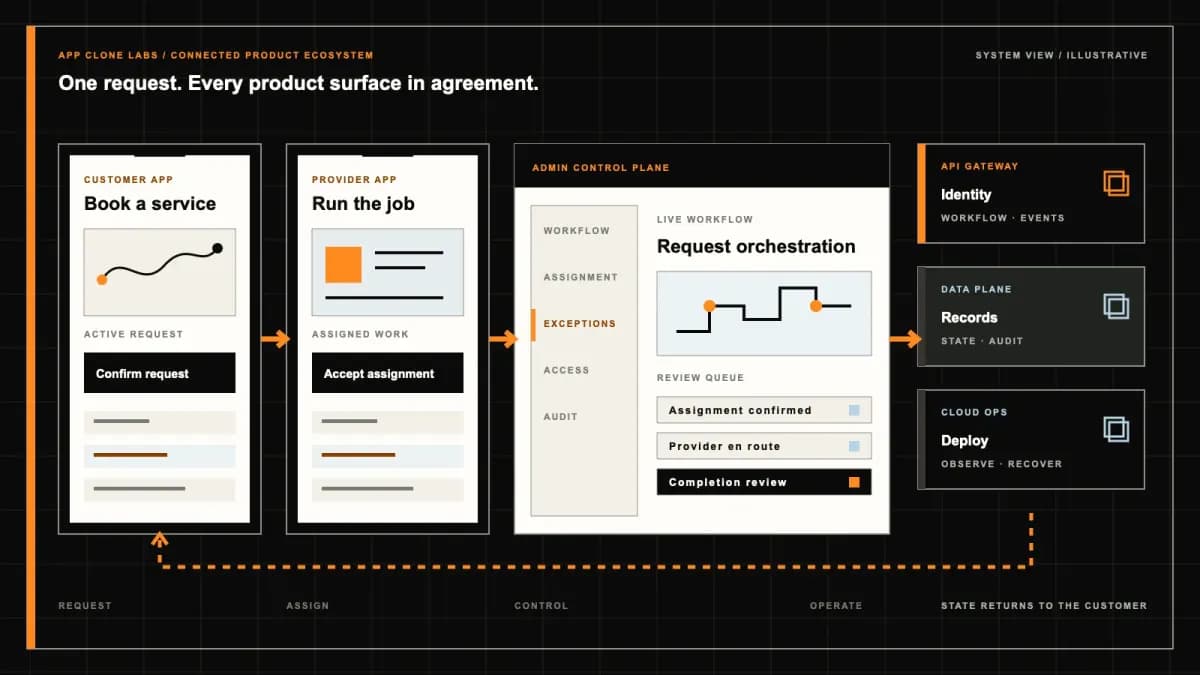
Clone-inspired platforms usually need several coordinated interfaces, not just a customer app.

01Eligible member

Organize consented accounts and inspect payment status

Link supported card accounts, review fetched bills and authorize permitted payment requests. Read reward eligibility separately from evidence that an issuer received a payment.

02Reward partner and program operator

Publish accountable benefit terms

Define funded offers, redemption limits and expiry rules. Manage campaign availability without gaining unrestricted access to member statements or authority to alter payment outcomes.

03Payment support and risk reviewers

Resolve uncertain transactions and reward exceptions

Reconcile authorized provider records, investigate fraud and attribute reward reversals. Restrict financial adjustments and preserve customer complaint evidence independently of campaign budgets.

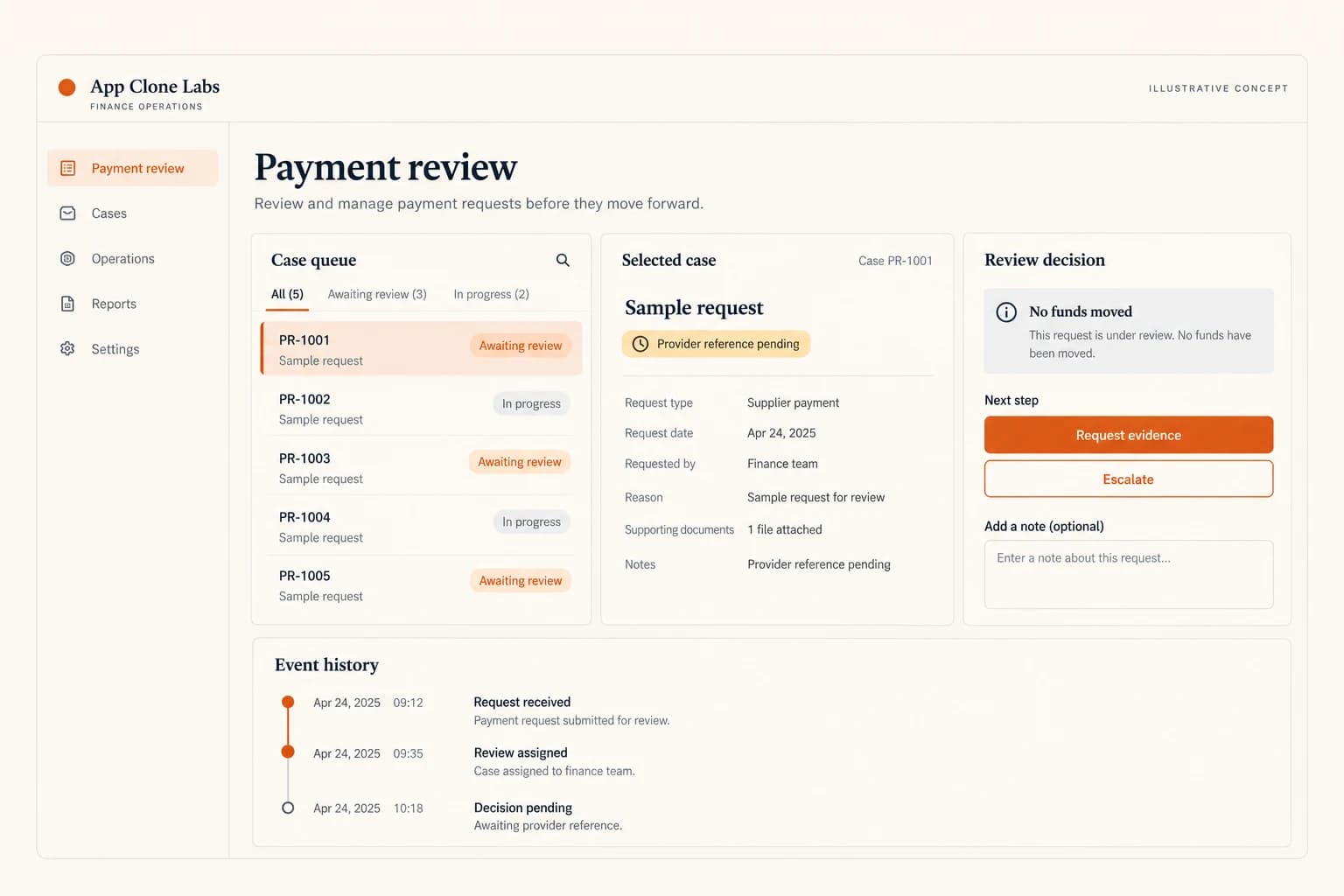
Review bill posting, refunds and reward eligibility in a CRED-style demo.

Use this generic finance-review illustration to discuss review ownership, then request a working CRED-style bill-payment demo with sample issuer records, payment events, refunds and reward decisions. Agree the proposed payment-provider responsibilities and eligibility rules before accepting the scope.

Supplier-payment review concept illustrating a case awaiting provider evidence

Supplier-payment review concept illustrating a case awaiting provider evidence

Original App Clone Labs generic finance-review illustration at 1536×1024: supplier-payment review queue, provider pending and no funds moved. It does not show credit-card bill payment, issuer posting, refunds or rewards. Request a working CRED-style demo for those workflows and identify sample records and proposed provider responsibilities. This concept is not an official CRED interface or an affiliation or endorsement claim.

What to check in the walkthrough

  • Bill posting: Can the working demo distinguish a payment submitted to the provider from a bill posted by the issuer? Ask to trace a sample bill, amount and due date through pending, failed and confirmed events, then repeat a provider callback and inspect whether it creates a duplicate payment or incorrectly marks the bill paid. Identify who supplies issuer confirmation and resolves a posting delay.
  • Refund and reversal: How does a refund reach the customer record when a payment fails after collection or the provider reports a reversal? Ask to follow a sample payment through the refund reference, amount, pending status and final provider confirmation, including a partial refund and a reconciliation difference. Identify which operator can investigate and which provider owns the movement of funds.
  • Reward eligibility: Which configured rules make a sample payment eligible, and what happens after a refund, duplicate payment or expired offer? Ask to inspect the rule version, eligibility explanation, provisional reward and reversal history in the working demo. Agree who approves offer terms and handles disputes; the finance-review illustration demonstrates no reward programme.
Open full-size reference

Product flow

Role-workflow flow diagram.

A visual map of how each role interacts with each workflow stage, with operator controls and integration boundaries.

Deployable product architecture

CRED-style Credit Member Rewards

Workflow

  1. 01Establish data purpose before linking
  2. 02Confirm the selected bill and payment instruction
  3. 03Maintain separate payment and benefit records

Roles in the loop

  • Eligible memberOrganize consented accounts and inspect payment status
  • Reward partner and program operatorPublish accountable benefit terms
  • Payment support and risk reviewersResolve uncertain transactions and reward exceptions

Operator controls

  • Minimize access and preserve revocation
  • Keep money movement with permitted entities
  • Trace benefits to disclosed qualifying events

Integrations underneath

  • Issuer and account-data interfaces
  • BBPS and payment partners
  • Reward partners and fraud review
Illustrative validation artifact — role-workflow flow diagram; final surfaces, boundaries, and integration topology are confirmed during discovery.

Monetization

CRED-style Credit Member Rewards monetization models.

We model monetization early so payments, admin controls, and reporting support the business.

Disclose sponsor and campaign conditions

Price administration against agreed partner terms, funding and redemption obligations. Do not present promotional value as cash already credited to a card account.

Explain access and renewal commitments

Charge for stated organizational tools or benefits with clear cancellation and remedies. Membership must not imply lender approval, unrestricted provider access or improved credit scores.

Tie charges to the actual operating arrangement

Display authorized fees before confirmation and reconcile adjustments. Establish the responsible provider and applicable permissions rather than assuming the interface may collect or hold funds.

A reward must never stand in for a bill payment receipt

A member pays a card bill, sees a reward animation and closes the app. The payment provider has accepted the request but has not confirmed the result. The reward may be provisional, while the bill remains due at the issuer. A CRED-style credit member rewards hub needs to explain those separate facts. The member should see which payment is unresolved, what the reward means and who owns the next action without interpreting celebration as financial confirmation.

The official CRED website describes membership, card reminders, spending insights and rewards. These surfaces inform the product reference, not the independent program’s eligibility thresholds, provider access or partner inventory. App Clone Labs scopes independently branded software without CRED affiliation. Delivery conveys neither lending nor payment authorization, and no guaranteed credit improvement. Establish data permissions, payment arrangements and funded benefit agreements separately before serving real members.

Our current reference build is a Next.js and Node.js application on PostgreSQL with an Android client and separate member and admin views. It demonstrates card management, bill reminders, spending analytics, goal tracking and score-view and simulator screens using sample data. Any score shown is illustrative, depends on a licensed credit-bureau integration and is not a promise of improvement or approval. Offer-matching screens are demonstrations; real card or loan offers need a regulated partner arrangement and sit outside the first release.

Membership eligibility is a disclosed program decision

Define who can join the independent program, which evidence supports the decision and how an applicant can correct a mistake. Do not copy the reference brand’s admission threshold as if it were a universal requirement. A membership approval is not lender approval, proof of financial reliability or permission to collect every available account record. Show pending, approved and declined states without implying that a pending applicant already has access to paid benefits.

Record the rule version and accountable decision owner. Establish any permissible review route and restrict sensitive evidence to staff who need it. Test an applicant with incomplete data, a corrected identity and a membership rule changing before review completes. Marketing should describe the actual benefits and conditions instead of promising status, credit access or financial improvement. Membership controls must remain consistent across account linking, partner offers and support rather than appearing only on the registration screen.

Explain which supported account information is requested, why it is needed and how long access lasts. Separate statement retrieval, spending analysis, reminders and promotional communications where their purposes differ. Do not treat a single acceptance as perpetual permission for every future feature. Collect the minimum identifiers required by the established interface and mask sensitive card details in screens, notifications, exports and routine support records.

Keep the consent version, source and expiry with the link. Provide a clear revocation route and stop future retrieval when permission ends. Define retention and deletion handling for records already collected, including restricted evidence that the operator must retain under applicable obligations. Rehearse revocation during a queued fetch and a member removing one of several linked accounts. The removed account should not keep receiving reminders merely because another linked account remains active. Partner merchants should not inherit access to private statements through reward participation.

Bill retrieval must show source and freshness

A fetched bill should identify its issuer or biller, relevant account reference, due date, amount and retrieval time where the authorized source supplies them. Distinguish a current retrieved amount from an estimate, old statement or manually entered reminder. If the provider cannot return a bill, explain the unsupported or unresolved state rather than filling the gap with a plausible balance. A successful connection does not guarantee that every billing cycle is available.

Define how updated bills, partial payments and changed due amounts affect the next action. Recheck relevant details before payment when required by the actual provider flow. Test a bill changing after the member opens confirmation and two accounts with similar masked identifiers. Keep enough source evidence to investigate a mismatch without storing unnecessary card data. A reminder helps organize a responsibility; it does not certify that the amount is accurate, the payment will arrive in time or the issuer has waived charges.

Indian bill payment needs an established participant model

The RBI Bharat Bill Payment System Directions, 2024 describe BBPS participants, authorization boundaries, bill fetching and complaint management in India. They provide a regulatory reference for qualified review of the actual arrangement. They do not establish that CRED, this product or a proposed partner has the permissions needed for a particular implementation.

Identify the responsible payment participant and the role of the independent program before implementing payment initiation. Where BBPS applies, establish the relevant participant or authorized partner arrangements and applicable requirements with qualified specialists. Other routes require their own permission review; an integration key alone is insufficient. Document whether the software only presents information, routes instructions or performs another approved function. Do not assume that a technology interface may hold funds, act as a lender or bypass the responsibilities of the authorized entity.

Payment confirmation should preserve the member instruction

Present the chosen bill, destination reference, amount, supported method and disclosed fees before the member confirms. A reward offer should not obscure the amount being paid or encourage paying a different account. Preserve the confirmed instruction and stable transaction reference so provider updates can be connected to the correct request. A changed destination or amount requires the appropriate renewed confirmation rather than silently inheriting approval.

Separate saved preferences and reminders from authorization for money movement. Any recurring payment feature needs its own explicitly supported mandate and cancellation behavior. Test a double tap, an expired confirmation and a member switching accounts immediately before submission. The platform should recover one economic instruction without creating duplicate payments. Explain the available cancellation boundaries truthfully; after an instruction reaches a provider, the interface cannot promise that pressing back reverses the external transaction or restores funds immediately.

Uncertain payments require status recovery before another attempt

Use distinct states for submitted, pending, confirmed, failed and reversed outcomes under the selected provider contract. A timeout is uncertain until authoritative evidence resolves it. Keep the reference and show a useful support route rather than replacing the screen with a generic retry button. A reward entry, notification or customer screenshot must not become the source of truth for whether a card bill was paid.

Reconcile provider events and financial records, including late or duplicated callbacks. Confirm the external outcome before initiating another payment with the same intended effect. Rehearse a provider accepting the request before the connection drops, a failure arriving after a provisional reward and a member reporting an issuer balance that has not changed. Explain the current evidence without inventing settlement times. Assign an exception owner and preserve the unresolved status until the authorized process supplies a supported result.

The reward ledger needs its own qualifying event and history

Define when a benefit becomes pending, earned, available or ineligible. Record the campaign version, qualifying transaction and applied rule with each issuance. A displayed coin balance should explain whether it has cash value, redemption restrictions or no transferability under the actual program. Do not combine reward accounting with payment balances in a way that suggests promotional credits reduce a card debt automatically.

Protect against duplicate issuance when a payment event is replayed. Manual grants need restricted authority and an attributable reason. Show members the relevant terms before they act, including exclusions and whether benefits depend on final payment confirmation. Test two campaigns claiming the same transaction and a rule change after a member qualifies. Preserve earlier commitments rather than silently applying a harsher new condition. Reward funding and partner settlement are commercial responsibilities that need actual agreements; software cannot create available cashback or inventory by displaying it.

Expiry, redemption and reversal must remain explainable

Show expiry dates, redemption thresholds and partner availability before a member spends a benefit. Distinguish reserving an offer from receiving a confirmed voucher or fulfilled service. Define what happens when partner inventory disappears, a code fails or a redemption response is uncertain. A successful request should not permanently consume rewards if the corresponding benefit was never confirmed and the agreed remedy permits restoration.

Payment reversals may affect rewards under disclosed rules, but the adjustment must remain visible. Record the original issuance and reversal instead of deleting history. Establish the approved treatment when a benefit has already been redeemed; do not silently charge a card or create an unexplained debt. Test expiry during an active redemption, duplicate partner callbacks and a reversed payment after voucher delivery. The member needs a reason and support path, while finance needs evidence linking the adjustment to the relevant campaign and transaction.

Fraud review and support should protect the same evidence

Review account takeover, duplicate account claims, fabricated payment evidence and reward abuse with proportionate controls. Limit staff access to consent records, payment references and reward history needed for each case. A suspicious pattern is a reason to investigate, not proof of misconduct. Account restrictions should explain available next steps where appropriate without disclosing sensitive detection methods or exposing other members’ information.

Give payment disputes and reward complaints distinct case types with accountable owners. Where applicable, connect payment complaints to the authorized partner’s dispute process and references. Resolving a voucher issue must not close an unresolved financial transaction. Rehearse a member losing access near a due date and a support agent attempting an unauthorized ledger adjustment. Keep decisions attributable and escalation staffed. Reward incentives should never pressure support to label an uncertain payment successful merely to protect campaign conversion numbers or avoid a complaint.

Keep the first release within credit organization and rewards

Compare the configurable banking operations platform when institution account servicing and controlled ledger operations are the central requirement. This membership hub organizes consented card information, routes permitted payments and administers partner benefits. It does not automatically include account issuance or a general banking relationship.

Review the Revolut-style multi-product finance scope when several separately authorized financial products must share one interface. A credit rewards membership should not expand into lending merely because an offer screen is available. Start with selected issuers, a defined payment route and funded campaigns. Add budgeting only under explicit data purposes, and evaluate each new financial service against its own responsible entity, permissions and support model.

Inspect an uncertain payment and reward reversal in the walkthrough

Illustrative screens require a synthetic sandbox demonstration with fictional members, bills and benefits. Buyer acceptance should include a revoked account link, stale bill, timed-out payment, duplicate provider event and reward reversal after redemption. Follow the same references across member, finance, partner and support views. Confirm that celebration never becomes a substitute for payment evidence and that unresolved transactions retain a named owner.

Bring supported issuers and the intended partner arrangement to a credit membership scope discussion to agree consent, payment truth, campaign funding and exception responsibilities.

Use the delivery process to establish source-code terms, provider permissions, deployment access and acceptance evidence. Real payment and reward availability depend on the independently established operating agreements.

FAQ

Questions to resolve before the build.

01What does this CRED-style membership brief cover?

Consented credit-account organization, bill reminders, authorized payment routing and transparent partner rewards. Payment and reward outcomes remain separately recorded.

02Does delivery include CRED affiliation or financial authorization?

No. Establish independent branding, account-data permissions, payment arrangements and partner contracts. Software does not confer lending or payment authorization.

03Does membership guarantee a better credit score?

No. Membership, reminders and rewards do not guarantee credit improvement, lending approval or a specific financial outcome.

04What consent is needed for linked card information?

Explain the supported information, purpose, duration and revocation route. Separate retrieval, analysis and promotional purposes where they differ, and minimize sensitive data.

05How should stale or unavailable bills appear?

Identify the source and retrieval time. Distinguish an old statement or estimate from a current fetched bill and show unresolved states without inventing an amount.

06Is BBPS automatically available to the product?

No. Qualified review must establish the actual Indian participant or authorized partner arrangement and applicable requirements. A software integration does not supply those permissions.

07Does a reminder authorize an automatic payment?

No. Payment confirmation and any recurring mandate need their own supported authorization, cancellation boundaries and provider behavior.

08What happens when a payment response times out?

Preserve the transaction reference and recover the authoritative outcome before another instruction. Keep uncertain status visible and route unresolved cases to accountable support.

09Does receiving a reward prove the card bill was paid?

No. Rewards may be provisional and follow separate campaign rules. Payment confirmation must come from authorized provider evidence and reconciliation.

10How should reward expiry and failed redemption work?

Disclose expiry, thresholds and availability before redemption. Separate reservations from confirmed benefits and apply the agreed remedy with a visible ledger history.

11Can a reversed payment remove redeemed rewards silently?

No. Apply disclosed reversal rules with attributable adjustments and support review. Preserve original issuance and redemption evidence rather than deleting entries or creating unexplained charges.

12What should buyer acceptance demonstrate?

Use synthetic accounts to test revoked consent, stale bills, uncertain payments, duplicate events and reward reversals after redemption across member, finance, partner and support views.

Solution reference register

01 / Reference and IP

This page references third-party product names only to describe familiar product models and planning references. App Clone Labs is not affiliated with or endorsed by those brands. Build decisions require independent legal, regulatory, and operational review for your market.

02 / Regulatory caveat

Confirm licensing and market-specific authorization before enabling regulated activity · Define whether assets or funds are held by the operator, a qualified custodian, or not held at all · Apply security review, strong authentication, encryption, audit logging, recovery, and incident response · Present educational product information only and prohibit personalized financial, legal, tax, or wagering advice · Apply identity, sanctions, transaction monitoring, complaint, and suspicious-activity procedures · Do not present credit scores, eligibility, or rewards as financial advice or approval assurances

Primary sources

References behind this page

Dated official documentation, standards, and research that support the factual claims on this page.

  1. 01
  2. 02

How to read this page

Scope, cost and timeline figures are planning guidance until confirmed in a written proposal. Diagrams and screens are illustrations, not client deliverables, and source-code rights and handover follow the signed agreement. See the delivery process and the full disclaimer.

Next decision

Turn the brief into an accepted product scope.

Define outcomes, constraints, evidence, rights and handover before delivery begins.

Commercial rights, repositories, environments, documentation, acceptance and handover remain contract-defined.

Independent from CRED

App Clone Labs is not affiliated with, sponsored by, or endorsed by CRED. The name identifies a familiar product category; every delivered product is independently designed and built, and the mark remains its owner's property. Read the full legal notice.