
01V1
Player app
Market board, market pages with price history, buying and selling, positions, activity and leaderboards, on web and mobile.
Solutions · Prediction markets
On a prediction market, people buy shares in the outcome of a question, such as whether a price will close higher or who will win an election. Each share pays out if its outcome happens, so its price reads like the crowd’s estimate of the odds. A Polymarket clone gives you the platform for that: markets with two or more outcomes, prices that move as people trade, a process for settling each market fairly, and the leaderboards and social features that bring people back. Whether players stake real money or virtual points changes the legal picture completely, and it is the first decision to make. What follows explains the market cycle, the problems that catch new operators out and a realistic first release.
Try the live demo See product screens and demo accessYes/no and multi-outcome markets
Real-money or points-only modes
Resolution sources recorded per market
V1
Market board, market pages with price history, buying and selling, positions, activity and leaderboards, on web and mobile.
An automated market maker for yes/no and multi-outcome markets, with settlement and payout.
Market creation and approval, resolution, disputes, users and limits.
Sign-up points, rewards and leaderboards, so the platform can launch without handling real money.
Operating loop
The operator, or a user whose proposal is approved, writes the question, the possible outcomes, the closing time and the exact source that will decide the result.
They buy shares in the outcome they expect. Prices move with demand, either through an order book or an automated market maker, and players can sell before the market closes.
At the closing time the result is taken from the named source, any disputes are reviewed, and each winning share pays out a fixed amount while losing shares pay nothing.
Leaderboards, streaks, friends and competitions give people a reason to return, and new markets on live events keep the board fresh.
Roles
Wants interesting questions, fair prices, clear rules on how each market will be settled and a visible record of how well they predict.
Proposes questions on topics they follow. Needs simple templates and quick feedback on whether a proposal is approved.
Settles markets from the named sources, handles disputes and records the evidence for every decision.
Approves markets, sets limits, blocks restricted topics and regions, and watches for manipulation and underage or problem play.
Hard parts
With real stakes, a prediction market may be regulated as a derivatives exchange, a betting operator or both, and in many countries it is not allowed at all. A points-only game avoids most of that, but prize competitions can bring in their own rules. Decide the mode with a lawyer before you design anything else.
Vague questions cause disputes. Every market needs precise wording, a closing time, a named source and a rule for what happens if the source is late, changes or disappears.
A new platform has thin markets where one player can move the price a long way. An automated market maker or seeded liquidity keeps prices usable until there are enough players.
Players may try to move a price to influence opinion, trade with each other to climb leaderboards, or bet on events they control. Monitor patterns across accounts and exclude markets that insiders could decide.
Markets on deaths, violence, or individual private people cause harm and reputational damage. Write a topic policy early and enforce it in the approval queue.
Operator controls
Question wording, outcomes, closing time, resolution source and topic checks before anything goes live.
Results, evidence, dispute requests and the decision record for every market.
Stake limits, blocked regions, age checks and self-exclusion where real money or prizes are involved.
Unusual trading, linked accounts and leaderboard abuse, with tools to freeze accounts or void markets.
Revenue
A small fee on each trade or on winnings, in real-money mode where it is licensed.
For points-only games: premium features, private leagues, badges and themes.
Branded competitions and anonymised odds data for media partners, with clear labelling.
Later
Only once a licence or licensed partner is in place, with payments, identity checks and responsible-play tools.
Open proposals to trusted players once the approval queue and topic policy are working.
Short markets on crypto or stock prices that settle automatically from a licensed data source.
Next decision
See how prediction markets sit next to sportsbooks and other betting and gaming platforms.
Open registerIf you want fixed odds set by your own traders rather than prices set by players, start from the sportsbook model.
Open registerFor teaching people how markets work with virtual money, a paper trading app with lessons is a closer fit.
Open registerHow we approach pricing engines, settlement, licensing partners and responsible-play tooling for betting and gaming operators.
Open registerLive demo
Open each app or panel in a new tab and sign in with the demo login shown. The demos run on shared sample data, carry our demo product names, and show the ready-made product before any customization.
Player App
Use this original approval-queue concept to scope how markets are proposed, checked and published. It is not Polymarket UI or proof of trading volume, real-money operation or regulatory status.
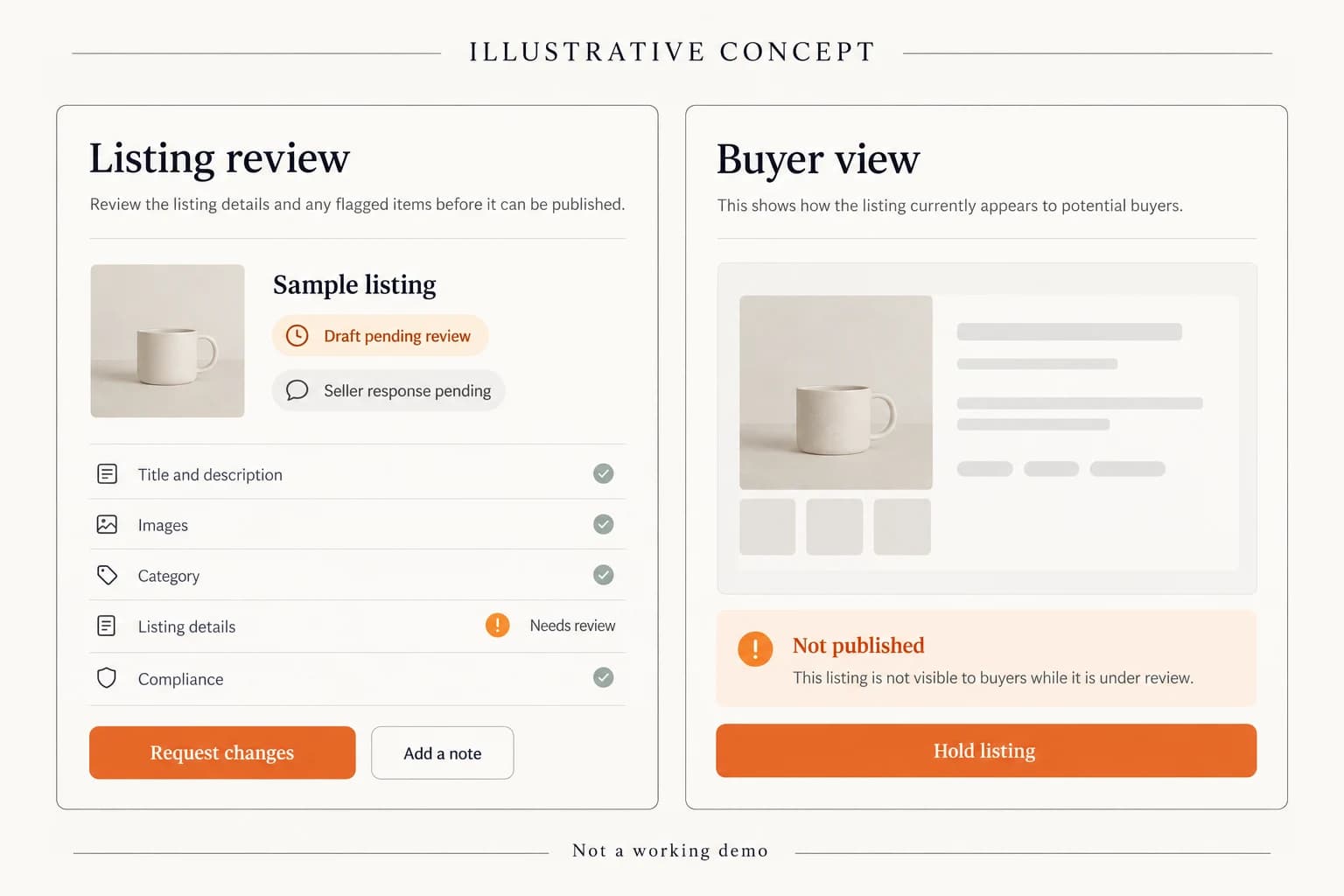
Original review-queue concept, shown here as a market proposal waiting for approval. Content and statuses are illustrative and do not show real markets, prices, players or licences.
What to check in the walkthrough
Players stay on prediction markets because the questions are interesting and the settlements are fair. A market that resolves on a technicality, or that nobody wanted to trade, does more damage than having no market at all.
Invest in the people and tools that write questions, check them and settle them. That is where trust comes from.
Our base product already runs the market board, pricing engine, leaderboards and operations console on virtual points, and you can play on the demo before you commit. We rebrand it and hand over the unencrypted source.
Real-money payments, identity checks, data feeds and responsible-play tools depend on your licence and markets. We plan them with you and build them on the same codebase once the legal route is clear.
A points-only launch lets you learn which questions people care about, how your resolution process holds up and whether players come back, without the cost and risk of a real-money licence on day one.
FAQ
A prediction market platform in the style of Polymarket, where people buy and sell shares in the outcomes of questions and winning shares pay out when the market resolves, run under your brand.
It depends on the country and on whether real money is involved. Real-money prediction markets may need a derivatives or gambling licence, or may be banned. A points-only version has fewer rules, but prize competitions can still be regulated. Take legal advice for each market.
Yes. The demo runs entirely on virtual points, which is how most operators should launch while they test demand and work through licensing.
Each market names its resolution source when it is created. At the closing time the result is recorded from that source, disputes are reviewed, and winning shares are paid out.
Yes, the player app, pricing engine and operations console are delivered unencrypted, so you can host them where your licence requires and change the rules engine yourself.
Primary sources
Dated official documentation, standards, and research that support the factual claims on this page.
The US derivatives regulator, which oversees event contracts traded on registered exchanges.
The UK regulator for betting and gambling, including rules on prize competitions and free draws.
How one large prediction market describes its markets, pricing and resolution.
How to read this page
Scope, cost and timeline figures are planning guidance until confirmed in a written proposal. Diagrams and screens are illustrations, not client deliverables, and source-code rights and handover follow the signed agreement. See the delivery process and the full disclaimer.
Next decision
Define outcomes, constraints, evidence, rights and handover before delivery begins.
Commercial rights, repositories, environments, documentation, acceptance and handover remain contract-defined.