Editorial dossier / Education Apps
Mobile App Development for E-Learning Platforms: Offline, Progress and Access
Plan mobile e-learning across lessons, downloads, progress sync, assessments, notifications, accessibility, privacy, subscriptions and support.
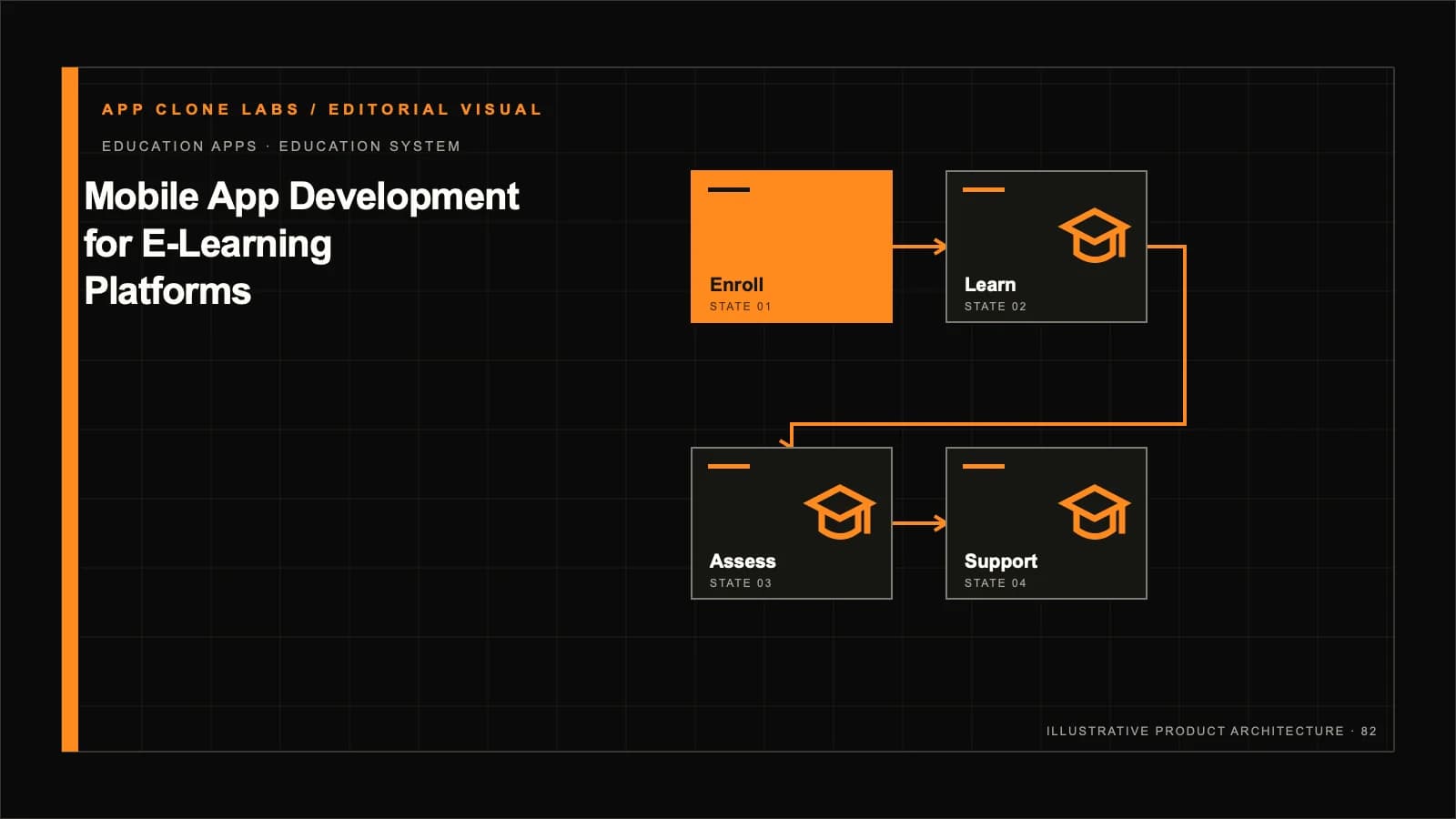
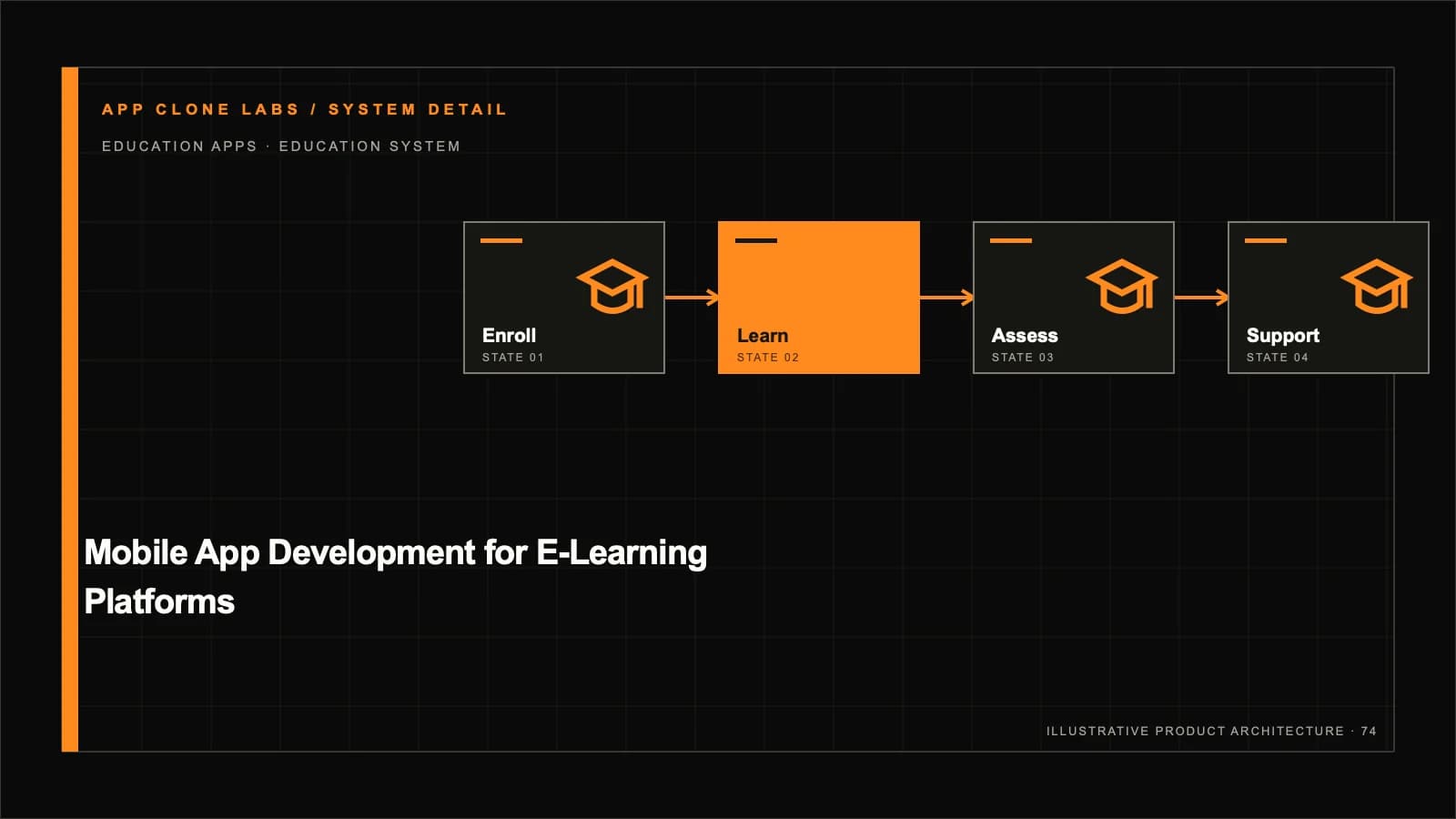
A learner downloads a lesson, completes it on a train, starts an assessment offline and reconnects after the course has been updated. The product must reconcile what happened without inventing duplicate progress or erasing valid work.
Mobile learning is not a smaller LMS screen. Connectivity, storage, device security, notifications and accessibility reshape the learning workflow.
This guide designs those constraints into the product model.
Define the mobile learning job
Define the mobile learning job is a separate operating decision within a mobile learning product spanning devices, offline work and learning records. It changes the promise made to users, the authority of each role, the evidence the platform must preserve and the recovery route when ordinary processing fails.
The failure mode is concrete: the team treats define the mobile learning job as an isolated feature, allowing permissions, downstream state, financial consequences and support behavior to diverge. This is not solved by adding another screen or background job. The product has to define ownership, permitted transitions, and the evidence retained when the transition occurs.
For the first release, define the authoritative lifecycle, accountable owner, allowed transitions and customer-visible outcome for define the mobile learning job before expanding the interface. Write that decision as an enforceable server-side rule, not guidance that depends on a client, operator, or AI model remembering the intended boundary.
Implementation should include For define the mobile learning job, retain stable identifiers, explicit states, server authorization, version checks, event and processing timestamps, reason codes, correlation IDs, audit history and an owned exception path. Keep the public response smaller than the internal record: users need a clear outcome and recovery path, while authorized operators need correlation IDs, policy versions, timestamps, and the before-and-after state.
Validate it with For define the mobile learning job, test success followed by duplicate delivery, stale state, concurrent commands, revoked authority, dependency timeout, partial failure, operator correction and reconciliation. Test the ordinary path, then repeat under timeout, duplicate delivery, stale state, partial failure, revoked authority, and concurrent requests. A feature is not ready when only the demonstration succeeds.
- Owner: product owner
- Release evidence: versioned define the mobile learning job decision and acceptance record
- Stop condition: define the mobile learning job cannot be explained or recovered from durable evidence
Choose native and web boundaries
Choose native and web boundaries is a separate operating decision within a mobile learning product spanning devices, offline work and learning records. It changes the promise made to users, the authority of each role, the evidence the platform must preserve and the recovery route when ordinary processing fails.
The failure mode is concrete: the team treats choose native and web boundaries as an isolated feature, allowing permissions, downstream state, financial consequences and support behavior to diverge. This is not solved by adding another screen or background job. The product has to define ownership, permitted transitions, and the evidence retained when the transition occurs.
For the first release, define the authoritative lifecycle, accountable owner, allowed transitions and customer-visible outcome for choose native and web boundaries before expanding the interface. Write that decision as an enforceable server-side rule, not guidance that depends on a client, operator, or AI model remembering the intended boundary.
Implementation should include For choose native and web boundaries, retain stable identifiers, explicit states, server authorization, version checks, event and processing timestamps, reason codes, correlation IDs, audit history and an owned exception path. Keep the public response smaller than the internal record: users need a clear outcome and recovery path, while authorized operators need correlation IDs, policy versions, timestamps, and the before-and-after state.
Validate it with For choose native and web boundaries, test success followed by duplicate delivery, stale state, concurrent commands, revoked authority, dependency timeout, partial failure, operator correction and reconciliation. Test the ordinary path, then repeat under timeout, duplicate delivery, stale state, partial failure, revoked authority, and concurrent requests. A feature is not ready when only the demonstration succeeds.
- Owner: product owner
- Release evidence: versioned choose native and web boundaries decision and acceptance record
- Stop condition: choose native and web boundaries cannot be explained or recovered from durable evidence
Model course versions
Model course versions is a separate operating decision within a mobile learning product spanning devices, offline work and learning records. It changes the promise made to users, the authority of each role, the evidence the platform must preserve and the recovery route when ordinary processing fails.
The failure mode is concrete: the team treats model course versions as an isolated feature, allowing permissions, downstream state, financial consequences and support behavior to diverge. This is not solved by adding another screen or background job. The product has to define ownership, permitted transitions, and the evidence retained when the transition occurs.
For the first release, define the authoritative lifecycle, accountable owner, allowed transitions and customer-visible outcome for model course versions before expanding the interface. Write that decision as an enforceable server-side rule, not guidance that depends on a client, operator, or AI model remembering the intended boundary.
Implementation should include For model course versions, retain stable identifiers, explicit states, server authorization, version checks, event and processing timestamps, reason codes, correlation IDs, audit history and an owned exception path. Keep the public response smaller than the internal record: users need a clear outcome and recovery path, while authorized operators need correlation IDs, policy versions, timestamps, and the before-and-after state.
Validate it with For model course versions, test success followed by duplicate delivery, stale state, concurrent commands, revoked authority, dependency timeout, partial failure, operator correction and reconciliation. Test the ordinary path, then repeat under timeout, duplicate delivery, stale state, partial failure, revoked authority, and concurrent requests. A feature is not ready when only the demonstration succeeds.
- Owner: product owner
- Release evidence: versioned model course versions decision and acceptance record
- Stop condition: model course versions cannot be explained or recovered from durable evidence
Build secure authentication
Build secure authentication is a separate operating decision within a mobile learning product spanning devices, offline work and learning records. It changes the promise made to users, the authority of each role, the evidence the platform must preserve and the recovery route when ordinary processing fails.
The failure mode is concrete: the team treats build secure authentication as an isolated feature, allowing permissions, downstream state, financial consequences and support behavior to diverge. This is not solved by adding another screen or background job. The product has to define ownership, permitted transitions, and the evidence retained when the transition occurs.
For the first release, define the authoritative lifecycle, accountable owner, allowed transitions and customer-visible outcome for build secure authentication before expanding the interface. Write that decision as an enforceable server-side rule, not guidance that depends on a client, operator, or AI model remembering the intended boundary.
Implementation should include For build secure authentication, retain stable identifiers, explicit states, server authorization, version checks, event and processing timestamps, reason codes, correlation IDs, audit history and an owned exception path. Keep the public response smaller than the internal record: users need a clear outcome and recovery path, while authorized operators need correlation IDs, policy versions, timestamps, and the before-and-after state.
Validate it with For build secure authentication, test success followed by duplicate delivery, stale state, concurrent commands, revoked authority, dependency timeout, partial failure, operator correction and reconciliation. Test the ordinary path, then repeat under timeout, duplicate delivery, stale state, partial failure, revoked authority, and concurrent requests. A feature is not ready when only the demonstration succeeds.
- Owner: product owner
- Release evidence: versioned build secure authentication decision and acceptance record
- Stop condition: build secure authentication cannot be explained or recovered from durable evidence
Checkpoint 4: reconcile the product promise with the recorded state. Support, finance, security, and delivery teams should be able to reach the same conclusion from the same identifiers without reconstructing events from chat messages or screenshots.
Design offline lesson downloads
Design offline lesson downloads is a separate operating decision within a mobile learning product spanning devices, offline work and learning records. It changes the promise made to users, the authority of each role, the evidence the platform must preserve and the recovery route when ordinary processing fails.
The failure mode is concrete: the team treats design offline lesson downloads as an isolated feature, allowing permissions, downstream state, financial consequences and support behavior to diverge. This is not solved by adding another screen or background job. The product has to define ownership, permitted transitions, and the evidence retained when the transition occurs.
For the first release, define the authoritative lifecycle, accountable owner, allowed transitions and customer-visible outcome for design offline lesson downloads before expanding the interface. Write that decision as an enforceable server-side rule, not guidance that depends on a client, operator, or AI model remembering the intended boundary.
Implementation should include For design offline lesson downloads, retain stable identifiers, explicit states, server authorization, version checks, event and processing timestamps, reason codes, correlation IDs, audit history and an owned exception path. Keep the public response smaller than the internal record: users need a clear outcome and recovery path, while authorized operators need correlation IDs, policy versions, timestamps, and the before-and-after state.
Validate it with For design offline lesson downloads, test success followed by duplicate delivery, stale state, concurrent commands, revoked authority, dependency timeout, partial failure, operator correction and reconciliation. Test the ordinary path, then repeat under timeout, duplicate delivery, stale state, partial failure, revoked authority, and concurrent requests. A feature is not ready when only the demonstration succeeds.
- Owner: product owner
- Release evidence: versioned design offline lesson downloads decision and acceptance record
- Stop condition: design offline lesson downloads cannot be explained or recovered from durable evidence
Protect downloaded content
Protect downloaded content is a separate operating decision within a mobile learning product spanning devices, offline work and learning records. It changes the promise made to users, the authority of each role, the evidence the platform must preserve and the recovery route when ordinary processing fails.
The failure mode is concrete: the team treats protect downloaded content as an isolated feature, allowing permissions, downstream state, financial consequences and support behavior to diverge. This is not solved by adding another screen or background job. The product has to define ownership, permitted transitions, and the evidence retained when the transition occurs.
For the first release, define the authoritative lifecycle, accountable owner, allowed transitions and customer-visible outcome for protect downloaded content before expanding the interface. Write that decision as an enforceable server-side rule, not guidance that depends on a client, operator, or AI model remembering the intended boundary.
Implementation should include For protect downloaded content, retain stable identifiers, explicit states, server authorization, version checks, event and processing timestamps, reason codes, correlation IDs, audit history and an owned exception path. Keep the public response smaller than the internal record: users need a clear outcome and recovery path, while authorized operators need correlation IDs, policy versions, timestamps, and the before-and-after state.
Validate it with For protect downloaded content, test success followed by duplicate delivery, stale state, concurrent commands, revoked authority, dependency timeout, partial failure, operator correction and reconciliation. Test the ordinary path, then repeat under timeout, duplicate delivery, stale state, partial failure, revoked authority, and concurrent requests. A feature is not ready when only the demonstration succeeds.
- Owner: product owner
- Release evidence: versioned protect downloaded content decision and acceptance record
- Stop condition: protect downloaded content cannot be explained or recovered from durable evidence
Queue progress events
Queue progress events is a separate operating decision within a mobile learning product spanning devices, offline work and learning records. It changes the promise made to users, the authority of each role, the evidence the platform must preserve and the recovery route when ordinary processing fails.
The failure mode is concrete: the team treats queue progress events as an isolated feature, allowing permissions, downstream state, financial consequences and support behavior to diverge. This is not solved by adding another screen or background job. The product has to define ownership, permitted transitions, and the evidence retained when the transition occurs.
For the first release, define the authoritative lifecycle, accountable owner, allowed transitions and customer-visible outcome for queue progress events before expanding the interface. Write that decision as an enforceable server-side rule, not guidance that depends on a client, operator, or AI model remembering the intended boundary.
Implementation should include For queue progress events, retain stable identifiers, explicit states, server authorization, version checks, event and processing timestamps, reason codes, correlation IDs, audit history and an owned exception path. Keep the public response smaller than the internal record: users need a clear outcome and recovery path, while authorized operators need correlation IDs, policy versions, timestamps, and the before-and-after state.
Validate it with For queue progress events, test success followed by duplicate delivery, stale state, concurrent commands, revoked authority, dependency timeout, partial failure, operator correction and reconciliation. Test the ordinary path, then repeat under timeout, duplicate delivery, stale state, partial failure, revoked authority, and concurrent requests. A feature is not ready when only the demonstration succeeds.
- Owner: product owner
- Release evidence: versioned queue progress events decision and acceptance record
- Stop condition: queue progress events cannot be explained or recovered from durable evidence
Resolve sync conflicts
Resolve sync conflicts is a separate operating decision within a mobile learning product spanning devices, offline work and learning records. It changes the promise made to users, the authority of each role, the evidence the platform must preserve and the recovery route when ordinary processing fails.
The failure mode is concrete: the team treats resolve sync conflicts as an isolated feature, allowing permissions, downstream state, financial consequences and support behavior to diverge. This is not solved by adding another screen or background job. The product has to define ownership, permitted transitions, and the evidence retained when the transition occurs.
For the first release, define the authoritative lifecycle, accountable owner, allowed transitions and customer-visible outcome for resolve sync conflicts before expanding the interface. Write that decision as an enforceable server-side rule, not guidance that depends on a client, operator, or AI model remembering the intended boundary.
Implementation should include For resolve sync conflicts, retain stable identifiers, explicit states, server authorization, version checks, event and processing timestamps, reason codes, correlation IDs, audit history and an owned exception path. Keep the public response smaller than the internal record: users need a clear outcome and recovery path, while authorized operators need correlation IDs, policy versions, timestamps, and the before-and-after state.
Validate it with For resolve sync conflicts, test success followed by duplicate delivery, stale state, concurrent commands, revoked authority, dependency timeout, partial failure, operator correction and reconciliation. Test the ordinary path, then repeat under timeout, duplicate delivery, stale state, partial failure, revoked authority, and concurrent requests. A feature is not ready when only the demonstration succeeds.
- Owner: product owner
- Release evidence: versioned resolve sync conflicts decision and acceptance record
- Stop condition: resolve sync conflicts cannot be explained or recovered from durable evidence
Checkpoint 8: reconcile the product promise with the recorded state. Support, finance, security, and delivery teams should be able to reach the same conclusion from the same identifiers without reconstructing events from chat messages or screenshots.
Handle assessments carefully
Handle assessments carefully is a separate operating decision within a mobile learning product spanning devices, offline work and learning records. It changes the promise made to users, the authority of each role, the evidence the platform must preserve and the recovery route when ordinary processing fails.
The failure mode is concrete: the team treats handle assessments carefully as an isolated feature, allowing permissions, downstream state, financial consequences and support behavior to diverge. This is not solved by adding another screen or background job. The product has to define ownership, permitted transitions, and the evidence retained when the transition occurs.
For the first release, define the authoritative lifecycle, accountable owner, allowed transitions and customer-visible outcome for handle assessments carefully before expanding the interface. Write that decision as an enforceable server-side rule, not guidance that depends on a client, operator, or AI model remembering the intended boundary.
Implementation should include For handle assessments carefully, retain stable identifiers, explicit states, server authorization, version checks, event and processing timestamps, reason codes, correlation IDs, audit history and an owned exception path. Keep the public response smaller than the internal record: users need a clear outcome and recovery path, while authorized operators need correlation IDs, policy versions, timestamps, and the before-and-after state.
Validate it with For handle assessments carefully, test success followed by duplicate delivery, stale state, concurrent commands, revoked authority, dependency timeout, partial failure, operator correction and reconciliation. Test the ordinary path, then repeat under timeout, duplicate delivery, stale state, partial failure, revoked authority, and concurrent requests. A feature is not ready when only the demonstration succeeds.
- Owner: product owner
- Release evidence: versioned handle assessments carefully decision and acceptance record
- Stop condition: handle assessments carefully cannot be explained or recovered from durable evidence
Manage media playback
Manage media playback is a separate operating decision within a mobile learning product spanning devices, offline work and learning records. It changes the promise made to users, the authority of each role, the evidence the platform must preserve and the recovery route when ordinary processing fails.
The failure mode is concrete: the team treats manage media playback as an isolated feature, allowing permissions, downstream state, financial consequences and support behavior to diverge. This is not solved by adding another screen or background job. The product has to define ownership, permitted transitions, and the evidence retained when the transition occurs.
For the first release, define the authoritative lifecycle, accountable owner, allowed transitions and customer-visible outcome for manage media playback before expanding the interface. Write that decision as an enforceable server-side rule, not guidance that depends on a client, operator, or AI model remembering the intended boundary.
Implementation should include For manage media playback, retain stable identifiers, explicit states, server authorization, version checks, event and processing timestamps, reason codes, correlation IDs, audit history and an owned exception path. Keep the public response smaller than the internal record: users need a clear outcome and recovery path, while authorized operators need correlation IDs, policy versions, timestamps, and the before-and-after state.
Validate it with For manage media playback, test success followed by duplicate delivery, stale state, concurrent commands, revoked authority, dependency timeout, partial failure, operator correction and reconciliation. Test the ordinary path, then repeat under timeout, duplicate delivery, stale state, partial failure, revoked authority, and concurrent requests. A feature is not ready when only the demonstration succeeds.
- Owner: product owner
- Release evidence: versioned manage media playback decision and acceptance record
- Stop condition: manage media playback cannot be explained or recovered from durable evidence
Design useful notifications
Design useful notifications is a separate operating decision within a mobile learning product spanning devices, offline work and learning records. It changes the promise made to users, the authority of each role, the evidence the platform must preserve and the recovery route when ordinary processing fails.
The failure mode is concrete: the team treats design useful notifications as an isolated feature, allowing permissions, downstream state, financial consequences and support behavior to diverge. This is not solved by adding another screen or background job. The product has to define ownership, permitted transitions, and the evidence retained when the transition occurs.
For the first release, define the authoritative lifecycle, accountable owner, allowed transitions and customer-visible outcome for design useful notifications before expanding the interface. Write that decision as an enforceable server-side rule, not guidance that depends on a client, operator, or AI model remembering the intended boundary.
Implementation should include For design useful notifications, retain stable identifiers, explicit states, server authorization, version checks, event and processing timestamps, reason codes, correlation IDs, audit history and an owned exception path. Keep the public response smaller than the internal record: users need a clear outcome and recovery path, while authorized operators need correlation IDs, policy versions, timestamps, and the before-and-after state.
Validate it with For design useful notifications, test success followed by duplicate delivery, stale state, concurrent commands, revoked authority, dependency timeout, partial failure, operator correction and reconciliation. Test the ordinary path, then repeat under timeout, duplicate delivery, stale state, partial failure, revoked authority, and concurrent requests. A feature is not ready when only the demonstration succeeds.
- Owner: product owner
- Release evidence: versioned design useful notifications decision and acceptance record
- Stop condition: design useful notifications cannot be explained or recovered from durable evidence
Support subscriptions and entitlements
Support subscriptions and entitlements is a separate operating decision within a mobile learning product spanning devices, offline work and learning records. It changes the promise made to users, the authority of each role, the evidence the platform must preserve and the recovery route when ordinary processing fails.
The failure mode is concrete: the team treats support subscriptions and entitlements as an isolated feature, allowing permissions, downstream state, financial consequences and support behavior to diverge. This is not solved by adding another screen or background job. The product has to define ownership, permitted transitions, and the evidence retained when the transition occurs.
For the first release, define the authoritative lifecycle, accountable owner, allowed transitions and customer-visible outcome for support subscriptions and entitlements before expanding the interface. Write that decision as an enforceable server-side rule, not guidance that depends on a client, operator, or AI model remembering the intended boundary.
Implementation should include For support subscriptions and entitlements, retain stable identifiers, explicit states, server authorization, version checks, event and processing timestamps, reason codes, correlation IDs, audit history and an owned exception path. Keep the public response smaller than the internal record: users need a clear outcome and recovery path, while authorized operators need correlation IDs, policy versions, timestamps, and the before-and-after state.
Validate it with For support subscriptions and entitlements, test success followed by duplicate delivery, stale state, concurrent commands, revoked authority, dependency timeout, partial failure, operator correction and reconciliation. Test the ordinary path, then repeat under timeout, duplicate delivery, stale state, partial failure, revoked authority, and concurrent requests. A feature is not ready when only the demonstration succeeds.
- Owner: product owner
- Release evidence: versioned support subscriptions and entitlements decision and acceptance record
- Stop condition: support subscriptions and entitlements cannot be explained or recovered from durable evidence
Checkpoint 12: reconcile the product promise with the recorded state. Support, finance, security, and delivery teams should be able to reach the same conclusion from the same identifiers without reconstructing events from chat messages or screenshots.
Meet accessibility needs
Meet accessibility needs is a separate operating decision within a mobile learning product spanning devices, offline work and learning records. It changes the promise made to users, the authority of each role, the evidence the platform must preserve and the recovery route when ordinary processing fails.
The failure mode is concrete: the team treats meet accessibility needs as an isolated feature, allowing permissions, downstream state, financial consequences and support behavior to diverge. This is not solved by adding another screen or background job. The product has to define ownership, permitted transitions, and the evidence retained when the transition occurs.
For the first release, define the authoritative lifecycle, accountable owner, allowed transitions and customer-visible outcome for meet accessibility needs before expanding the interface. Write that decision as an enforceable server-side rule, not guidance that depends on a client, operator, or AI model remembering the intended boundary.
Implementation should include For meet accessibility needs, retain stable identifiers, explicit states, server authorization, version checks, event and processing timestamps, reason codes, correlation IDs, audit history and an owned exception path. Keep the public response smaller than the internal record: users need a clear outcome and recovery path, while authorized operators need correlation IDs, policy versions, timestamps, and the before-and-after state.
Validate it with For meet accessibility needs, test success followed by duplicate delivery, stale state, concurrent commands, revoked authority, dependency timeout, partial failure, operator correction and reconciliation. Test the ordinary path, then repeat under timeout, duplicate delivery, stale state, partial failure, revoked authority, and concurrent requests. A feature is not ready when only the demonstration succeeds.
- Owner: product owner
- Release evidence: versioned meet accessibility needs decision and acceptance record
- Stop condition: meet accessibility needs cannot be explained or recovered from durable evidence
Minimize device data
Minimize device data is a separate operating decision within a mobile learning product spanning devices, offline work and learning records. It changes the promise made to users, the authority of each role, the evidence the platform must preserve and the recovery route when ordinary processing fails.
The failure mode is concrete: the team treats minimize device data as an isolated feature, allowing permissions, downstream state, financial consequences and support behavior to diverge. This is not solved by adding another screen or background job. The product has to define ownership, permitted transitions, and the evidence retained when the transition occurs.
For the first release, define the authoritative lifecycle, accountable owner, allowed transitions and customer-visible outcome for minimize device data before expanding the interface. Write that decision as an enforceable server-side rule, not guidance that depends on a client, operator, or AI model remembering the intended boundary.
Implementation should include For minimize device data, retain stable identifiers, explicit states, server authorization, version checks, event and processing timestamps, reason codes, correlation IDs, audit history and an owned exception path. Keep the public response smaller than the internal record: users need a clear outcome and recovery path, while authorized operators need correlation IDs, policy versions, timestamps, and the before-and-after state.
Validate it with For minimize device data, test success followed by duplicate delivery, stale state, concurrent commands, revoked authority, dependency timeout, partial failure, operator correction and reconciliation. Test the ordinary path, then repeat under timeout, duplicate delivery, stale state, partial failure, revoked authority, and concurrent requests. A feature is not ready when only the demonstration succeeds.
- Owner: product owner
- Release evidence: versioned minimize device data decision and acceptance record
- Stop condition: minimize device data cannot be explained or recovered from durable evidence
Build diagnostics and support
Build diagnostics and support is a separate operating decision within a mobile learning product spanning devices, offline work and learning records. It changes the promise made to users, the authority of each role, the evidence the platform must preserve and the recovery route when ordinary processing fails.
The failure mode is concrete: the team treats build diagnostics and support as an isolated feature, allowing permissions, downstream state, financial consequences and support behavior to diverge. This is not solved by adding another screen or background job. The product has to define ownership, permitted transitions, and the evidence retained when the transition occurs.
For the first release, define the authoritative lifecycle, accountable owner, allowed transitions and customer-visible outcome for build diagnostics and support before expanding the interface. Write that decision as an enforceable server-side rule, not guidance that depends on a client, operator, or AI model remembering the intended boundary.
Implementation should include For build diagnostics and support, retain stable identifiers, explicit states, server authorization, version checks, event and processing timestamps, reason codes, correlation IDs, audit history and an owned exception path. Keep the public response smaller than the internal record: users need a clear outcome and recovery path, while authorized operators need correlation IDs, policy versions, timestamps, and the before-and-after state.
Validate it with For build diagnostics and support, test success followed by duplicate delivery, stale state, concurrent commands, revoked authority, dependency timeout, partial failure, operator correction and reconciliation. Test the ordinary path, then repeat under timeout, duplicate delivery, stale state, partial failure, revoked authority, and concurrent requests. A feature is not ready when only the demonstration succeeds.
- Owner: product owner
- Release evidence: versioned build diagnostics and support decision and acceptance record
- Stop condition: build diagnostics and support cannot be explained or recovered from durable evidence
Implementation references
Use 1EdTech Caliper Analytics and record the version used for release.
Validate against 1EdTech LTI and record the version used for release.
Review W3C WCAG 2.2 and record the version used for release.
Compare with Android offline-first guidance and record the version used for release.
Continue with E-Learning App Development when converting this guide into scope.
Frequently asked questions
What should work offline?
Only clearly defined lessons and actions with safe sync behavior.
How is progress synchronized?
Stable event IDs, occurrence times and version-aware reconciliation.
Can assessments work offline?
Only with explicit integrity, timing and conflict rules.
How are downloads protected?
Minimize, encrypt where appropriate and expire entitlements.
Should every LMS feature be mobile?
No. Prioritize learner jobs suited to the device.
What notifications are useful?
Time-sensitive learning reminders with preferences and deep links.
What accessibility matters?
Screen readers, captions, zoom, contrast, focus and accessible documents.
What should be tested?
Network loss, device restart, course updates, expired access and sync conflicts.
Turn the plan into release evidence
A credible release connects its promise to durable state, scoped authority and recoverable operations. The team should explain ordinary journeys and consequential exceptions from the same evidence.
Keep the first scope narrow enough to rehearse. Expand only after permissions, data, money and support outcomes remain consistent under retries, failures and human mistakes.
- 01
- 02
- 03
- 04
- 05
- 06
Reviewed by the App Clone Labs product strategy team
This guide is written for founders and operators planning clone-inspired platforms, SaaS products, marketplaces, and mobile apps. It is reviewed against App Clone Labs delivery patterns, product scoping standards, and current implementation realities before being published.
Review the editorial team structureRelated product paths
Continue with the services, solutions, guides, and articles that connect this topic to a real software build.
Services, solutions, and guides
Read next