
A rental platform can receive ten thousand browsing sessions and only a few hundred bookings while paying for map requests, address searches, authentication texts and background calendar imports throughout the month. Budgeting only a cost per confirmed booking misses the work generated by everyone who searches, abandons checkout or reconnects a calendar.
This guide shows founders and property operators how to forecast third-party API overhead for a short-term rental platform. It separates maps, messaging, transactional email, calendar synchronisation and the infrastructure that connects them. Every numerical budget below uses invented inputs, not current provider tariffs, market averages or measured App Clone Labs results. Obtain configured regional quotes and review applicable privacy, messaging, rental and consumer requirements with appropriate specialists before launch.
Build the event inventory before comparing plans
List events the product generates: map display, address autocomplete, listing lookup, saved search, account verification, reservation request, booking confirmation, arrival reminder, calendar fetch and support contact. Record which provider receives each event and whether one user action can trigger several billable operations. A product screen and a billing unit are rarely the same thing.
Separate browser activity from server activity. A user searching repeatedly can generate map or place requests without a booking. Background imports continue when no guest is online. Retries and abuse can add traffic beyond the expected customer journey. Include those events explicitly rather than hiding them in a general contingency percentage.
Keep a dated assumptions sheet containing geography, currency, provider product, billing unit, expected monthly volume, peak pattern and pricing source. Update it when the interface or integration changes. If a new map panel doubles requests per search, the original forecast is no longer valid even if booking volume stays unchanged. This inventory is the foundation of a defensible API budget.
Separate launch assumptions from capacity claims
An invented pilot might have two hundred listings, twelve thousand monthly search sessions, six hundred reservation attempts and three hundred confirmed bookings. Those numbers describe the worksheet, not a benchmark or a commercial forecast. State how they were chosen and which observation would cause the team to revise them.
Define peak behaviour as well as monthly totals. A promotion can concentrate searches and notifications into a short period. Providers may apply request quotas or throughput constraints, and your own queues need capacity to absorb bursts. A bill that fits the monthly budget does not prove that the integration will respond acceptably during a busy hour.
Distinguish a configured allowance from a tested result. If a proposal says the product supports a certain number of listings or concurrent guests, request the workload, environment and evidence behind that statement. Hosting size, provider quotas and external API cost are related but separate. Procurement should not accept one impressive user count as an answer to every performance and operating-cost question.
Count map products separately
Map rendering, geocoding, address autocomplete, place details and route calculation can be separate products with different billing rules. Google's current core-services pricing reference distinguishes SKUs and usage tiers. Use the actual methods and requested features in your implementation rather than assuming every interaction is one generic Google Maps call.
For an invented search interface, twelve thousand sessions with two map displays each would produce twenty-four thousand display events under that assumption. If autocomplete is requested for every typed character rather than a properly designed interaction, its volume can diverge sharply from sessions. Confirm the applicable session and billing semantics for the selected API instead of inventing your own counting rule.
Collect usage by feature during the pilot. Tag the source of requests without sending unnecessary personal information. Then compare provider reporting with the application's counters. If the numbers disagree, investigate duplicated initialisation, repeated renders and uncontrolled refreshes. Optimising those causes is more useful than switching providers based on a headline unit price that ignores the way your application actually consumes the service.
Be deliberate about location detail
A guest may need an approximate area before booking and precise arrival details only after confirmation. That is a product and privacy decision, not merely a map zoom setting. Review the location information displayed, transmitted to providers and included in emails or notifications. Avoid exposing access instructions in public listing data or analytics events.
Store and reuse location-related data only as permitted by the provider's current terms and your approved policy. Do not assume all geocoding responses can be retained indefinitely or mixed into another provider's map. Licence restrictions can influence both architecture and cost. Record those dependencies so a future supplier change does not become a surprise data-migration problem.
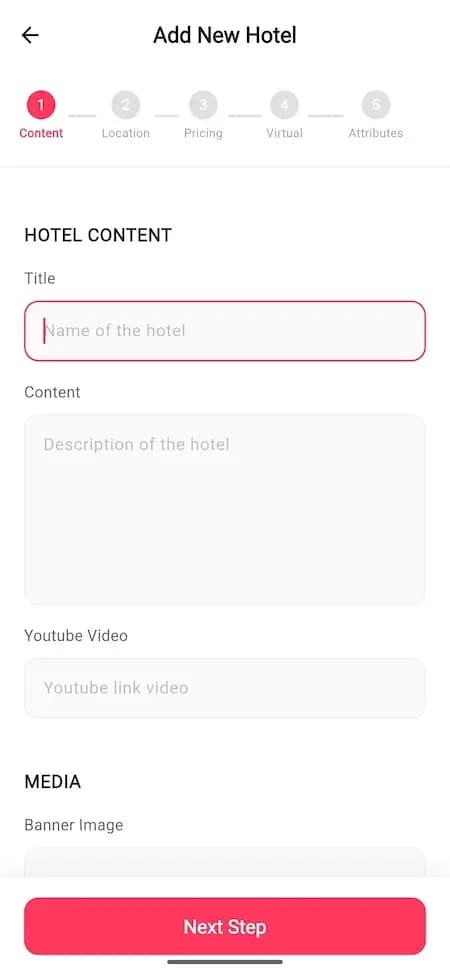
The accompanying reference image illustrates listing setup, not a working short-term rental booking or calendar integration. A procurement demonstration should show the actual visibility rules with synthetic addresses. Test what an anonymous browser, a confirmed guest, an owner and a support operator can see. Good data boundaries reduce unnecessary exposure without depriving authorised guests of the instructions they genuinely need.
Use routes only when the buyer journey needs them
Some rental products need distance estimates to airports or attractions; others need only location context. Decide which calculations support a real decision. Recomputing several route options every time a listing card appears can create recurring cost without improving the booking experience. Document when a route is calculated and which features are requested.
Google's Routes usage guidance describes billing considerations for methods and functionality, including matrix-related units. If comparing multiple origins and destinations, count the relevant work rather than assuming one HTTP request equals one unit. Validate the selected API's current rules and quota configuration before launch.
Use a labelled adverse case: if six hundred reservation attempts each request four route estimates, the worksheet contains twenty-four hundred estimates. If a redesign requests the same four estimates for twelve thousand search sessions, it becomes forty-eight thousand. Those are event counts, not bills. Multiply them by the applicable configured pricing only after checking current terms. The important procurement question is why that work is necessary at that stage of the journey.
Budget SMS by destination, sender and segments
SMS costs depend on more than the number of messages shown in an admin log. Geography, sender arrangement, carrier-related charges, registration and message segmentation can matter. Twilio's US pricing page is relevant to US configurations, not a universal price for every destination. Request a worksheet for the countries and sender types you will actually use.
Twilio's character-limit guidance explains that encoding and message length affect segments. Test the real templates, including non-Latin text, punctuation and personalised fields. A short example approved in discovery may become several billable segments once translated or filled with a long property name. Count segments under the applicable rules rather than assuming every notification costs one unit.
An invented month with nine hundred one-segment notifications and three hundred two-segment notifications contains fifteen hundred segments. At a purely assumed two cents per segment, the arithmetic is thirty dollars before excluded charges. That is not a Twilio rate. The calculation demonstrates how wording and localisation influence a budget even when the number of reservation events does not change.
Separate verification from reservation messaging
Account verification, booking changes and marketing have different requirements. Decide which messages are essential, which can use email or an in-app inbox and which require an approved fallback. Avoid sending an SMS for every intermediate processing state simply because it is technically easy. Too many notifications create cost and customer confusion together.
Authentication endpoints need rate limits, retry controls and abuse detection appropriate to the risk. A burst of automated code requests can consume a messaging allowance without creating genuine guests. Keep the provider credentials server-side and restrict their scope where supported. Review geographic permissions and sender settings rather than leaving every possible destination available by default.
Define what a failed verification or notification means operationally. A provider accepting a request is not proof that the guest received or read it. Track appropriate delivery evidence and give staff a safe response when an important arrival message fails. Obtain review of consent and local messaging obligations. A fallback should respect customer preferences and legal boundaries, not simply try every channel repeatedly until one appears successful.
Choose an email plan for the actual workload
Transactional email includes reservation requests, confirmations, receipts, changed dates, account recovery and arrival instructions. Marketing campaigns are a separate workload and may use different products or plans. Twilio's SendGrid Email API pricing reference should be checked for the current volume tier, included features and overage behaviour of the selected service.
Build a template count from events. In a fictional month, three hundred confirmed bookings generating four transactional emails each produce twelve hundred sends. Add account activity, unsuccessful requests, host notifications and support messages separately. Do not assume every reservation has only one recipient or every email is included in the same marketing subscription.
Set up sending-domain authentication and validate the chosen configuration before relying on email for time-sensitive instructions. Review bounce handling and suppression behaviour. A deliverability issue can be operationally expensive even when the API bill is small. Budget the work required to maintain a trustworthy sending setup and investigate failures, rather than treating an SMTP hostname as a completed messaging product.
Measure email outcomes without overstating them
SendGrid's event documentation distinguishes processing, delivery-related events, bounces and other outcomes. Interpret them carefully: acceptance by a recipient mail server does not prove a person read the instructions. A guest's failure to arrive cannot be resolved merely by pointing to an email API request marked successful.
Persist safe provider references and apply repeated callbacks idempotently. Avoid placing door codes, full guest documents or sensitive support content in monitoring events. Decide which information belongs inside the authenticated application rather than in an email that can be forwarded. Retention and access decisions should cover both the original message and event records.
Test bounced confirmation email, a changed booking after a reminder was queued and an opt-out or suppression state. The guest should not receive an obsolete arrival message after cancellation. Background jobs need to recheck relevant booking conditions before sending. This behaviour requires engineering and operating ownership; buying an email plan does not automatically solve message relevance, timing or exception handling.
Understand what iCalendar does and does not provide
RFC 5545 defines the iCalendar data format for calendaring and scheduling information. It is not a distributed transaction protocol that locks a property across every booking channel. Exchanging an availability feed does not automatically synchronise prices, guest records, payment status or commercial cancellation rules.
Ask each integration partner what its import and export actually contain. Airbnb's calendar-sync help describes periodic imports; its published automatic refresh interval illustrates why a linked calendar should not be advertised as instant universal availability. Other channels have their own behaviour. Verify current provider documentation and do not assume identical timing across services.
The product needs an explicit freshness model. Show when a feed was last fetched successfully, whether it was parsed and whether there are unresolved conflicts. Distinguish an empty valid feed from a failed request. If the business needs stronger booking guarantees or broader channel data, evaluate an appropriate contracted integration or channel-management service. Do not sell a basic feed importer as an equivalent real-time channel manager.
Forecast polling cost and the failure budget
Suppose two hundred listings each import two feeds once per hour. The fictional worksheet produces ninety-six hundred fetch attempts per day: two hundred multiplied by two, multiplied by twenty-four. Over a thirty-day planning month that becomes two hundred eighty-eight thousand attempts before retries. The feed may be free to access under its arrangement, but your workers, network and monitoring still perform work.
Choose polling intervals according to provider constraints and business risk, not an arbitrary fastest-possible setting. Spread requests over time and use supported conditional requests where appropriate. Apply bounded retry behaviour so an unavailable provider does not create an expanding backlog. Observe response sizes and parsing time as well as request counts.
Record failures as operational information. A stale feed should trigger a defined booking policy and escalation, not silently continue looking current. Decide whether a listing can accept an immediate booking when its source availability has been unreliable. That decision belongs to the approved product model. A lower hosting bill achieved by hiding failed imports is not an optimisation.
Handle calendar identities and date boundaries correctly
Calendar events need stable source identity so repeated imports do not create duplicate blocks. Preserve source references and distinguish external blocks from bookings created by your platform. Define how updates and removals are detected for each supported feed. A temporary empty response should not automatically erase a confirmed internal reservation.
Test all-day dates, exclusive end boundaries and time-zone handling against the chosen calendar format and provider semantics. For a stay, checkout date and occupied night are different concepts. A one-day interpretation error can either hide sellable inventory or expose dates already occupied. Use documented examples and synthetic fixtures rather than relying on how a calendar widget happens to render a timestamp.
Include malformed feeds, unexpectedly large responses and changed event identifiers in testing. Treat imported URLs and content as untrusted input. The server should not fetch arbitrary private-network locations because someone pasted a calendar URL. Validate destinations, bound response size and time, and protect feed credentials or private tokens. A background sync feature introduces a security boundary even when it has no visible payment screen.
Define the conflict policy before enabling instant booking
Two channels can accept a booking before either learns about the other's update. An iCal importer alone cannot prevent that race. Document which system is authoritative and what the platform does when an external block overlaps a local reservation. Do not quietly delete a customer's confirmed booking to make a calendar appear consistent.
Choose an approved workflow such as request-to-book, a controlled availability check or another suitable integration model. Each has customer-experience and operational consequences. Where immediate confirmation is offered, make its assumptions and dependencies explicit. The software supplier should not guarantee the absence of double bookings from a periodically refreshed feed.
Run a synthetic conflict exercise: a local booking is confirmed, then an overlapping external event arrives. The console should show the conflict, relevant timestamps, responsible owner and permitted next actions. Customer communication and resolution follow the business's approved policy. Price the discrepancy queue and support workflow as part of synchronisation; parsing an ICS file is only one small piece of operating the feature responsibly.
Create one monthly cost worksheet with exclusions
The comparison table uses fictional monthly allowances: one hundred twenty dollars for maps and place services, thirty for SMS segments, forty for transactional email, eighty for calendar workers, fifty for monitoring and thirty for supporting storage and network use. The illustrative subtotal is three hundred fifty dollars. These allowances are not quotes or current vendor prices.
Keep platform hosting, payment processing, support labour, channel-management subscriptions, authentication products, taxes and contingency separate. Some providers combine services or charge minimums and additional fees; replace the worksheet structure as needed to match actual contracts. Do not present a tidy subtotal as the complete cost of operating a rental business.
Calculate a base and adverse case using the same units. Change search-to-booking ratio, message segmentation, polling interval and retry volume independently. This exposes which design choice drives the bill. Cost per booking can be reported afterwards, but retain the underlying usage counters. Otherwise a quiet month can look inexplicably expensive because background work continues while the booking denominator shrinks.
Put controls where costs are generated
Restrict API keys using the provider's supported mechanisms and separate environments where appropriate. A browser-visible key intended for a constrained map use is different from a server secret that can send paid messages. Review each credential's permissions and owner. Do not paste unrestricted production credentials into a mobile application or a public repository.
Set provider quotas and alerts with an operating owner, while understanding whether the particular setting is a notification or an enforceable limit. Budget alerts do not universally stop spending. Introduce application-level bounds for repeated authentication requests and calendar retries, but do not disable critical guest communication without a documented fallback.
Measure by feature, environment and integration. Staging traffic, automated tests and a forgotten import worker can all contribute to usage. A provider outage should not cause every web request to retry the same expensive action. Ask vendors to demonstrate how usage is diagnosed and how a compromised or malfunctioning integration can be isolated without unnecessarily taking the whole rental platform offline.
Compare a channel-manager quote on equivalent terms
A paid channel manager may be worth evaluating when the operating model needs broader inventory or reservation handling than basic calendar feeds provide. Ask which channels, data fields, property types and account arrangements are actually supported. A logo on a partner page does not establish that every capability is available to your particular business.
Request pricing against the same listing count and workflow. Clarify whether charges are per listing, property, connection, reservation or another unit, and identify minimum commitments and onboarding work. Include setup, mapping, training and continuing support in the comparison. A subscription might replace some custom work but can also introduce account and contract dependencies.
Ask how changes are confirmed and how unresolved updates are surfaced. Demonstrate a modification, cancellation and channel outage with synthetic data in the approved environment. Establish what happens when the integration reports success but the external inventory differs. The useful question is how your team discovers and resolves the discrepancy, not whether the service is advertised as seamless.
Document exit requirements too. Confirm permitted exports, access to historical references and the handling of open reservations if the service is changed. Retain an accurate integration boundary in the budget: work delegated to a contracted service is not work that ceased to exist. Your product still needs to present the right information, handle exceptions and assign an operational owner.
Buy maintainable integrations rather than a one-time connection
Third-party services change pricing, quotas, authentication and product versions. Assign ownership for notices, renewals and regression tests. Preserve synthetic calendar fixtures and message-event tests so the team can validate changes before production. Provider replacement requires reviewing data rights, identifiers, templates and unresolved work, not just editing an API base URL.
At handover, request the event inventory, dated pricing assumptions, account ownership, quota configuration, alert destinations and exception runbooks. Confirm that your authorised team can see usage and billing without depending on a developer's personal account. Test a failed feed and an undelivered message during training so operators know which evidence matters and who should act.
App Clone Labs can scope rental search, listing management, messaging and availability workflows against that inventory. Bring expected listings, connected channels, guest destinations, booking policy and the notifications you genuinely need. The linked rental solution and process pages offer a starting point. A useful proposal explains both the monthly arithmetic and the limits of each integration, so a low initial estimate does not become a misleading operating promise.
Google Maps Platform core-services pricing and SKUs
Google Routes API usage and billing
Twilio US SMS pricing: verify destination and sender configuration
Twilio SMS length, encoding and segmentation
Twilio SendGrid Email API pricing
SendGrid email-event definitions
RFC 5545 iCalendar specification
Airbnb calendar import and export behaviour
Comparison register
Illustrative monthly API and integration allowances
Invented budget inputs, not provider tariffs or a complete operating estimate. Excludes core hosting, payments, support labour, channel-manager subscriptions, separate authentication products, taxes and contingency.
| Cost line | Illustrative monthly allowance | Replace with |
|---|---|---|
| Maps and place services | USD 120 | Selected SKUs, units and configured regional pricing |
| SMS segments | USD 30 | Destinations, encoding, sender and contractual charges |
| Transactional email | USD 40 | Current send volume tier and selected features |
| Calendar workers | USD 80 | Feed count, fetch interval, parsing and retry workload |
| Integration monitoring | USD 50 | Retention, alerts and actual event volume |
| Supporting storage and network | USD 30 | Measured response sizes and configured infrastructure |
| Illustrative subtotal | USD 350 | Not a vendor quote or a complete platform budget |
- 01
- 02
- 03
- 04
- 05
- 06
- 07
- 08
Reviewed by Aditya Bhimrajka
This guide is written for founders and operators planning clone-inspired platforms, SaaS products, marketplaces, and mobile apps. It is reviewed against App Clone Labs delivery patterns, product scoping standards, and current implementation realities before being published.
Review the editorial team structureRelated product paths
Continue with the services, solutions, guides, and articles that connect this topic to a real software build.