
01V1
Trader dashboard
Challenge checkout, account details, live progress against each rule, trade history, identity checks and payout requests, on web and mobile.
Solutions · Prop trading challenges
A prop trading firm sells traders a chance to prove themselves. The trader pays for a challenge, trades a simulated account against a profit target without breaking loss limits, and if they pass, receives a funded account and a share of the profits it makes. A FundingPips clone runs that whole business: the checkout, the rules engine that watches every account, the trading platform connection, the payouts and the risk team’s tools for spotting abuse. The sections below set out the challenge loop, the risks that sink new firms and a sensible first release.
Try the live demo See product screens and demo accessOne- and two-step challenges
Drawdown rules checked on every trade
Payouts by bank transfer or crypto
V1
Challenge checkout, account details, live progress against each rule, trade history, identity checks and payout requests, on web and mobile.
Account creation and rule monitoring on one trading platform to start.
Products, prices, discount codes, accounts, breaches, support tickets and payouts.
Payout approvals with basic checks for copied trades and shared devices.
Operating loop
They pick an account size and a challenge type, such as one step or two steps, pay the fee and receive login details for a simulated account on the trading platform the firm supports.
The account must reach a profit target without breaching a daily loss limit or a maximum drawdown, and sometimes within a minimum number of trading days. A breach ends the challenge immediately and the trader is told why.
Once the target is met and the trades are reviewed, the trader receives a funded account with the same rules. Identity checks usually happen here, before any money is paid out.
The trader requests their share of the profits on a weekly or monthly cycle. Consistent traders can be moved to larger accounts with better splits.
Roles
Skilled or hoping to be. Wants clear rules, a live view of how close they are to each limit, fast account delivery and payouts that arrive when promised.
Answers questions about rules, breaches and payouts, and needs the full trade history and rule checks for each account in front of them.
Reviews passing accounts and payout requests for prohibited strategies, copied trades between accounts and other abuse.
Sets challenge products, prices, rules, discount codes, payout methods and splits, and watches the firm’s overall exposure.
Hard parts
Daily loss and drawdown limits must be calculated exactly as the rules page describes, on equity rather than closed trades if that is the rule, and at the same moment for everyone. A limit that triggers a few seconds late or early causes disputes that are hard to settle.
Most traders expect MT5, cTrader or MatchTrader. Platform vendors set their own terms for prop firms, and some have withdrawn access for firms serving certain countries, so line up platform agreements early and design for more than one platform.
Some traders run the same trades on many accounts, hedge one account against another or exploit price delays. Compare trades across accounts, devices and payment details before approving payouts.
Payouts to funded traders are usually funded by challenge fees, not by profits from real markets. The pass rate, split and fees have to balance, or the firm cannot pay what it owes. Model this before setting prices.
Depending on the country, a prop firm may be treated as a training service, a gambling product, a financial promotion or a brokerage. Take legal advice for each market you sell into, and describe simulated accounts and profit splits accurately.
Operator controls
Account sizes, steps, profit targets, loss limits, minimum days, prices and discount codes.
Every account’s equity against its limits, with breach history and the exact trade that caused each breach.
Requests, identity checks, abuse flags and approval before payment by bank or crypto.
How many traders pass, how much is owed in payouts and how that compares with fee income.
Revenue
The main income: a fee per challenge, priced by account size and challenge type.
Fees to restart a failed challenge or to add options such as a larger profit split or extra trading days.
Commission paid to affiliates who bring in traders, tracked by code.
Later
Add a second or third platform once the first is stable, so traders can choose.
Larger accounts and better splits for consistent traders, once there is enough history to judge consistency.
Good for marketing, but they need their own rules and prize terms.
Next decision
Brokerage, banking, wallets and remittance each carry different licences; the finance overview lays them side by side.
Open registerIf the goal is teaching traders rather than funding them, a paper trading app with lessons and scores is a better fit.
Open registerOnce traders deposit their own funds and orders reach an exchange, you are running a brokerage; the Zerodha-style model covers that route.
Open registerNeed a second trading platform, custom challenge rules or new payout rails? Our fintech development service covers that work.
Open registerLive demo
Open each app or panel in a new tab and sign in with the demo login shown. The demos run on shared sample data, carry our demo product names, and show the ready-made product before any customization.
Trader Dashboard
Use this original payout-review concept to scope trader, support, risk and admin workflows. It is not FundingPips UI or proof of funded capital, real trades, payouts or regulatory status.
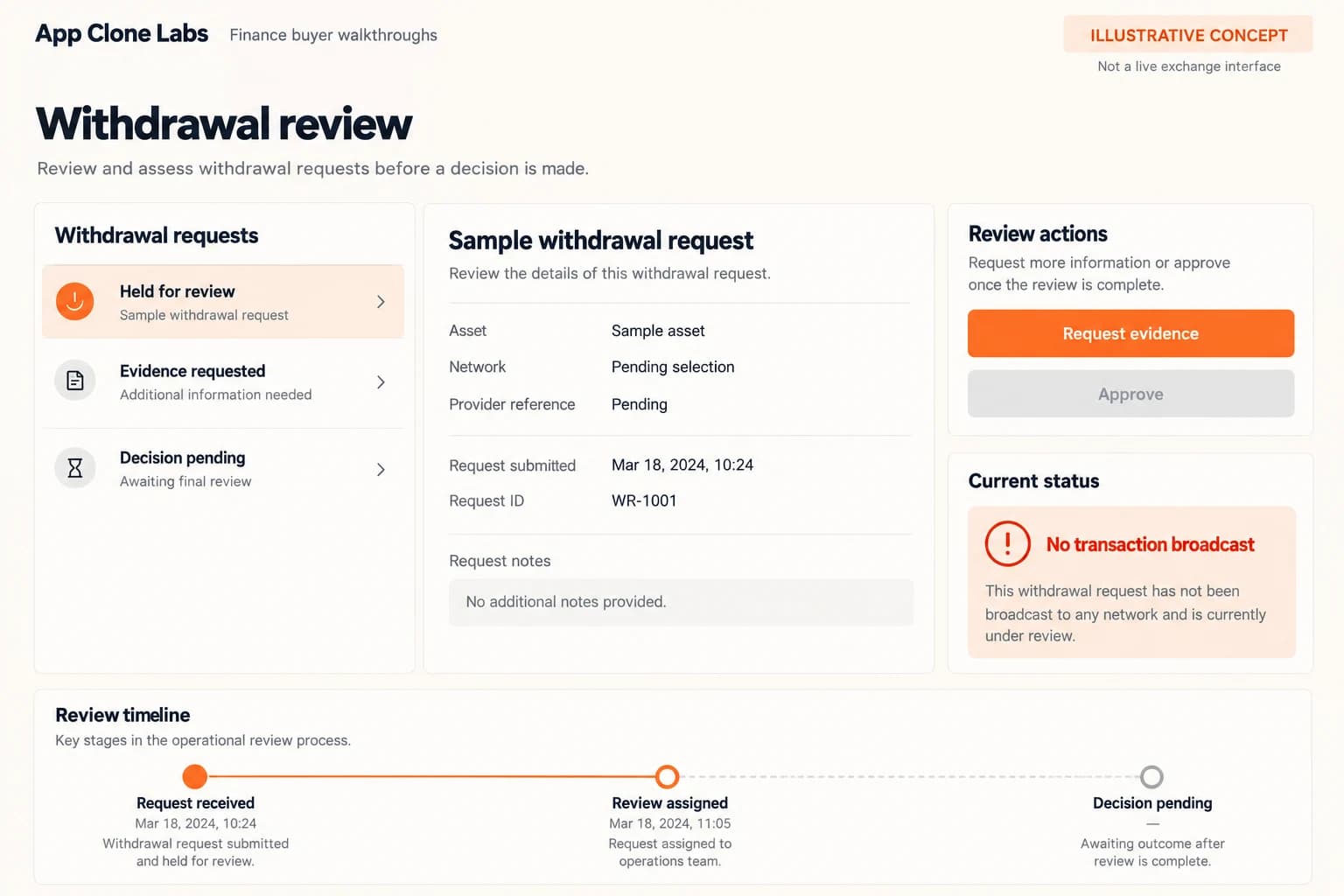
Original payout-review concept. Accounts, amounts and statuses are illustrative and do not establish funded capital, trading results, payout capacity or regulatory status.
What to check in the walkthrough
Artifact register
Reference screens illustrate workflows, not a contracted feature list. Sample prices, data, and responses are demonstration content; confirm the current scope during a walkthrough.
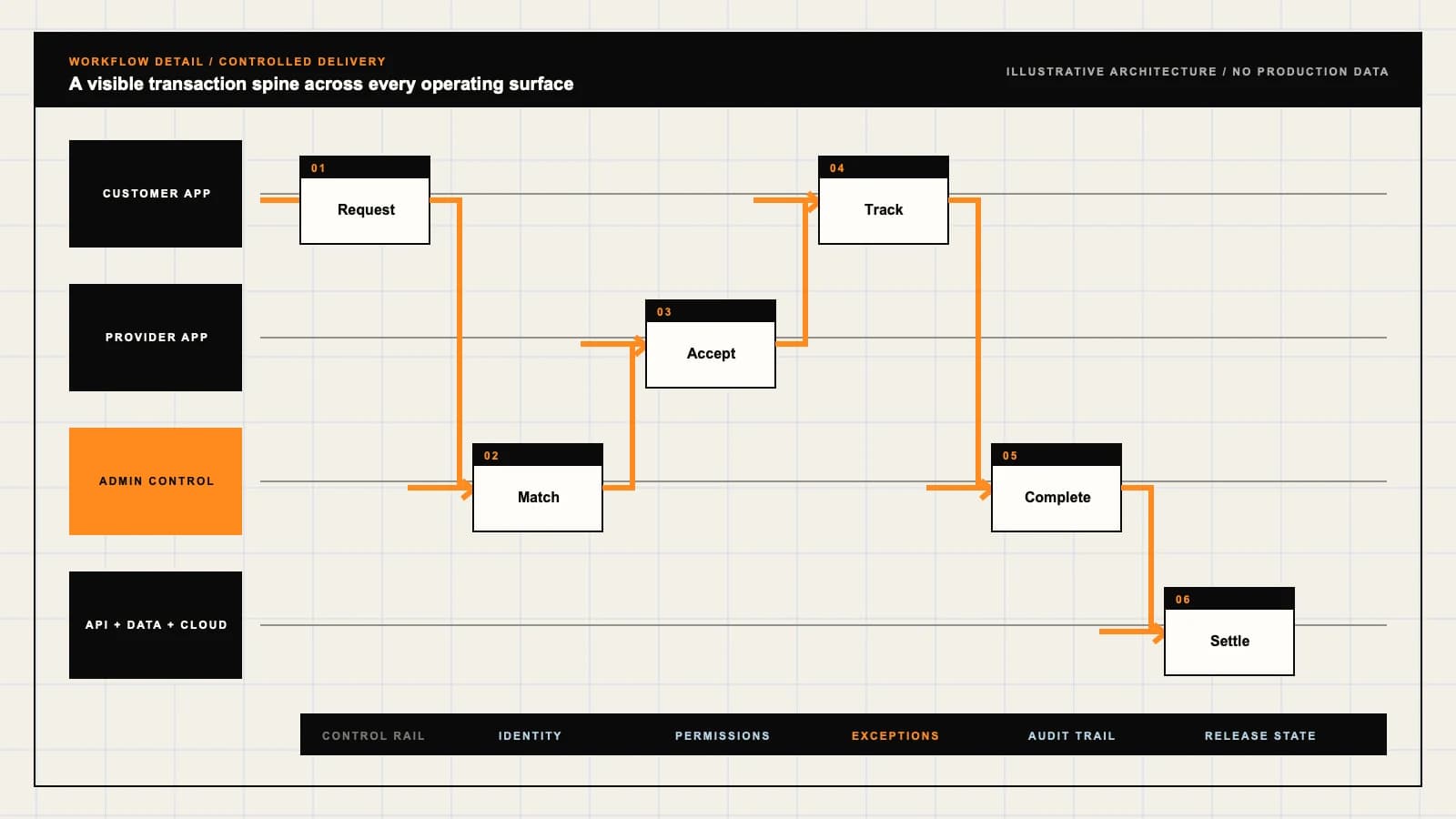
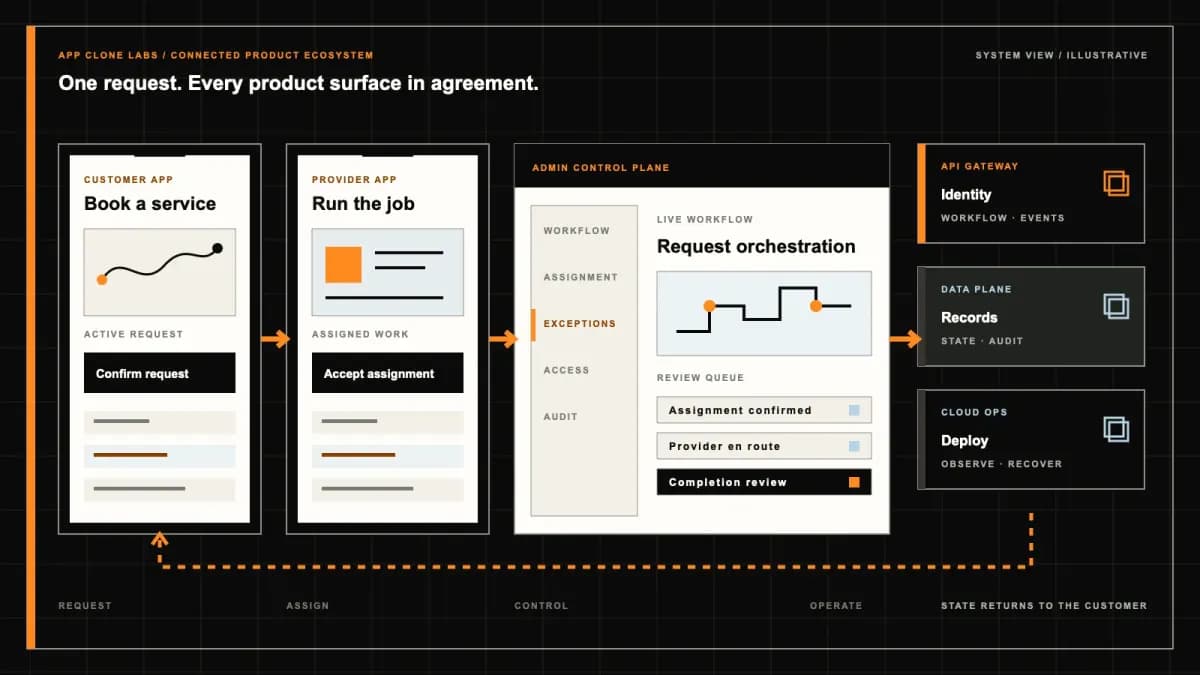
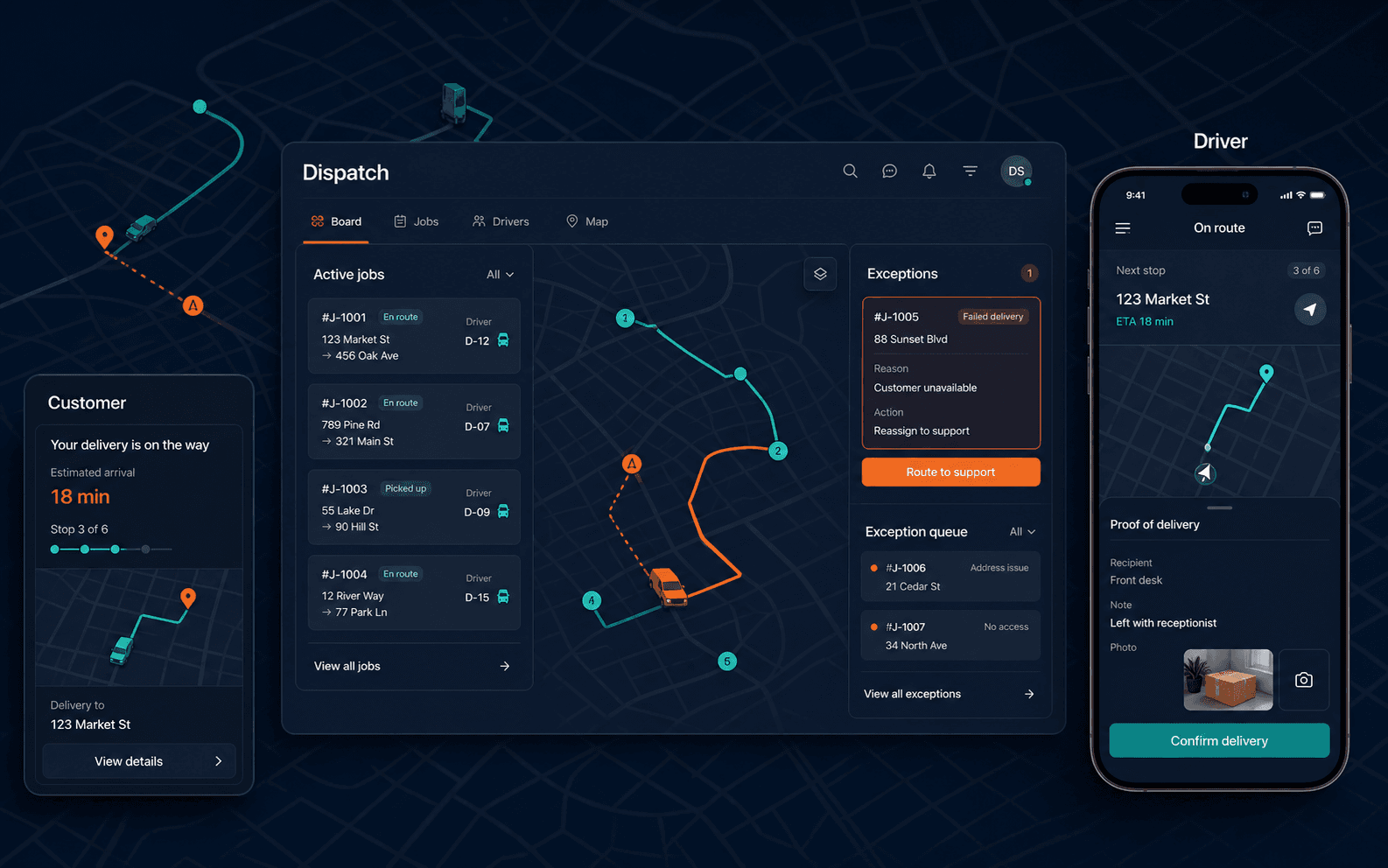
Traders choose a prop firm on its rules: how big the account is, how hard the target is, how loss limits are measured and how fast payouts arrive. Two firms with the same app can have very different reputations because one applies its rules exactly and the other surprises traders with breaches they cannot explain.
Publish every rule in plain language, apply it in software exactly as written, and show traders the trade and the number that caused any breach.
Our base product already runs the trader dashboard, rules engine and admin, support and risk consoles, and you can open the demo to try them. We rebrand it for your firm, and the source code is yours, unencrypted.
Trading platform agreements, payment partners and your challenge pricing depend on your market. We help plan them and build the connections on the same codebase.
A prop firm can grow fast and still fail if more traders pass than its fees can pay for. Track pass rates, payouts owed and fee income from the first week, and change prices or rules openly rather than quietly.
FAQ
Software for running a prop trading firm in the style of FundingPips: traders buy challenges, trade simulated accounts under loss limits, and those who pass receive funded accounts and a share of the profits, all under your brand.
Prop firms commonly use MT5, cTrader or MatchTrader. Each needs an agreement with the platform vendor or a licensed provider, so the first release usually starts with one platform.
Traders request their profit share on a set cycle. After identity and risk checks, payouts go by bank transfer or crypto, depending on what your payment partners support.
It depends on the country and on how the firm describes its accounts and payouts. Some regulators treat prop firms as training businesses, others look at them as financial or gambling products. Take legal advice before launch in each market.
You do. The dashboard and consoles carry your firm’s brand, the trader records sit on hosting you control, and the source code is handed over for your developers to change.
Primary sources
Dated official documentation, standards, and research that support the factual claims on this page.
The US derivatives regulator’s customer guidance, including warnings about trading-related offers.
UK rules and risk warnings for leveraged products of the kind prop traders practise on.
The trading platform most prop firms offer; its vendor sets its own terms for prop firm use.
How to read this page
Scope, cost and timeline figures are planning guidance until confirmed in a written proposal. Diagrams and screens are illustrations, not client deliverables, and source-code rights and handover follow the signed agreement. See the delivery process and the full disclaimer.
Next decision
Define outcomes, constraints, evidence, rights and handover before delivery begins.
Commercial rights, repositories, environments, documentation, acceptance and handover remain contract-defined.
